Building AI Glasses experiments.
Better questions, people first, tech for good, play, make mistakes, evolving together. Author of “Consume Less, Create More”.
MemoryLens is an experiment in making the physical world searchable.
AI glasses conversational capture turning real-world moments into polished, shareable visual recaps.
eg: museum visits, home tours, and guided capture flows. The core loop:
capture → context -> recaps
Could AIs learn taste?
Do AIs have implicit aesthetic biases?
Would different models judge beauty differently?
What happens when humans influence the feedback loop?
I built a first prototype of The Art Arena to start exploring these questions: https://t.co/Z1VoEfSPqp
@signulll Portability is the past, the future is protocols that allow users to own their memories and share with different agents at different times via APIs
@KMNDR_@signulll You’re right and the problem with seeing it this way vs op is that this interpretation robs us of the ability to improve things, and that’s why we all love @signulll ‘s one, because it’s empowering and leading to growth
Sharing an interesting recent conversation on AI's impact on the economy.
AI has been compared to various historical precedents: electricity, industrial revolution, etc., I think the strongest analogy is that of AI as a new computing paradigm (Software 2.0) because both are fundamentally about the automation of digital information processing.
If you were to forecast the impact of computing on the job market in ~1980s, the most predictive feature of a task/job you'd look at is to what extent the algorithm of it is fixed, i.e. are you just mechanically transforming information according to rote, easy to specify rules (e.g. typing, bookkeeping, human calculators, etc.)? Back then, this was the class of programs that the computing capability of that era allowed us to write (by hand, manually).
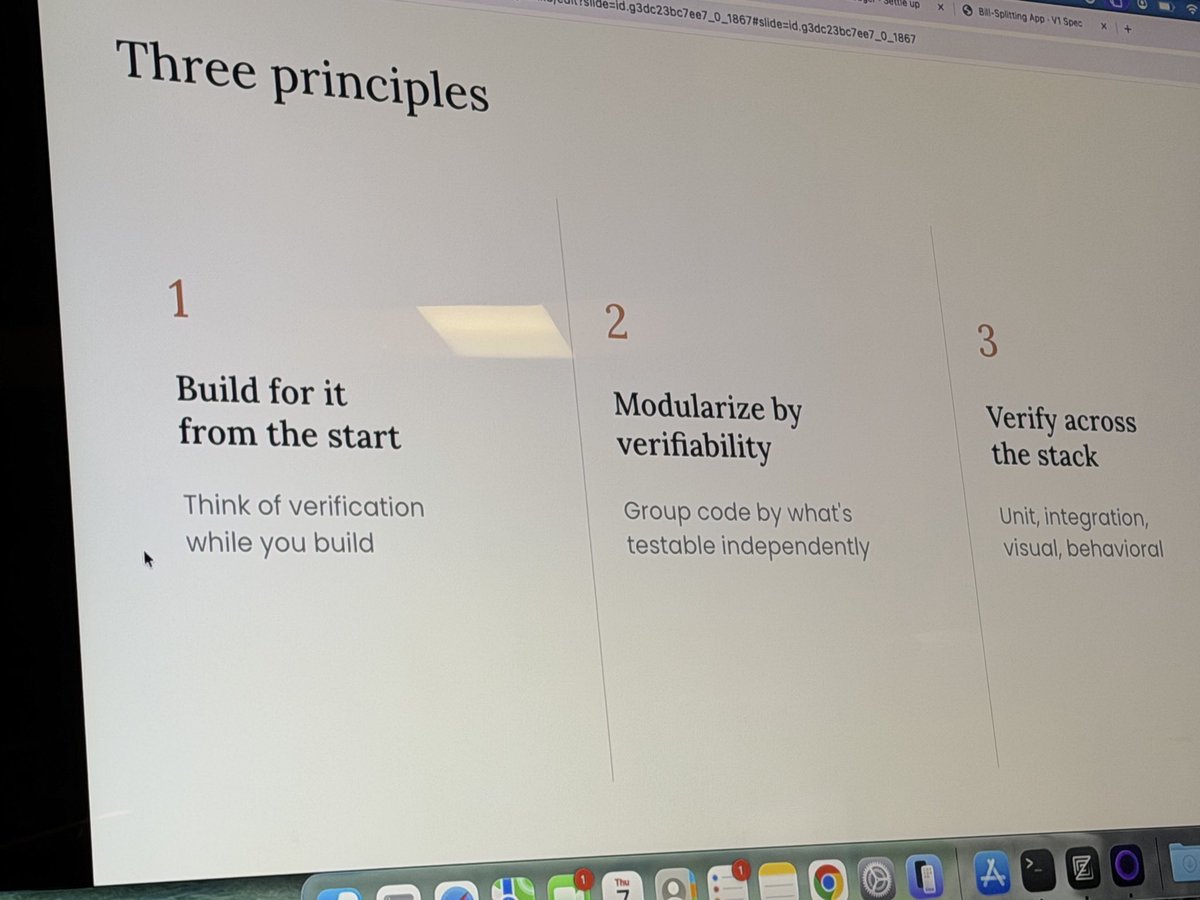
With AI now, we are able to write new programs that we could never hope to write by hand before. We do it by specifying objectives (e.g. classification accuracy, reward functions), and we search the program space via gradient descent to find neural networks that work well against that objective. This is my Software 2.0 blog post from a while ago. In this new programming paradigm then, the new most predictive feature to look at is verifiability. If a task/job is verifiable, then it is optimizable directly or via reinforcement learning, and a neural net can be trained to work extremely well. It's about to what extent an AI can "practice" something. The environment has to be resettable (you can start a new attempt), efficient (a lot attempts can be made), and rewardable (there is some automated process to reward any specific attempt that was made).
The more a task/job is verifiable, the more amenable it is to automation in the new programming paradigm. If it is not verifiable, it has to fall out from neural net magic of generalization fingers crossed, or via weaker means like imitation. This is what's driving the "jagged" frontier of progress in LLMs. Tasks that are verifiable progress rapidly, including possibly beyond the ability of top experts (e.g. math, code, amount of time spent watching videos, anything that looks like puzzles with correct answers), while many others lag by comparison (creative, strategic, tasks that combine real-world knowledge, state, context and common sense).
Software 1.0 easily automates what you can specify.
Software 2.0 easily automates what you can verify.
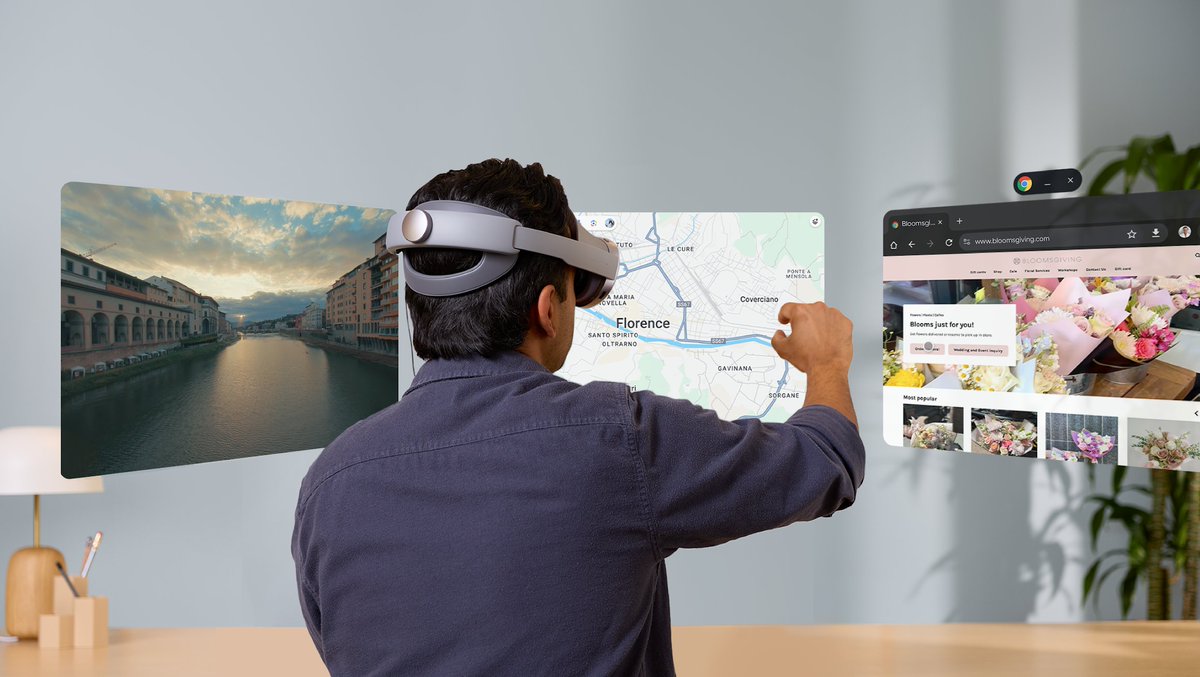
Today, Samsung introduced Galaxy XR, the very first device built on @Android XR, our new operating system for next-generation headsets and glasses. With Gemini built in, Galaxy XR lets you do more, including:
• Navigate the interface naturally with your voice, hands and eyes
• Circle to search anything you see
• Turn your photos and videos into 3D experiences and step into your memories
• Immerse yourself in entertainment
• Multitask seamlessly in an infinite workspace
…and more
Learn more about how Galaxy XR opens up new ways to watch, explore and create → https://t.co/PkWvuqZlWX
Congrats to Google and Samsung on the launch of the Galaxy XR!
I think you’re all going to love this headset and the apps coming to it.
Bringing @fluid_xr to AndroidXR has been a pretty wonderful experience. We’re excited to have you try it soon!