🟥Hello, welcome.
The original intention behind this account is simple: curiosity, and the desire to support myself through curiosity.
I'm curious—how many things in this world are there that we still don't know?
Honestly, this world is pretty boring.
But when you start paying attention to those mysterious and profound things—metaphysics, mythology, anomalies, legends—the world suddenly becomes very interesting.
This curiosity has driven me for a long time, and it will probably continue to drive me in the future.
Thank you for being willing to join me.
🟥 Do “Lunatic” and “Moon” Share the Same Root?
English has an old word: lunatic.
It once described people thought to be out of their minds.
Its ancestor was not “madness.”
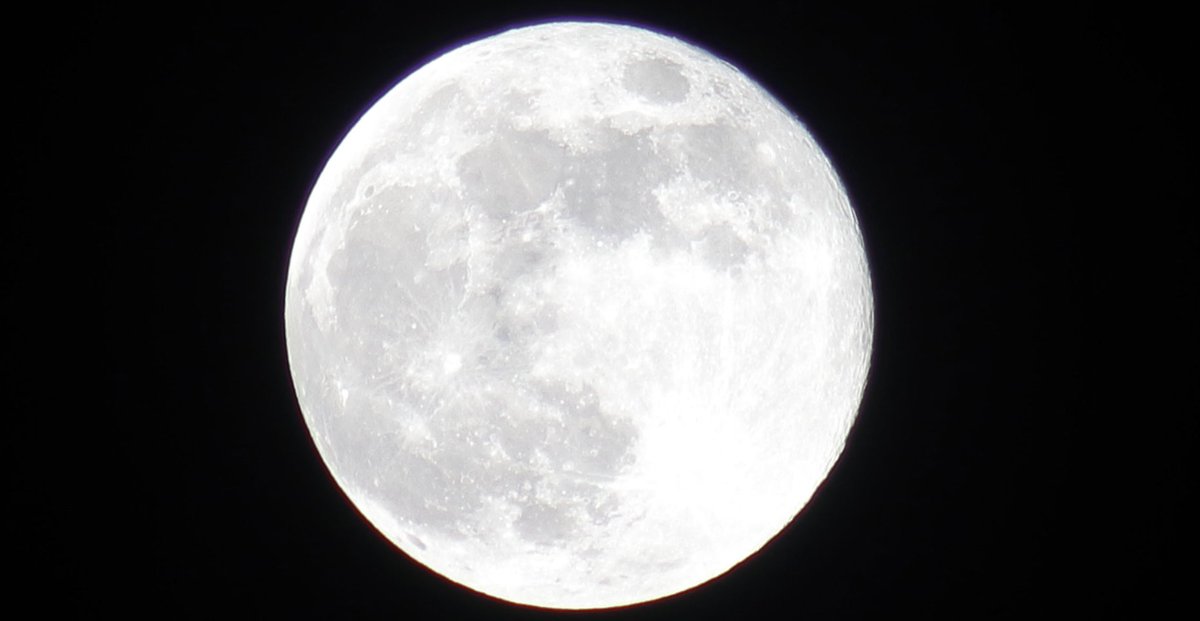
It was the Latin luna: the moon.
In other words, the first sense of the word was close to this:
a person influenced by the moon.
This was not an accident.
In European history, people long suspected that the moon could disturb the human brain.
Epileptic fits.
Sleepwalking.
Agitation.
Mental disorder.
All were, to different degrees, tied to the phases of the moon.
In the eighteenth century the English physician Richard Mead even claimed that, after watching his patients, he could predict some epileptic attacks from the new moon and the full moon.
🔺 Why Suspect the Moon?
One reason is plain to the eye.
The moon really does “control” natural events you can see.
It waxes and wanes on a cycle.
The sea rises and falls with it.
The menstrual cycle also happens to sit on a similar scale of time.
In an age that did not know neurotransmitters, brain waves, or the body clock, a further guess came easily:
If the moon can pull the ocean, can it also pull the fluids inside a human body?
🔺 A Less Mystical Suspect: Sleeplessness
There is a more interesting modern suggestion, and it is less occult.
Before electric light, a full moon was a very strong natural lamp at night.
A bright night could make people sleep later and sleep more lightly.
Lack of sleep can, in some people, raise the risk of mania or of epileptic attacks.
So the old tale that “the moon drives people mad” may have named the wrong killer.
What hid behind the moonlight may have been only one thing:
not being able to sleep.
🔺 The Word Kept the Shadow
Most research today finds no stable proof that a full moon makes people lose their minds.
But the old suspicion has stayed in English for good.
Every time someone says lunatic, the moon’s shadow is still inside the word.
Source: original Chinese essay on lunatic, luna, and the belief that the moon disturbs the mind
@LycaonIncubus@CaudilloXIV I just want to say, if you want to understand your own country's history, don't read your own country's history books. Read other countries' books instead, because they have no political stance and will be objective.
@Jiikae When I was a kid, I envied adults using laptops while waiting at the airport and thought they seemed so elite. Now I think little me was an idiot.
@Simon_Ingari I believe in the Church of Sleep. The most important rule of the doctrine is: nothing is more important than sleep. If I want to sleep at work, you should allow it and must not offend my faith.