Important piece by Margot Cleveland in @FDRLST.
The Government of Brazil’s intervention in the Rumble/Trump Media case against Brazilian Supreme Court Justice Alexandre de Moraes puts the central question squarely before a U.S. federal court.
Can a foreign judge secretly order American platforms to censor speech posted by U.S. users and disclose U.S. user data to the foreign judge bypassing U.S. law?
That question should concern every American.
https://t.co/QPXEeq0rAt
Beaucoup de figures de gauche, aux US comme en Europe, qualifient Musk d'extrême droite. Certains vont jusqu'au mot « nazi ».
J'ai fait l'inverse de l'accusation : lire avant de juger. Deux biographies. Des dizaines d'heures d'interviews et de documentaires. Zéro once de racisme détectée.
Ce que j'ai trouvé, c'est une obsession constante pour la liberté : rachat de Twitter au nom de la liberté d'expression, réintégration des comptes bannis, publication des Twitter Files, ouverture du code de l'algorithme, open-source de Grok, brevets Tesla libérés en 2014, Starlink rallumé pour les Iraniens coupés du net pendant les manifestations et pour l'Ukraine, refus répété des demandes de censure étatiques.
Maintenant, faisons l'expérience de pensée que ses accusateurs ne font jamais. Imaginez que Musk soit réellement evil.
Cet homme possède un réseau de satellites qui couvre la planète, soit une capacité de surveillance quasi totale. Il possède la place publique numérique la plus influente du monde. Il possède la première fortune à 1000 milliards de l'Histoire, depuis l'IPO de SpaceX le 12 juin. Aucun individu n'a jamais concentré autant de leviers.
Un Musk réellement malveillant, avec ça dans les mains, ne tolérerait pas une seconde qu'on le traite de nazi H24 sur sa propre plateforme. Il bannirait. Il surveillerait. Il écraserait. On serait déjà dans 1984.
Or regardez la réalité : les comptes qui l'accusent de nazisme tweetent toujours. Tous les jours. Sans entrave. Sur son réseau. Avec son algorithme. La dystopie totalitaire qu'on lui prête se démontre par l'absence du goulag.
Voilà le retournement. 1984 le contrôle de la parole, la surveillance de masse, la désignation publique des hérétiques ce n'est pas son projet. C'est le fantasme de ceux qui l'accusent. L'accusation décrit toujours l'accusateur.
C'est du Girard à l'état pur : on désigne un bouc émissaire pour ne pas voir le mécanisme qu'on porte soi-même. Celui qui hurle « nazi » rêve souvent, en silence, du pouvoir de bannir, de ficher, de faire taire.
L'homme qui aurait tous les moyens de bâtir 1984 est précisément celui qui laisse ses pires détracteurs parler. Demandez-vous qui, dans cette histoire, rêve vraiment du télécran.
Ontem, em Londres, tive a honra de receber o prêmio Free Speech Corage Awards por meu trabalho na Vaza Toga 2. Recebi o prêmio das mãos do jornalista Michael Shellenberger.
Ofereço esse prêmio às vítimas do 8 de janeiro e a todos os que lutam pela verdade.
Também foram agraciados Eli Vieira, co-autor da reportagem, e o deputado federal Marcel van Hatten.
🇧🇷🇺🇸🇬🇧
Fachin autorizou a AGU a defender Moraes na ação movida pela Rumble contra o ministro.
Ou seja: Moraes pratica um ato considerado ilegal, é processado, e quem paga a defesa somos nós, com dinheiro público.
Pior: a autorização veio de Fachin, o ministro que se considera o pai do Código de Ética da Corte
Este é o STF
Today, pursuant to an order from a U.S. federal court, Rumble and Trump Media served Brazilian Supreme Court Justice Alexandre de Moraes by email.
Summons attached.
Fim da escala 6x1 parece simples até alguém explicar quem paga essa conta. O vídeo é direto, didático e mostra por que esse debate precisa sair do grito e entrar na realidade. Vale a pena assistir!
Many people have asked why a federal court in Florida authorized Rumble and Trump Media to serve Brazilian Supreme Court Justice Alexandre de Moraes by email.
The answer is simple.
Justice Moraes sent his secret censorship orders to U.S. platforms like Rumble by email directly from Brazil, bypassing the U.S. government, U.S. courts, and ordinary legal process.
Rumble and Trump Media did the opposite. We first followed the proper international legal process. For many months, we attempted service through the Hague Convention — the formal treaty process for serving a defendant in another country.
Instead of allowing ordinary service to proceed, Brazilian authorities turned the process into a political shield for Moraes. The service request was diverted into extraordinary proceedings. The Brazilian Attorney General’s office (PGR) intervened. The matter was placed under seal to shield it from public scrutiny, and Brazilian authorities ultimately declined to execute routine service of process. In other words, the normal channel became politicized and effectively unavailable.
The irony is obvious. Moraes tried to use email to export secret censorship orders into the United States to quietly silence American users. Now, after Rumble and Trump Media exhausted proper legal channels and Brazilian authorities obstructed them, a U.S. federal judge has authorized email service so Moraes can be called to answer in an American court.
This was entirely foreseeable. For 458 days, Brazilian authorities have had every opportunity to restore Rumble in Brazil and contain Moraes’s unlawful attempt to project Brazilian judicial power onto American soil. They have not done so.
So the case moves forward. Once served, Moraes must appear in U.S. court or risk default.
Um petista não é evangélico, católico, ateu ou umbandista. Um petista é sempre um petista ANTES DE QUALQUER COISA.
Ele é petista antes de ser pai, mãe, filho, neto, sobrinho etc.; é petista antes de ser médico, advogado, músico ou astronauta; é petista antes de ser paulista, mineiro, baiano, acreano ou carioca.
Um petista é um petista é um petista. E qualquer coisa para ele serve apenas de pretexto para favorecer o projeto de poder total do partido.
Entendam isso de uma vez!
#VotouMessiasPerdeuEleicao
Robert Sapolsky es un neurocientífico de Stanford que demostró que el estrés crónico es el asesino silencioso que los médicos ignoran.
Reveló 10 hábitos que haces todos los días y que te quitan años de vida.
1) Repasar conversaciones en tu cabeza
A Persian scholar finished a single math book in 9th century Baghdad that quietly became the foundation for every line of code running on Earth today.
I started reading about him at midnight and could not believe how many things in my daily life trace back to one man.
His name was Muhammad ibn Musa al-Khwarizmi. The book is called The Compendious Book on Calculation by Completion and Balancing.
Every time you say the word algebra, you are saying his book title. Every time someone says the word algorithm, they are saying his name. Both English words come from him. Both are Latin transliterations of Arabic and of his own identity. The man did not just contribute to mathematics. He named it.
Here is the part almost nobody tells you.
Al-Khwarizmi was born around 780 CE in Khwarazm, in what is now Uzbekistan. He moved to Baghdad and worked at a research institution called the House of Wisdom, which during the Islamic Golden Age was the single most important center of learning on the planet. The caliph al-Mamun hired the best mathematicians, astronomers, and philosophers from across three continents and put them in one building with one job. Translate, study, and produce new knowledge.
Al-Khwarizmi finished his book on algebra around 820 CE. The Arabic title contained the word al-jabr, which referred to one of the two operations he used to solve equations. When the book was translated into Latin in the 12th century, the Latin world did not have a word for what he had built. So they kept his Arabic word. Al-jabr became algebra. The discipline was named after a single Arabic word in the title of a single book by a single man.
The deeper insight is what he actually changed about how humans think.
Before al-Khwarizmi, mathematical problems were solved geometrically. You drew shapes. You measured them. You compared areas. The Greeks had built an entire mathematical tradition on visual proofs and physical constructions. It was beautiful and limited. You could not solve a problem you could not draw.
Al-Khwarizmi did something nobody had done before him at this scale. He said you could solve any problem using abstract symbols and rules. You did not need a shape. You needed a procedure. You moved terms across the equation. You cancelled like terms on both sides. You isolated the unknown. He invented the idea that mathematics is a manipulation of symbols according to rules, not a study of physical figures.
That single shift made everything that came afterward possible. Calculus. Differential equations. Linear algebra. Quantum mechanics. None of it works if math is locked inside geometry. He pulled it out.
The second thing he did is the one that changed how the world counted forever. He took the Hindu numeral system from Indian mathematics, refined it, and wrote a book introducing it to the Arab world. That system included the concept of zero as a placeholder, and a positional notation where the value of a digit depends on its location. Roman numerals could not do complex calculation. Hindu-Arabic numerals could.
When his book on numerals was translated into Latin as Algoritmi de numero Indorum, the word Algoritmi was just the Latin spelling of his own name. Europeans started calling the new method "doing algorism," then "running an algorithm." The word for the most important concept in computer science is literally his name in Latin.
The third thing he did is the part that should haunt anyone who works in tech.
His method of solving problems was systematic. Step one, do this. Step two, check that. Step three, if condition A, then do X, otherwise do Y. He wrote down procedures that could be followed by anyone, anywhere, who knew how to read. The procedure did not depend on intuition or genius. It worked because the steps worked.
That is exactly what an algorithm is. A finite, deterministic procedure for solving a problem. He did not just give us the word. He gave us the entire concept of programming a thousand years before there was anything to program.
When Alan Turing built the first abstract model of computation in 1936, when John von Neumann designed the first stored-program computer in 1945, when every engineer at Google, OpenAI, Anthropic, and DeepMind writes code in 2026, they are working in a paradigm that started with one man in Baghdad twelve centuries ago.
The strangest part is what happens when you walk into any tech office in San Francisco or Bangalore or Lahore today. Engineers say the words algebra and algorithm hundreds of times a day. They do not know whose name they are saying. Almost nobody can spell al-Khwarizmi correctly on the first try.
His original Arabic manuscript is preserved at Oxford. His book on Hindu numerals survives only in Latin translation. The Latin version was the textbook that taught medieval Europe how to count.
The man who built the foundation of the AI revolution did not live to see a calculator. He died around 850 CE, a thousand years before the first electric current was sent through a wire. The civilization he built mathematics for collapsed. The library he wrote in burned. His own grave is unmarked.
But every algorithm running on every machine on Earth right now still answers to his name.
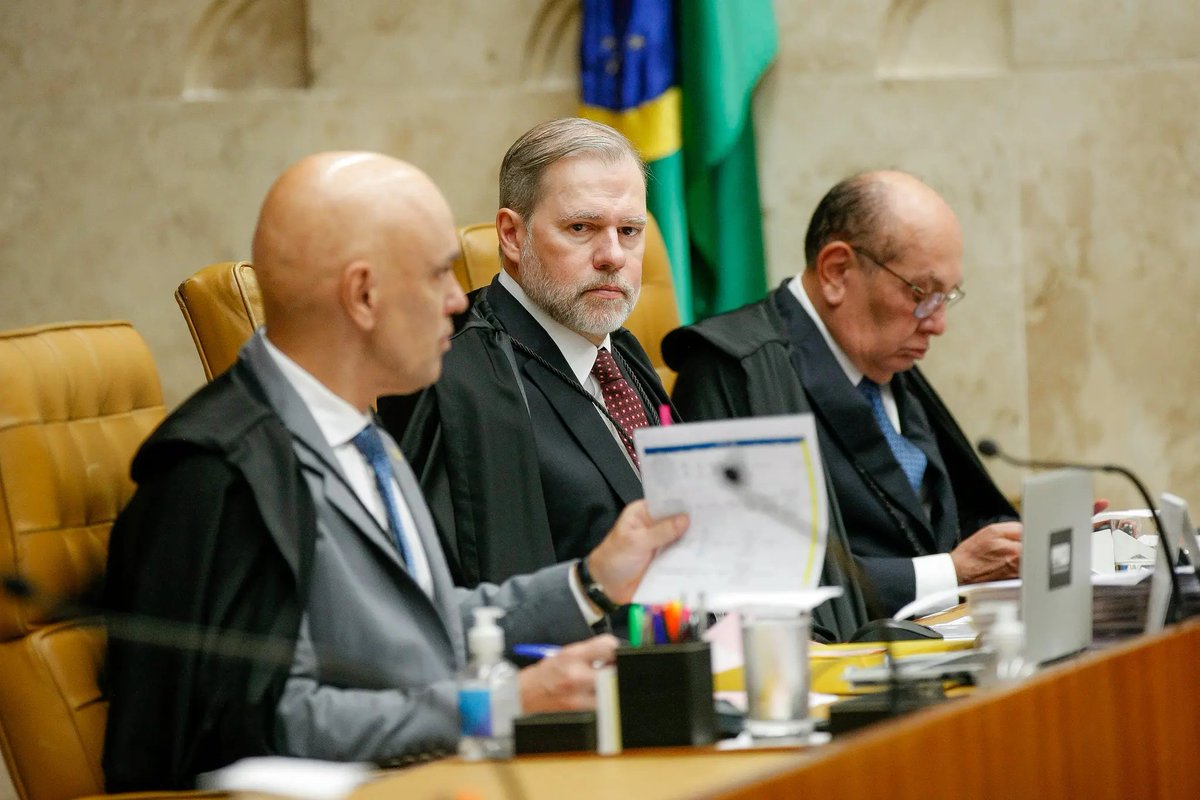
Quando Toffoli está na mira, Moraes respira aliviado.
Quando Moraes está na mira, Gilmar respira aliviado.
Quando Gilmar está na mira, todos os ministros respiram aliviado.
Quando esses três estiverem fora do judiciário, o Brasil irá respirar aliviado.
30,000 hours of footage, equivalent to 3 years and 7 months, were filmed to capture the blooming of 77 types of flowers, and the result is spectacular.
An MIT professor taught the same math course for 62 years, and the day he retired, students from every country on earth showed up online to watch him give his final lecture.
I opened the playlist at 2am and ended up watching three of them back to back.
His name is Gilbert Strang. The course is MIT 18.06 Linear Algebra.
Every machine learning engineer, every data scientist, every quant, every self-taught programmer who actually understands how AI works learned the math from this one man. Most of them never set foot on MIT's campus. They just opened a free playlist on YouTube and let him teach.
Here's the story almost nobody tells you.
Strang joined the MIT math faculty in 1962. He retired in 2023. That is 61 years of standing at the same chalkboard teaching the same subject to 18-year-olds.
The interesting part is what he did when MIT launched OpenCourseWare in 2002. Most professors were skeptical. They worried that putting their lectures online would make their classrooms irrelevant. Strang did not hesitate. He said his life's mission was to open mathematics to students everywhere. He filmed every lecture and gave it away.
The decision quietly changed how the world learns math.
For decades linear algebra was taught the wrong way. Professors started with abstract vector spaces and proofs about field axioms. Students drowned in the abstraction. Most never recovered. They walked out believing they were bad at math when they had simply been taught in an order that nobody's brain is built to absorb.
Strang inverted the entire curriculum.
He started with matrix multiplication. Something you can write down on paper. Something you can compute by hand. Something you can see. Then he showed his students that everything else in linear algebra eigenvectors, singular value decomposition, orthogonality, the four fundamental subspaces was just a different lens for understanding what the matrix was actually doing under the hood.
His rule was strict. If a student could not explain a concept using a concrete 3 by 3 example, that student did not actually understand the concept yet. The abstraction was supposed to come last, not first. The intuition was the foundation. The proofs were just confirmation that the intuition was correct.
The second thing Strang changed was the classroom itself. He said please and thank you to his students. Every single lecture. He paused mid-derivation to ask "am I OK?" to check if anyone was lost. He never used the word "obviously" or "trivially" because he knew exactly what those words do to a student who is one step behind. He treated 19-year-olds learning math for the first time the way he treated his own colleagues. With patience. With respect. With the assumption that they belonged in the room.
For 62 years.
The result is something that has never happened in the history of education. A single math professor became the default teacher of his subject for the entire planet.
Universities in India, China, Brazil, Nigeria, every country with a computer science department, started telling their own students to just watch Strang's lectures. The University of Illinois revised its linear algebra course to do almost no in-person lecturing. The reason was honest. The professor said they could not compete with the videos.
His final lecture was in May 2023.
The auditorium was packed with students who had never met him before. He walked to the chalkboard, taught for an hour, and at the end the entire room stood and applauded. He looked confused for a moment, like he genuinely did not understand why they were cheering. Then he smiled and waved them off and walked out.
His written comment under the YouTube video of that final lecture was four sentences long. He said teaching had been a wonderful life. He said he was grateful to everyone who saw the importance of linear algebra. He said the movement of teaching it well would continue because it was right.
That was it. No book promotion. No farewell speech. No legacy management.
The man whose teaching is the foundation of modern AI just thanked the audience and went home.
20 million views. Zero ego. The entire engine of the AI revolution sits on top of math that millions of people learned for free from one quiet professor in Cambridge.
The course is still on MIT OpenCourseWare. Every lecture, every problem set, every exam, every solution. Free.
The most important math course of the 21st century is sitting one click away from you. Most people will never open it.
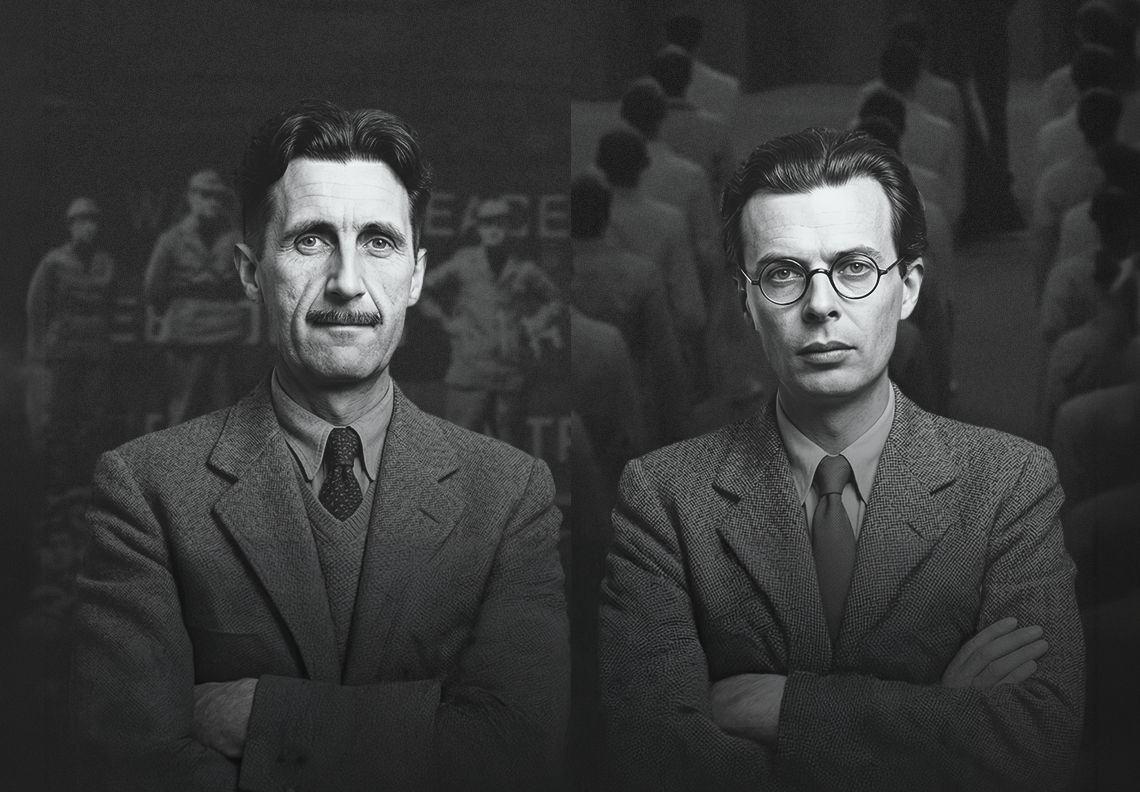
Four months after George Orwell published 1984, his former teacher sent him a letter.
Aldous Huxley had one message: you described the wrong dystopia. 🧵
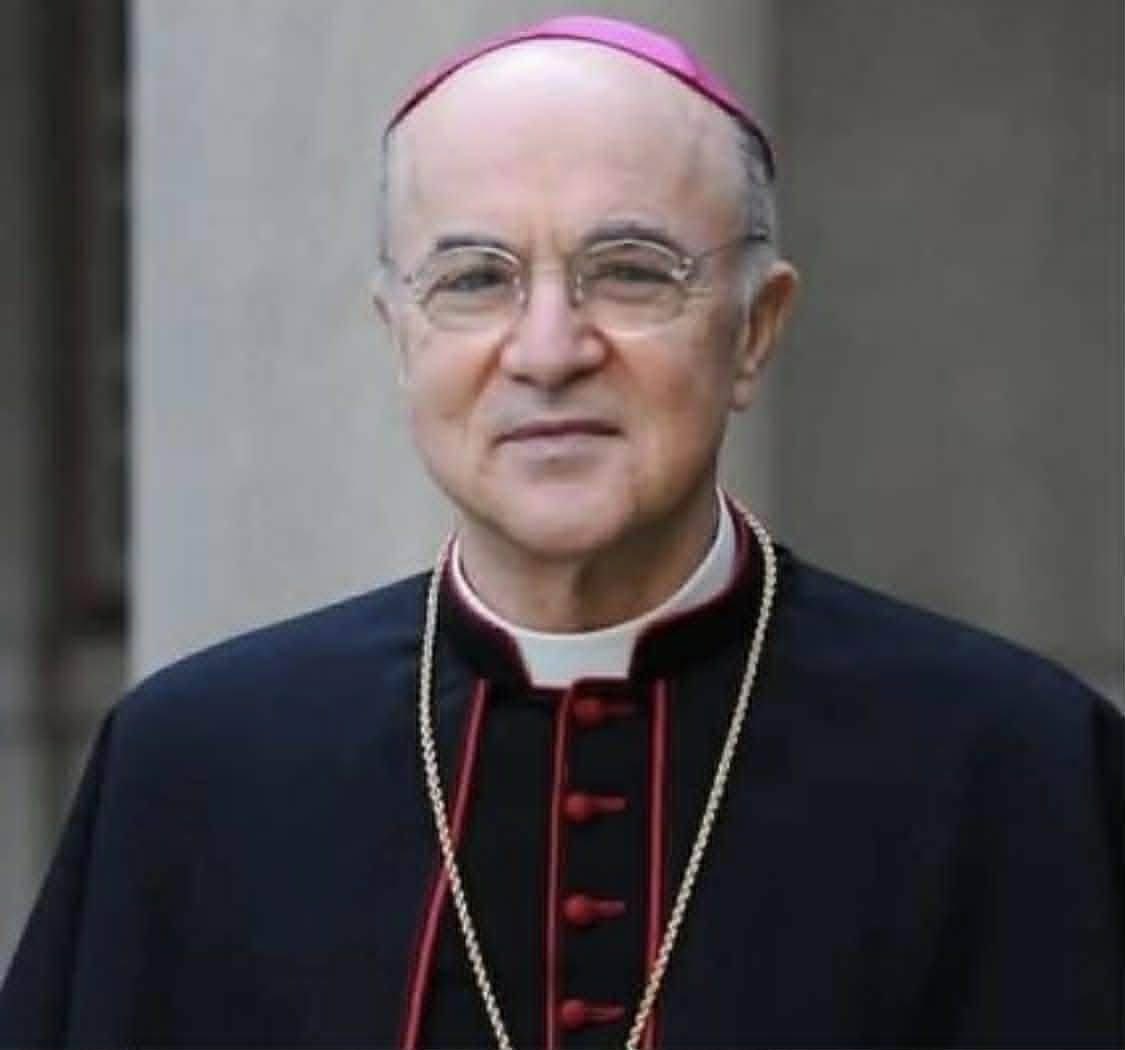
💥L'ARCHEVÊQUE VIGANÒ VIENT DE LÂCHER UNE BOMBE 💣 DE VÉRITÉ NUCLÉAIRE
Quand un archevêque catholique ✝️ de haut rang ancien nonce apostolique aux États-Unis, 🇺🇸 accuse ouvertement les élites mondiales d'infiltrer les gouvernements occidentaux pour imposer l'Agenda 2030…
le monde 🌎 devrait s'arrêter 🛑 et écouter.👂
Viganò avertit :
« Une dangereuse élite subversive a infiltré les plus hautes sphères des institutions occidentales pour mettre en œuvre un plan criminel mondial. »
Il affirme que ceux qui dénoncent ce « coup d’État mondial » sont réduits au silence par :
📍Censure
📍 Intimidation
📍Abus psychiatrique
📍Arrestation
Et il cite le nom d'un prisonnier politique dont les médias traditionnels refusent de parler :
Reiner Füllmich emprisonné pour avoir dit la vérité.
Viganò va alors plus loin que presque toutes les figures ecclésiastiques de notre époque :
« Ce n’est pas Füllmich qui mérite d’être en prison, mais ceux qui ont commis le plus grand crime jamais commis contre l’humanité. »
Et il les nomme :
📍Fauci
📍Portes
📍Schwab
📍Soros
📍Von der Leyen
📍Bourla
…et leurs complices au sein des fonctions publiques.
C'est sans précédent.
Un archevêque de haut rang accuse la structure de pouvoir mondialiste de crimes contre l'humanité et nomme le système émergent pour ce qu'il est :
Un régime totalitaire qui se répand à travers l'Europe, 🇪🇺 le Canada, 🇨🇦 l'Australie 🇦🇺 et toutes les nations contrôlées par l'ONU, 🇺🇳 l'OTAN, l'OMS et le Forum économique mondial.
Son appel au monde 🌏 est clair :
📍«Élevez la voix.
📍Défendez les persécutés.
📍Libérez Rainer Füllmich.»
L'histoire s'accélère.
L'Église ⛪️ prend la parole. 🗣️
Des 🗣️lanceurs d'alerte sont emprisonnés.
Et les mondialistes perdent de l'emprise.
La vérité commence à éclater. ✨
@CarloMVigano💥
🚨 QUICK NOTE TO EVERYONE WHO SEES THIS
If this post reached you, it actually means a lot.
The reality is, even if you follow this account, X only shows posts to a small percentage of you. Most of the time, the content never even reaches your feed.
So if you do see a post:
• Drop a like
• Leave a quick comment
• Bookmark it
• Share it if you can
Even the smallest action tells the algorithm this content matters and helps push it out to a much wider audience.
This page isn’t just something you follow, it’s something you’re part of.
We’re working to get accurate information out, cut through the noise, and give a platform to voices that don’t usually get heard.
None of that happens without you.
Stay connected, follow @MOSSADil