“When our genes could not store all the information necessary for survival, we slowly invented brains. But then the time came, perhaps ten thousand years ago, when we needed to know more than could conveniently be contained in brains. So we learned to stockpile enormous quantities of information outside our bodies. We are the only species on the planet, so far as we know, to have invented a communal memory stored neither in our genes nor in our brains. The warehouse of that memory is called the library.
A book is made from a tree. It is an assemblage of flat, flexible parts (still called ‘leaves’) imprinted with dark pigmented squiggles. One glance at it and you hear the voice of another person - perhaps someone dead for thousands of years. Across the millennia, the author is speaking, clearly and silently, inside your head, directly to you. Writing is perhaps the greatest of human inventions, binding together people, citizens of distant epochs, who never knew one another. Books break the shackles of time, proof that humans can work magic.”
— Carl Sagan
Good Morning
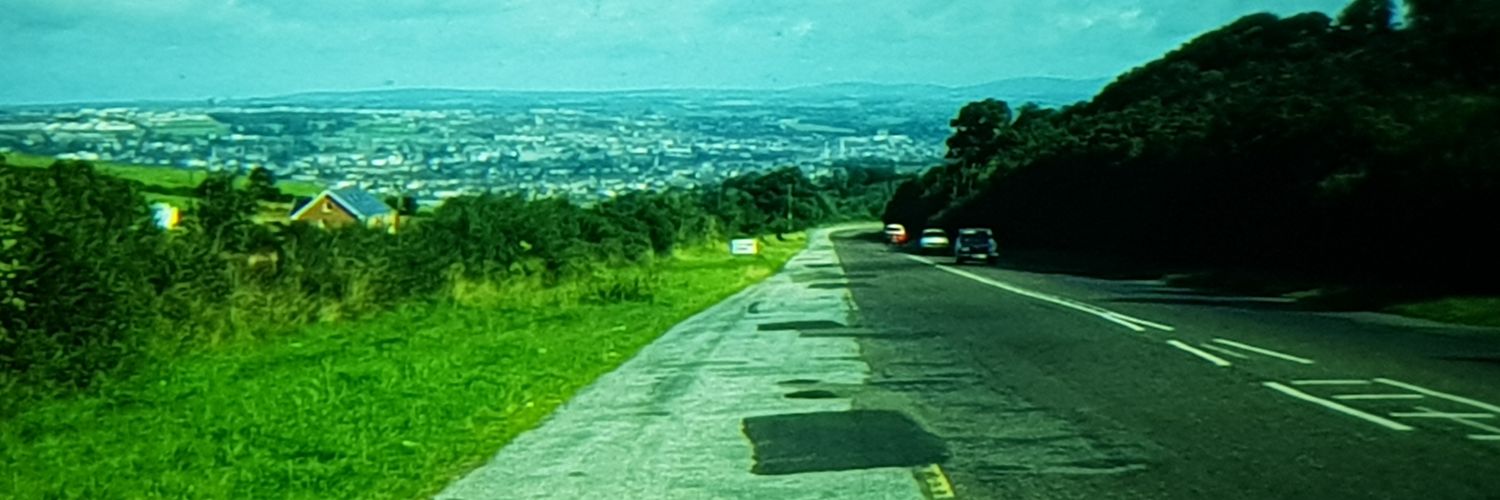
It’s cold here today. Windy not good for the roses!
Just looks at these two
You will not be surprised that they are both by
Kaoru Yamada whose aim in life is to create beautiful work.
She succeeds
Modern masterly pieces
signed bottom left .
This is such a beautiful song. It was written by Ric Ocasek, but he felt that the song needed a better vocal performance than he could give, so he let bandmate Benjamin Orr sing it instead. A very wise, and selfless, move. Unfortunately, Ben died of pancreatic cancer in 2000. Gone but never forgotten and the music will live on forever.
The Cars - Drive (Live Aid 1985)
November 1971. Chiswick, West London.
Erin Pizzey is 32 years old. She is not a lawyer. Not a politician. Not a doctor.
She is a woman who talked Hounslow Council into lending her a cold, rundown building on Belmont Road — a former community hall — for almost nothing. Her original plan was modest. A warm room. A cup of tea. Somewhere for mothers with young children to simply get out of the house.
Then the door opened.
A woman stood in the entrance. She was covered, head to foot, in bruises. She was holding two small children. She was shaking.
She didn't want tea.
She needed somewhere to hide.
Erin let her in. She didn't turn her away. She didn't tell her to call the police.
Because Erin had already called the police. They told her the same thing they told every woman in Britain at the time: they could not enter a private home over a "domestic dispute." That was the law. The home was private. What happened inside it was a family matter.
When Erin contacted a female civil servant to report what she was seeing, the response was astonishing. The woman told her flatly: "There wasn't a problem of battered wives until you made one."
Erin put down the phone. Then she went back to her residents and made sure they were fed.
Within weeks, 40 mothers and children were sleeping in four tiny rooms. No funding. No staff. No legal authority.
She didn't stop.
By 1973, word had spread through quiet whisper networks — one woman telling another, "There is a place. Go to Chiswick. She won't turn you away." That same year, Erin hosted the first National Women's Aid Conference in the UK. Women from across Britain arrived, and they all recognized the same thing at once: what she had built needed to exist everywhere.
In 1974, the council set a maximum of 36 residents. At peak times, 150 women and children were living inside those walls — sleeping on floors, on chairs, in hallways. The building smelled of cooking, fear, and something else entirely: relief.
Erin was taken to court for overcrowding. She appealed all the way to the House of Lords.
She kept the doors open the entire time.
That same year, she wrote a book. Scream Quietly or the Neighbours Will Hear. It was the first published account of domestic violence in British history. It used real stories from real women inside the shelter. Overnight, a problem that had no official name was on front pages from London to New York.
The movement spread. Refuges opened across the UK. Then Australia. Then Canada. Then the United States. The pattern she created in four small rooms in West London — no blueprint, no permission, no funding — had been replicated in hundreds of shelters across the Western world.
MP Jack Ashley stood up in Parliament and said: "It was she who first identified the problem, who first recognised the seriousness of the situation and who first did something practical."
She was ranked 14th in a poll of the 100 women who shook the world. She was awarded the Italian Peace Prize. She received a CBE. The charity she founded — Chiswick Women's Aid, which became Refuge — grew into the largest domestic violence charity in the United Kingdom, with over 460 employees and an annual income of more than £33 million.
Erin Pizzey passed away on October 4, 2025, aged 86.
She never stopped.
It all began with one woman, one borrowed building, and an absolute refusal to say no.
Forty women and children showed up with nowhere to go.
She made room.
Share this if you believe one ordinary person, refusing to look away, can build a shelter that holds the whole world.
Follow us Lost in Yesterday
This is awful. The last ever Denby Pottery going to the kiln. Why is there not uproar? Where’s the government in this?? We all have Denby in our homes, in family heirlooms, as our history and now it’s closing through lack of support, such a sad sad day. #SaveDenby@denbypottery
BBC PAID A WOMAN HALF A MAN SALARY FOR THE SAME JOB AND THOUGHT NO ONE WOULD NOTICE
Carrie Gracie spoke fluent Mandarin. Ran the @BBC Beijing bureau. Thirty years of service. One of four international editors at Britain's most prestigious broadcaster.
Then the BBC was legally forced to publish salary data in 2017. Gracie looked at the list. Her male counterpart covering North America was on up to £249,000. She was below £150,000. Not even on the published list. Neither was Europe editor Katya Adler. The two women. Funny that.
She had explicitly made equal pay a condition of taking the China role. The BBC said yes. Then paid her nearly half anyway and apparently hoped she'd never check.
She checked.
She asked for equal pay. The BBC, with the confidence of an institution that had been getting away with this for decades, offered her a raise that still left her short.
She turned it down. Resigned from the post. Published an open letter to the licence fee payers explaining exactly what their public broadcaster was doing with their money.
The BBC's response was to put her through nearly a year of their own internal grievance process. Run by the same institution she was complaining about. Investigating itself. Shockingly, it went nowhere.
It took three separate meetings with the Director-General and the concrete threat of an employment tribunal before the BBC caved, issued a public apology, and paid her £361,000 in backdated wages.
She gave every single penny to the Fawcett Society (@fawcettsociety).
A publicly funded broadcaster. Breaking equality law. Caught red-handed. Dragging a 30-year employee through a year of institutional theatre. Paying up only when a judge became a realistic possibility.
@drhingram@RupertLowe10@elonmusk I love it. You post one clip out of the whole show picking holes. Not an intellectual enough reply referring to Homer Simpson.
That's you being biased against "common folk"