Donc si vous avez des tuyaux de médias (plutôt orienté politique française et étrangère/société) qui cherchent encore une alternante, venez dans mes dm. C'est cosy. 🙏
📢New Research Identifies Potential Biomarkers for Diagnosing Hypermobile Ehlers-Danlos Syndrome (hEDS) and Hypermobility Spectrum Disorders (HSD)!
🩸A recent study funded by The Ehlers-Danlos Society, and published in the American Journal of Medical Genetics, has identified potential blood-based biomarkers that could help diagnose hEDS and HSD.
❗This discovery is significant because diagnosing hEDS and HSD has been challenging due to the lack of established laboratory tests and molecular markers.
What was the study, and what did it find❓
🔬In this study, researchers examined blood samples from 466 adults, including 94 diagnosed with hEDS and 80 with HSD.
1. The study revealed the presence of a specific 52 kDa fragment of fibronectin in the blood of every individual with hEDS and HSD. This fragment was notably absent in healthy controls, individuals with other types of EDS, and those with various kinds of arthritis.
2. The consistent presence of the 52 kDa fibronectin fragment in individuals with hEDS and HSD suggests a possible common underlying pathophysiology, thus questioning the differentiation between these conditions.
3. Additionally, a fragment of collagen I was found in all individuals with hEDS and HSD, although this fragment was also present in other conditions.
What could this study mean❓
The identification of these fragments could lead to the development of the first blood test for hEDS and HSD, providing a more reliable diagnostic tool for healthcare providers, and reducing the time to diagnosis, which currently averages around 12 years.
What are the next steps❓
The study's findings are a significant step forward, but the authors emphasize that before this test is ready for diagnostic use, other investigators must confirm the results in additional cohorts of hEDS, HSD, and controls.
The Ehlers-Danlos Society is sponsoring further confirmatory work. Currently, no diagnostic lab offers this test, but if validated, it could become an important tool in diagnosis and treatment trials and provide new insights into the underlying causes of hEDS and HSD. Of course, we will keep you up to date with all developments!
Find an FAQ and further information, including a link to the research paper here: https://t.co/1rrN1bcGvS
#hEDS #HypermobileEDS #HSD #hypermobility #hypermobilityspectrumdisorder #EhlersDanlossyndrome #medtwitter #meded
🗳️🇧🇪 Shifting Winds of Belgian Politics: Mapping right and left shifts in the 2024 vs. 2019 elections. Dive into this windy map animation to see how political preferences have changed! 🎏
Density ➞ 🧍🏻🧍🏼♀️🧍🏽♂️
Wind speed ➞ Political shift intensity
Here is how I build it 🧵
The Ehlers-Danlos Society is excited to announce a new hypermobile Ehlers-Danlos syndrome (hEDS) research study that aims to identify targeted therapies and better management strategies for people with hEDS and upper gastrointestinal concerns. https://t.co/PK3hvhpx6i
Attention, tentative d’approche nuancée d’un sujet inflammable.
Est-ce que lancer, comme l’a fait M. Jeholet, dans un débat sur les valeurs, la phrase “Ne venez pas nous donner des leçons ici en Belgique. Si ça ne vous plaît pas, vous n’êtes pas obligé de rester en Belgique” est problématique ? Oui. Cela réduit l’interlocuteur à ses origines étrangères, c’est indéniable. Comme si la nationalité belge de son interlocuteur n’était pas réelle, authentique. Faites l’exercice: si c’est Connor Rousseau qui avait prononcé cette phrase, elle aurait été qualifiée sans hésitation de raciste par l’ensemble du spectre politique, MR inclus.
Comme il ne fait guère de doutes, pour moi, que M. Jeholet n’est pas raciste - il ne s’était jamais égaré de la sorte et c’est un homme politique tout-à-fait honorable par ailleurs - la bonne attitude aurait été de s’excuser, de retirer ces propos et de passer à autre chose. Que lui, son président et l’ensemble du MR ne voient pas le problème et tentent à tout prix de justifier ces propos est révélateur d’une droitisation qui hélas, abime les idéaux du libéralisme dans ses fondements.
Pourtant, ce n’est pas le seul aspect dérangeant. Si le dérapage de M. Jeholet est condamnable, la comparaison à laquelle il répondait l’est aussi. L’élu du PTB M. Boukili venait en effet de comparer la défense de la neutralité en Belgique avec l’imposition du voile en Iran. Comparaison insupportable, et même indigne, parce qu’elle met sur le même pied une imposition théocratique qui soumet toutes les femmes à un règlement sexiste et patriarcal au mépris de leur liberté, et une réglementation démocratique qui traite tous les signes convictionnels (religieux ou non) de la même manière, en demandant qu’on s’abstienne de les porter dans des lieux spécifiques (administrations et écoles) lorsqu’on est représentant de l’Etat. Depuis des années, une certaine gauche tente de nous faire croire que la neutralité est discriminatoire, et empêche de régler ces questions, comme nous voudrions le faire, par l’inscription de la laïcité de l’Etat.
Au lieu de répondre sur ce terrain - celui des valeurs - M. Jeholet a répondu d’une manière qui, hélas, permet à la gauche d’assimiler neutralité et racisme larvé. A ce titre, c’est un désastre total.
Donc rappelons-le: il est possible d’être à la fois totalement opposé à toute forme de discriminations ET de défendre fermement la neutralité et la laïcité de l’Etat. C’est le chemin choisi par DéFI depuis longtemps. Nous nous sommes continuellement battus contre, par exemple, les discriminations à l’embauche à Bruxelles, sous la férule de notre ministre Bernard Clerfayt, avec un réel bilan. Et dans le même temps, défendre la neutralité de l’Etat dans les administrations est la seule voie possible du vivre ensemble demain; l’interdiction des signes convictionnels ne vise jamais une religion en particulier, elle sert à empêcher qu’une conviction ne s’impose aux autres, et à protéger travailleurs comme usagers de tout prosélytisme.
Dans le bruit et la fureur de ce fait de campagne, où les uns et les autres s’insultent, gardons le cap de la raison. En ce qui nous concerne, nous n’abandonnerons ni la neutralité, ni la lutte contre les discriminations.
En #communication, faut-il dire oui à tout ? Deux réponses de #DirCom.s :
1️⃣ Non ! En communication, dire oui à tout serait une faute professionnelle. Communiquer, c’est s’engager et décider… et donc savoir choisir et renoncer. Dire oui à tout, c’est seulement chercher à faire plaisir à votre interlocuteur et non partager votre expertise !
2️⃣ En communication de façon générale, la réponse est non, notamment quand il s’agit de demandes mal pensées, calibrées, programmées… Il faut être capable de dire non et savoir l’expliquer. Ce qui permet aussi de donner plus de valeur à un oui. En revanche, pour les relations presse, il faut être capable de toujours dire oui aux journalistes, capable de se rendre disponibles, capable de s’adapter à l’agenda d’une rédaction…
#LaComEstUnMétier
🟢 https://t.co/UpTfZqs0Pm
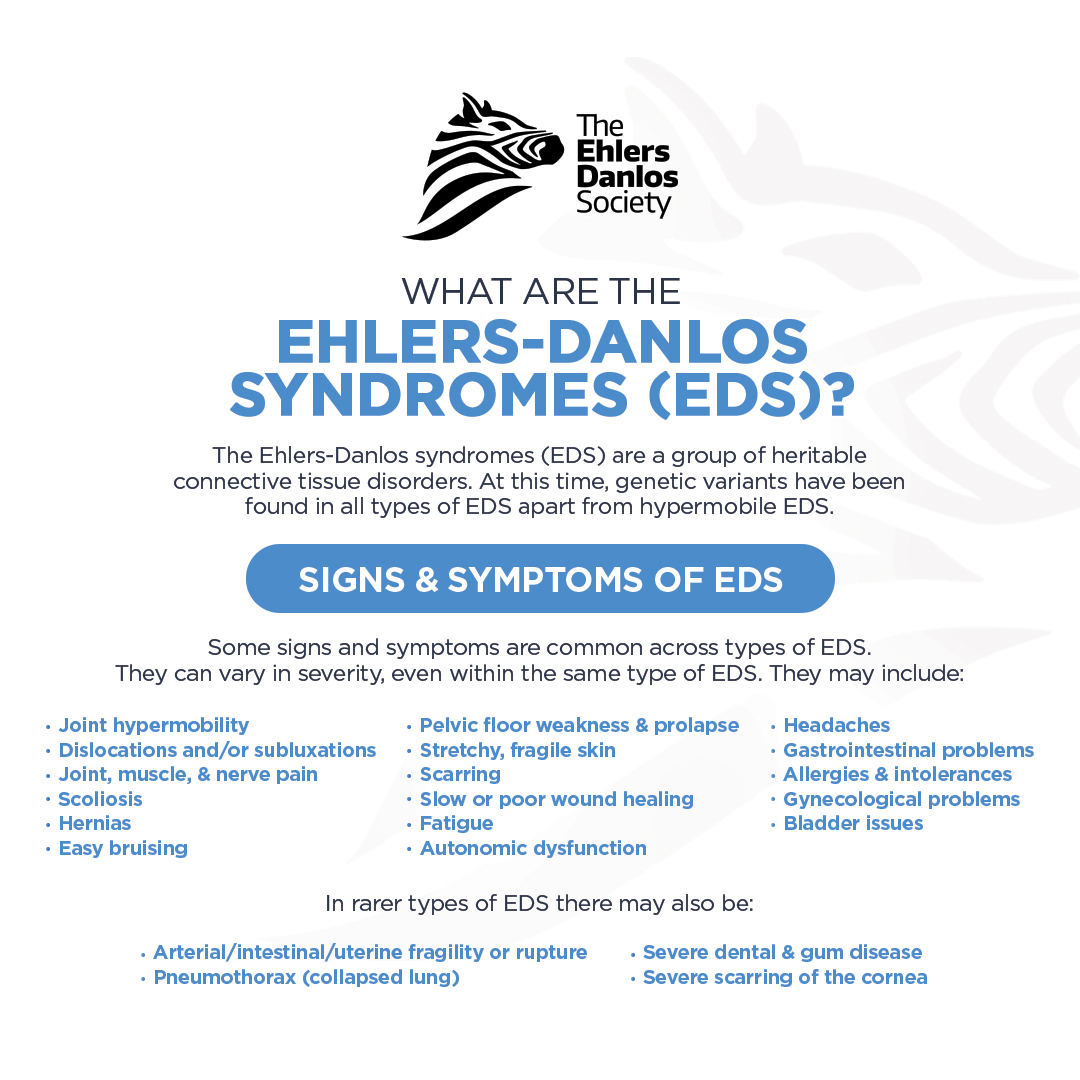
May is Ehlers-Danlos Syndromes Awareness Month. What are the Ehlers-Danlos syndromes (EDS)?
The Ehlers-Danlos syndromes (EDS) are a group of heritable connective tissue disorders that vary in how they affect the body and their genetic causes. 🧬
Variants in the genes that determine how the body makes collagen and other proteins that work alongside collagen have been shown to cause EDS.
At this time, genetic variants have been found in all types of EDS, with the exception of hypermobile EDS (hEDS).🔬
Connective tissue is everywhere in the body. It provides support and structure to other tissues and organs, including bone, ligaments, tendons, blood vessels, lymphatic vessels, the tissue that holds the gastrointestinal tract in place, etc.
❓️Signs and symptoms
Some certain signs and symptoms are common across all types of EDS. However, these can vary in severity between individuals, even with the same type of EDS.
These include:
• Joint hypermobility
• Joint instability with dislocations and/or subluxations
• Injury to connective tissues in and around joints
• Joint, muscle, and nerve pain
• Scoliosis
• Hernias
• Pelvic floor weakness and prolapse
• Easy Bruising
• Stretchy skin
• Fragile skin
• Scarring
• Slow or poor wound healing
In rarer genetically-defined types of EDS, there are specific concerns with certain tissues of the body that can present with complications such as:
• Arterial/intestinal/uterine fragility or rupture (usually
associated with vascular EDS (vEDS))
• Pneumothorax (collapsed lung)
• Severe dental and gum disease
• Severe scarring of the cornea of the eye
Across all the types of EDS, a number of conditions and symptoms are now also recognized as common. These include:
• Fatigue
• Autonomic dysfunction (such as fast heart rate and/or low blood pressure)
• Headaches
• Gastrointestinal problems
• Anxiety disorders
• Heavy and painful periods and bladder pain
• Allergies and intolerances
➡️ Learn more here: https://t.co/hkadA9VH9j
❓️What would you like people to know about EDS?
#MedTwitter #MedEd #EhlersDanlosSyndrome #Healthcare #Hypermobility