A checkout can succeed while a hidden second transaction sends card data to an attacker. 💳🕵️
See how Magecart skimmers steal data inside the browser, and how to detect and contain them.
https://t.co/bXZlAR1P5Q
#WebSkimming
The Trojan horse in your JavaScript supply chain may arrive through code you already trust. 🐴⚠️
Learn how compromised code reaches browsers through packages, CDNs, vendors, and runtime dependencies.
https://t.co/rGjq5wvp2l
#SupplyChainSecurity
Sensitive data can leave a website without a new cookie ever being created. 🚨📤
Trace browser-side leakage from its source, through executing code, to the destination.
https://t.co/MP1bwfBeyU
#DataExfiltration
Checkout can succeed while a hidden route sends payment data elsewhere.
Web skimming can copy accessible fields without breaking the real transaction, and activate only for selected visitors.
Episode 7 of The Client Side, Explained:
https://t.co/EDGPUX8nl5
#WebSkimming
CSP, SRI, and monitoring answer three different security questions. 🛡️🧪👀
See what each control catches, what it misses, and how to combine them without false confidence.
https://t.co/qQkdyqbYgE
#WebSecurity
The page you ship isn't always the page your customer receives.
PCI DSS 6.4.3 and 11.6.1 bring that browser layer into focus: script authorization, integrity, and change detection.
Episode 6 of The Client Side, Explained:
https://t.co/XeLEvZHVjU
#PCIDSS
A script served from your domain is not automatically first party. 🧩🌐
Classify JavaScript by ownership, update authority, execution, access, and data flow, not hostname alone.
https://t.co/JEEk8NHJnl
#JavaScriptSecurity
If you cannot name every script running on your site, you do not know your browser attack surface. 📋🔍
Build a living third-party JavaScript inventory with our practical template.
https://t.co/5YuXbATWdg
#JavaScriptSecurity
A trusted provider does not guarantee trusted behavior.
Compromised accounts or dependencies can change what runs in your customers' browsers—without a deployment from your team.
Episode 5 of The Client Side, Explained:
https://t.co/18H3M8O0WS
#ClientSideSecurity
An iframe creates a boundary, but it does not automatically create safety. 🧱🔐
Use sandboxing, Permissions Policy, CSP, and safe postMessage validation to control what frames can do.
https://t.co/jgHBDRmdKQ
#BrowserSecurity
A script in the browser can reach the DOM, forms, personal data, cookies, storage, device APIs, and external destinations.
The real question: which access is necessary?
Episode 4 of The Client Side, Explained:
https://t.co/FlPzA0HpQT
#ClientSideSecurity
A strict CSP can stop attacks. A rushed one can stop checkout. 🛡️⚙️
Learn how to move safely from Report-Only to enforcement for third-party scripts.
https://t.co/wULSzflGwf
#CSP#WebSecurity
The same URL does not always produce the same browser runtime.
First-party code, third-party tags, nested dependencies, consent, region, and session can change what executes.
Episode 3 of The Client Side, Explained:
https://t.co/Hl2frkrMB5
#ClientSideSecurity
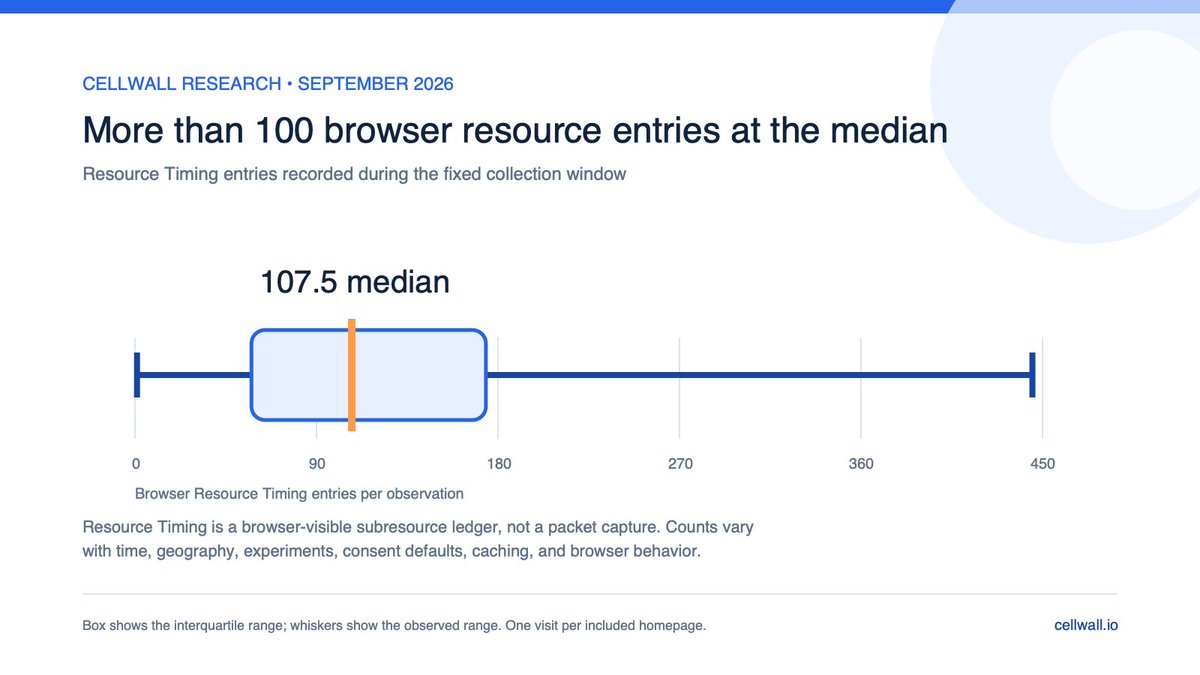
We analyzed 100 public homepages to see what reaches the browser.
Median observation:
• 107.5 browser resource entries
• 8 additional registrable domains
Findings, methodology, and anonymized data:
https://t.co/ftNo8L4Hy0
A payment page can look normal while its scripts have already changed. 💳⚠️
Use our practical PCI DSS 6.4.3 and 11.6.1 checklist for script inventory, authorization, integrity, and tamper detection.
https://t.co/XepVdgBk7c
#PCIDSS
One approved third-party script can become a browser-side supply chain.
It may load new dependencies, access forms and storage, or send data beyond your server logs.
Episode 2 of The Client Side, Explained: https://t.co/8ugD9b60Z7
#ClientSideSecurity
@SaniAiTech Exactly. The challenge is that this layer changes continuously, often beyond the visibility of server-side tools. That’s why runtime context matters.
Your server didn’t send the final website. The browser finished the job. 👀
See how third-party JavaScript changes what users receive, and why server-side controls miss it.
https://t.co/HOPLwWY0is
#ClientSideSecurity
Your website changes after it leaves your server.
Do you know what your customers actually receive? 👀
The browser is where the client side comes to life, and visibility often disappears.
🎥 Watch The Client Side Explained:
https://t.co/fh8l2UPXCw
#ClientSideSecurity