El ingeniero que creó claude code acaba de soltar un video de 28 minutos donde te enseña a escribir prompts que realmente funcionan.
He visto cursos de 300 dólares que no llegan ni a la mitad de lo que explica en los primeros 10 minutos.
Archivos CLAUDE.md, atajos de memoria, sesiones paralelas y patrones de prompting que cambian el juego.
Todo en un solo video y completamente gratis.
Da igual si eres desarrollador, principiante o ya llevas meses usando Claude. Esto te va a volar la cabeza.
Book by @adamjkucharski explains how certainty, even in math, can be an illusion.
"Proof: The Art and Science of Certainty" at https://t.co/QlB2IZNxla #Mathematics
"To discover proof [of something], we must reach into a thicket of errors and biases and embrace uncertainty"
Get this incredible 448-page guidebook "The Art of Statistics: Learning from Data" at https://t.co/RCD6HTcUiY
(Over 3700 4- and 5-star reviews)
#DataScience#DataScientist
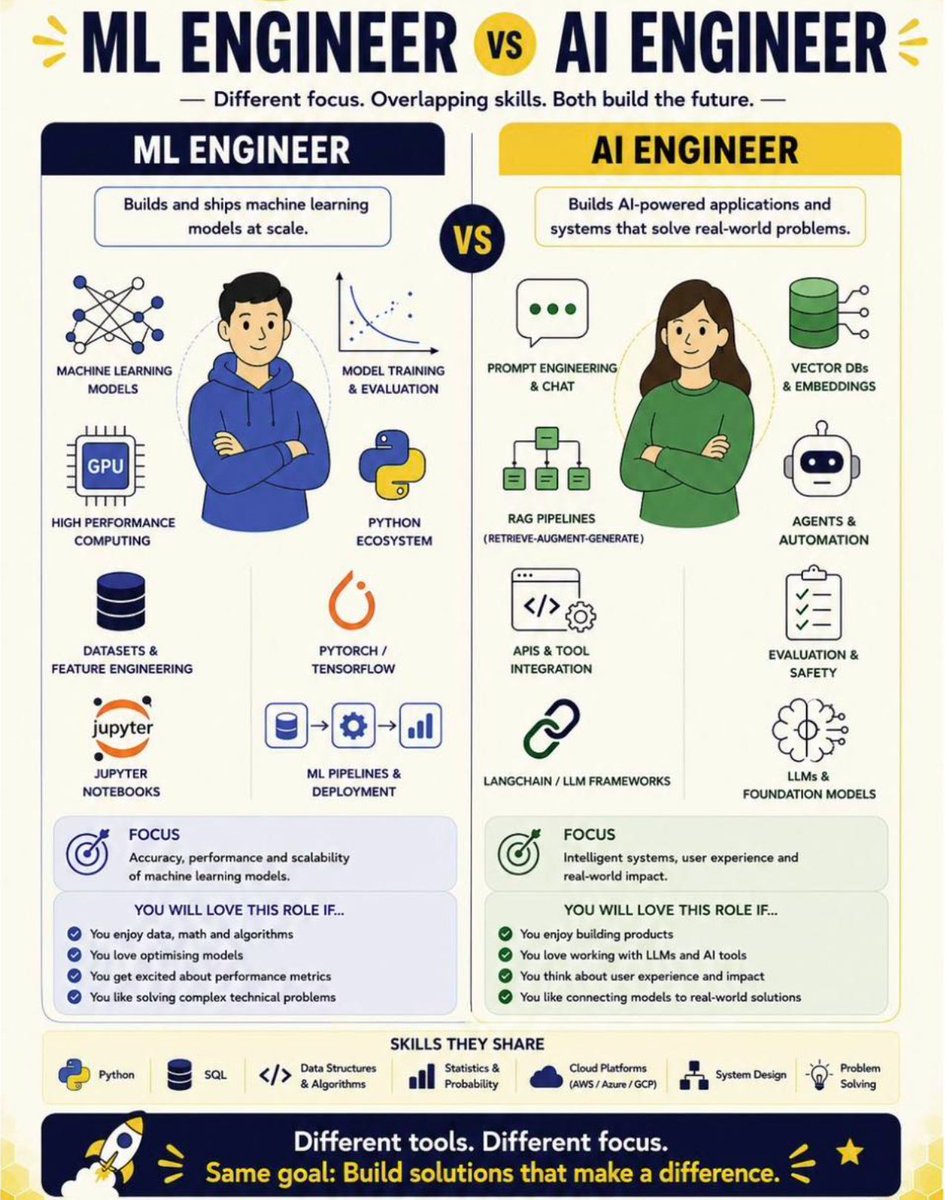
Two of the most confused job titles in tech right now.
ML Engineer. AI Engineer.
People use them interchangeably in job posts, interviews and LinkedIn bios. They are not the same role.
Here is the clearest breakdown I have seen.
An ML Engineer builds and ships machine learning models at scale. The focus is accuracy, performance and scalability. If you love data, math, algorithms and optimising models this is your role.
An AI Engineer builds AI-powered applications and systems that solve real world problems. The focus is intelligent systems, user experience and real world impact. If you love building products, working with LLMs and connecting models to real solutions this is your role.
The skills overlap significantly. Python, SQL, cloud platforms, statistics. Both roles need these.
But the day to day work, the mindset and the problems you solve are fundamentally different.
Save this. Share it with anyone who is trying to figure out which path to take.
♻️ Repost to help someone who is confused about which role to apply for.
#DataScience #MachineLearning #AI #MLEngineer #AIEngineer #DataScientist #LearnAI
Most machine learning explanations have the same failure mode.
They either drown you in math or hide the mechanics behind APIs.
Grokking Statistics is useful because it rebuilds the core ML mental model from first principles, then connects it to modern AI systems like transformers, LLMs, and image generation.
The book covers:
• Understand regression and tree-based methods
• Strengthen practical machine learning judgment
• In Grokking Statistics discover: Understanding the shape of data with…
• With Grokking Statistics, you’ll build a strong foundation in statistical…
The production angle is the part I would pay attention to.
Model APIs change quickly. The durable skill is understanding the patterns, failure modes, preprocessing choices, feature tradeoffs, and evaluation habits underneath them.
Good fit for engineers who use AI tools every day but want the underlying ML concepts to feel less like a black box.
Link in the first comment.
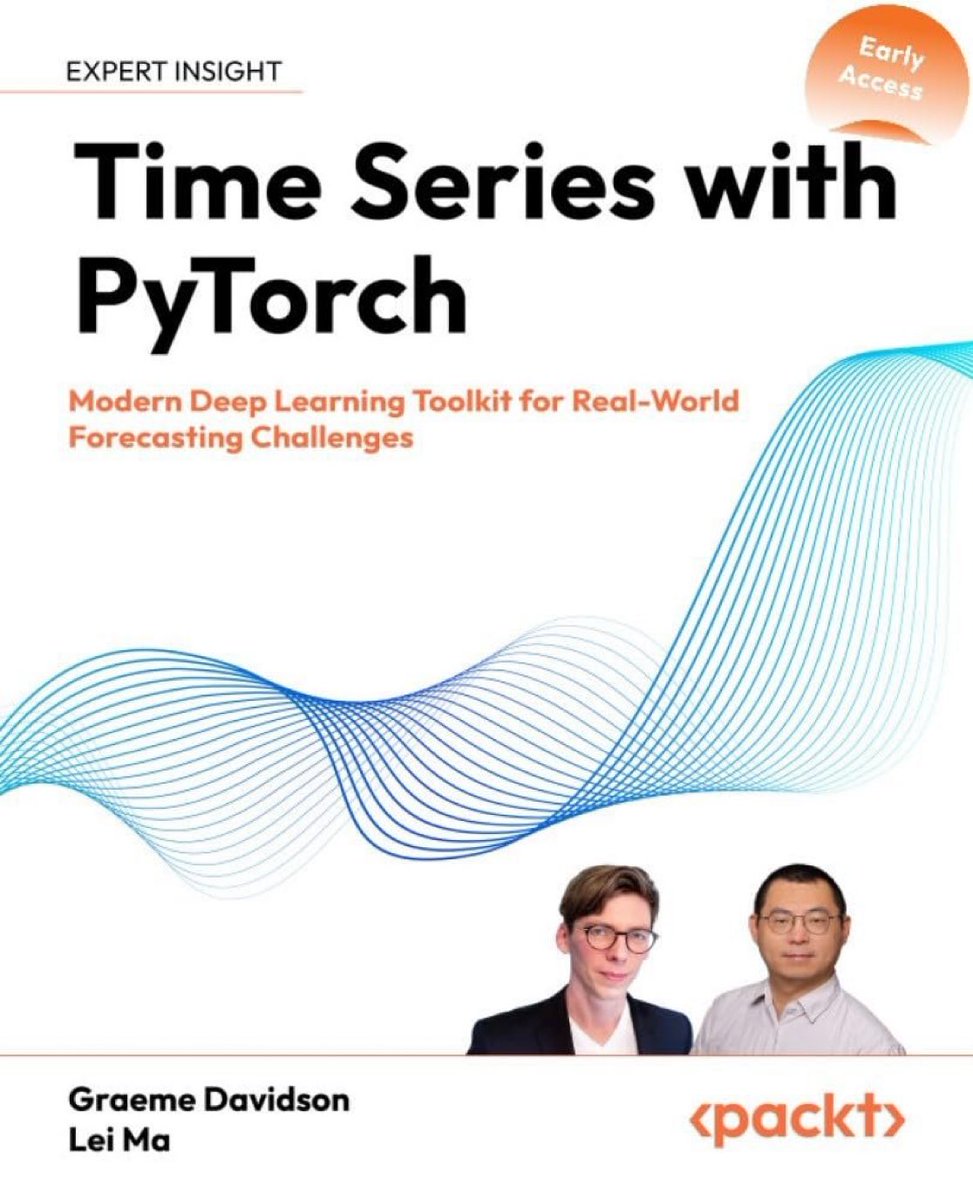
NEW book from @PacktPublishing@PacktDataML ...
"Time Series with PyTorch: Modern Deep Learning Toolkit for Real-World Forecasting Challenges", available at https://t.co/hrPgQAcSBT
Highly rated new book from @PacktPublishing@PacktDataML ...
"Architecting Generative AI Applications: Build, deploy, and scale production-ready GenAI systems with LLMOps best practices"
See it at https://t.co/qEfwoYVBdT
The secret of Hedge Funds is revealed in a 6 page PDF.
Stanford released the complete LSTM neural network framework for trading that quants at firms like Citadel & 2Sigma are known to use & released it for free.
Bookmark it before someone takes it down:


![KirkDBorne's tweet photo. Book by @adamjkucharski explains how certainty, even in math, can be an illusion.
"Proof: The Art and Science of Certainty" at https://t.co/QlB2IZNxla #Mathematics
"To discover proof [of something], we must reach into a thicket of errors and biases and embrace uncertainty" https://t.co/WcJeTLVW01](https://pbs.twimg.com/media/HKKbkNSW8AAi-YX.jpg)