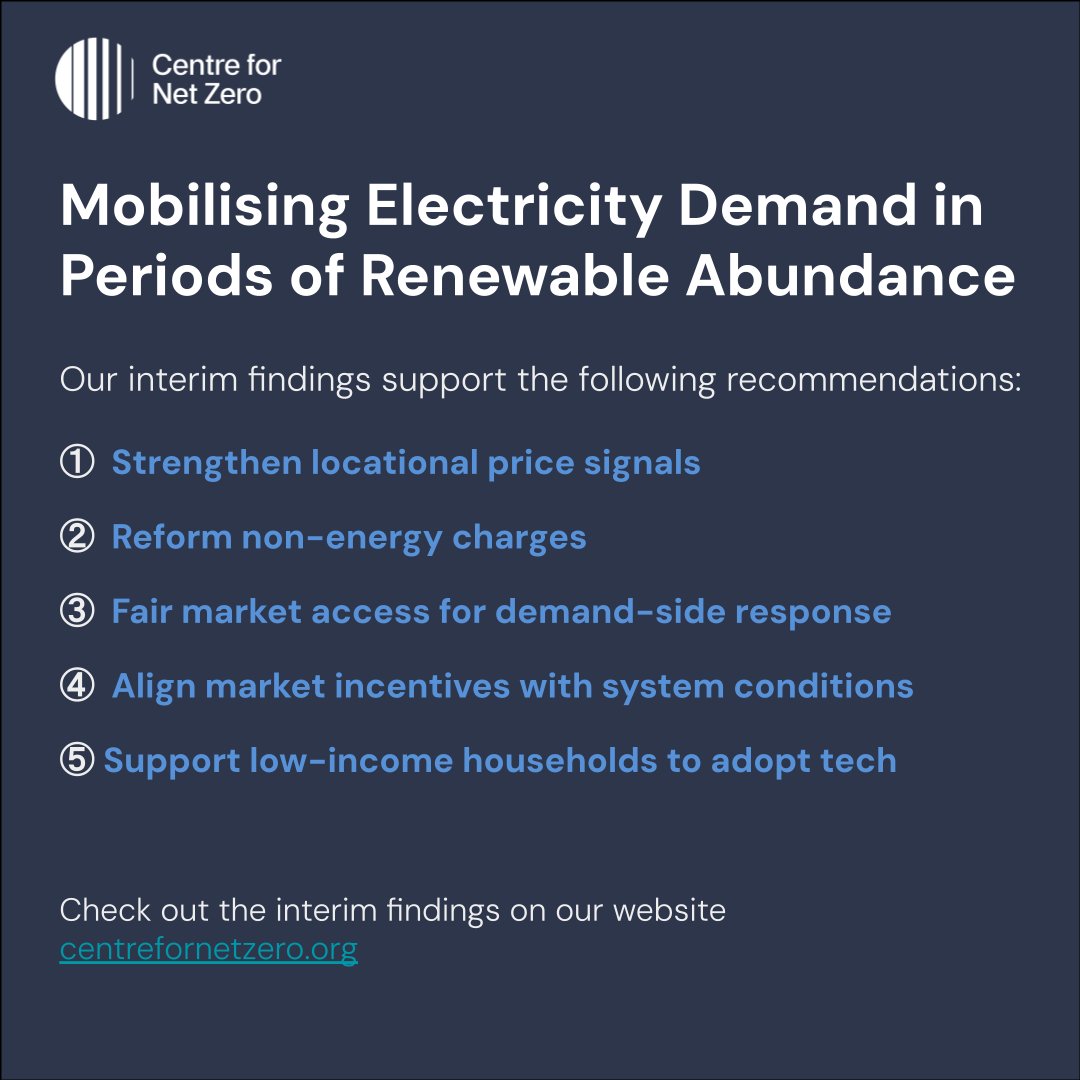
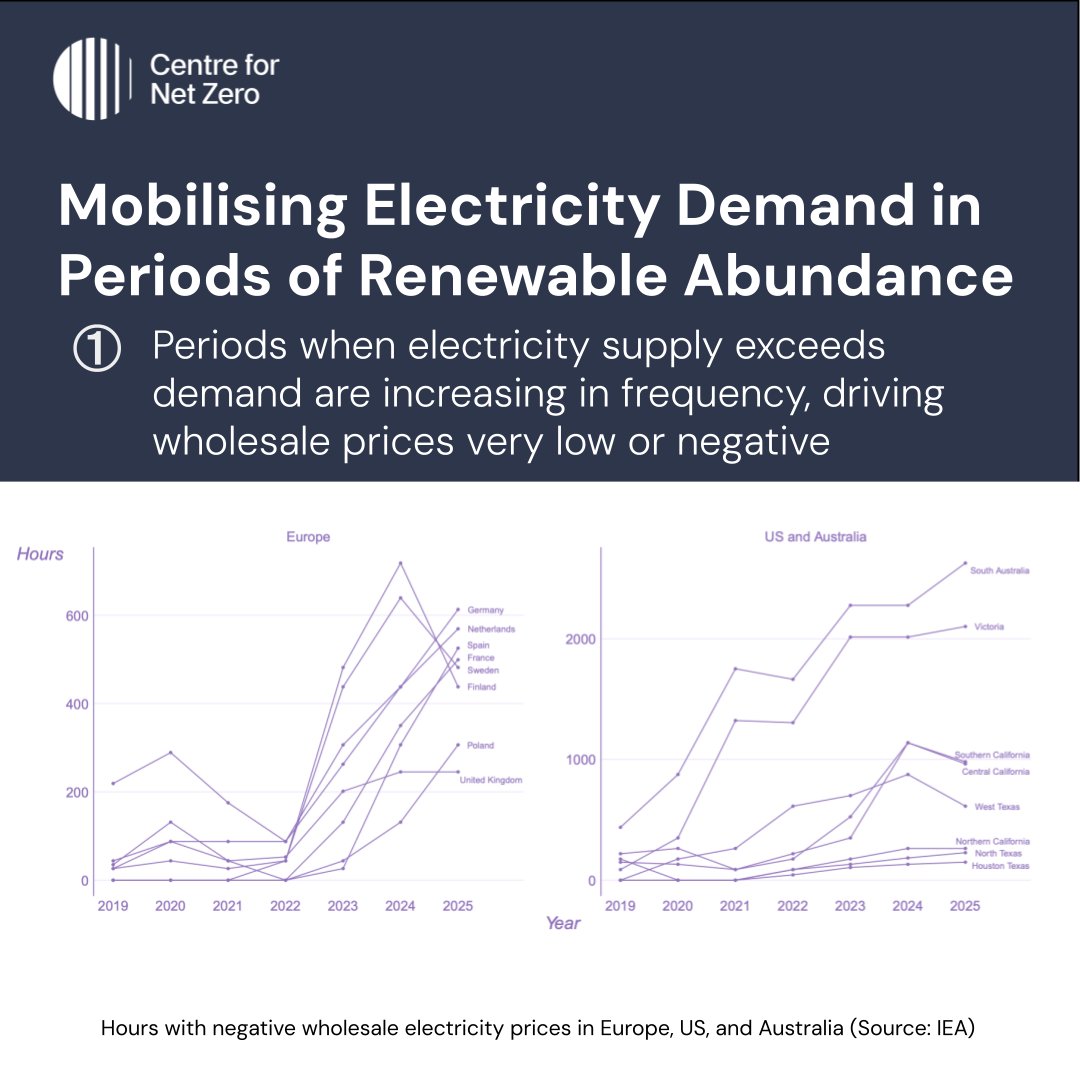
💡 With simple incentives, we can actively match demand to abundant renewable supply - a potential win-win for reducing curtailment and bringing down bills.
👀 Watch this space for the final analysis and get in touch if you have insights to share.
🔗 https://t.co/7UedCpiL7D
⚡🌬️☀️ What happens if households get free electricity when renewables are abundant?
We tested this with 120,000 customers across @OctopusEnergy 🇬🇧 & @OctopusEnergyES 🇪🇸 - the results are pretty striking 🧵
🔄 In Great Britain there was some evidence of load shifting from periods before and after the event.
💰 And survey responses showed financial incentives far outweigh environmental or civic motivations for taking part.
👐 If you just want to get your hands on a ready-made dataset, explore 10 million synthetic smart meter profiles through our @linuxfoundation Energy
OpenSynth repository: https://t.co/qrLD69zZMT
🕵️ Ever wondered what goes on under the hood of our generative AI model?
⚡Our model, Faraday, generates synthetic, half-hourly, household-level smart meter data that helps researchers and policymakers understand electricity demand - without compromising consumer privacy.
👩💻 To help users get the most from the model and dataset, we’ve also released a new user guide within the Faraday App, covering best practices, model assumptions, and highlights of Faraday in action to inspire your own experiments.
https://t.co/fpnICdvOdE
⚡As electrification increases and extreme weather events become more frequent, understanding how household demand responds, and how flexibility can be deployed, will be essential to winter resilience.
🔗Read the full analysis here: https://t.co/ztPZxMCbwM
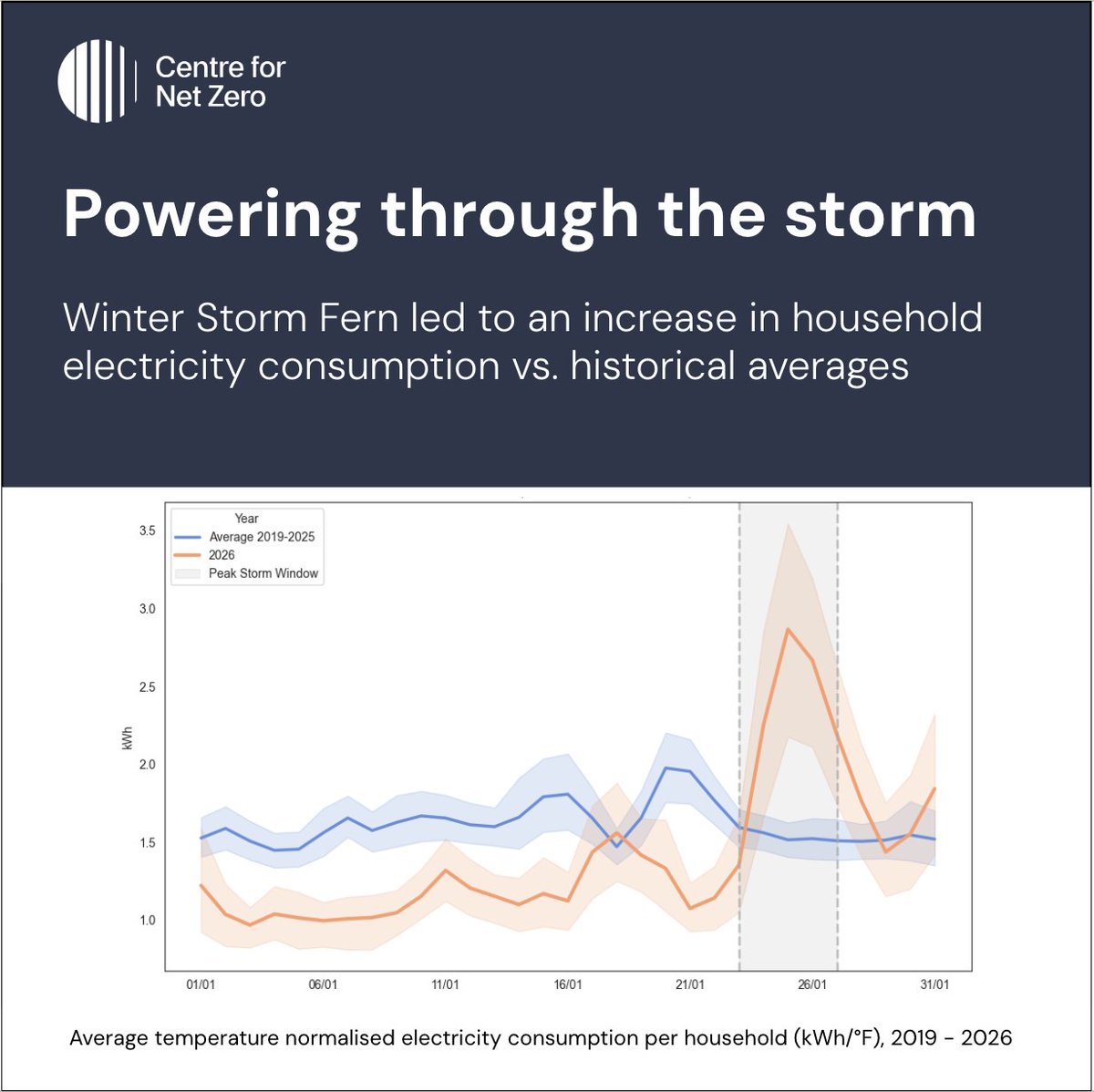
🥶 How does household electricity demand respond to extreme winter temperatures?
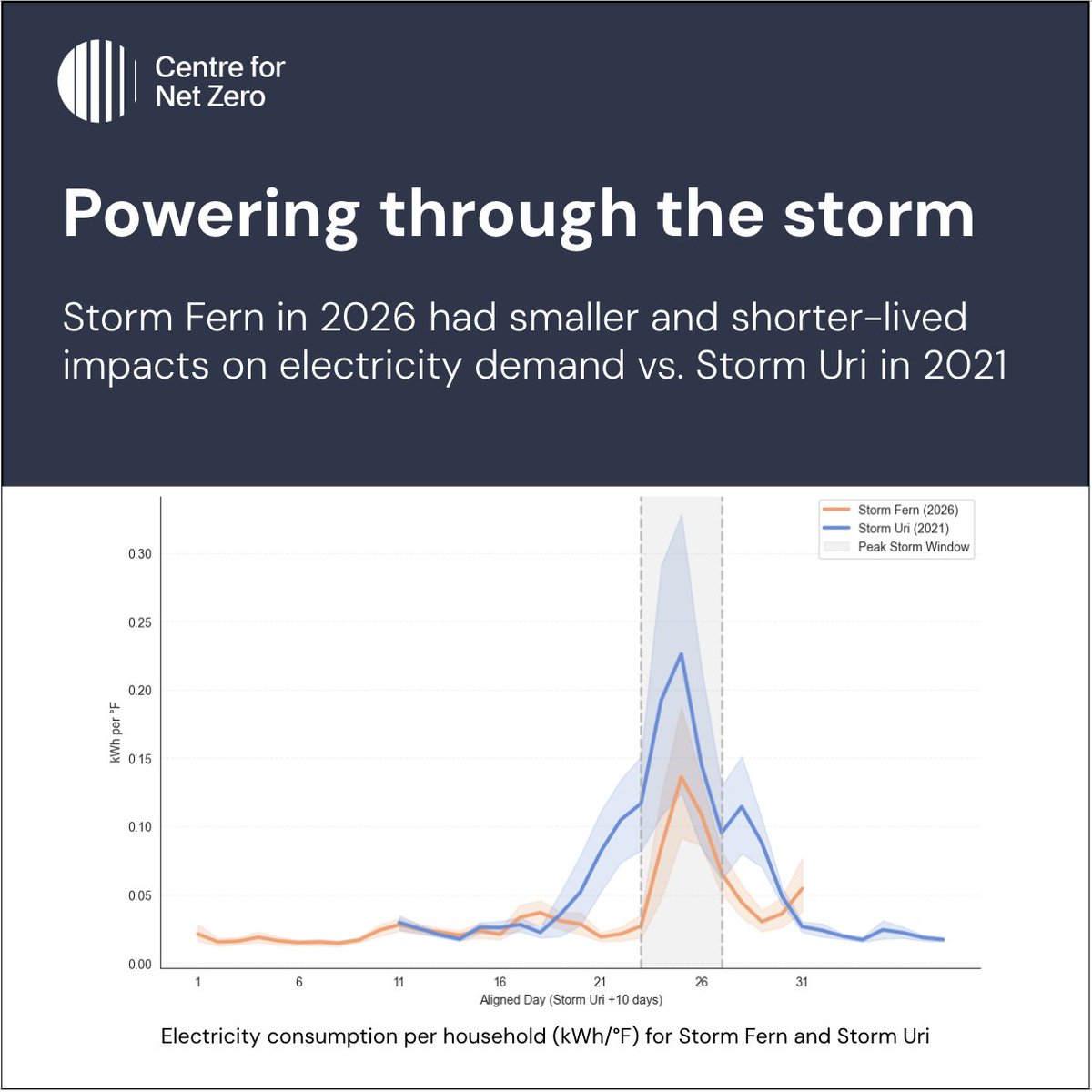
🌨️ In our latest piece, we analysed how electricity use in Texas responded during Winter Storm Fern in January 2026 — and what that tells us about managing winter stress in ERCOT.
Using @OctopusEnergyUS household data, we found:
1️⃣ An increase in household electricity consumption that was notable, but not unseasonable
2️⃣ Smaller and shorter-lived impacts vs. Winter Storm Uri in 2021
3️⃣ Flexibility, including pre-heating, could help manage peak system stress
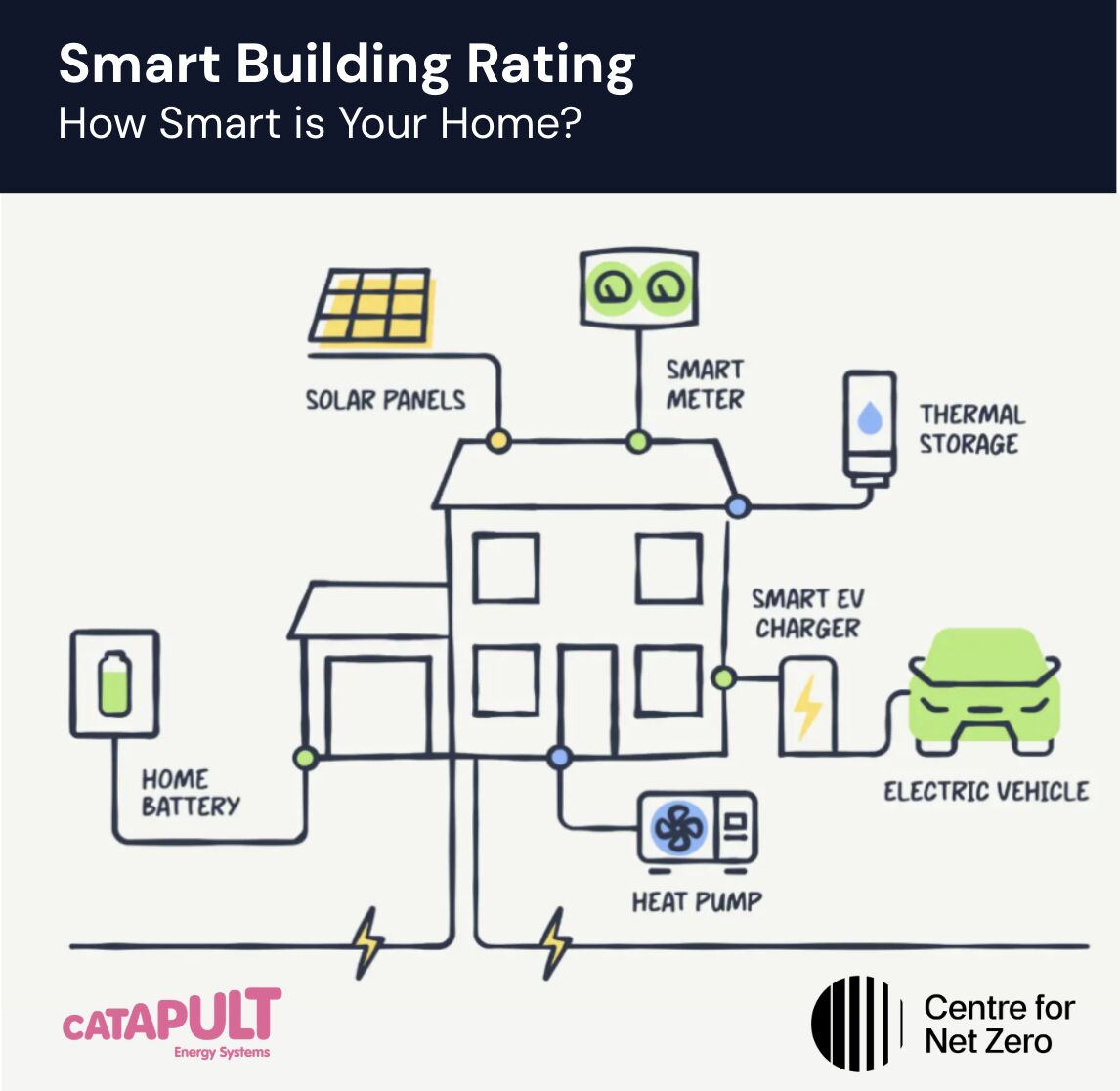
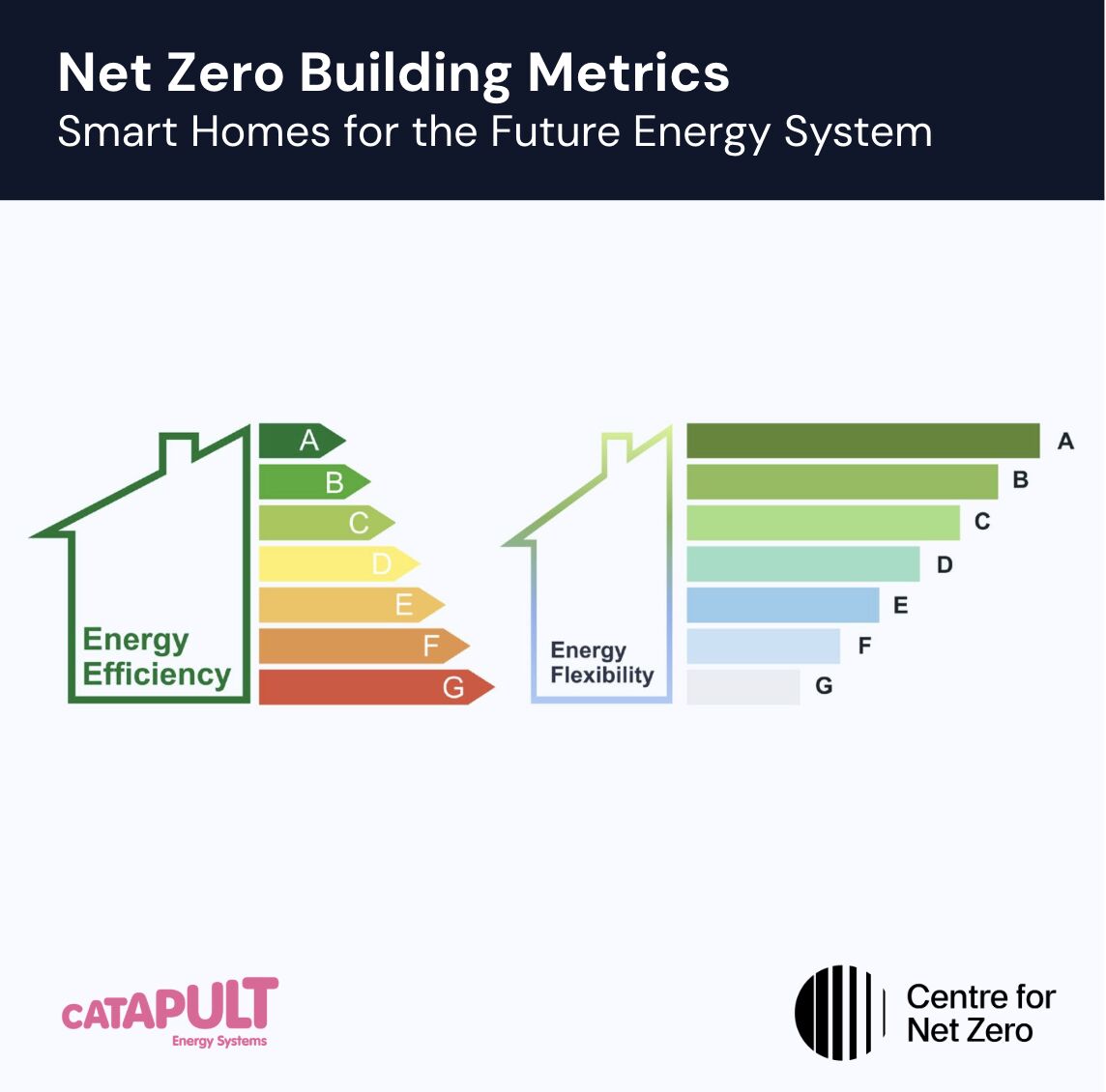
👉 Our @CentreNetZero and @EnergySysCat proposal for net zero building metrics can be found on our website: https://t.co/yMVFwlk2ie
👀 Find out more about what government has said here: https://t.co/SLpaKSesBe
💡 Time to rethink building performance.
📣 UK gov has confirmed that reformed Energy Performance Certificates will include a new smart metric to capture microgeneration and flexibility.
💪 Great to see following our campaign with @EnergySysCat and our cross-industry coalition.
🇬🇧 The Warm Homes Plan is a welcome step towards smart, low-carbon tech playing a central role in home upgrades.
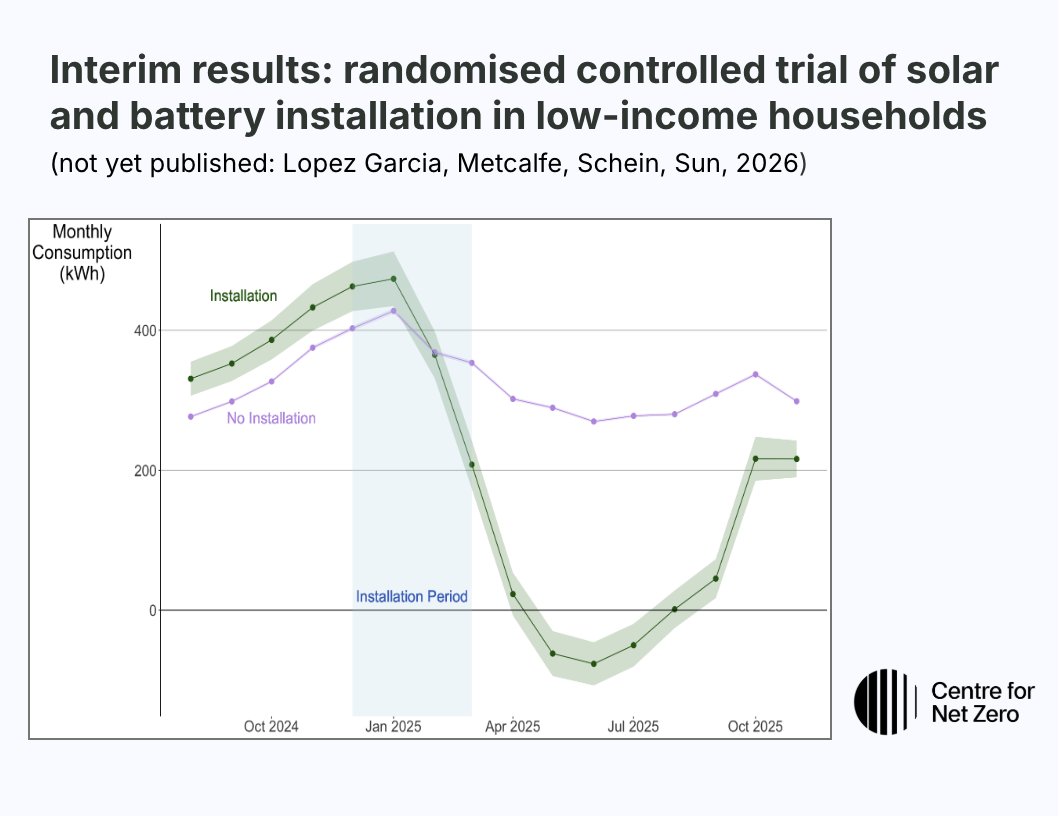
⚡🏠 As empirical backing for that shift, our research shows that heat pumps cut carbon ~70%, while solar + batteries can slash bills for fuel-poor households (even below zero in summer).
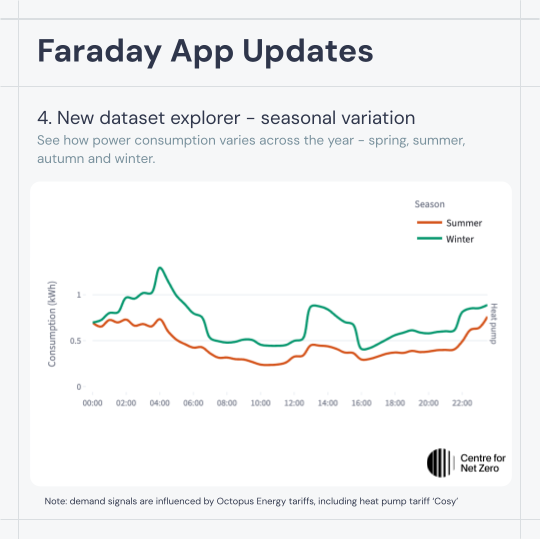
🚨 We’ve updated the app for Faraday, our open-access generative AI model for synthetic smart meter data.
❓ The latest version includes a dataset builder and a dataset explorer, leveraging the @LFE_Foundation OpenSynth repository
🚪 Want access? You can sign up directly - check out details & 🔗 in 🧵