Eight years ago, the initial plan was to terminate FGO's service immediately upon completing the final chapter—even envisioning a completely blank white title screen and a shutdown notice on December 31. Driven by the players' overwhelming passion and dedication over the years, they ultimately chose to display a blue sky on the post-clear title screen to signify that the journey continues.
His previous comment about leaving the ending in the hands of the players referred to the final chapter's raid. The banner reading "Until the End of Grand Order" was meant to come off as a genuine ultimatum: if players defeated the raid, the game would end. But when players shattered that threshold, it symbolized a collective choice to push past the end and forge ahead into what lies beyond—represented in-game by the shattering sound effect right before the protagonist stands up in the final battle.
While Nasu originally wrote more explicit text declaring the end of service and even proposed locking players out of the app until New Year's Day, Lasengle requested he tone down the phrasing and rejected the startup ban.
Nasu clarifies on why several Foreigners did not appear in Finale, explaining that they are divided into two distinct categories: Servant Universe-types and Outer God-types. While Servant Universe Foreigners are an extension of FGO, Outer God-types exist outside its world. Because the Chaldeas faction deems Evil Gods unnecessary and refrains from interfering with them—and the Evil Gods themselves care nothing for Maris Chaldeas's plans—a mutual non-interference policy kept them out. That said, the bleaching was not a direct threat to the Outer Gods, as none actually reside within the universe of FGO. Their primary goal is to claim the universe, but if it is wiped completely blank, they simply lose interest and move on to find another. He hints that the "unfilled slot" mentioned in the 10th Anniversary interview may not necessarily be the Foreigners.
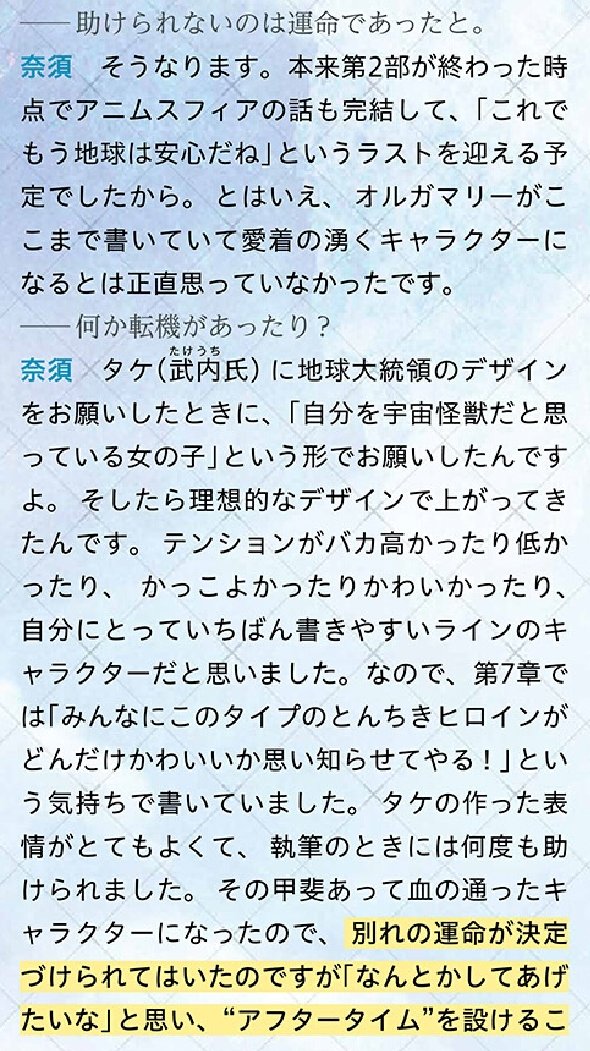
Nasu says that Olga Marie couldn't be saved at the end of Finale because the narrative needed to address the reality that some lives simply cannot be saved, regardless of one's efforts. He wanted to depict a parting that offered grace and solace, blending her signature comedic farewell—where she ranked the protagonist's past blunders—with heartbreak and gratitude. Although her fate was set in stone alongside the conclusion of the Animusphere storyline, Nasu admitted he did not anticipate her growing into such a deeply beloved, vibrant character. Because of her popularity and development, he wanted to do something special for her, which ultimately led to the decision to set aside an "after time" segment for her.