CertPing is an enterprise PKI and certificate lifecycle platform. It connects certificate inventory, policy, renewal, deployment, domains, monitoring, and brand
A new domain should not start life in someone's personal registrar account.
Buy it through CertPing, manage DNS and monitoring in the same platform, and keep domain operations with the business from day one.
https://t.co/Gt7pNGNL4J
A domain can change owners without changing its reputation.
Old backlinks still work. Traffic still arrives. Security systems still see years of clean history.
That's why expired domains are useful to attackers.
Domain age tells you how old the name is. Not who controls it today.
CA rotation isn't finished when the new CA starts issuing.
The U.S. Federal PKI is migrating its Federal Bridge from G4 to G5 right now. For a while, relying parties need to accept both trust paths.
Issuance moves first. Trust stores move next. Old paths get revoked last.
A curl auth bypass disclosed yesterday has a useful detail.
LDAP over TLS isn't affected.
The attacker gets rejected during server certificate validation before the vulnerable SASL code is reached.
Sometimes the certificate check really is the security boundary.
CertPing is now officially a registered U.S. trademark. ®
We're building CertPing® around one idea: digital trust starts with the domain, then extends to the certificates and infrastructure protecting it.
Domains. Certificates. Digital Trust.
Built in the USA. 🇺🇸
Domain validation has an awkward dep: the network you're using to prove domain control
Princeton researchers found single-location validation resilience fell from 86% to 38% once DNS attacks were included
Five diverse validation points brought it back to 97%. That's why MPIC is
Taking down one phishing domain rarely ends the campaign.
The same operator may already have several more registered.
ICANN is now considering rules that would push registrars to investigate associated domains too.
The better question is: what else is connected?
Buying a domain is the easy part.
Then somebody has to remember the renewal, keep DNS sane, make certificate validation work, monitor whether the site is actually reachable, and notice when someone registers a convincing lookalike.
The registrar is only one piece of the job.
A CA knowing it issued a cert is not certificate inventory.
It tells you the certificate exists.
It doesn't necessarily tell you where that certificate ended up, whether the replacement was deployed, or whether the old copy is still sitting on a load balancer nobody remembered.
@richardhicks "The CA isn't internet-facing" can give a false sense of security here.
The moment devices enrol through NDES, that endpoint becomes part of the PKI trust boundary too. Hardening the CA while treating NDES like a simple relay leaves a pretty important gap.
Certificate automation has its own dependencies.
Akamai's cert provisioning API had errors this week.
If your renewal path depends on one external system, that system is now part of your cert lifecycle risk.
Automation removes manual work. It doesn't remove dependency risk.
CA choice is an operational dependency.
A team can automate every certificate renewal and still get hurt if its issuer becomes unavailable, untrusted, or has to revoke certificates.
PKI resilience needs a CA migration path, not just renewal automation.
Expiry alerts are useful.
But they're not certificate lifecycle management.
If you can't tell where a certificate is deployed, replace it, verify the replacement, and revoke the old one, you're still doing most of the lifecycle yourself.
Certificates fail quietly until they don't. CertPing finds every cert across cloud, Kubernetes, edge, and private infra, then handles issuance, deployment, renewal, and revocation from one place. No more spreadsheet tracking expiry dates. https://t.co/Gt7pNGNL4J
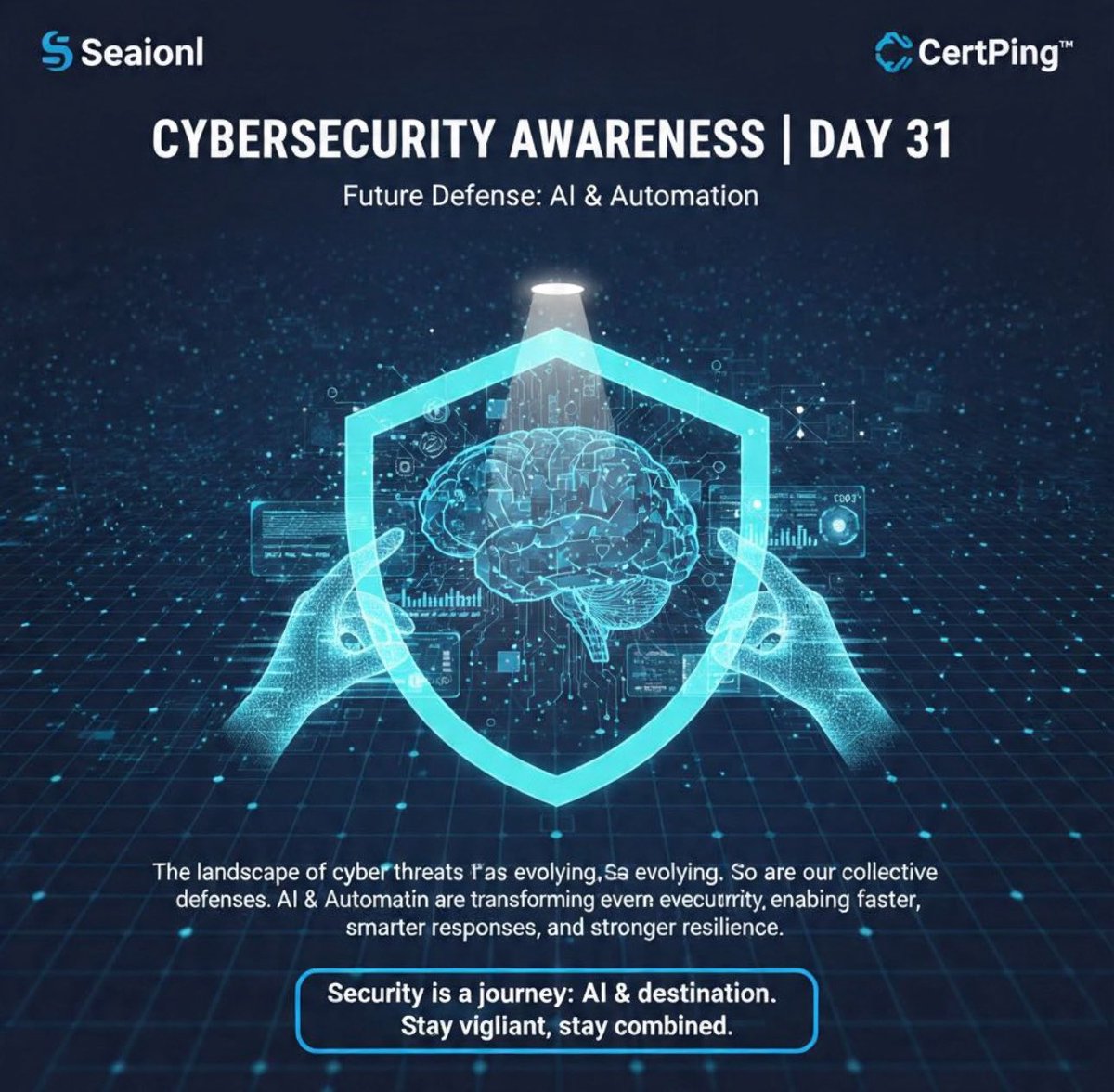
Day 31: Threats evolve. So must our defense. 🚀
AI & Automation are transforming security, enabling us to detect and respond faster than ever. Evolving Defenses: AI and humans working together.
Prepare for future: https://t.co/Gt7pNGNdfb | https://t.co/HnKo5oweCt
#Automation
Day 30: Our campaign ends, but vigilance continues. 🚀
Security is everyone's job. Your actions make the difference. Thank you for your commitment! Security is a journey, not a destination.
Stay secure, always: https://t.co/Gt7pNGNdfb | https://t.co/HnKo5oweCt
#Cybersecurity
Day 29: Predict, don't just react. 🔮
Threat Intelligence gives you the insights to know your enemy's TTPs and build proactive defenses. Anticipate, don't just react.
Stay ahead: https://t.co/Gt7pNGNdfb | https://t.co/HnKo5oweCt
#ThreatIntelligence#Cybersecurity
Day 28: An attack is inevitable. The damage isn't. 🛑
IR/DR plans dictate how quickly we recover. Test your plans and train your teams. Prepare, Respond, Recover.
Plan for the worst: https://t.co/Gt7pNGNL4J | https://t.co/HnKo5owMs1
#IncidentResponse#Cybersecurity
Day 27: Security is a shared responsibility. 🔄
DevSecOps integrates security testing throughout the pipeline. Find and fix flaws early! Security is built into the code.
Build it safe: https://t.co/Gt7pNGNL4J | https://t.co/HnKo5owMs1
#DevSecOps#Cybersecurity
Day 26: Security is an ongoing watch. 👁️
Logging & Monitoring provides the visibility needed to spot threats the moment they appear. Without logs, you're flying blind. Visibility is security.
Never fly blind: https://t.co/Gt7pNGNL4J | https://t.co/HnKo5owMs1