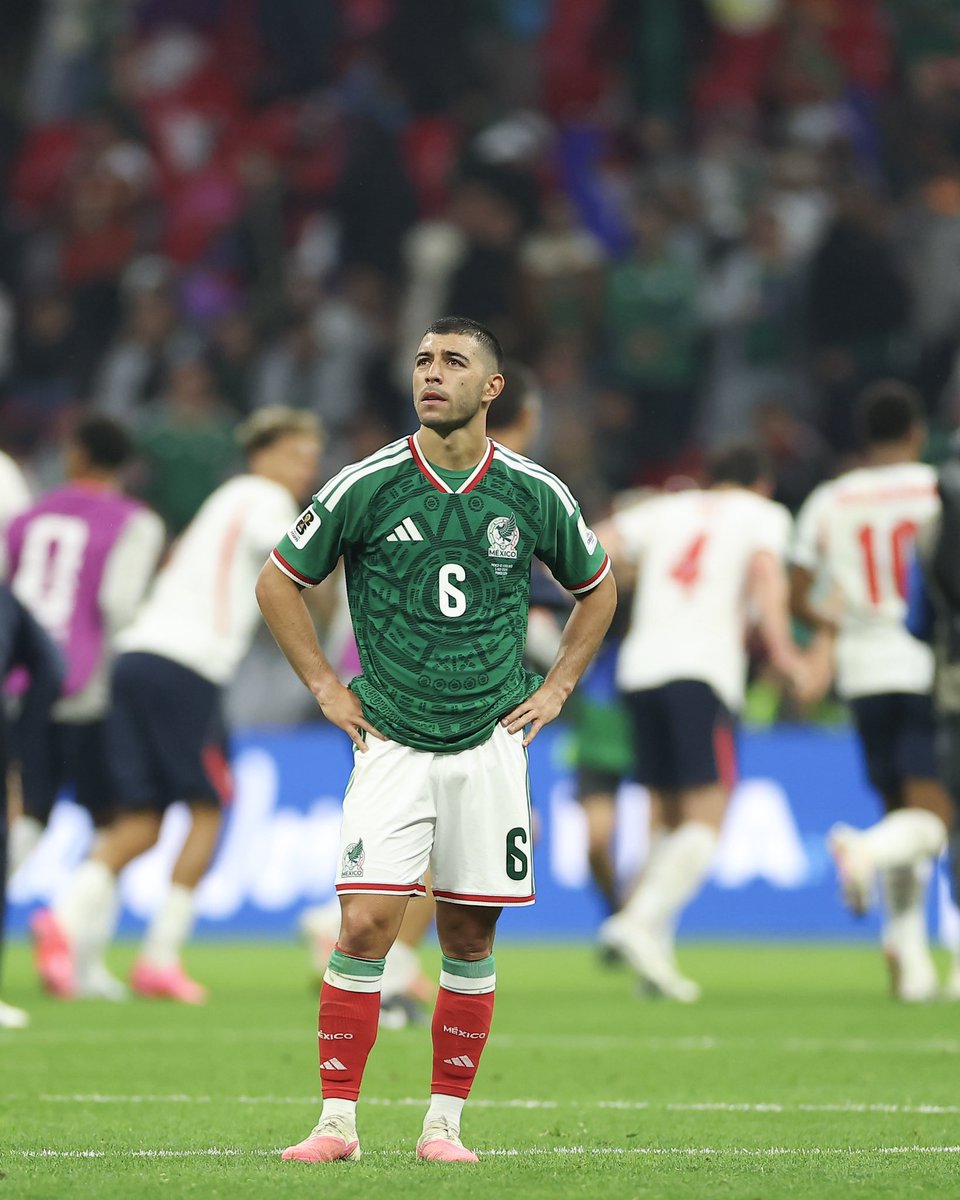
La mejor historia de México en el Mundial es la de Raúl Jiménez. Gana la medalla de oro en 2012, a 2014, llega muy joven y juega 8 minutos. En 2018 fue suplente de un gran Chicharito y entró ratitos dos partidos. 2020, estaba en su cénit, se comía la Premier y viene esa lesión horrible. Sobrevive, se recupera y llega a 2022, pero otra lesión le impide jugar más que unos minutos. La gente se burlaba de su lesión, lo criticaba, lo trataba mal por “no anotar en Mundiales” sin tomar en cuenta el contexto. Los propios mexicanos, no los rivales. Llega a 2026 manteniéndose activo, con 35 años, y su padre muere unas semanas antes del Mundial. Raúl se vuelve en el símbolo del renacido equipo mexicano. Con tres goles, se convierte en el cuarto mejor goleador de México en la historia de los Mundiales, empatado con Rafa y Cuauhtémoc. Por encima de Hugo, Jared y Luis García. Si alguien se merece todos los aplausos, es él. Grande Raúl.
¡HONOR, CABO VERDE!
➟ En la primera Copa del Mundo de su historia.
➟ Empataron ante la Selección de España de Lamine Yamal, Pedri, etc.
➟ Empataron ante la Selección de Uruguay de Fede Valverde, Muslera, Loco Bielsa, etc.
➟ Sumaron sus primeros puntos en su historia de las Copas del Mundo.
➟ Llevaron hasta prórroga a la Selección de Argentina de Messi en los dieciséisavos.
➟ No perdieron ningún partido en los 90 minutos en todo el mundial.
➟ 3 de sus 4 partidos fueron ante Campeones del Mundo (España, Uruguay, Argentina).
➟ Aunque fue su primer mundial, parece que llevan jugando toda su vida jugando mundiales.
➟ Nos regalaron la mejor historia del mundial.
➟ Quedaron eliminados pero se ganaron el respeto de todo el mundo.
DE PIE ANTE LA SELECCIÓN DE CABO VERDE.
A 33-year-old woman at MIT wrote the code that ran inside the Apollo 11 lunar lander, and 20 seconds before Neil Armstrong touched the moon, her program made a decision the astronauts didn't know was happening that was the only reason the mission didn't crash.
Her name was Margaret Hamilton.
She led the team writing every line of code that would fly humans to the moon and back. The part almost nobody knows is that she had to fight to be allowed to do the work at all.
Code in 1965 was not treated as real work.
Rockets were serious. Circuits were serious. Writing code was something the men at NASA thought secretaries could do on the side. Hamilton was told this to her face more than once.
So she started calling what her team did "software engineering."
She used the phrase on purpose. In meetings. In memos. To force people to treat it as a discipline instead of a chore. Colleagues laughed at her the first few times she said it out loud.
That phrase is now the name of the biggest engineering profession on earth.
The story of what her code did on July 20, 1969 is the one every kid should be taught.
Neil Armstrong and Buzz Aldrin were 3 minutes from touching down when the computer inside the lunar module started flashing an alarm.
1202.
Then again. Then 1201. Five alarms in four minutes. The computer was telling the astronauts it could not finish everything it had been asked to do.
The computer they were flying with had less memory than a modern microwave.
Someone on the checklist had left a switch in the wrong position, and a radar the astronauts did not even need right then was flooding the computer with data. It was eating around 13% of the machine's brain at the exact moment every second mattered.
In almost any other system, that overload would have frozen the machine.
A frozen machine 30,000 feet above the moon means a crash. It means two dead astronauts and a third one orbiting alone above them, waiting for a signal that would never come.
Hamilton's code did something else.
She had built the software with a rule almost nobody in her field was using at the time. When the machine ran out of room, it would not treat every task as equally important. It would look at the list of jobs it had been asked to do, throw out the ones that could wait, and keep running only the ones keeping the crew alive.
The radar was the low priority job.
The landing was the highest.
So the computer did what she had told it to do. It dumped the radar. It kept flying. The alarm was not a failure. It was the machine reporting that it was handling the overload exactly the way she had designed it to.
Down in Houston, a 24-year-old engineer named Jack Garman recognized the alarm from a test his team had run months earlier. He shouted "Go" to the flight controller. The controller shouted it up to the crew. The landing kept going.
Armstrong touched the surface with 25 seconds of fuel left.
The part that gets lost in every retelling is why Hamilton had built that safety net in the first place.
NASA had not asked for it.
She had added it on her own, years earlier, because her 4-year-old daughter Lauren had once crashed the simulator by pressing a button during a test. The button was one the astronauts had been told they would never press.
Hamilton wanted the code to survive that button press anyway.
Her bosses told her it was a waste of time. Astronauts do not make mistakes.
She insisted. The safety net went in.
Two years later, on the way to the moon, an astronaut left a switch in the wrong position. The exact class of mistake she had been told would never happen.
There is a photograph of her from that period.
She is standing next to a stack of paper as tall as she is. Every page in that stack is the code her team wrote for the mission. She is smiling at the camera like she knows something the rest of the aerospace industry has not figured out yet.
In 2016, Barack Obama put the Presidential Medal of Freedom around her neck and said the astronauts did not have much time, but thankfully, they had Margaret Hamilton.
Every autopilot in every plane you have ever flown on uses a version of what she invented. Every pacemaker. Every self driving car. Every satellite in orbit.
The idea that a machine should know which job matters most and drop the rest when it runs out of room is now the foundation of almost every safety system on the planet.
She wrote it because a 4 year old crashed a simulator and nobody else thought it was worth fixing.
The men in the room laughed at her for calling it engineering.
Then her code was the only thing in the sky that did not fail.
Her birth mother gives her up at birth. Adopted at three months old, renamed forever. Nobody expects this quiet New Jersey girl to become rock's fiercest icon.
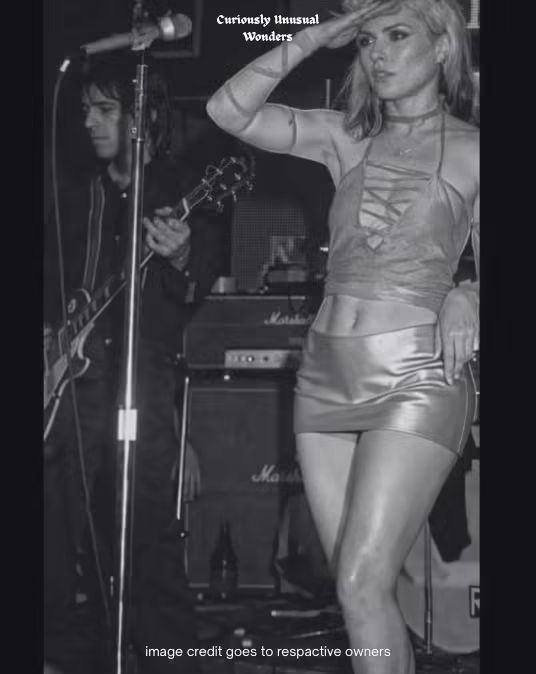
In 1974, she forms a band inside New York's filthiest clubs. Five years later, she rules the charts. Her real story hides darkness.
Angela Trimble is born on July 1, 1945, inside Jackson Memorial Hospital in Miami, Florida.
Her birth mother cannot keep her. Three months later, a couple named Richard and Catherine Harry adopt the baby girl and rename her Deborah.
She grows up in Hawthorne, New Jersey, a quiet gift-shop town nowhere near a stage or a spotlight.
At age four, she learns she is adopted. It changes something in her, quietly and permanently.
Decades later, she finally locates her birth mother, a concert pianist. The woman chooses not to build a relationship with her.
By the late 1960s, Deborah Harry moves to New York City with nothing but ambition.
She works as a secretary, a beautician, and a waitress at Max's Kansas City, the legendary bar where rock stars and artists collide every night.
She becomes a go-go dancer in Union City and a Playboy Bunny in Vernon Township. None of it feels like her real life.
Here is what most people miss: before Debbie Harry became an icon, she survived New York's streets completely unprotected.
In the early 1970s, after failing to hail a cab late at night, she climbs into a stranger's car for a ride.
Something about the man feels wrong. The inside of the car is stripped bare. The passenger door has no handle. She escapes.
Years later, she becomes convinced the driver was serial killer Ted Bundy.
She keeps moving forward. In 1973, she joins a female punk trio called The Stilettos and meets a young guitarist named Chris Stein.
They fall in love. In 1974, they leave The Stilettos and form a new band. Truck drivers used to shout one word at platinum-haired Harry on the street: "Blondie." She turns the insult into a name.
In 1976, Blondie released their self-titled debut album. Critics barely noticed.
In 1977, Plastic Letters followed. Mainstream America still was not paying attention.
Then, in 1978, everything changes.
Parallel Lines becomes a phenomenon. "Heart of Glass" hits number one in the United States. "Picture This" and "One Way or Another" become anthems.
"One Way or Another" is not fiction. Harry writes it after being stalked by a man in real life.
In 1980, "Call Me," co-written with producer Giorgio Moroder for the film American Gigolo, becomes Blondie's second US number-one hit.
In 1981, "Rapture" hits number one too. It becomes one of the first songs to bring rap into mainstream American radio, years ahead of its time.
By 1981, Debbie Harry is one of the most famous women on Earth. She is also nearly broke.
Here is what most people miss: their record contracts, signed back when the band was unknown and desperate, locked them into an unheard-of low percentage of their own earnings.
Then it gets worse. Harry's business manager fails to pay her taxes for two years. The Internal Revenue Service seizes her assets.
The world sees a platinum superstar. Behind the scenes, she is fighting to keep her home.
In 1982, disaster strikes again. Chris Stein is diagnosed with a rare, life-threatening autoimmune skin disease.
Blondie breaks up. Harry walks away from her own career at its peak to care for him full time.
She nurses him back to health over several years, spending nearly everything she has earned to do it.
They split romantically in 1987. But she never leaves his life. She becomes godmother to his two daughters and remains his close friend for decades.
Harry battles heroin addiction during these same hard years. She gets clean and keeps going.
She rebuilds as a solo artist. KooKoo arrives in 1981, produced by Nile Rodgers, and goes gold. Rockbird follows in 1986.
Def, Dumb & Blonde arrives in 1989, giving her a UK top-20 hit with "I Want That Man." Debravation follows in 1993.
In 1999, after a 17-year wait, Blondie reunites and releases No Exit. The comeback single "Maria" shoots straight to number one in the UK.
The woman once written off as a washed-up 1970s act proves everyone wrong.
In 2006, Blondie is inducted into the Rock and Roll Hall of Fame.
She keeps releasing music into her sixties and seventies: Panic of Girls in 2011, Ghosts of Download in 2014, and Pollinator in 2017, which reaches number four in the UK charts.
In 2019, Harry publishes her memoir, Face It. For the first time, she tells the world about the rape she survived at knifepoint inside her own apartment, and about the night she believes she escaped a serial killer.
In 2023, Rolling Stone ranks her among the 200 greatest singers of all time.
She never marries. She never has children. She builds something else instead: a body of work that outlives every label executive who once underpaid her.
On July 1, 2026, Deborah Harry turns 81 years old.
She was given up at birth. She was underpaid, robbed by her own accountant, assaulted in her own home, and possibly hunted by a killer. She still became one of the most influential voices in music history.
Luke Aikins salta sin paracaídas desde 7620 metros y aterriza efectivamente en una red instalada de 30x30 metros.
La única persona en la historia que ha logrado saltar de un avión sin ningún equipo de vuelo y aterrizado también.
Y sigo buscando una explicación y no la encuentro. Karim López anoche se convirtió en el primer jugador nacido en México seleccionado en la primera ronda del Draft de la NBA. Un hecho histórico. Pensé que al menos merecería un pequeño espacio.
WHAT A PHD IS AND WHAT IT IS NOT?
After having completed a PhD degree myself, I would like to offer some humble advice to those aspiring to pursue a PhD degree. I find that many students fail to understand the purpose of getting a PhD degree and the commitments and sacrifices that it calls for.
A PhD is the highest academic and research degree from a university. I have seen both remarkable successes and disappointing failures amongst students pursuing this academic endeavour. It takes more than just brain power to cross the line to complete this journey.
A degree by research is very different from a degree by coursework. A course degree whether at the undergraduate or masters level is heavily structured. A student just have to be disciplined and rigorous in following this predetermined structure regimentally, without much creativity required from him or her. Of course, creativity is demanded from the student in completing assignments and projects but the demand is nothing close to what is required for a PhD degree.
The most important prerequisites for pursuing a successful PhD program are passion, inquisitiveness, creativity, discipline, persistence, perseverance and meticulousness. I did not mention intelligence not because it is not important, but because it is less important than the other attributes I mentioned. At least, it is in my book. Others may feel differently.
Of those many attributes, I consider passion the most important. Some students start out enthusiastically but lose steam halfway through or towards the end. Ever heard of the saying, "when the going gets tough, the tough gets going?" Success in a PhD is simply that. The harder it becomes, the harder you will strive. Sometimes, you do not see the light at the end of the tunnel but you still keep looking for it because you know it is there. When you love what you do, failure is not an option.
Some people do PhD for wrong reasons. Some do it because the jobs they have taken up require them to acquire a PhD. You cannot force yourself to do a PhD. You cannot force yourself to love something. you must love to force yourself to get it.
The PhD is an academic journey. There will be failures but mainly successes along your way. You may encounter some foes but mainly friends in the same boat as yourself. It always help to be in a group of students to share both your setbacks and achievements. Working alone in a silo is the worst you can do to yourself. There are certain things you want to discuss with your fellow colleagues that you cannot discuss with your supervisor; matters that are either academic or personal.
Your supervisor is your mentor, guide and consultant, not your teacher. He cannot teach you your PhD knowledge, you have to teach yourself through his guidance and wisdom. He is more your friend than he is your master. At the end of your PhD journey, you are supposed to be more knowledgeable on the subject of your research than your supervisor. I have heard of students not being able to complete their PhD because they could not get along. This is the worst scenario that can happen to you. If you do not have a supervisor you can work with, you will not get your PhD no matter how good you are or how hard you work. So, choose your supervisor well, not just the university you want to do your PhD in.
A PhD degree needs sacrifices, especially when you are a family person; a wife, mother, husband or dad. Family is always important and should always be your priority. However, you and your family members must be willing to make sacrifices that are necessary. There can be no gain without pain. That is why when you finally get your PhD degree, your family members can even be happier and more proud of you than you yourself, because it is as much their accomplishment as it is yours. Their sacrifices must be duly appreciated.
So what does it mean when you have a Dr. before your name? Does it mean that you are an expert on a certain subject matter? Hardly so, I think. It means that you are both a seeker as well as a generator of knowledge. It means that you have enriched the world and added on to the vast body of knowledge through your PhD contribution.
The world has become a slightly better place from the knowledge that you have contributed through your PhD thesis and publications. The world now knows more on a subject than before you completed your PhD. Your work get referred and cited by other researchers in your field, as they absorb your new knowledge to generate new knowledge of their own.
I hope I have inspired some of you to pursue a PhD degree if what you read here is what you really want from a PhD. On the other hand, I hope I have also discouraged others who have a misconception of what a PhD degree entails, so that you will not go down the road of failure. A PhD is not for everyone.