The latest Cityscape continues to explore the Hispanic Housing Experience in the U.S. This issue fills major research gaps on access to housing for Hispanics by examining segregation, assisted housing, homeownership & generational transfer of wealth: https://t.co/MU09cRRWqu
HUD released the 2021 #AnnualHomelessAssesment Report Pt. 1 which details a single-night estimate of homelessness in 2021 prior to the start of this Administration.
#AHAR2021 is the most consistent way to measure year-to-year changes in homelessness: https://t.co/61C8KES0Mh
Two new resources present lessons learned from an examination of community approaches to unsheltered homelessness (@stevemetraux and @bjpoppe) and encampments (@JillKhadduri and Lauren Dunton) nationwide.
https://t.co/NP0L5R3bQi
Important work by Center expert Stephen Metraux and Center advisor Barbara Poppe examining the approaches to unsheltered homelessness in nine localities that have taken measures that aspire to be non-punitive and reduce harm for unsheltered individuals.
https://t.co/6Znt1YutRY
These briefs provide practical guidance by highlighting approaches taken by these sites, thereby assisting other localities in developing innovative approaches to addressing unsheltered homelessness.
CESH expert Jill Khadduri urges looking to evidence in use of American Rescue Plan funds to more effectively help people experiencing homelessness.
https://t.co/Gdfdao8SZR
"For the first time since the government began doing the annual count, the number of single adults living outside — 209,413 — exceeded the number of individuals living in shelters — 199,478."
@pamelafessler of @NPR
https://t.co/htrID9VgNI
New @HUDgov numbers show that "on a single night in January 2020, there were more than 580,000 individuals who were homeless in the United States, a 2% increase from the year before."
And that was before the pandemic.
@pamelafessler reports: https://t.co/bnkcLqCZp4
Those disproportionately affected by homelessness are also those disproportionately affected by COVID-19 and its follow-up economic effects. National, state, and local responses to people experiencing or at-risk of homelessness must center racial equity. The evidence is clear.
Black or African Americans and Indigenous peoples remained considerably overrepresented among people experiencing homelessness. #homelessness#AHAR
https://t.co/dsk4U8YimI
Pre-pandemic data show that unsheltered homelessness has worsened across most populations and in rural, urban, and suburban areas #homelessness#AHAR https://t.co/dsk4U8GHva
In two weeks: Abt’s @JillKhadduri moderates a discussion with @CenterOnBudget, @NAHROnational, and other experts on the potential to expand the Housing Choice Voucher program. Register here: https://t.co/o5EIwAKXT8
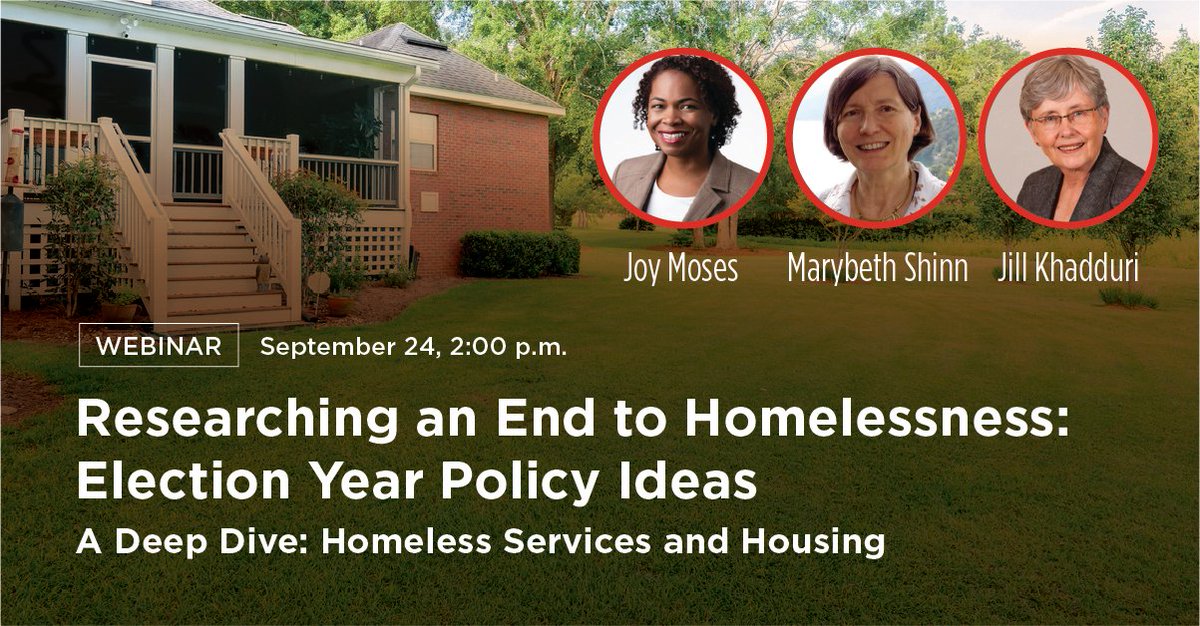
Abt’s @JillKhadduri recently co-authored “In the Midst of Plenty,” a book on the causes and effects of homelessness. Next week, join her, co-author Marybeth Shinn, and @naehomelessness for a webinar on their findings: https://t.co/x1Z46oRq7V
Interested in concrete steps activists can consider as they take on systemic racism in the housing?
Check out our new publication on how to address systemic racism in the housing.
#HousingSegregationisEverything
https://t.co/gFRMFUwaNK
Here is an excellent primer on the background and purpose of #AFFH from @FurmanCenterNYU for those looking for more information: https://t.co/Aaj6WXCKNi
#AFFH is a step toward interrupting the unquestionable relationship between structural racism and homelessness. Here are some resources on early evidence of its promise: https://t.co/lQdI8NTqnH