One shot finality.
Instant. Sub second.
On over 3200 validators.
Decentralised, permissionless, super cheap to run.
This is @MultiversX with SUPERNOVA!
Last week in MultiversX 🌍
📊 MvX State of the Foundation Report released
🛣 Putting the report into perspective: thoughts by Beniamin & Lucian
🏃 Major developments since '24 by @CodeMultiversX
🤖 Substrate, Not Standards: the agent commerce stack starts at the rails
🚀 3,237 validators new high recorded by @chainspect_app
⚙️ mxpy v11.4.0: custom HTTP headers for proxy + faucet requests
⛓️ It's easy to set up an MvX Validator
🎤 @andreimmarinica's 8 years on a mission
🏫 HSE 2026 high school engineering projects sponsored by MvX
🍖 @veropay_ro is cooking
🛠 Weekly #multiversxtech
🙌 Ecosystem highlights: @ThePalmTreeNW • @stakenest_io • @HG_EGLD • @BubuMVX • @hellerbtc • @alain_trades • @andreimmarinica • @scribblesvc • @SasuRobert • @ansschweiger
🌎 MultiversX
9.20M accounts • 604M transactions • 14.5M staked
📲 xPortal
2.5M+ users • 100k+ users stake $EGLD
⚡️ xExchange
$4.66M TVL • 1M USD 7d Volume
Hardening security across every live module.
We are in the early weaponization phase of frontier AI. The team is reanalyzing the security assumptions behind every module we run in production. Surface by surface, layer by layer.
As we have discovered in the past, MultiversX, myself, and perhaps several other team members have been targets of a highly-sophistication attack campaign, by Lazarus and other groups among them. Every attempt has been detected, contained, defended. What is unmistakable to me, is that the raw intelligence now available to attackers has materially elevated the sophistication, speed, and creativity of these groups.
The vital work done by the team has surfaced a class of issues that did not exist as viable threat vectors twelve months ago. Each one identified, patched, and folded back into a continuous hardening pipeline.
Security is and continues to be the highest priority over the coming weeks. And the shift here is structural: raw AI offensive capability is being normalized into the baseline threat model of every open source project on earth. Until that single fact is internalized by open source and blockchain teams, new attacks and vulnerabilities will be exploited every single day. Responsible teams should swiftly reorder their priorities around this reality. Now.
Alongside the vital work done by our engineering team, we very much appreciate the continuous surgical effort put in by the resourceful network of builders, validators, and community members, surfacing issues, proposing improvements, and sharpening the system as we prepare for what comes next.
All focus is on this 360° security review until the hardening phase concludes.
Then, the next chapter.
SUPERNOVA.
Agents Are Eating the World
A few structural shifts redefining value creation, market topology, and the architecture of the firm.
The Death of the Session
The fundamental unit of software is shifting from the “session”, a human sitting in front of an interface, clicking through menus, to the “task.” Agents don’t browse. They execute. This collapses the entire UX layer that defined the last three decades of software into a thin orchestration membrane. The companies that built moats around user habit and design familiarity are discovering those moats were made of sand. When an agent books your flight, it doesn’t care about your airline’s homepage redesign. It cares about the API. The implication is seismic: distribution advantages based on UI stickiness are evaporating. The new moat is data gravity and API surface area.
CORE INSIGHT: Every company is now two companies: the one humans see, and the one agents negotiate with.
Autonomous Commerce Loops
We are witnessing the emergence of closed-loop autonomous commerce, agents procuring, negotiating, and settling transactions with other agents, with humans only setting boundary conditions. A procurement agent evaluates 4,000 suppliers in the time a human reads one proposal. A pricing agent adjusts in real-time across 200 variables no human could hold in working memory simultaneously. This is a new market topology. The speed and dimensionality of agent-mediated commerce will create market dynamics we’ve never modeled: flash negotiations, millisecond arbitrage on service contracts, and reputation graphs that update continuously. The companies that win will be the ones that build the settlement rails and trust infrastructure for this machine-to-machine economy.
CORE INSIGHT: The next Visa is not a payments company. It’s an agent-to-agent trust and settlement protocol.
The Principal-Agent Collapse
Economics has long studied the principal-agent problem: how do you ensure someone acting on your behalf actually serves your interests? With AI agents, this problem transforms from a social contract into an engineering specification. Agent alignment isn’t about trust, it’s about architecture. Guardrails, evaluation loops, and value functions replace traditional contracts, incentives, and performance reviews. This is simultaneously the greatest risk and the greatest opportunity. The companies that solve agent alignment at the infrastructure level, building auditable, interpretable, controllable agent systems, will own the trust layer of the entire agentic economy. Every agent interaction requires a trust decision. Whoever arbitrates that decision captures the toll on every transaction.
CORE INSIGHT: The most valuable company of the agentic era won’t build agents. It will build a system that makes agents trustworthy.
In the end, the solution arrives, and it's striking is how much it simply converges on Supernova. Sub-second interaction anywhere on earth. True agent scalability. Programmable, verifiable actions. Payment and orchestration rails embedded at the foundation.
This is SUPERNOVA.
FRESH OFF THE PRESS: EGLD POSITIONED FOR US INSTITUTIONAL ADOPTION 🇺🇸
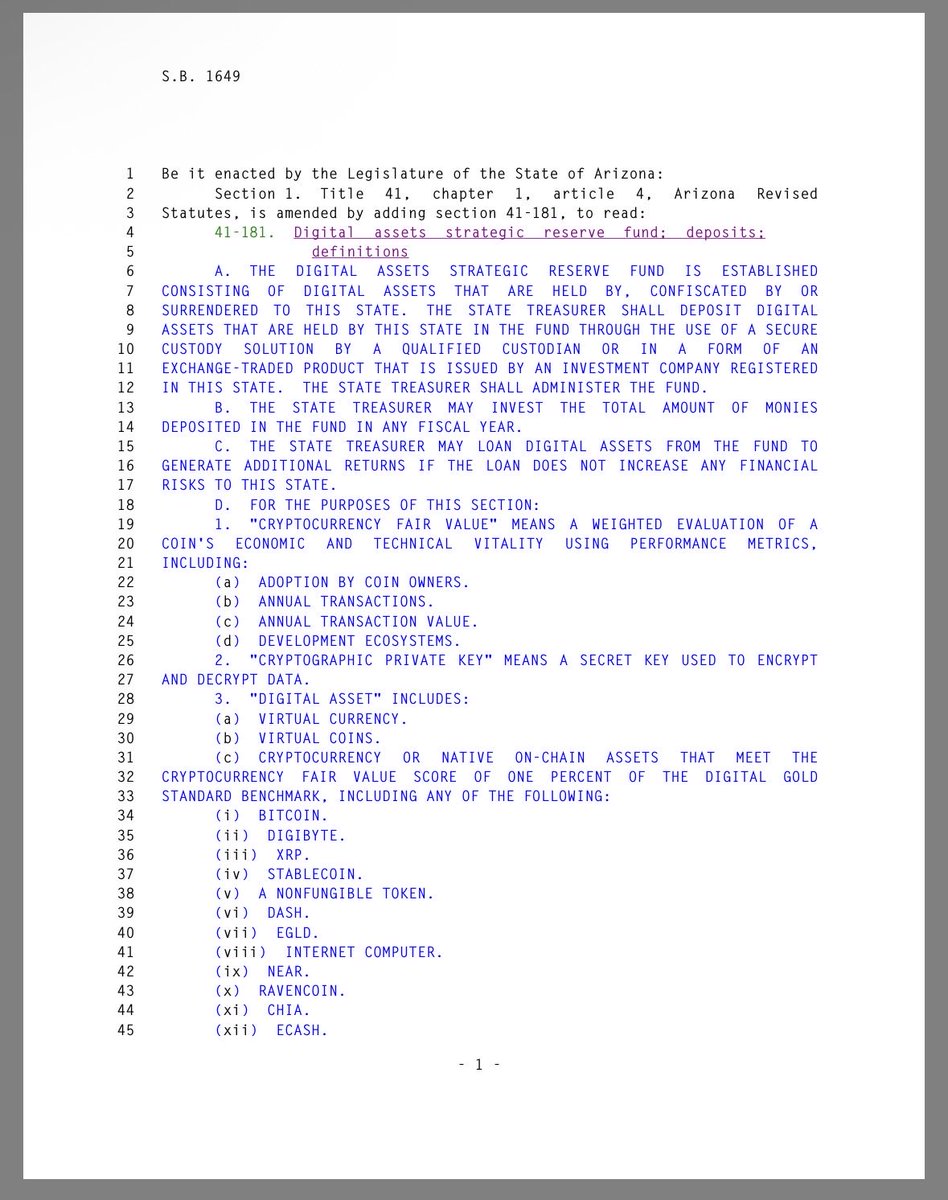
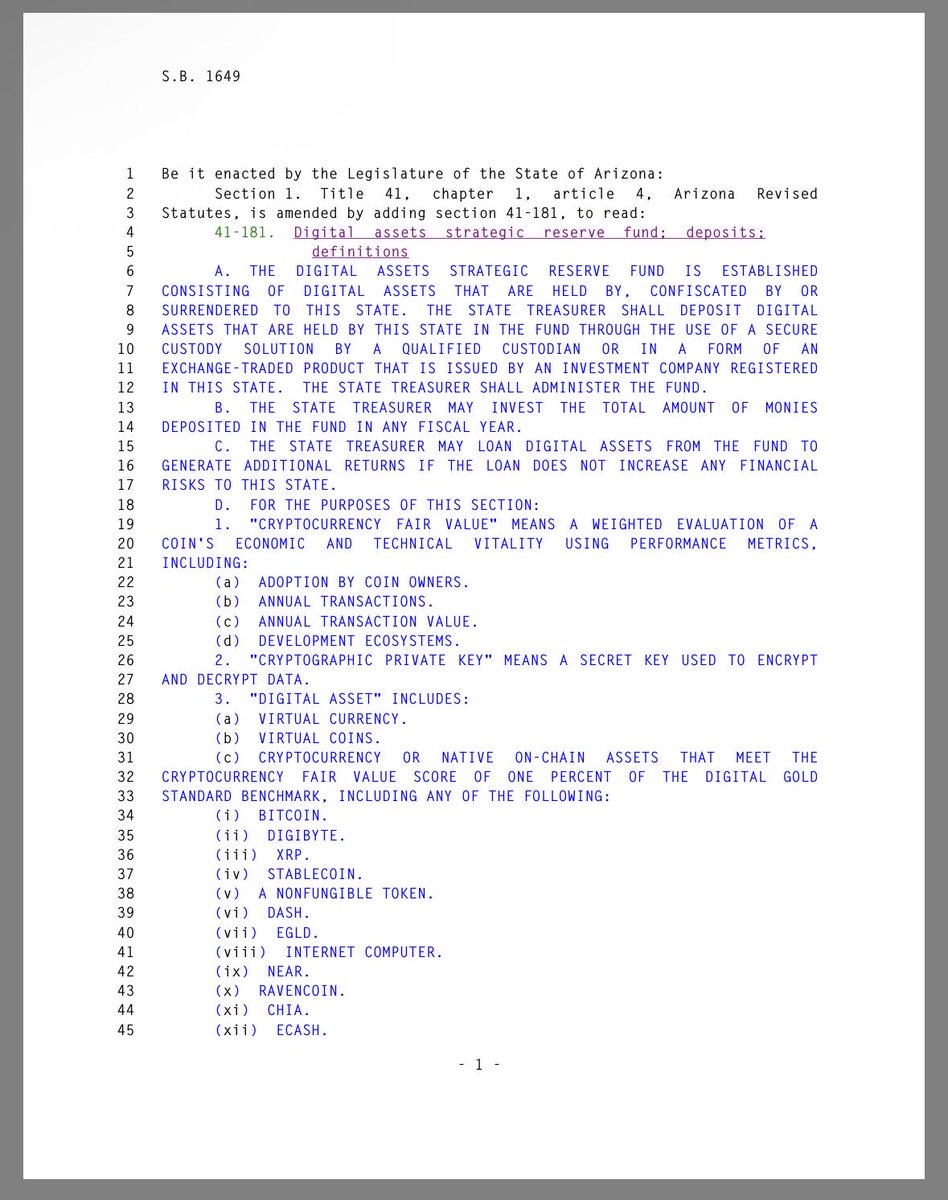
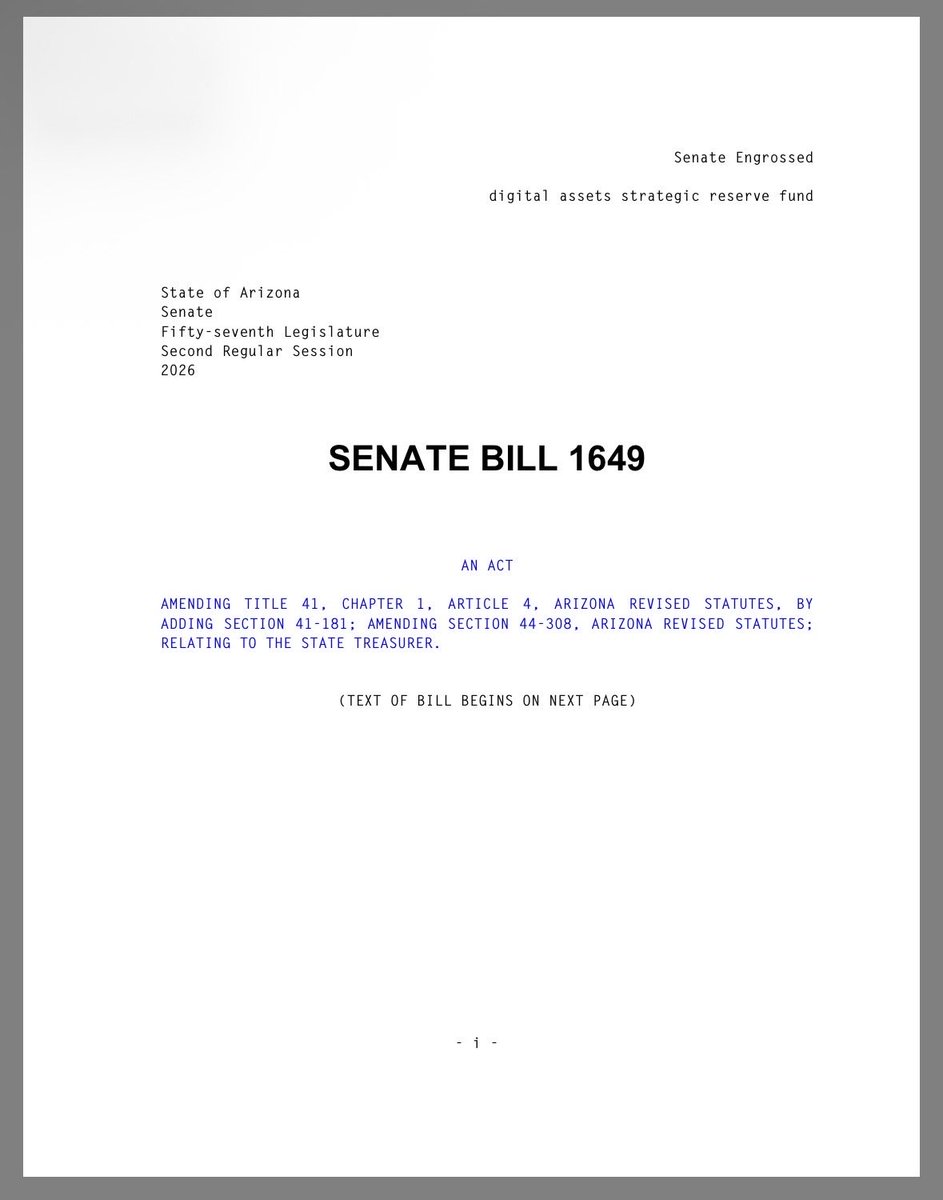
Arizona Senate Bill 1649 establishes the first Digital Assets Strategic Reserve Fund in the United States, with EGLD named directly in the bill text. The bill introduces an evaluation framework written into law, measuring network strength, development improvements, performance benchmarks.
Fourteen assets made the cut. EGLD one of them. This matters far beyond a single state. SB1649 sets a legal precedent for how governments can evaluate and hold digital assets following a deep review of fundamental measurable criteria. The fact that Arizona’s legislature looked at the data and included MultiversX technology alongside Bitcoin and other assets speaks volumes to what the team has been building for years: real infrastructure, real usage, real resilience.
If this passes the full House vote, Arizona becomes the first US state to hold a diversified crypto reserve, and EGLD is eligible from day one.
Institutional frameworks are being built around networks and assets enabling a robust and resilient foundation to build on for the future.
A great example of long efforts from people who care, builders and entrepreneurs from around the world, showing up, and finding new ways to bring contributions to the ecosystem. cc @DigitalGoldTalk
Public source: https://t.co/SOWV5DSCiM
🇺🇸 EGLD Enters the US Institutional Conversation
———
State of Arizona advanced two crypto bills to a full House vote.
SB1042 allows 10% of state public funds into digital assets. SB1649 creates a Digital Assets Strategic Reserve Fund, first of its kind in the US.
SB1649 names 14 cryptocurrencies by name. Selection criteria: adoption, transactions, transaction value, development ecosystem.
EGLD is one of the 14.
———
If passed, Arizona creates the first US state crypto reserve. EGLD eligible from day one. The precedent opens the door for other states and bigger institutional adoption.
source: https://t.co/SC9QZCBMqU
That's a wrap on the 32nd St Cafe x Silly Kitties limited time partnership and we are officially sold out! 🐾☕
We want to send a huge thank you to our community for showing up, and a warm welcome to all the new faces who joined us along the way. We’re thrilled to have you here.
Don't go too far, though! A brand new partnership is already on the horizon.
Stay Silly!
For the last years, we have been working toward a new breakthrough. A ground-up rearchitecting to set new records in speed, and UX (in addition to unprecedented throughput).
Yesterday, with the same minimal technical specs, we have processed 1 Billion transactions, achieving a peak of 120k transactions/second in a LIVE community battlenet, with only 3 shards + metachain.
This is SUPERNOVA 🔥
The game has changed.