CFACT defends the environment & human welfare through facts, news, and analysis, promoting free-market solutions to the world's environmental problems.
🚨Sovereignty Alert🚨 The U.N. is trying to seize control of Okefenokee Swamp against local wishes. Join CFACT and allies to keep America's wild spaces free from foreign control!
What do you think? Comment below to support American conservation! #okefenokeeswamp#unitednations #UN #floridageorgialine #florida #georgia #okefenokee #conservation #environment #wildlife #nature #protectourland #keepamericafree #statesrights #savetheokefenokee #community #activism #freedom #wetlands #ecology
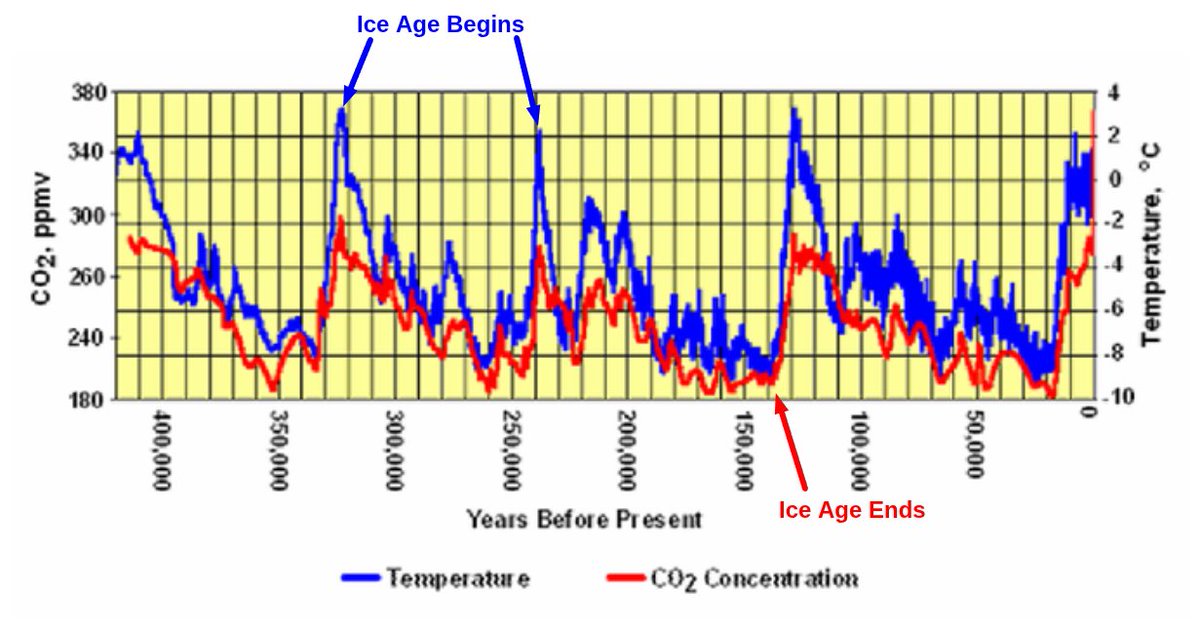
Ice ages begin when atmospheric CO2 is high, and they end when CO2 is low. This is the exact opposite behavior of what occur if CO2 controlled the climate.
https://t.co/hRpfdyhGG3
Here we go again with the coral reef panic. 🪸
Associated Press (10/22/2026): “The world's coral reef ecosystems all face high risk of collapse in the next 50 years.”
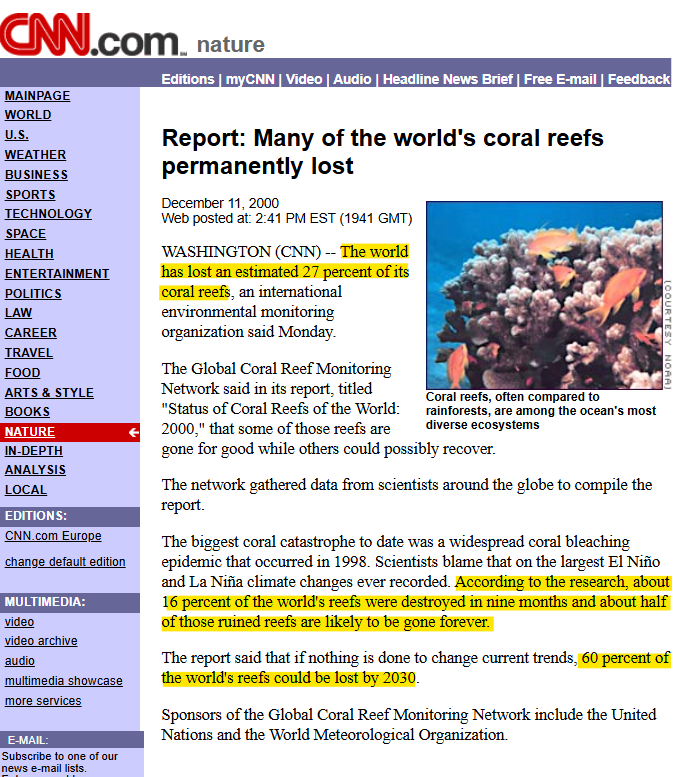
CNN essentially said the same thing 26 years ago.
CNN (12/11/2000): “[A]bout 16% of the world's reefs were destroyed in nine months and about half of those ruined reefs will be gone forever. [I]f nothing is done to change current trends, 60% of the world's reefs will be lost by 2030.”
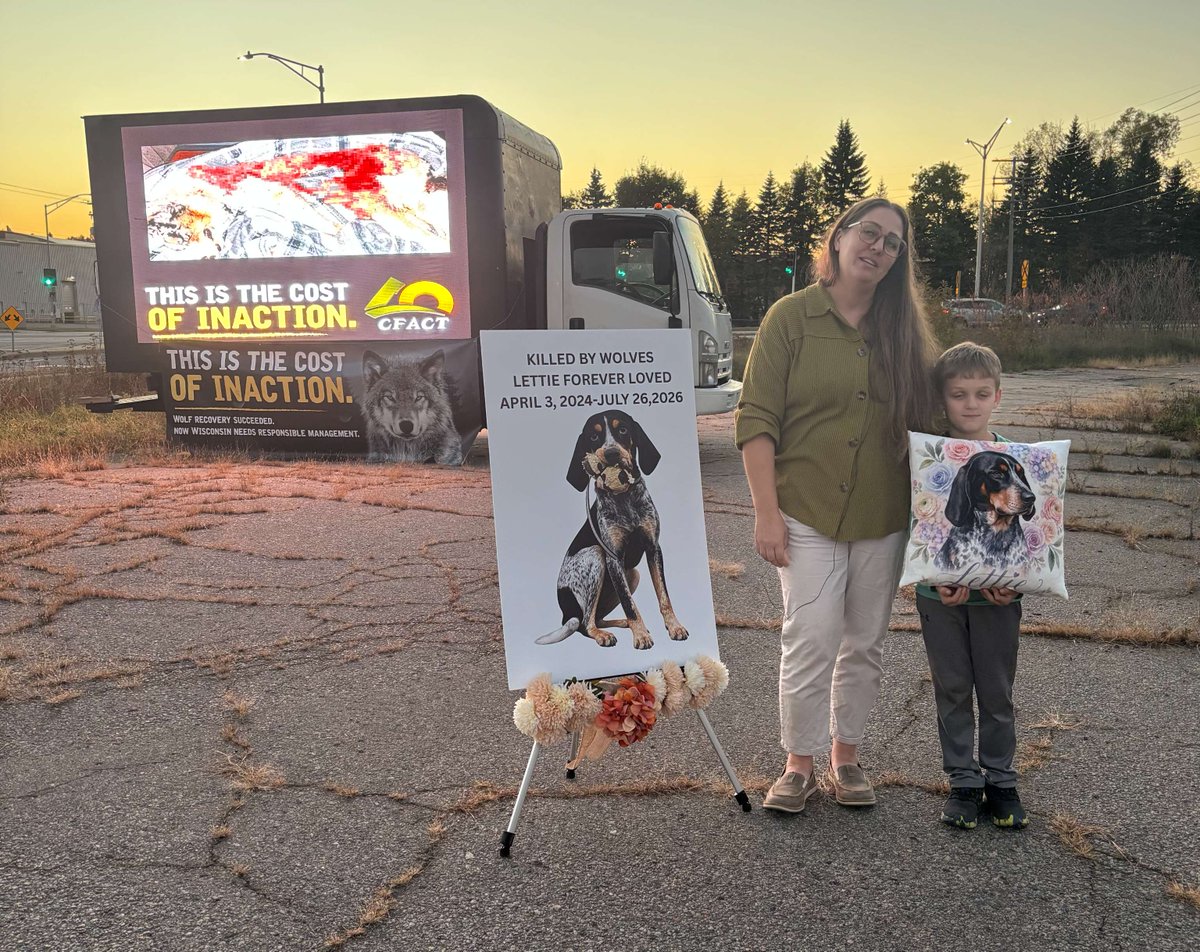
CFACT's billboard truck is on the move once again in the great state of Wisconsin! 🚚
Yesterday it passed through Mercer, giving CFACT's team to meet up with a local activist that shares the keen conviction population management needs to be returned to the state control.
Later in Wausau, CFACT's team met with the family of Lettie, a beloved family pet and hunting dog that was brutally killed by wolves in July of this year to express their condolences in person.
We need common sense policy reform ASAP! Will your pet be next? #DelisttheWolf #Wisconsinwolves #wolvesinwisconsin #conservation #SaveOurPets 🐶
For more information, visit: https://t.co/ZD8BsmEUQo
CFACT's billboard truck continues its journey across Wisconsin this week, traveling deep into the Northwoods on Tuesday to hold a memorial in front of the Ashland County Courthouse for the nearly 100 family pets killed by wolves in the Cheese State since 2024.
We couldn't visit his home district without mentioning our most sincere gratitude to @RepTiffany for being a strong voice on delisting the gray wolf from the Endangered Species Act!
True conservation is mutually exclusive with leaving wildlife populations unmanaged. Coexistence has to entail legal protections for human beings too, not just wolves. #DelisttheWolf #graywolves #Wisconsin 🐺📜❌
No Meat for You! Watch: Copenhagen pushes elderly in retirement homes to eat little meat to cut CO₂ –
Climate targets for everyone. & old people are ‘precisely the generation that polluted the most’
https://t.co/ubM2apT8x2
CFACT billboard truck spotted in Eau Claire!
We're raising awareness about the grim reality of 300+ #GrayWolf predations in the state since 2024.
Wolf populations have sufficiently rebounded in the #UpperMidwest, more than enough to merit removal from the Endangered Species Act. Currently federal law severely prohibits the killing of gray wolves, even in cases of self-defense or protection of domesticated animals.
In a state with an economy that heavily relies on #dairyfarms, coexistence and #conservation of gray wolves means hunting and population management, not wolves literally growling at your door!
For more information visit: https://t.co/uPEM3uh0t4 🐺
Have you seen this truck? 👀CFACT is in #Wisconsin this week, raising awareness about the brutal reality of unmanaged wolf populations. The photos on the mobile billboard are of local pets killed by wolves, representing over 300 pets and livestock killed by wolves in the Badger State alone since 2024.
Upper midwestern populations have surpassed Endangered Species Act (ESA) benchmarks and now pose a clear and present danger to Wisconsinites unless common sense conservation is implemented. Its time to #DelisttheWolf from the ESA and #SaveOurPets! 🐶🐱🐮🐷
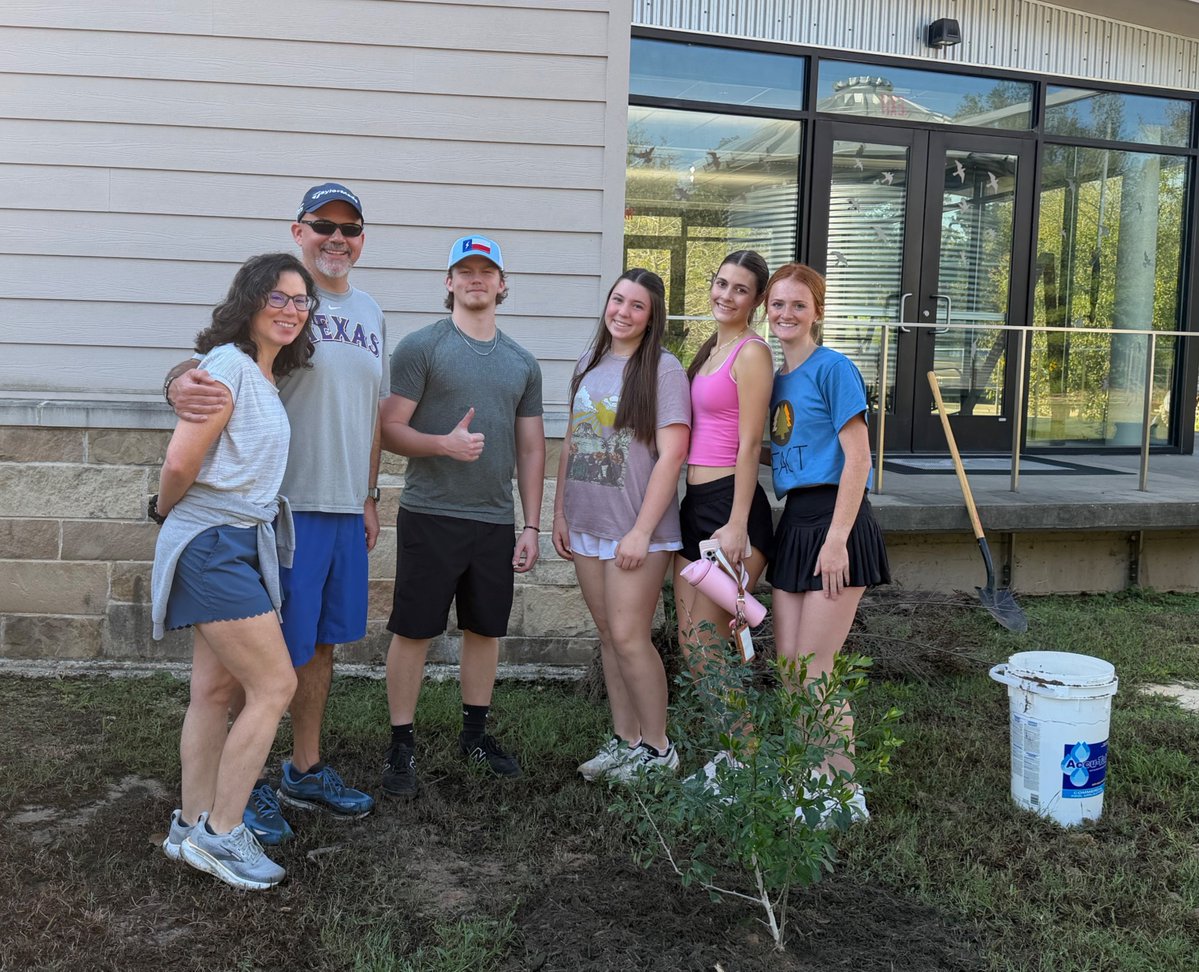
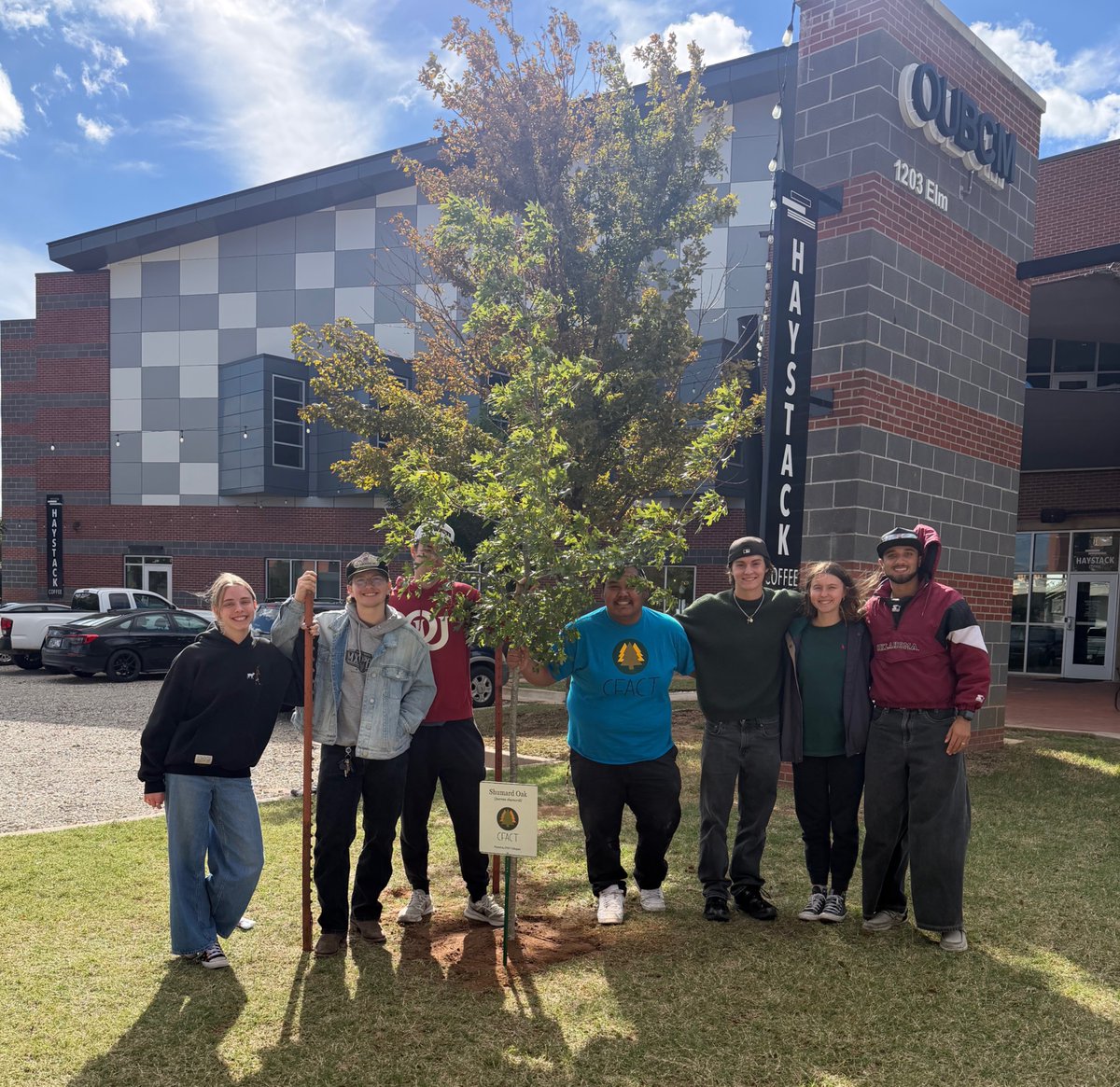
CFACT Collegians are "rooting" for conservation this semester by planting trees native to their states! 🌱Shoutout to our students at #UniversityofOklahoma and #TexasAMU for their stellar jobs 😎The best way to practice environmental stewardship is to roll up your sleeves and get your hands dirty.
You can read a full write up on their events here: https://t.co/eGsjatSQJa
Is your state a part of the U.S. Climate Alliance? If so, you could be facing higher utility prices, power outages, and more! Get the full run down here: https://t.co/HAAwiGIciv #exitclimatealliance#climatealliance#affordability
Soggy farms and drainage ditches are apparently "protected #wetlands" now according to the climate alarmists 😒Read all about it: https://t.co/khIaPLgi5T #SCOTUS
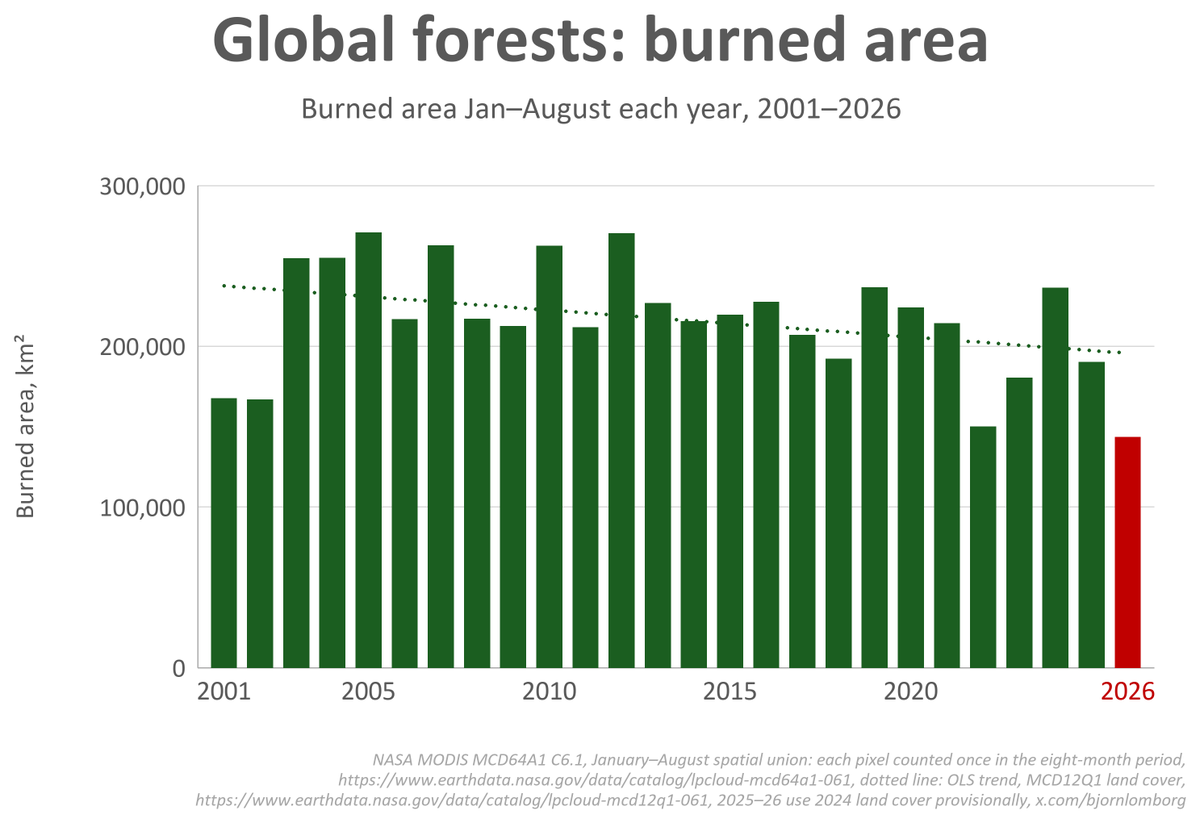
2026 global forest burn at a record low
January–August 2026 burned 35% less than the January–August 2001–25 average
NASA MODIS just released, January–August for every year 2001–26. Dotted line: least-squares trend
https://t.co/5aiHYoiijz
#NaturalGas is reliable energy! #Fossilfuels aren't perfect, but they irreplaceably power modern civilization and make our way of life possible. Green energy simply can't compete. 🛢️ What do you think about the role of natural gas in our energy future? https://t.co/BXUq5fhWYM
Protect Our Pets! As important #wolfconservation efforts continue to succeed , rural Americans, especially in states like #Wisconsin, are now facing the very real threat of wolf attacks. Watch the full video hosted by CFACT's @Gabby_Hoffman here: https://t.co/HAj0MjPa15 #protectourpets
What do record temperatures, rising global sea levels, and apple shortages all have in common?
They're all bogus claims made by climate alarmists in September of course!
Check out the full debunk for each claim plus more on CFACT's September edition of our Climate Fact Check: https://t.co/qFelLYpI1H #climatechange #climaterealism #thereisnoclimatecrisis
This is a LIE.
The United Nations apparently does not read their own IPCC reports.
Globally, floods have not become more frequent or more intense, although there are regional variations within the bounds of internal variability.
There are two primary types of floods relevant to this discussion: fluvial (river) and flash (pluvial).
Long-term trends in river floods are usually evaluated by looking at river and streamflow from river / stream gauges. This can be evaluated by looking at the flux of water passing by a fixed point, and we measure this in units of cubic feet per second (ft³ / sec).
With respect to river flooding trends, IPCC AR6 WG1 states in Chapter 11 that,
🗨️ “Peak flow trends are characterized by high regional variability and lack overall statistical significance of a decrease or an increase over the globe as a whole. Of more than 3,500 streamflow stations in the USA, central and Northern Europe, Africa, Brazil, and Australia, 7.1% stations showed a significant increase, and 11.9% stations showed a significant decrease in annual maximum peak flow during 1961–2005.”
🔗https://t.co/rCcMMVHu5K (p. 1568)
With respect to attributing flooding trends to human influence, the IPCC states,
🗨️ “In summary there is low confidence in the human influence on the changes in high river flows on the global scale. In general, there is low confidence in attributing changes in the probability or magnitude of flood events to human influence...”
🔗https://t.co/rCcMMVHu5K (p. 1569)
More recent streamflow data from USGS gauges (and compiled by the U.S. EPA) affirm the IPCC’s synthesis in that river floods in the U.S. have neither increased nor decreased over the last 60+ years.
The map I made below on the left shows the change in the magnitude of river flooding in the Lower 48 since 1960. The triangle-shaped markers show the annual linear trend in peak river flows (ft³ / sec) from 1960 to 2025 for all 425 USGS river / stream gauges having at at least 95% completeness over the period examined.
Only ~5.2% of gauges show a statistically significant increase in river floods and ~5.9% show a significant decrease. The rest are not statistically significant in either direction, so overall the trend isn’t statistically different from zero.
With respect to flash flooding IPCC AR6 says,
🗨️ “[H]eavier rainfall does not always lead to greater flooding. This is because flooding also depends upon the type of river basin, the surface landscape, the extent and duration of the rainfall, and how wet the ground is before the rainfall event... A mix of both increases and decreases in [flash] flooding have been observed in some regions...”
🔗https://t.co/D4EPjLdiSg (p. 8)
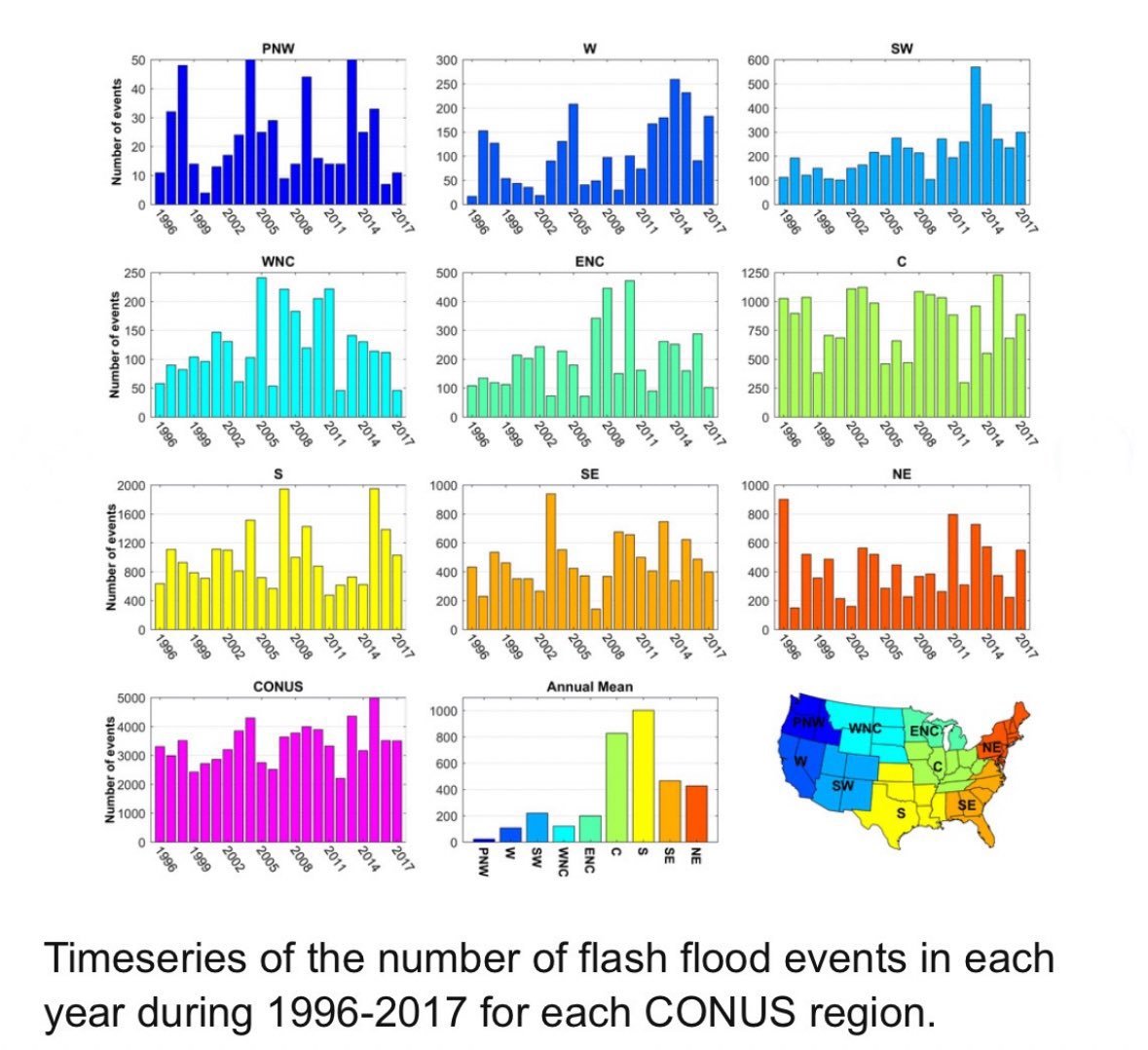
Ahmadalipour & Moradkhani (2019) found no increase in flash flooding incidents in the U.S. between 1996 and 2017. I suspect that these trends have continued, but an update to this paper would be nice.
🔗https://t.co/TCrrtYFHxD
Make America Energy Independent Again! 🪨💡
Check out the latest public comment penned by a CFACT campus representative, this time submitted to the National Oceanic Atmospheric Administration (#NOAA) in support of a recent permitting request to expand #criticalmineral mining and exploration on the ocean floor: https://t.co/lCjLlKx12e