Exploring various mediums. Trying to keep a 'tourist eye' on life. Collage/Abstract art/Digt photography/Short film Super8/Fashion Design/Instagram as cfishion
This video really makes you reflect on how much incredible talent in the world goes completely undiscovered and untapped simply because of lack of resources and opportunity.
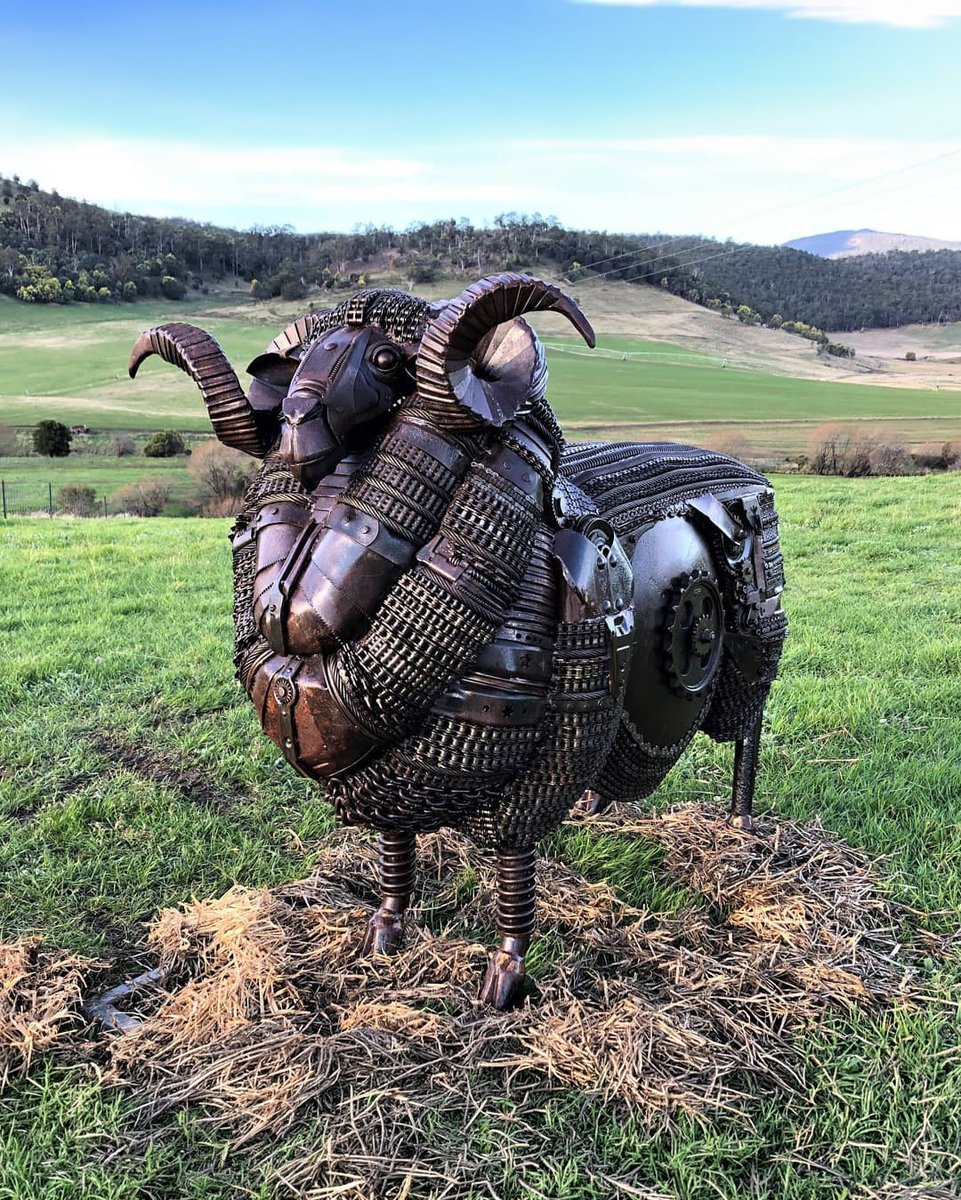
The Big Merino Ram!
A monumental scrap metal masterpiece by Matt Sloane in Copping, Tasmania. This big Merino ram is forged from old farm machinery, garden tools, and workshop steel, breathing new life into the region's agricultural past.
Installed in 1410, Prague’s Astronomical Clock is the oldest in the world still in operation. A 600-year-old masterpiece of medieval engineering that tracks time, stars, and seasons with haunting precision.
Local folklore says the clock's creator, Master Hanuš, was blinded by the city council so he could never replicate his masterpiece. Before dying, he supposedly reached into the gears to stop the clock forever. While historically debunked, the legend remains as haunting as the Orloj itself.
"It's a little embarrassing that after forty-five years of research and study, the best advice I can give people is to be a little kinder to one another."
—Aldous Huxley
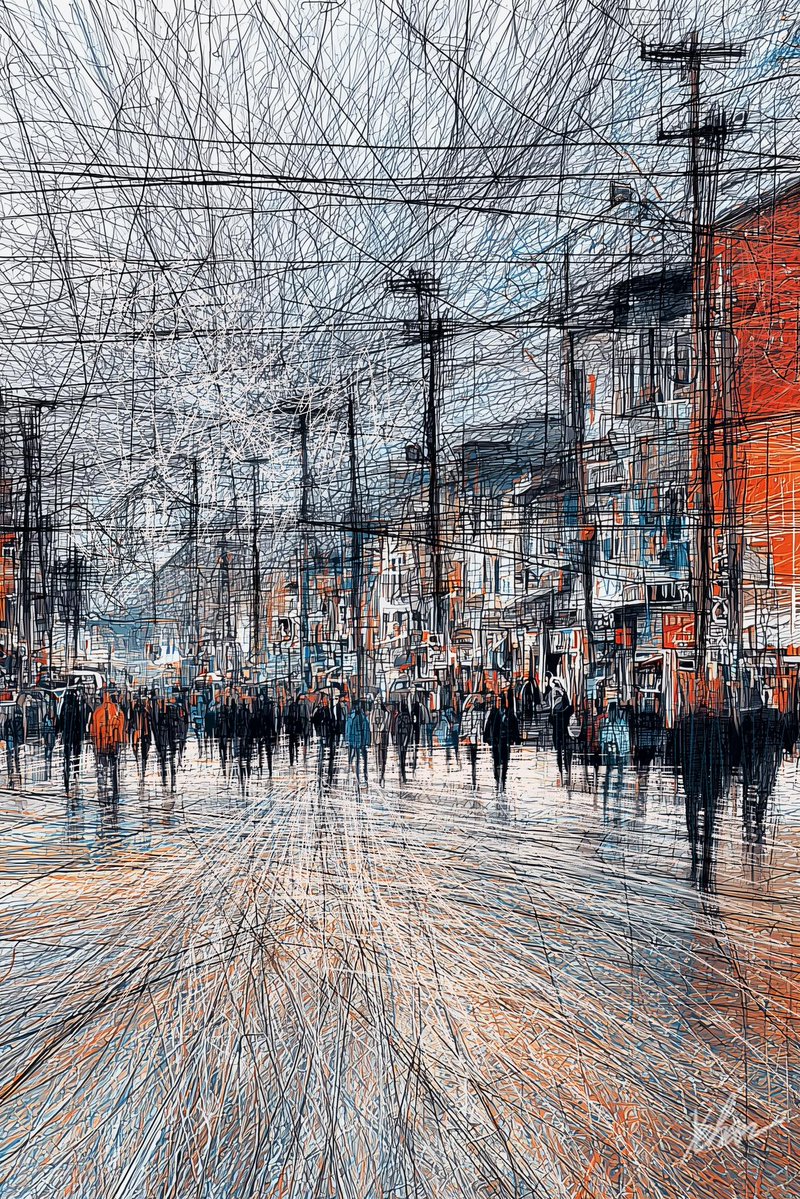
Yehan Wang art
Chipko movement ("to hug" in Hindi) non-violent women-led, forest conservation movement, 1970s, of India (Uttarakhand). Participants hugged trees to prevent loggers from cutting them down, successfully preventing massive deforestation. Where "tree huggers' originated #WomensHistoryMonth
Inuit Woman's Knife (Ulu). Culture: Inuit. Origin: Northern Canada, circa 1890. Medium: Walrus ivory handle and steel blade.
In traditional Inuit life in Northern Canada, these knives, called ulus, were the most vital cutting tool for women. Women used them every day to skin hunted marine mammals, break down frozen meat, and sew the thick clothing needed to protect their families from the cold.
Historically, the Arctic region didn't have metal smelting technology. So, before the 19th century, older ulu blades were mostly made from stones like slate, or from raw, cold-hammered copper. But as contact and trade in the region grew toward the late 1800s, the Inuit quickly started cutting down imported steel hand saws and turning them into traditional ulu knives. The 1890 tool I'm sharing here is a product of that material shift.
Now, let's look at the tool's design. With standard Western-style knives, the handle sits behind the cutting edge, which puts constant strain on the wrist joint when cutting hard objects. In the ulu's design, however, the handle is placed right above the top center of the blade. This way, the power from your arm and your body weight goes straight down into the cutting point without losing any force. Thanks to this, people could comfortably cut through frozen meat, thick seal hide, or whale blubber without tiring their wrists.
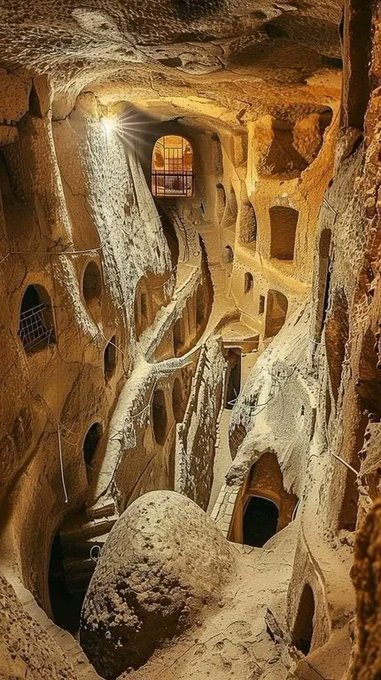
Derinkuyu is a 2500-year-old multi-level underground city in Turkey, extending to a depth of approximately 85 meters.
It is large enough to have sheltered as many as 20,000 people together with their livestock and food stores.
It is believed to have been built by the Phrygians, an ancient Indo-European people, around the VIII to VII centuries BCE. The city was later expanded by the Persians, Romans, and Christians, who used it as a refuge during times of war and persecution.
Derinkuyu is one of the largest and most well-preserved underground cities in the world, extending to a depth of approximately 85 meters (280 feet) and covering an area of around 4 km² (1.5 mi²).
The city consists of multiple levels connected by tunnels and stairways, with living quarters, stables, churches, and storage rooms.
The complex was designed with self-sufficiency in mind, featuring ventilation shafts, water wells, and an ingenious system of large round stone doors that could be rolled into place to seal off passageways and protect the inhabitants from invaders.
Derinkuyu was rediscovered in the XX century and has since become a popular tourist destination, attracting visitors from around the world who come to explore its mysterious and fascinating history.