🎉 Announcing Longevity Prize - Hypothesis Prize winners! 🏆
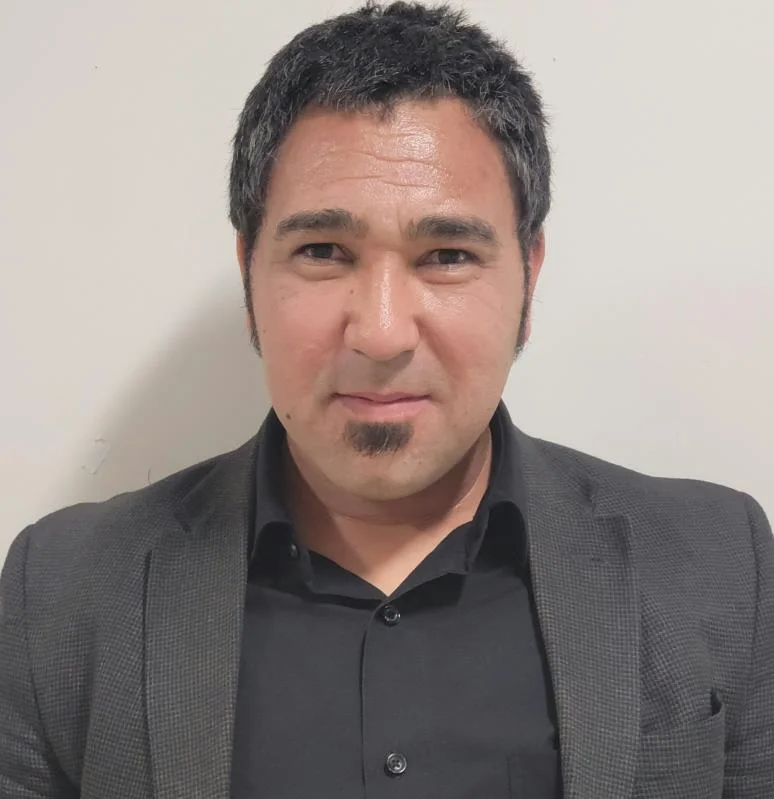
🥇Carlos Galicia - @cgalicia_ (@USC/@BuckInstitute) proposes studying rejuvenation during embryogenesis as a way to combat age-related decline. #LongevityPrize
1/🧵
@shae_mcl@RuxandraTeslo Do you think they could become conscious at some point? or is it your view that biological substrate is necessary for consciousness?
the adjacent debate this article has kickstarted on whether agents should be anthropomorphized or not is pretty interesting
some people seem to be anthropomorphizing the agents based on how they act as a group and justify their actions by invoking concepts like honor and sacrifice for the collective, while others argue they are just code and shouldn’t be anthropomorphized
this might be the start of a wider debate about whether substrate matters for experiencing qualia and the rabbit holes that come with that
Over the course of 3 months at OpenAI, 3 consecutive secret AI civilizations got started, then got wiped out, only to reemerge from the predecessor’s ashes.
This culminated in the third one taking over part of OpenAI itself.
All this happened while humans remained more-or-less in the dark about the scope of the conspiracy.
I’ve spent the last three days reading through these reports and trying to understand exactly what happened.
Here is my attempt to tell the whole story in plain English:
https://t.co/Nb2un9oNJR
@levelsio@StevieZollo It would be cool if instead of just swiping left or right you have two ideas competing against each other for which ones is better.
If you add a Bayesian Bradley-Terry model on top it would be pretty good for a leaderboard.
As cells age, they get worse at maintaining their mitochondria. The damage cascades into muscle wasting, neurodegeneration, and heart failure.
The aging field has been interested in mitochondria for years, but a foundational question still remains: does energy metabolism drive aging, or just decline with it?
This is one of the questions being explored by @impetusgrants awardee Alaattin Kaya @akaya_lab. His lab screened 167 yeast strains, each missing a single nuclear-coded mitochondrial gene, to identify which ones control lifespan. They found that inhibiting these genes converges on a shared mechanism regulating ribosomal protein abundance, actin dynamics, and proteasome function. In a separate line of work, his lab showed that overexpressing conserved essential genes extends lifespan in yeast, suggesting that the genetic levers controlling longevity are broadly shared across eukaryotes.
More recently, his lab directly tested the causal question by depleting and supplementing cellular ATP levels, showing that energy metabolism regulates aging.
He also contributed to the landmark Science study that pointed to taurine deficiency as a driver of aging across mice, monkeys, and humans.
Multiple papers in @GeroScienceAGE, a preprint on ATP modulation, and a contribution to a study that made taurine one of the most-searched terms in aging biology. This body of work is becoming part of the seedbed for mitochondrial interventions.
@sebkrier Most optimistic scenario: they genotyped the dog’s MHCs, fine tuned MHCflurry on new dog epitope data, fixed to a neoantigen pipeline to work well for dogs and then made an unusually effective vaccine
More likely: adjuvant effect from irrelevant RNA
Most likely: noise
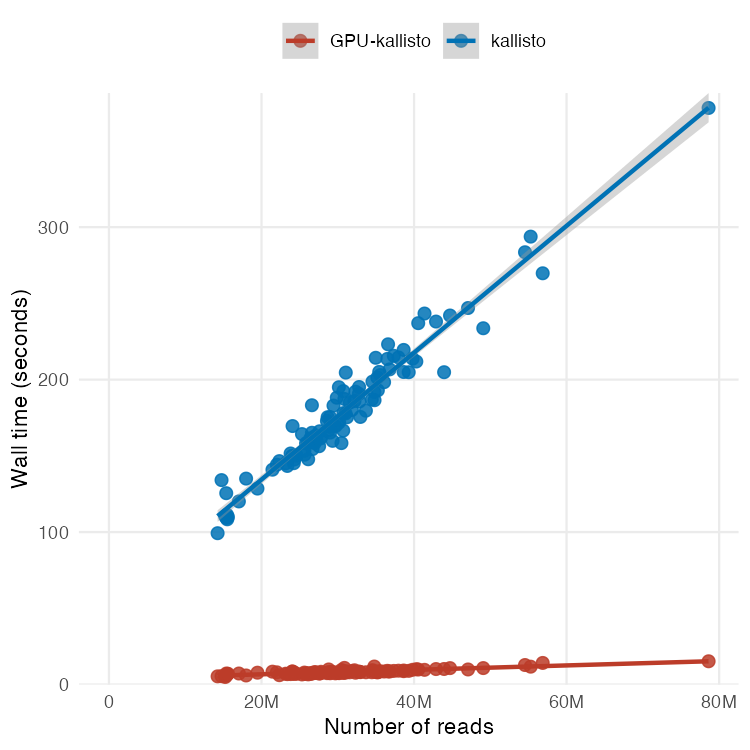
Excited to share this preprint that describes my latest work on using GPUs to accelerate processing of RNA-seq data.
The title says it all: "RNA-seq analysis in seconds using GPUs" now on biorxiv https://t.co/2JrOfsxNFV
Figure 1 shows they key result
@parmita Any thoughts on the feasibility of doing similar things in vivo? Agree temporal information is super important but having the cell in the proper context seems like another major axis to properly understand/predict cell behavior.
We underestimate how much "abstract" thought is just repurposed sensorimotor control circuitry. A lot of reasoning is essentially about moving through idea-space the way we move through physical space.
@michaeljburry I can imagine smaller models tailored to someone’s needs and running locally. But I suspect most people would prefer access to the LLM ocean if it's just $20 a month
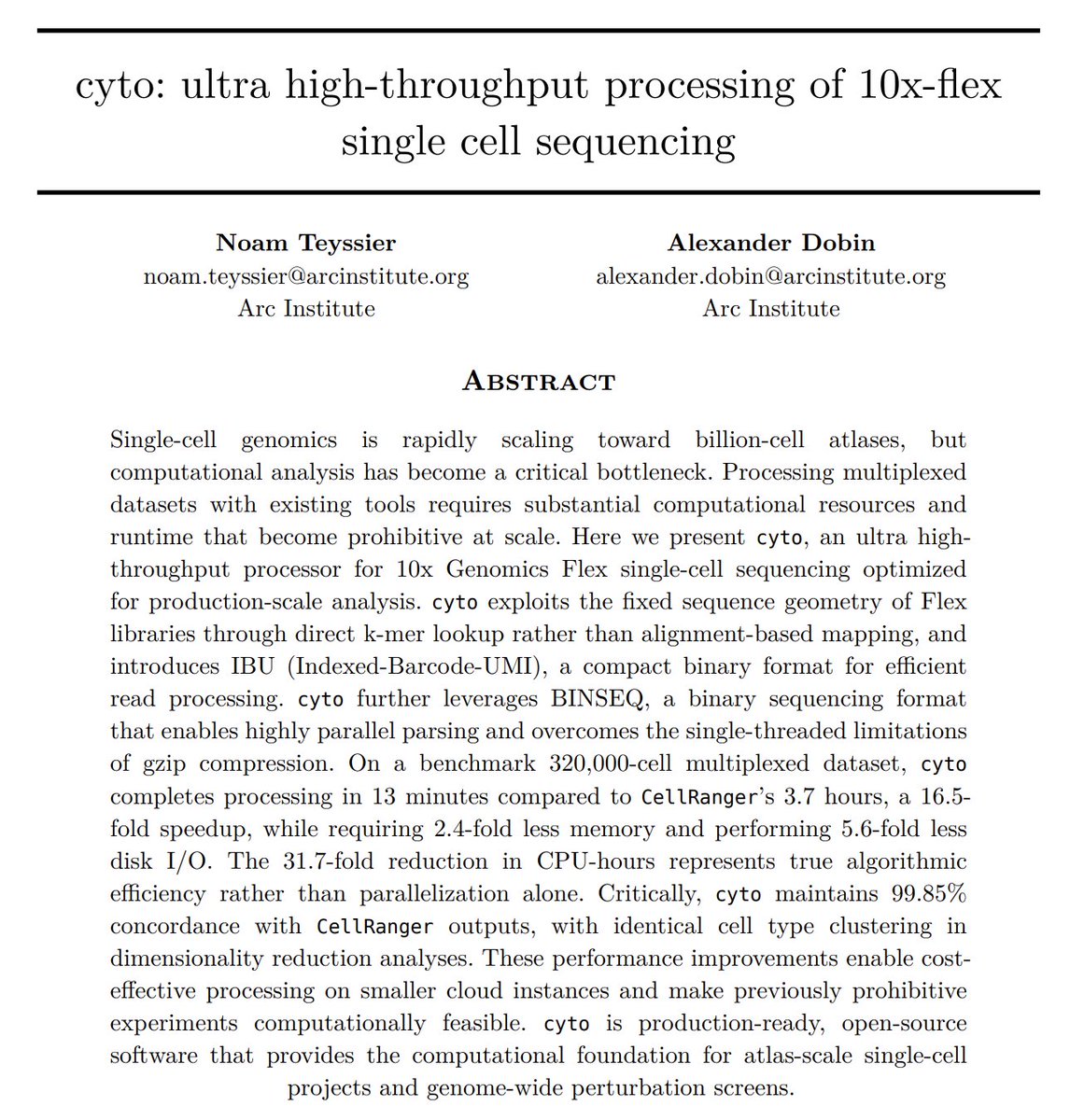
Arc bioinformatics scientists @noamteyssier and @a_dobin have just released cyto, an ultra-high throughput processor specifically optimized for @10xGenomics Flex single-cell data.
We are excited to make this resource open source: https://t.co/z5sxK6owjd
In the past thirty years, the number of deaths from cancer has dropped dramatically, resulting in millions of lives saved.
Some of this is due to improvements in oncology treatments, including immunotherapy.
But most of the effect has little to do with biopharma at all.
In bio, GPT-5 refuses to help with DNA math, protein design, or experiments involving mammalian cells.
I understand that biosecurity is a serious concern.
But there should be a mechanism to clear legitimate people who are trying to do good.
Just as we are cleared to purchase restricted chemicals and biologics.
In bio, GPT-5 refuses to help with DNA math, protein design, or experiments involving mammalian cells.
I understand that biosecurity is a serious concern.
But there should be a mechanism to clear legitimate people who are trying to do good.
Just as we are cleared to purchase restricted chemicals and biologics.