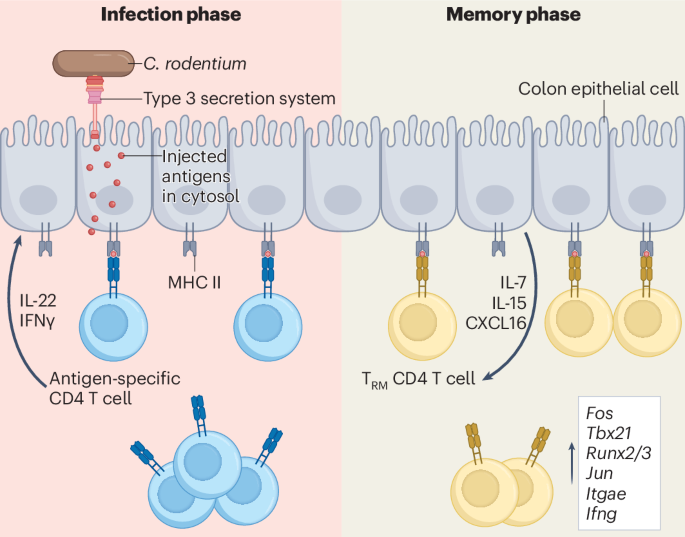
Bacterial antigens injected into cytosol of intestinal epithelial cells are presented by MHC II for induction of Ag-specific T cell responses and long-term epithelial cell-associated CD4 Trm
https://t.co/FR4vszQW4g @NatImmunol
https://t.co/dtFx6eHAqy
Enormous thanks to my co-first author Pragun Acharya, the Weaver Lab, and to my mentor Casey. A big thank you to Xi Lin and Richard Blumberg who wrote a generous News & Views alongside it. Always happy to talk about this work, questions welcome. https://t.co/YccmE9yhVF
Out this week: We asked whether where a bacterial antigen ends up inside an IEC determines the CD4 T cell response it generates. Isogenic C. rodentium strains, same LCMV epitope, different destinations. More below: https://t.co/2SXpayAaaW
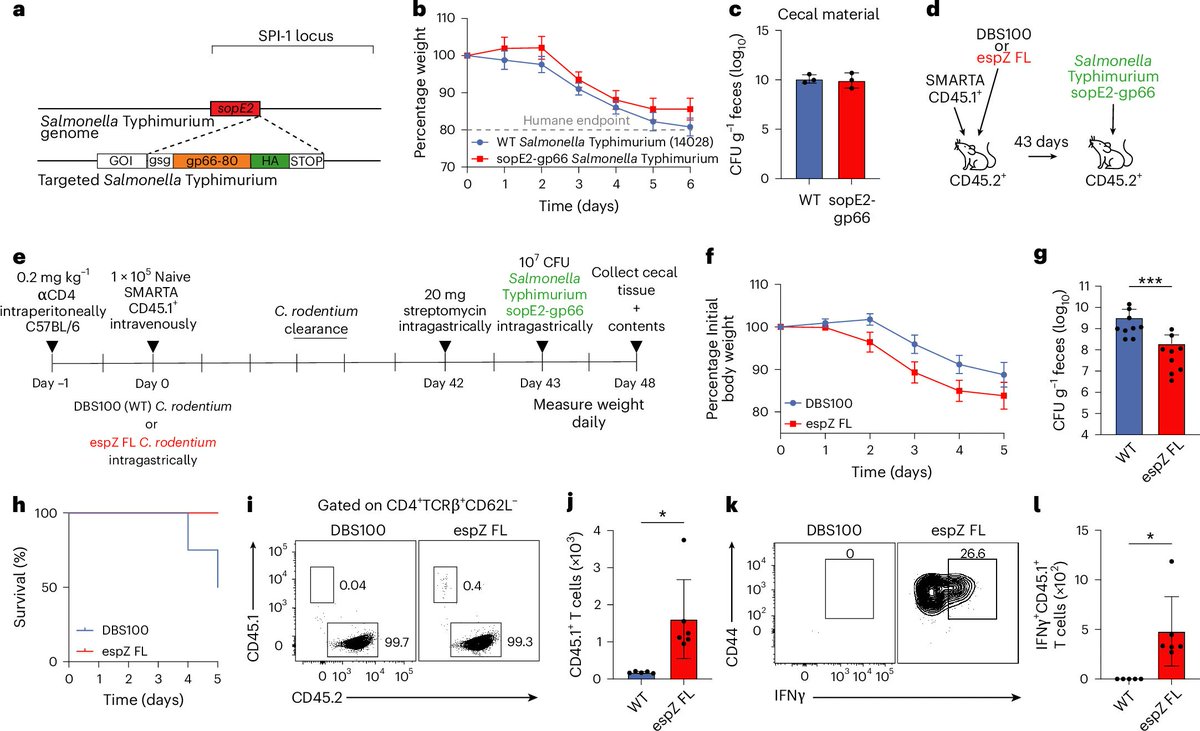
Does it matter? Mice primed with cytosol-delivered antigen were protected against a heterologous Salmonella carrying the same epitope. A T3SS that evolved for virulence doubles as an antigen delivery route the host exploits.
In anticipation of what to do if the NIH begins to evaporate as a viable mechanism to support American biomedical research I’ve written the two attached articles. One for young PhD scientists in @PLOSBiology, the other for MD/DO health professionals @BakerInstitute. These are admittedly imperfect papers since nothing can compensate for losses in NIH funds, but it’s a start. The good news is that you can still have a career in the U.S. but things won’t be quite the same