Today we announced our new Fairwater datacenter in Atlanta, connected with our first Fairwater site in Wisconsin and our broader Azure footprint to create the world’s first AI superfactory.
Fairwater exemplifies our vision for a fungible fleet: infra that can serve any workload, anywhere, on fit-for-purpose accelerators and network paths, with maximum performance and efficiency.
AI workloads have evolved beyond large-scale pre-training. Today, they encompass fine-tuning, reinforcement learning (RL), synthetic data generation, evaluation pipelines, and more. Fairwater is built to support this full lifecycle:
Max density: Fairwater’s two-story design and liquid cooling system lets us place racks in three dimensions and pack them with GPUs as densely as possible, minimizing cable runs and improving latency and effective bandwidth.
Fleet: Each Fairwater DC can integrate hundreds of thousands of the latest NVIDIA GPUs into a single coherent cluster. This provides flexible infra that can support the full spectrum of workloads, and ensure no GPU is left unnecessarily idle.
And that’s on top of the more than 100,000 GB300s coming online this quarter alone for inference across the rest of our fleet. For us, it’s all about turning every gigawatt into the maximum number of useful tokens. Not every GW is created equal!
Planet-scale: Every Fairwater DC will connect through our continent-spanning AI WAN to prior generations of AI supercomputers, forming a truly fungible pool of compute. This enables developers to scale beyond the capacity of a single site and dynamically land workloads on the right infra for their needs.
Together, these innovations let us bring together different generations of silicon and AI systems across DCs and geos into a single elastic system that scales seamlessly across training and inference workloads
And this elastic AI capacity is all available alongside all the other cloud services (compute, storage, databases, app services) that AI agents and workloads need.
This is what we mean when we talk about building a fungible fleet – a single, unified platform that pushes the limits of performance per watt and per dollar.
Read more: https://t.co/PsMoTN3UPQ
.@satyanadella just put the whole "water" debate to rest.
Datacenters run on a closed loop cooling system, the water usage of a datacenter for an entire year is roughly equivalent to a usage of 1 restaurant!
If Spirit's shutdown affected your travel plans, we're here to help. We're offering reduced, nonrefundable rescue fares for the next five days across domestic routes (nonstop and one-stop via our hubs) and routes between the U.S. & Latin America. Learn more: https://t.co/XtUTgpqutQ
50 years of @Apple
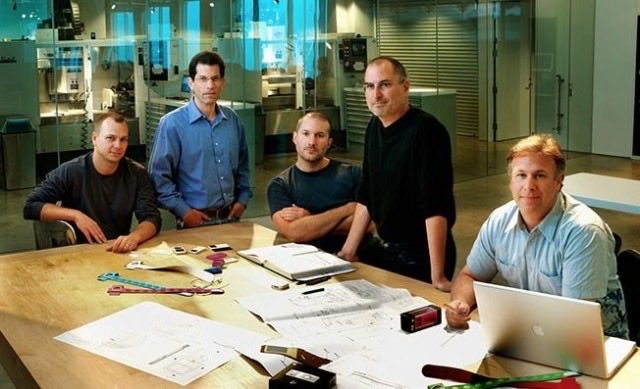
From the early days of the #iPod to bringing the #iPhone into the world, some of the most formative years of my career were spent there. The products and teams stay with you. But more importantly so does how Apple thinks.
A few lessons that have held true for decades:
1) Start with the user, not the tech. The question isn’t “what can we build?” but “what problem actually matters?”
2) Focus is everything. Apple is defined as much by what it says no to as what it builds.
3) End-to-end matters. Hardware, software, services. It all has to work together.
4) Details are the product. What feels small is what users remember.
5) Debate hard. Commit fully.
6) Build for the long term.
We’re in another moment of massive technological change. The fundamentals haven’t changed.
The companies that win build things people actually use and can’t imagine living without.
Congrats to everyone who has been part of Apple’s first 50 years! 🙌