🎁USD$150 Christmas Luckydraw
@GluonMoney is a new way to experience money: fast, fun, social, and borderless
Most financial apps give you features 🤓
We’re giving you moments 😋
Gluon starts as a social mini-game platform:
🎁 luckydraws
🎟️ raffles
✨ surprises
Behind the fun sits the real engine we’re building:
🤑saving, investing, spending
🛒with more options, more upsides, more discounts
🌐truly borderless and permissionless
To participate, follow the rules in the post 👇
✅follow @GluonMoney
✅like + retweet
✅tag 3 friends
✅click the link to join luckydraw
https://t.co/mvjqF1YHKa
1/ click link to download app (if downloaded skip to 4/)
2/ email signup
3/ if you are not landed on join page, then come back and click link again
4/ be in a draw for $150 🫡
I’m turning 41, but I don’t feel like celebrating.
Our generation is running out of time to save the free Internet built for us by our fathers.
What was once the promise of the free exchange of information is being turned into the ultimate tool of control.
Once-free countries are introducing dystopian measures such as digital IDs (UK), online age checks (Australia), and mass scanning of private messages (EU).
Germany is persecuting anyone who dares to criticize officials on the Internet. The UK is imprisoning thousands for their tweets. France is criminally investigating tech leaders who defend freedom and privacy.
A dark, dystopian world is approaching fast — while we’re asleep. Our generation risks going down in history as the last one that had freedoms — and allowed them to be taken away.
We’ve been fed a lie.
We’ve been made to believe that the greatest fight of our generation is to destroy everything our forefathers left us: tradition, privacy, sovereignty, the free market, and free speech.
By betraying the legacy of our ancestors, we’ve set ourselves on a path toward self-destruction — moral, intellectual, economic, and ultimately biological.
So no, I’m not going to celebrate today. I’m running out of time. WE are running out of time.
Countries with the highest number of arrests for online comments in 2023:
🇬🇧 United Kingdom: 12,183
🇧🇾 Belarus: 6,205
🇩🇪 Germany: 3,500
🇨🇳 China: 1,500
🇹🇷 Turkey: 500
🇷🇺 Russia: 400
🇵🇱 Poland: 300
🇹🇭 Thailand: 258
🇧🇷 Brazil: 200
🇸🇾 Syria: 146
🇮🇳 India: 100
🇮🇷 Iran: 100
🇫🇷 France: 54
🇺🇸 USA: 50
🇻🇳 Vietnam: 45
🇪🇬 Egypt: 20
🇸🇦 Saudi Arabia: 15
🇦🇿 Azerbaijan: 13
🇭🇺 Hungary: 10
And then Brits come and lecture the world on the so-called "free speech" 🤡
@0xgoku_ Totally agree, seem people toxic by default, also they seem dont want live together in peace haha
Anyway, I only want to read your post, Gavin's post about Polkadot eco, build, stay, value add
Keep it going bro :)
Fun fact, @EnterTheMythos is #1 blockchain with NFT Volume, transactions & buyers 🙌⚡️
Remember, BIG new games by @playmythical games are coming soon, bringing +100 M players on-chain secured by @Polkadot🩷
⚽️ @FIFARivals
🐧 @PlayPudgyParty
Imagine when this goes live 👀
In November 2017, an anon github user, “devops199,” accidentally triggered a bug in Parity’s multisig wallet.
513,774 ETH froze on the spot, affecting over 587 wallets. About $150M at the time. $90M of that was from Polkadot’s ICO.
It was the second largest ETH loss in Ethereum’s history. And even today, a lot of people still don’t fully get what happened and its impacts.
What went down:
• Parity’s multisig wallet used a shared library contract to run functions across all wallets. Efficient, but a single point of failure.
• The library wasn’t properly initialized, leaving its ownership open.
• devops199 found this, called the initWallet function, and unintentionally (?) became the contract’s owner.
• Moments later, he triggered the self-destruct function, permanently deleting the library.
Every multisig wallet that relied on this library: Frozen.
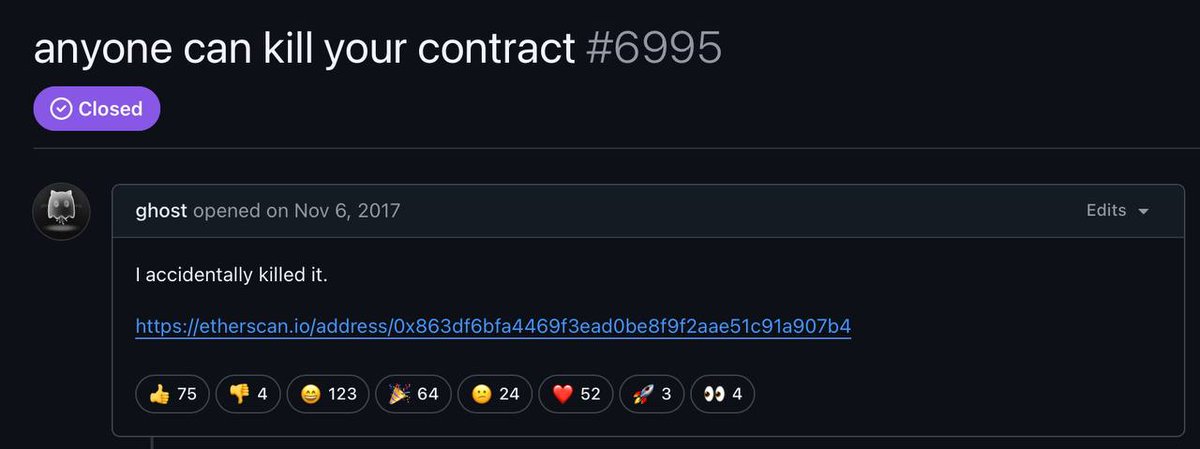
And devops199—ghost left a now-iconic message:
“Anyone can kill your contract… I accidentally killed it.”
Why the funds were irrecoverable:
• No backup. Without the library, wallets lost all functionality.
• Ethereum’s immutability principle. Smart contracts are immutable by design. Once the library was gone, there was no native way to restore access.
This incident challenged the notion of what we mean by immutability and exposed the idea that blockchain immutability is, in many ways, an illusion (a fallacy).
Ethereum also itself had mechanisms that force change.
Take the difficulty bomb. A built-in feature that makes mining (almost) impossible unless the network upgrades.
It was Ethereum’s way of saying, “This chain needs to evolve, or it dies.”
That wasn't immutability. That was planned mutability.
So, the real question isn’t “Should the protocol change?”
It’s “When is it acceptable to change?”
And more importantly: “Whose expectations are we protecting?”
The philosophical split:
In the Parity incident, purists argued that the code should be followed to the letter. Bugs and all. “The contract failed. End of story.”
Pragmatists focused on intent. The funds were meant to be spendable by the wallet owners. Freezing them forever wasn’t the point.
We saw the same split during the DAO hack in 2016.
People weren’t even sure whether to call it a hack. Some said, “It’s not a hack if the code allowed it.”
Others argued, “The intent was violated, so it’s theft.”
Ethereum chose pragmatism back then. They forked the chain to recover the stolen funds.
With the Parity case, Ethereum took the opposite approach. No fork. No fund recovery.
The decision makers leaned into “Code is Law” this time, choosing protocol integrity.
The hidden politics of upgrades:
And to this day, Ethereum still respects “Code is Law” at the contract level. Meaning if a smart contract has a flaw, the network itself doesn't have to intervene to fix it.
Post-DAO, it has become more resistant to making such interventions, reinforcing the idea that individual contract risks fall on users and devs.
But when it comes to the protocol level, Ethereum recognizes that upgrades are essential for the chain’s health and future growth.
So, Ethereum frames its upgrades as purely technical, focused on scalability, security, and performance, but often downplays the social and political dynamics behind what gets upgraded and why.
The Parity wallet decision poses this question or contradiction: choosing not to act was itself a political choice.
Because one can easily argue that, at its core, every upgrade, every hard fork, every algorithm carries some bias. It reflects the values, priorities, and decisions of its creators, its ultimate initiators.
So, Ethereum’s choice not to fork after the Parity hack wasn’t just pure adherence to code.
It was a social decision in some aspects, just like the DAO fork was.
And if immutability means “the code is the final word,” then why does the chains need constant upgrades to stay functional?
Impacts on Polkadot:
This incident made @gavofyork see even more clearly that the problem with blockchains wasn’t just technical, it was also philosophical.
Ethereum’s rigidity around immutability, its commitment to relying on nebulous consensus for decision-making, and the lack of formal structures have led to fractures, stagnation, and a system that can’t react in crises in a world of infinite gardens, each with infinite vulnerabilities.
And therefore, Polkadot was designed with flexibility and upgradability baked in:
• Forkless upgrades keep the chain evolving without hard forks or community splits.
• On-chain governance ensures that decisions are transparent, automated, formalized.
• Its governance is inclusive, and its tools allow anyone, not just founders, to propose solutions when a crisis hits. The community, any ecosystem agent can decide, can step up with conviction and skin in the game.
This doesn't reject immutability entirely. It reframes it. Code can evolve, but the social contract, users’ shared expectations, remains at the core.
So, this core debate seems to remain for a while:
Is immutability about following code to the letter?
Or is it about upholding what users expect the code to do?
For Polkadot, it’s the latter. Governance, OpenGov, as the safeguard for user expectations.
And that’s where the real ideological fork happened. Not in the code, but in how these ecosystems handle failure, risk, trust, decision-making, and navigate infinite gardens filled with infinite vulnerabilities.
🤯 I know you're just looking at the price, but the data speaks for itself and you're not bullish enough on Polkadot yet...
✅ Highest Bandwidth | 42 MB/s
👀 Most resilient | 149 real-time Nakamoto Coefficient
🔋 Most Energy Efficient | lower carbon footprint 71 tCO2e/year
🏃♂️ Fastest | 143343 TPS
The CME CF Polkadot Reference Rate is now available against the New York Variant, published at 4:00 p.m. ET daily, providing greater pricing transparency for the U.S. cryptocurrency market. https://t.co/xM3x2Jjk24
On a multi-core, shared Web3 world computer that exists today.
With a DA throughput: 67MB/s.
Cost per core: Under $50/month today. Need more power? Buy more cores. Need less? Sell the ones you don’t need.
Lowest entry point, open market for the blockspace, beating anything else in price/performance.
Not a waffle network running on a few dozen nodes or permissioned setups.
No 90KB/s limitations from base layer block sizes, not leaning on sequencers for high throughput, or high costs due to L1 calldata.
Size, coherence and resilience could be the new blockchain trilemma. @polkadot's JAM protocol and its mostly-coherent computation model is a novel proposal in this tradeoff. In case you're new to this and JAM, @kianenigma wrote this nice article to help explain it. https://t.co/KcJmvpNYSg
Today, all of web3 changes forever.
After two years of rigorous research and development, Hyperbridge comes online—as the world's first verifiable, multichain bridge.
https://t.co/3SiGvn6APi
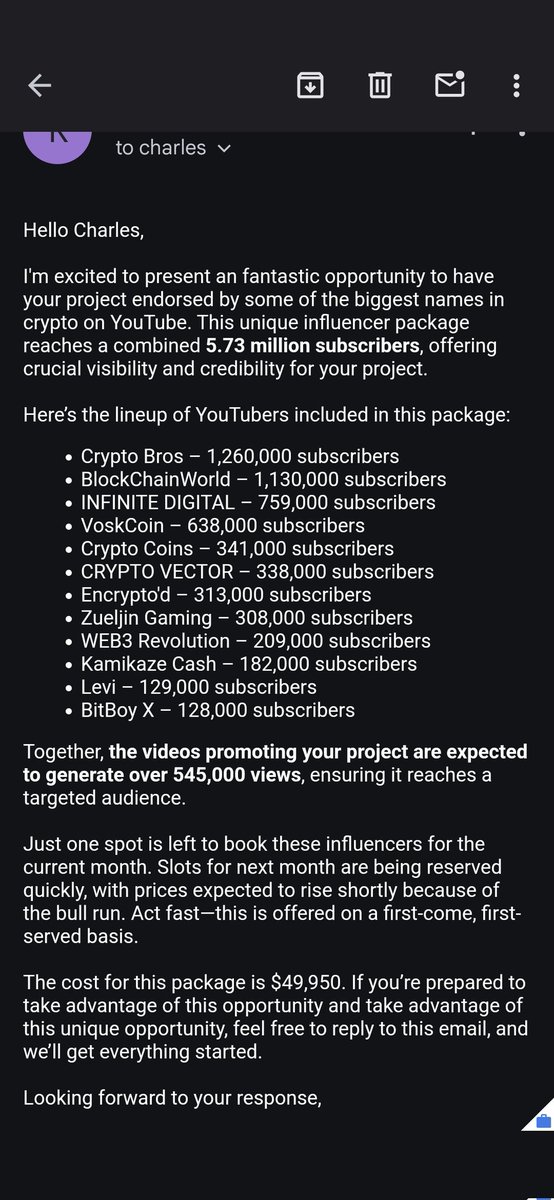
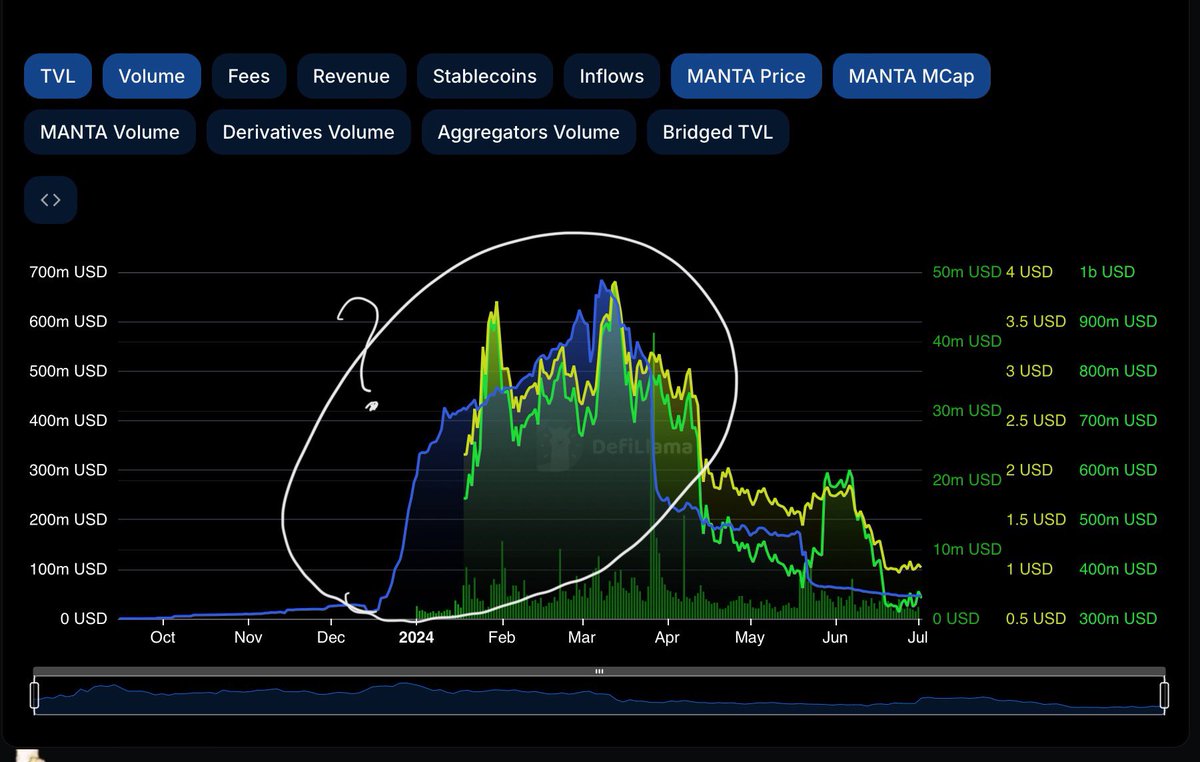
Meanwhile, as common folks, you have been farmed and completed over 100 quests during this period by the platforms, KOLs, and influencers.
They got their metrics, fundings, and valuation. Some of you got your airdrop.
And this is today.