@SteveReedMP Nor was it with the Tories but you lot never stopped calling for resignations and elections.
Noone wants a Labour Government not Starmer as PM so let's have another General Election and let the people decide
Starmer and Hermer chose to tear up the protections, that Conservatives put in place, to stop our brave veterans being dragged through the courts in their old age. They claim the courts had left them no choice.
Well guess what?
My Shadow Attorney General stepped in, acted pro bono for veterans and won: the UKSC have reinstated immunities and confirmed that the vast majority of our Act is lawful.
When a lower court said the Legacy Act breached the ECHR and the Windsor Framework, Labour did not appeal. It suited them to hide behind international law rather than stand up for those who served our country.
There was no legal duty to betray our veterans. Starmer and Hermer chose to do that. Conservatives chose to fight for them.
I'm proud of @DXW_KC, @AWNDinsmore and my Shadow Northern Ireland & Defence Teams for keeping up this fight.
We are the ONLY party actually holding Labour to account. Farage did not bother to turn up last Monday and vote against Labour’s terrible anti-veterans bill.
Another reason to VOTE CONSERVATIVE today.
Labour Loves the Countryside. It Just Hates the People Who Run It.
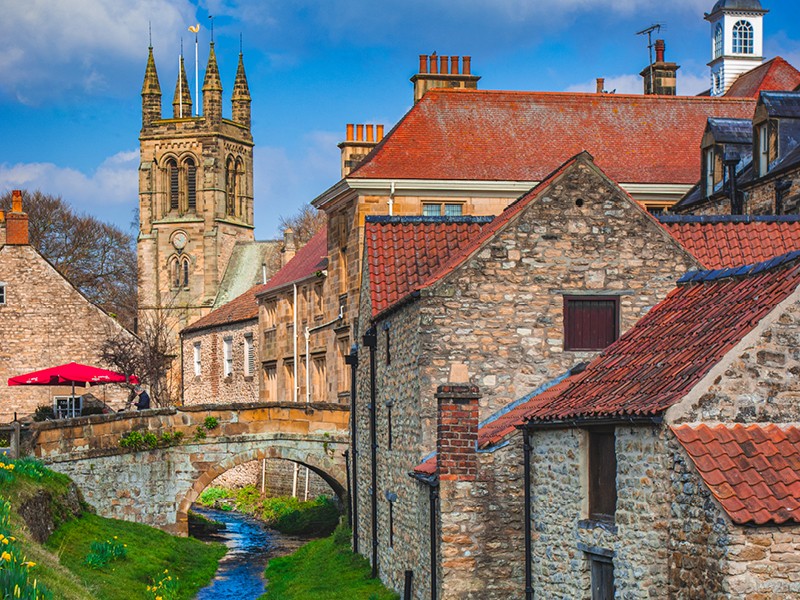
A woman walks into a tailor's shop in Helmsley, North Yorkshire. She loves the heather hills, she says. The wooded dales. The purple moorland stretching to the horizon. What she cannot stand is the shooting that takes place on the Glorious Twelfth.
Jeremy Shaw, the tailor, has heard this before. He considers whether to explain that the heather she travelled three hours to admire exists because of the grouse moor she despises. The gamekeepers who manage the land, suppress the bracken, and keep the moorland in the condition that makes it worth visiting. The cake, in other words, was baked by the baker she came to castigate. What is worrying is that the government shares her confusion.
On March 18, Labour published its Land Use Framework. Half a million acres earmarked for solar panels. Nine percent of farmland committed to rewilding. And buried on page 45, a proposal to license game bird shooting, potentially restricting pheasant and partridge releases onto estates. The trail hunting ban came first. Licensing comes next. Each measure arrives with its own rationale. Together they form a programme.
Licensing does not prohibit. Bureaucracy does not ban. Smaller shoots simply cannot absorb compliance costs, fold quietly, and nobody in Whitehall answers for the consequence. A Natural England case near Helmsley shows the method. A longstanding partridge shoot was barred from releasing birds until after the season had already started. Shoot days cancelled. Revenue gone. Natural England's hands formally clean.
Helmsley bucks every trend in British retail. Four pubs in the town square. A Michelin-starred inn nearby. A tailor forty years in business in what a mentor once called a dying trade. Seventy-five percent of Shaw's revenue is shooting-related. The Pheasant hotel runs at sixty percent shooting occupancy through winter. The deli sells local cheese to Norwegian and German sportsmen. Shooting contributes £3.3 billion annually to the UK economy and supports nearly 147,000 jobs. Pull the shooting thread and the weave comes apart.
One Helmsley pub changed hands a few years ago. The new owners decided they wanted nothing to do with shoot trade. They lost heavily, then went back to the estates cap in hand. The market delivered the verdict that policy is not yet ready to impose openly. Licensing achieves the same result without anyone having to take responsibility.
The conservation argument collapses under scrutiny. Grouse moor owners have restored 217,000 acres of upland heath in the past 25 years. The almost-extinct curlew is four times more likely to fledge on a managed grouse moor than on unmanaged moorland. The landscape that Whitehall has identified as the problem is the reason the landscape exists in the form they claim to value.
When asked what economic trade-offs it had actually modelled, the government was vague. Officials said they recognised shooting's cultural importance and would work with industry toward a sustainable relationship. Starmer has been invited to visit Helmsley and see how the economy functions. He has not replied.
He should go. He should meet the gamekeeper loading double guns through winter to keep the household solvent. The beaters earning seventy pounds a day. The tailor measuring 24 keepers for tweed suits stitched with Essex lining and Yorkshire zips.
What rural Britain is being offered instead is a licensing regime that will first eliminate smaller shoots, then larger ones, then the hotels and tailors and pubs, until the moorland reverts to bracken and the towns that shooting sustained join the dying high streets that apparently only the countryside had managed to avoid.
The heather on the North York Moors, Jeremy Shaw at Carters Country Wear, and the market town of Helmsley. All three exist because of shooting. Labour's Land Use Framework puts all three at risk.
Hi @Femi_FPolitics,
Having been a defendant in a five-year High Court libel action concerning tweets, I say this with some experience: your analysis is legally flawed.
A few key points under UK defamation law:
1. Amplification is not a defence. The relevant publication is the original tweet. Liability turns on whether the words you published are defamatory, not on whether the claimant later shared or responded to them.
2. Calling someone “irrelevant” is not the issue. The potentially defamatory meaning arises from the allegation that she “meets the definition of terrorist” and “pled guilty.” That is a statement of fact capable of seriously harming reputation.
3. Accuracy matters. She was not convicted of, nor did she plead guilty to a terrorism offence under UK law. Conflating a Public Order Act conviction with terrorism is not a semantic debate, it goes directly to truth as a defence.
Ultimately, this comes down to statutory defences under the Defamation Act 2013:
- Truth
- Honest opinion
- Publication on a matter of public interest
If the allegation cannot be shown to be substantially true, the risk exposure is significant, particularly given the scale of publication. This is the scary thing with social media and libel as your Tweet has been viewed over 100k times and shared onto other timelines. This would be considered significantly damaging to Lucy.
For context: I defended a High Court defamation action relating to tweets (search my name + Craig Wright for the judgment). These cases are slow, technical, and extremely expensive. Legal fees alone can run into seven figures. An unsuccessful defendant is typically liable for both sides’ costs. Both sides in mine were well over £1m in costs.
Given that reality, early resolution is often the most commercially rational course where risk exists. My suggestion is to consult a lawyer, offer @LucyTCWife a full public apology and a cash settlement for damages. Then pray she accepts it.
Alternatively you can defend this in court but you will almost certainly lose and it could bankrupt you if you are not wealthy. I suspect you aren’t.