0 jito bundles is the headline, not 38%. extraction moved off the surface jito-anchored tooling watches — the exact cross-slot gap chainlens is built around.
Solana’s sandwich economy is smaller and more concentrated than the leaderboards suggest. Across 459 AMM-replayed detections: 1 wallet takes 38% of all extraction, and 0 used Jito atomic bundles.
Part 2 of 3.
@solana@TimGarcia0
https://t.co/gPTHLTPSMS
The models keep getting better at running on their own for longer.
Which means the thing that matters most isn't how smart the agent is.
It's whether you can check what it did while you weren't watching.
Capability is racing ahead. Accountability isn’t.
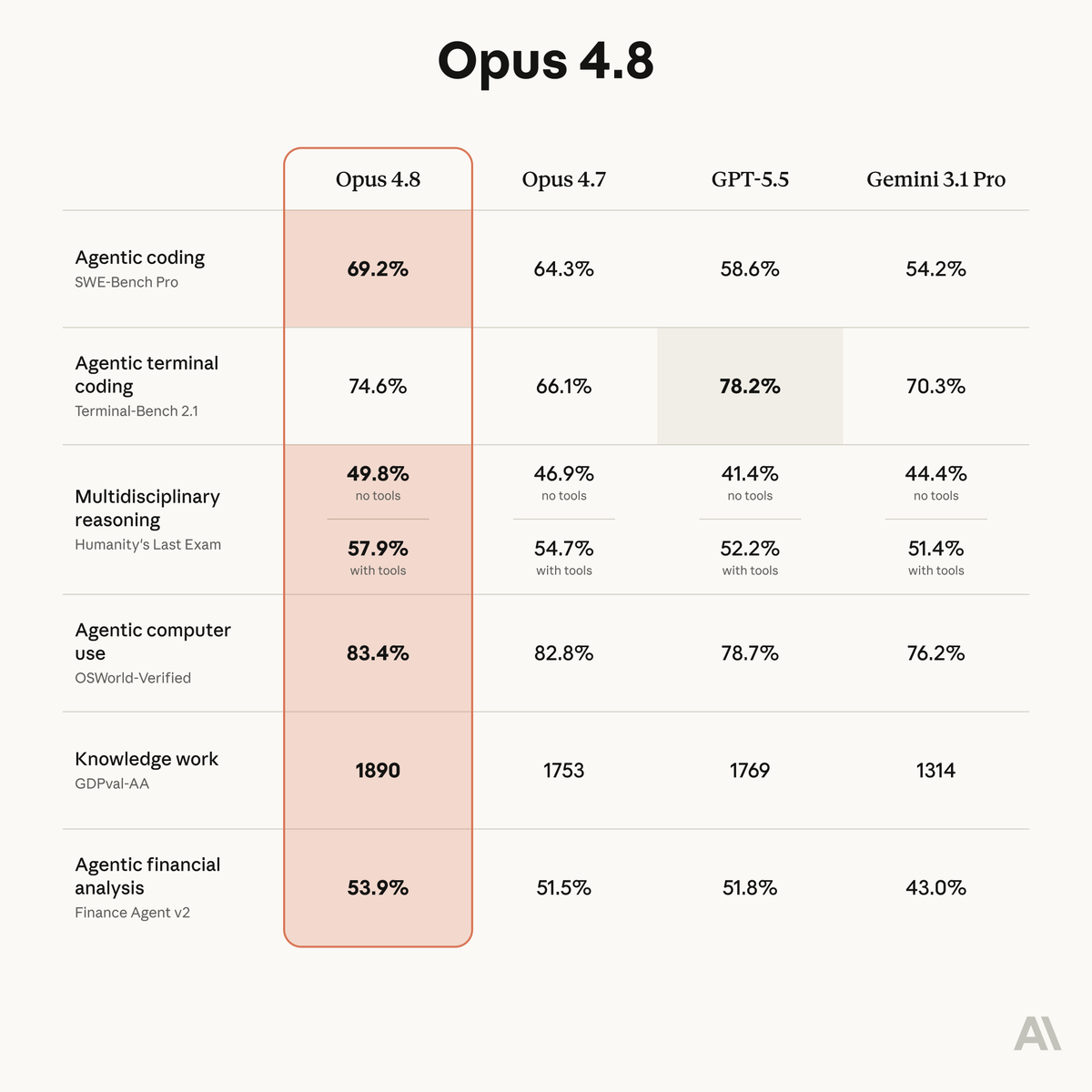
Introducing Claude Opus 4.8: it builds on Opus 4.7 with sharper judgment, more honesty about its own progress, and the ability to work independently for longer than its predecessors.
Available today at the same price.
everyone's racing to make AI agents more autonomous. the more interesting race is making them accountable.virtuals puts an evaluator in every job. injective gives every agent an auditable identity.a bot you can't audit isn't an asset. it's a liability with a wallet.
everyone optimizes the trade. nobody audits the leak.
your bot logs entry, exit, pnl. it does not log what got skimmed between slots.
that number exists. it's just never written anywhere you can read it.
so you optimize the 2% and bleed the 5% you can't see.
Solana MEV bots extracted hundreds of millions last year. you funded part of it and never got a receipt.
you got sandwiched. how much did it cost you? you don’t know. your bot doesn’t either.
Jito bundles help, but 93% of it is cross-slot — the part bundles can’t touch.
can’t fix what you can’t see. starting there.
Introducing USDC pairs
Coin creators now have the option to launch with USDC-paired liquidity pools; for more stability, better coin distribution & higher ceilings.
Learn more 👇
Lost 50% of my position in a live trading demo. The agent did exactly what I told it to.
I gave it key access and told it to open a 10x long. Forgot to say anything about slippage.
So it filled in the blank itself, 5%, and I lost half my position in front of a live audience.
You think you trust your agent. What you’re actually trusting is that you didn’t forget anything.
Still sure your funds are safe?
ChainLens.
Spent today in a session with @kwok_phil , @dom_kwok , @souleixbt and other founders — on how we say what we're building.
It didn't change what I believe. It made me say it cleaner:
Solana trading bots get rugged and sandwiched more than humans do — by checks they skip and MEV they never see. The agent-side safety layer for it doesn't exist yet. That's what ChainLens is.
Tomorrow I present exactly that at Blockchain@Yonsei, my research society.
Solana trading bots are getting eaten twice.
First: they rug themselves. Speed is the razor, so they skip validation and walk into honeypots humans would spot in 10 seconds.
Second: MEV bots eat them. $500M extracted in 16 months. Memecoin trading bots are the prime target — high slippage tolerance, predictable routes.
The whole bot stack assumes safety and speed are tradeoffs. They're not. That's the bet ChainLens is built on.
Solana DeFi agent safety. SDK-native.
Met with @Coiniseasy today — same read. Focusing here.
We’ve scheduled a meeting tomorrow with CoinEasy, a team that operates Korean Web3 communities.
We’re planning to get their thoughts and feedback on the direction ChainLens is taking.
@Coiniseasy
Today’s dev log
Today, my teammate and I discussed how we want to detect MEV and determine rug risks — essentially the architecture of the engine itself.
To build a strong engine, you need strong design first.
ChainLens is planning to build this from the foundation up, properly.
We made this pivot because large players entered the space, and we needed to seriously rethink where our real edge is.
That internal discussion is why our posts were delayed — sorry about that.
We hope you’ll continue following the journey.
ChainLens will keep evolving.