Wednesday Career talk:
A first degree is not a job title and a second qualification need not stay in the same field.
You can study Psychology then computing, or study Engineering then finance, or perhaps Education then cybersecurity. These combinations are not confusion. They are distinction 👌🏾
The world is hiring people who can move across disciplines, not people waiting for a vacancy that matches the name on one certificate.
Make sure you build a unique stack and then offer it where it is needed.
#CareerWednesday
1. Who paid for the first conference of the African National Congress (ANC) in 1991 post its unbanning that was held in Durban?
2. How were the delegates chosen and who chose the delegates since many of the attendees didn't have any history within the ANC?
3. How did Cyril Ramaphosa contest the position of Secretary General of the ANC in 1991 when he had no history of activism nor leadership in the ANC?
4. Both UDF and COSATU were fully funded by the Oppenheimers, Menells, and other influential mining houses which aided and abetted apartheid. What role did mining play in deciding who became members of the ANC NEC in 1991 which was littered with members of UDF?
5. Who chose members of what was then called the ANC Reception Committee that welcomed back exilees and prisoners to the country? The Reception Committee included the likes of Cyril Ramaphosa, Jay Naidoo, Trevor Manuel.
6. Where did the Reception Committee get money to buy houses and cars for ANC Leaders, later giving them access to shares in companies?
7. Why was it the same members of the Reception Committe who were also part of a team called the Nelson Mandela Crisis Committee that led the investigation into Winnie Mandela led by Cyril Ramaphosa which led to that famous divorce? Who organised this committee and funded it?
8. When Nelson Mandela publicly separated from Winnie Mandela he went to stay with apartheid Mining tycoon, Clive Minell who also assisted to pay for the education fees of ANC leaders in Swaziland. Why did the Menells go out of their way to help Nelson Mandela yet could not tolerate Winnie Mandela the mother?
9. Why did Capital have such profound hatred for Winnie Mandela to the extent of making her the only collateral damage of the ANC at the TRC?
10. Why did Capital both domestic and international, invest soo much in Cyril Ramaphosa, then and now? What was the deal that gave birth to the New Deal?
11. Why did the apartheid beneficiary, the wealthy Jewish family, the Menells, unbundle their business and gave their majority of shares and equity to Patrice Motsepe in 2002 and the Oppenheimers to Ramaphosa? Why them?
The Menells and Oppenheimers are the same family that Nelson Mandela stayed with after his release from house arrest or was it prison.
Lesego Foundation 2.0 via @Black_Nobilliti
Angelina’s upper back features traditional Sak Yant tattoos (mostly by Ajarn Noo Kanpai) in ancient Khmer/Khom script.
Left shoulder: five vertical lines (Hah Taew / prayer for son Maddox). Meaning: protection from enemies, bad luck, curses; good fortune, beauty, and safety. Translation includes “May your enemies run far away from you… Your beauty will be that of Apsara.”
Center: Yant Phutson (Five Gods) + ViHan Pha Chad Sada grid. Mercy, luck, fortune, and the four elements/continents for protection.
Right: Yant Kraw Petch (Diamond Armor). Buddha’s virtues, luck, wealth, success, and shielding from failure.
Top of neck: “Know Your Rights” (The Clash song).
🇿🇦https://t.co/OpZ6a5F5xO As a data analyst and developer I created Mzansi's first grocery comparison site that helps consumers make price conscious decisions. I'm just struggling with marketing it out there, please share🙏🏾. We compare across Shoprite, pick n Pay, Woolworths etc.
AN OPEN LETTER TO THE CITIZENS OF SOUTH AFRICA
Beloved,
I wrote The Big Five Cartel because silence was no longer an option. You can see where we are today. I have spent too much time away from you, studying them , men and women. I watched, I questioned and I wrote.
What did they think would happen? How do you silence a writer? We can never fight what’s already written. There are book we all fear to write and yet there is this ONE!
Also because my therapist said “journaling helps” and I took it a bit too literally.
For years I’ve been called “controversial,” “too loud,” “too much.”
Translation: I speak in a room full of whispers and apparently that’s a crime. We all have slept with the enemy, we have eaten with cowards and we lost ourselves in love. That all ends when I step into the writing room, everyone is enemy.
I’ve been dragged through courts, spent two years under house arrest, and lost friendships, brand deals, and a few good nights of sleep. We all pay a price for what we have been chosen to become.
People told me: “Jackie, stop writing. Stop talking. Stop naming what everyone sees but no one says out loud at the braai.” Well, the truth dies when we all cower.
But I kept taking notes. With receipts.
Being a vocal minority is exhausting, however someone has to carry the weight.
It’s tweeting the truth at 2am and waking up to 3000 comments, 2 lawsuits, and 1 aunty asking “but why must you always?” It’s the months of research, not reading things online, literally finding the information that’s in this book!
It’s being told “you’re causing division” for pointing at the division that was already there.
It’s doors closing, publishers hesitating, and people suddenly forgetting your number — until they want to know if they are in the book.
The sacrifice was real. Goodness I have fought so hard, you saw it!
There were threats. Headlines that tried to turn me from an author into a scandal. Nights I asked myself: “Is documenting our own stories worth it?”
Yes. Because someone has to say it first so that others can say it louder later.
I wrote this book because South Africa deserves the truth, even when it’s ugly. Especially when it’s ugly.
The Big Five Cartel is about the systems, the networks, and the “no honour amongst thieves” culture that keeps ordinary people trapped while a few eat in the dark. It’s about power without accountability. About not letting them win, brokers, cartels; and the cost paid by women, men, and kids who never asked to be part of it.
This book will make people uncomfortable. Good. Comfort has kept us stuck.
It will be called defamatory, sensational, dangerous. But what’s truly dangerous is pretending.
I am not a hero. I’m just a daughter of this country who decided to document instead of disappear. And maybe crack a joke or two while doing it, because if we don’t laugh we’ll cry.
“The Commission is only the start.” There’s more to tell. So, we shall stand up and say what they can’t. There is more to unmask. More to fight for.
To those who pushed back: thank you. You proved why the book needed to be written.
To those who stood with me: thank you. You reminded me why I kept going.
To you, the reader: read it with an open mind and an open heart. Argue with it. Feel it. Share it as far as possible. But don’t ignore it. We can’t just talk, someone has to document it.
South Africa, we cannot be silenced. Not by courts, not by fear, not by power.
And definitely not by group chats or should we say Cartel’s?
With courage, love, and a little bit of mischief,
J.P
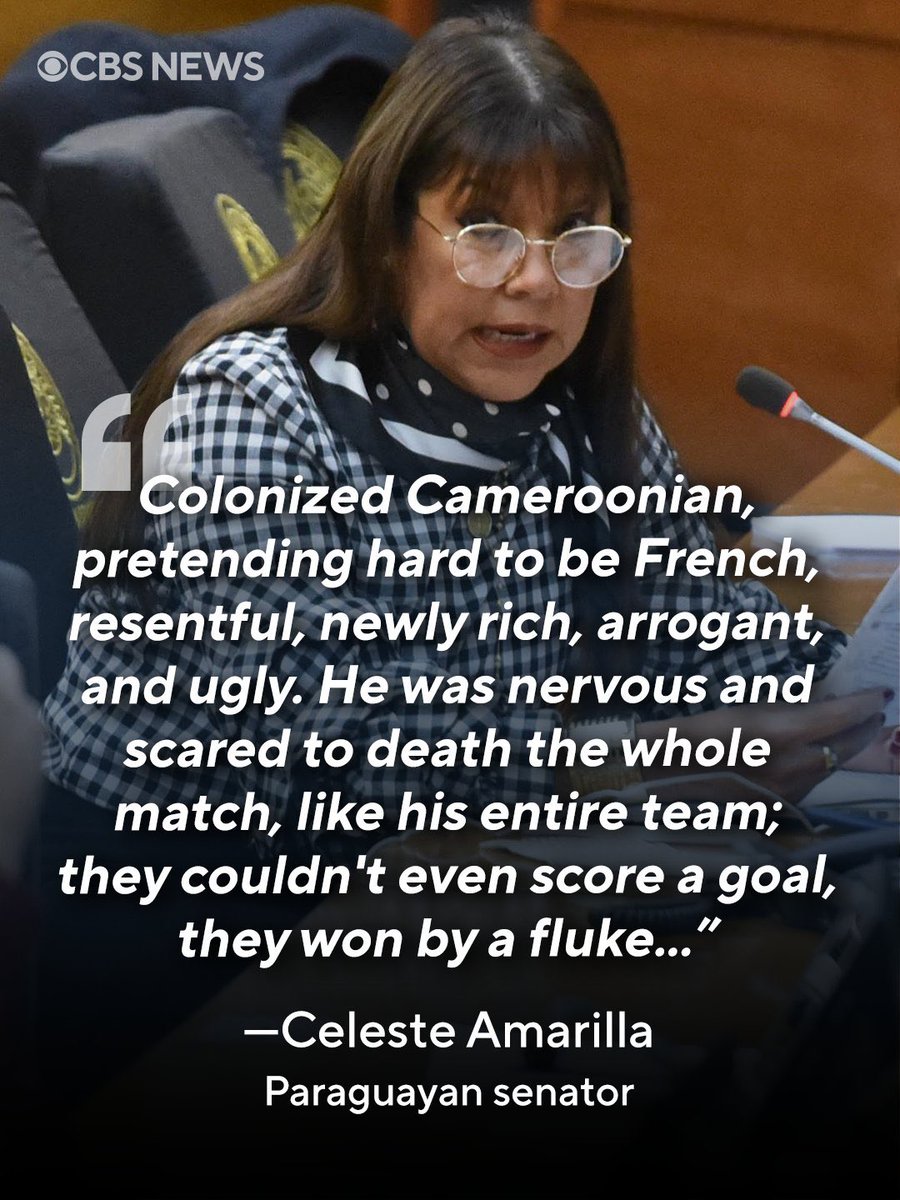
The whole senator of a nation, Celeste Amarilla ~ Paraguayan senator ~ decides to insult one player out of the whole squad because he is black and has African roots and nobody is calling her to order.
This is what she said about @KMbappe: ❝This brute hasn’t even learned to write. Instead of breastmilk, he grew up sucking on coconuts, and the most educated creatures he ever heard were chimpanzees.
You should've given him the middle finger, Orlando Gill (Paraguay GK).
A colonized Cameroonian, pretending to be French, resentful, newly rich, arrogant, and ugly.
He was nervous and scared to death all game, like his whole team. They didn’t even manage to score a single goal, until they got lucky with a penalty.
The only thing many of us blame the team for is not giving him a full-handed slap at the end of the game. I'm not even a football fan. ❞
Meet Vutlharhi Valoyi, the Limpopo-born founder of Zulzi — the online grocery delivery startup that secured R30 million in funding from a JSE-listed company. 🇿🇦📈
From humble beginnings to processing over 2,000 orders a day, Zulzi was already doing nearly R1 million in sales per day back in 2019. Their innovation would later help shape the development of Checkers Sixty60, now one of South Africa’s biggest delivery platforms. 🚀
Zulzi founder and CEO Vutlharhi “Donald” Valoyi played a major role in building the future of on-demand grocery delivery in South Africa.
Black child, it’s possible. Build. Innovate. Dream bigger. And let’s support our own. ✊🏾
Largest Producers in Africa 🌍
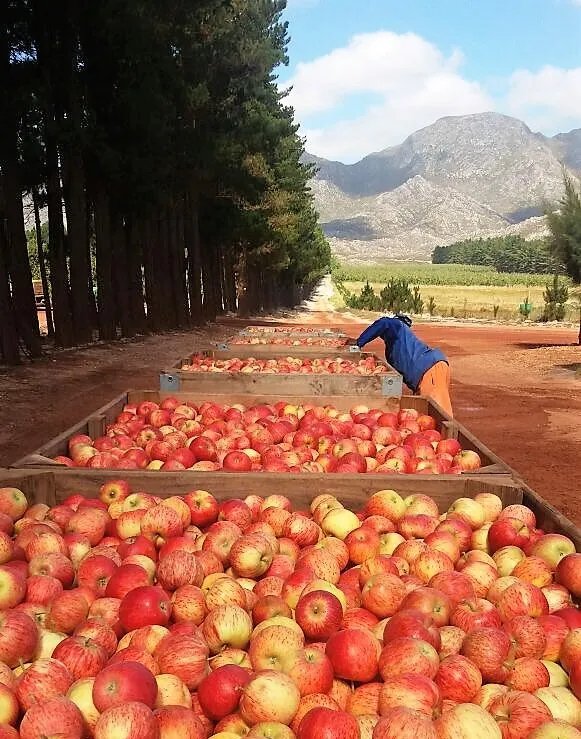
Largest Apple Producer - 🇿🇦 South Africa
Largest Oil Producer - 🇳🇬 Nigeria
Largest Coffee Producer - 🇪🇹 Ethiopia
Largest Platinum Producer - 🇿🇦 South Africa
Largest Tomato Producer - 🇪🇬 Egypt
Largest Diamond Producer - 🇧🇼 Botswana
Largest Bauxite Producer - 🇬🇳 Guinea
Largest Cobalt Producer - 🇨🇩 DR Congo
Largest Wheat Producer - 🇪🇬 Egypt
Largest Timber Producer - 🇿🇦 South Africa
Largest Natural Gas Producer - 🇩🇿 Algeria
Largest Cocoa Producer - 🇨🇮 Côte d’Ivoire
Largest Copper Producer - 🇨🇩 DR Congo
Largest Cotton Producer - 🇧🇯 Benin
Largest Palm Oil Producer - 🇳🇬 Nigeria
Largest Gold Producer - 🇬🇭 Ghana
Largest Tea Producer - 🇰🇪 Kenya
Largest Uranium Producer - 🇳🇦 Namibia
Largest Manganese Producer - 🇿🇦 South Africa
Largest Phosphate Producer - 🇲🇦 Morocco
Largest Rice Producer - 🇳🇬 Nigeria
Largest Tobacco Producer - 🇿🇼 Zimbabwe
Largest Iron Ore Producer - 🇿🇦 South Africa
Largest Cashew Producer - 🇨🇮 Côte d’Ivoire
Largest Onion Producer - 🇪🇬 Egypt
Largest Sugar Producer - 🇿🇦 South Africa
Largest Sisal Producer - 🇹🇿 Tanzania
Largest Maize Producer - 🇿🇦 South Africa
Largest Vanilla Producer - 🇲🇬 Madagascar
Compiled by Africa First
Zimbabwe recently became the first African nation to export locally-processed lithium.
However, many Zimbabweans would either have not heard about this or dismiss it as a nothingburger because they have been conditioned by Western liberal thought to believe their one and main problem is "corruption" and that all focus should be shifted to “cleaning the country”.
For context of how big of a deal this is, what Zimbabwe is doing is widely accepted by historians and economists alike as the primary way to develop a country by moving up the value-added ladder and export finished goods, not raw just materials.
By moving from exporting raw ore to processed lithium, Zimbabwe is attempting to break the “resource curse” which has kept many a developing nation from capturing more of the value chain.
The people obsessed with fighting corruption are effectively saying that industrialisation doesn’t matter unless the politics is perfect. But the thing is, historically, no nation, from the US in the 19th century to China in the 20th, waited “to fix corruption” before building an industrial base. They built the base, which then created the economic stability which reduced instances of corruption.
If you wait for the “corruption” to end before you start processing your own minerals, you might find that even if by some miracle you were able to eliminate all malfeasance, there might be no minerals left to process and you’re just left with the standard neoliberal talking points.
Some will say they can walk and chew by focusing on corruption *and* industrialisation. But this misses something extremely crucial about how a country’s capacity to act is a finite resource, and that when a developing nation is told it must reach “Scandinavian levels” of transparency before it can pursue ambitious industrial policy, it often results in institutional paralysis.
This is because “fighting corruption” means using up resources on adding layers of bureaucracy, audits, and oversight committees which slows down decision-making, exhausts human capital by funneling the best minds towards compliance, auditing and accounting, instead of science and engineering.
Because they’re inundated with neloliberal thought patterns, many developing nations fall into the trap of believing the myth that “clean” government leads to development. In reality, history usually shows the opposite, that it’s industrialisation that creates the conditions for a cleaner government. This may sound counterintuitive, but there are examples all over the place.
For instance, the 19th-century US was so corrupt that the wealthiest among them were commonly known as Robber Barons who bought politicians by the dozen. Yet the country built the world’s most powerful industrial base during that exact period.
Similarly, all the way in the Far East, South Korea and Taiwan had serious cronyism during their rapid growth phases. But they prioritised industrialisation, and the middle class that emerged from that growth eventually demanded better governance.
And, of course, China, which is holding Zimbabwe’s hand through the lithium refining, lifted 800 million people out of poverty while navigating massive corruption scandals, but they focused on building the factories first.
This may offend many people’s sensibilities, but from a cold, economic perspective, a “corrupt” state that successfully builds a lithium refinery is still far more productive than a “clean” state that remains a raw-material backyard for the West.
As Professor Grieve Chelwa showed in his 2024 paper on the weaponisation of corruption, “anti-corruption” is often used as a tool to hollow out the state. If the state is labelled as inherently “corrupt”, the only “moral” solution offered is to outsource everything to the private sector or foreign NGOs. This effectively prevents the state from ever developing the muscles it needs to lead a national development strategy.
In the case of Zimbabwe’s lithium plant, an “industrialiaation-first” approach treats development as a survival imperative. It acknowledges that while corruption is a disease that needs a cure, you don’t stop a starving man from eating just because his hands aren’t perfectly clean.
So, for Africans, the beginning of wisdom is understanding that the push for “transparency” is used by foreign actors specifically to prevent African states from forming the kind of State-led development that allowed them to rise so quickly.
No country in the Global North became wealthy by being honest first. They became wealthy by protecting their industries and moving up the value chain which raised the capacity to be honest.
By processing lithium locally, Zimbabwe is attempting to jump from the raw material rung to the industrial rung. It is a messy, complicated process, and yes, money will likely be lost to corruption. But as Prof Chelwa shows in his paper, the greatest corruption is the neocolonial structure that tells Africa it isn’t “ready” to own its own value chain.
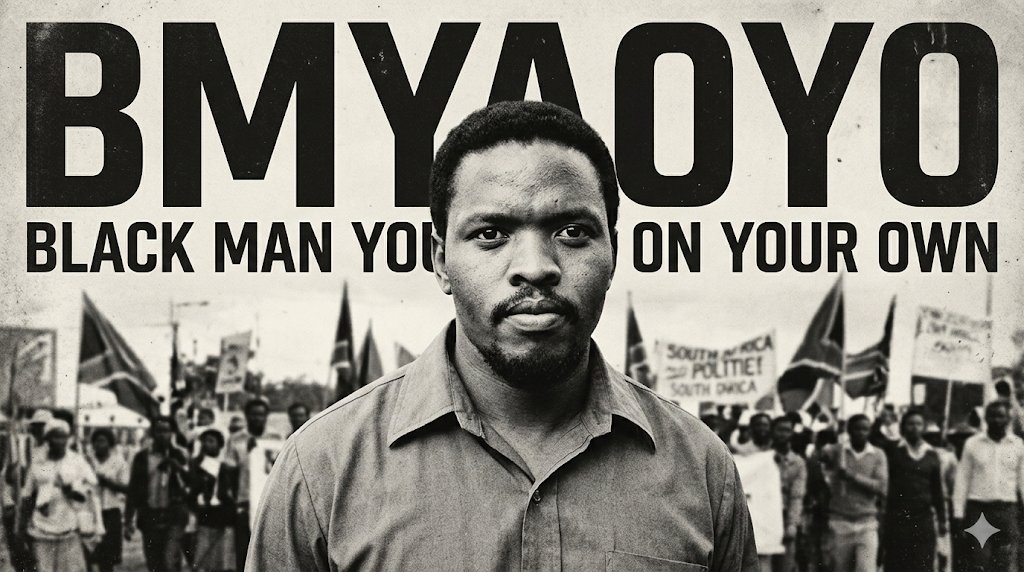
People assume that when Steve Biko said, “Black man, you are on your own,” he was expressing despair or abandonment. The assumption is that he was saying, “Don’t expect help,” or “No one is coming to save you.”
In reality, Biko meant the opposite. When you read Biko’s writings, it becomes easily apparent that he was pushing back against a few things, including the growing dependence of Black people on White liberal “allies.” He argued that even well-meaning White involvement would unintentionally reinforce power imbalances.
When he said the now-famous slogan, Biko was identifying a pattern where White liberals were leading Black organisations, which was causing natives to frame freedom in terms of entry into white-defined norms. His issue with this was that it kept Black people in a dependent position, or as a “perpetual pupil,” as he put it.
Biko saw White liberals as often wanting to “uplift” Black people within the existing colonial structure, rather than dismantle it. Their help, even if well-intentioned, kept Black people as junior partners.
Biko was frustrated by how the “freedom” many natives wanted was just better treatment within a White-run system, things like less harsh passes, slightly higher wages, a few parliamentary seats, while still playing under rules set by the coloniser. To Biko, this was not genuine liberation.
Biko further noted how, once liberation is framed as something White people teach about, Black people are forever in a learning position. According to him, the first lesson is that there is nothing to be taught from that position at all, that the pupil must declare the teacher irrelevant to that particular journey.
That’s why his Black Consciousness philosophy insisted on not rushing into policy negotiations, which is what the ANC eventually settled for, but a psychological revolution where Black people rejected the very premise that they needed White guidance.
Unfortunately, this is the trap the ANC fell into when it pursued exactly what Biko warned against by negotiating for a place WITHIN a fundamentally unchanged economic and political structure of neoliberal capitalism, a constitution protecting property rights inherited from Apartheid, etc.
In fact, Biko was so deep that the fight he saw wasn’t first against Apartheid laws, but against the internalised belief that a White-run world is natural; a belief that makes “freedom” look like asking for better seats on someone else’s ship, rather than learning to build your own.
If Steve Biko were alive today, he would bemoan a psychological revolution that never happened. A walk through modern South Africa, would lead him to conclude that the revolution was stalled at the ballot box.
He would be devastated to see that for many, “liberation” has been redefined as the ability to consume like the oppressor, to own the same luxury German cars, live in the same gated suburbs, and send children to schools that still prioritise Eurocentric curricula. To Biko, If you are still using the oppressor’s yardstick to measure your success, you are still mentally occupied.
Steve Biko would also see a psychological stagnation in how labour is still structured. Even with a Black government, the fundamental relationship of the Black servant to the White corporate master persists in the economy. Biko wanted a Black man who could stand upright and look the world in the eye; he would likely find that the crouched posture of economic dependency remains the default for millions of natives.
Biko’s greatest fear was that Black people would win the country but lose their souls to the belief that they are naturally inferior in the realm of governance. His fear has come true.
This new Winnie Madikizela-Mandela documentary, “The Trials of Winnie Mandela”, is an execrable travesty!
Two Mandela granddaughters took Zionist money to film this awful production about Madikizela-Mandela.
Ivor Ichikowitz, a questionable arms dealer and rabid Zionist with deep ties to the Israeli defence industry, funded this hogwash through his Foundation.
No self-respecting person with some modicum of political consciousness and moral probity would accept blood money from Ichikowitz.
The documentary features moral cretins like Palesa Morodu who supports Gaza genocide; including known apartheid security informants; trash journalists like Mondli Makhanya; as well as United Democratic Front (UDF) activists who actively undermined Madikizela-Mandela’s standing at a time when solidarity from comrades was essential.
The production is a grotesque desecration of Madikizela-Mandela’s enduring revolutionary legacy through a profoundly flawed attempt at presenting a balanced historical discourse.
It resurrects the pure and unadulterated STRATCOM filth that should have been left dead and buried in the past, and need not be juxtaposed with Madikezela-Mandela’s trials and tribulations under the apartheid system and her just fight for the liberation of her people. It dilutes and undermines her legacy.
I find the production an ethical aberration that the politically unmoored granddaughters deemed acceptable for their own personal gain. It is shameful.
Madikizela-Mandela was no saint by any stretch of imagination but to sully her revolutionary legacy with repetitions of historical apartheid falsehoods leaves a bitter taste.
Boycott UAE! Boycott Dubai!
It's a soulless, heartless and cultureless dumpster fire of a region. Only those drawn to filth go there willingly.
Free Sudan!
As a black child your enemies are:
Media 24
Daily Maverick
ENCA
Newzroom
Sunday world
City Press
BiZnews
Dan Corder
Bill Gates
Helen Zille
Rob Hersov
Gareth Cliff
Stephen Grootes
Karyn Maughn
Afriforum
The judiciary
ANC
DA
Ramaphosa
McKenzie
Mbalula
Oppenheimers
Minels
Ruperts
All the NGOs
These are all trusted soldiers of imperialists.
*Feel free to add to list