From Chaktomuk, to the World | We turn Cambodian perspectives into global conversations. From foreign affairs to local takes, we break down what matters, with b
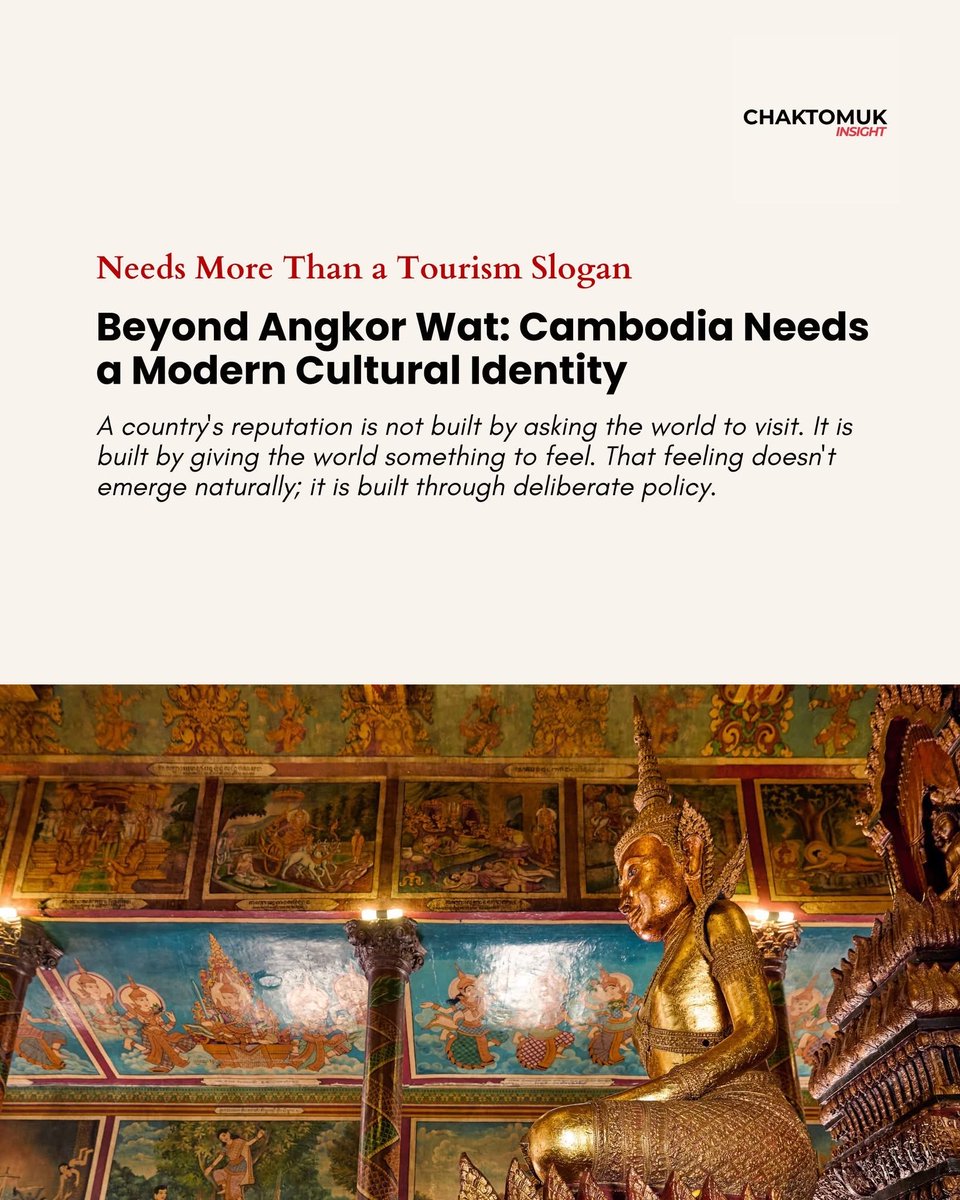
When people think of Cambodia, a few images come to mind: Angkor Wat, the shadow of the Khmer Rouge, and, more recently, headlines about online scam compounds. The instinctive response from policymakers has been to market harder, better campaigns, bigger budgets, and more promotion. But this diagnoses the wrong problem. Cambodia doesn't have an image problem. It has an identity vacuum. And no marketing campaign fills a vacuum.
A country's reputation is not built by asking the world to visit. It is built by giving the world something to feel. That feeling doesn't emerge naturally; it is built through deliberate policy. For example, South Korea increased government spending on cultural exports from $14 million in 1998 to $84 million in just three years, and by 2023, the figure had reached $622 million annually. France has treated culture as a matter of sovereignty since 1959, spending around €4.4 billion per year at the national level, while its cultural and creative industries generate €91 billion in revenue, more than agriculture and the automotive industry combined. Neither country began with tourism campaigns. South Korea built global attachment through dramas and music, while France exported its identity through cuisine and cultural institutions. In both cases, tourism followed cultural presence. Cambodia has reversed the order, investing in promotion before building the cultural presence that makes promotion meaningful.
Cambodia's policy response has been almost entirely tourism-facing. The "Visit Cambodia: Kingdom of Wonder" campaign has run since 2012. The newly established Cambodia Tourism Board carries a larger promotional budget than the Ministry of Tourism itself. The Tourism Development Plan 2026-2030 focuses on diversification and targeted campaigns. These are not bad initiatives. But they all share the same limitation: they speak to people already considering travel. They do not build relationships with people who have never thought about Cambodia at all. Cambodia does have a National Policy on Culture, and as of 2025, it is still drafting a national policy for its cultural and creative industries with UNESCO support. But the gaps its own policymakers identify, adequate funding, export support, and international market access for Cambodian culture, remain unaddressed.
Cambodia does not need to copy South Korea or France by matching their cultural budgets. The lesson is not the size of spending, but the sequence of investment. With limited resources, Cambodia should move from broad tourism promotion to targeted cultural investment by supporting a few sectors with global potential, such as cuisine, contemporary music, fashion, film, and digital arts. Small grants, creative training, intellectual property protection, translation support, international partnerships, and export channels can help Cambodian culture travel beyond tourism. Culture should be treated not only as a tourism decoration, but as an economic and diplomatic asset. Only when Cambodia builds this creative ecosystem will tourism promotion have something meaningful to amplify. #Chakinsight #chaktomukinsight #Cambodia #Tourism #visitcambodia #kingdomofwonders
Author: Muyhong
In two days, Cambodia will host another major international gathering in Siem Reap: the 39th WAGGGS World Conference and the 42nd Annual Meeting of the Olave Baden-Powell Society.
At first glance, the WAGGGS World Conference is about placing girls and young women at the centre of leadership, service and social development. Its theme, “We See. We Care. We Act,” carries a clear message: recognizing the potential of girls and young women is not enough. Societies must also support their growth, build their confidence, and create space for them to lead, serve and contribute meaningfully to their communities.
But for Cambodia, the event also carries wider significance. It is a valuable soft-power opportunity.
By welcoming global leaders, women leaders, policymakers and international delegates to Siem Reap, Cambodia has a chance to present itself as it truly is, not only as it is sometimes described online. Visitors will be able to experience Cambodia’s hospitality, culture, heritage and ability to host a major international event. For a country still too often viewed through old narratives, direct experience can be powerful.
These soft-power assets matter. Cambodia’s cultural and natural sites, traditions, cuisine, heritage and hospitality can help promote the country as an attractive destination for tourists, which is how Cambodia normally promotes tourism. But beyond tourism, direct experience can shape deeper perceptions. When visitors witness and experience Cambodia for themselves, they may leave with a stronger impression of the country as safe, friendly and welcoming. Over time, such perceptions can also help strengthen Cambodia’s image as a promising place for investors and international partners.
The event also strengthens friendship, cultural exchange, solidarity and global sisterhood among Girl Guides, women leaders and delegates from around the world. According to the official Facebook page of the Chief Commissioner of the Girl Guides Association of Cambodia, the programme includes cultural performances and traditional activities, which are expected to showcase Cambodian culture, cuisine and hospitality.
This is why events like this are important. Cambodia should not promote itself only through temples and tourist destinations, but also through ideas, people and international platforms. Hosting scholars, policymakers, researchers, youth leaders and global networks gives them a reason to come, observe and understand Cambodia for themselves.
Their words matter because they help shape perceptions and narratives. A professor may later use Cambodia as a case study in class. A scholar may publish an article based on what they observed. A policymaker may share their experience with colleagues. These are not ordinary impressions; they are perceptions carried by people whose voices can influence wider audiences.
When influential people experience Cambodia directly, they may compare what they see with the existing research, reports and narratives already available online. If their experience is positive and meaningful, they can help carry a stronger, more balanced and more credible story of Cambodia to the world.
For Cambodia, soft power is not only about what we show. It is also about who we welcome, what they experience and what they remember when they leave. #chakinsight #chaktomukinsight #Cambodia #Softpower #WAGGGS
Author: PanhaCHEZDA
According to the World Bank, only about 58% of school-age Cambodians are enrolled in high school. Four in ten are not in the system at all. And for those who are, the quality of what they experience inside depends heavily on whether the school has any real authority to maintain it. Right now, it largely does not. When things go wrong in Cambodian public schools, such as students skipping class, disrespecting teachers and rules, getting involved in gang activity, or substance abuse, the blame lands on the school, then on the Ministry of Education. Rarely does it land where part of it belongs on the students themselves, and on the parents who sent them there without any commitment attached.
Passing the Grade 9 national exam in Cambodia automatically moves a student into high school. There is no selection, no review, and no conversation with the family about expectations. A student who barely passed sits next to one who worked hard to be there, and the school has no formal basis to remove anyone who makes the environment worse for everyone else. On top of that, there is no public ranking of Cambodian public high schools. Parents cannot look up which schools produce better outcomes. Schools face no reputational pressure to maintain standards. Students have no competitive target to aim for. When the seat means nothing, it gets treated accordingly.
Vietnam offers one useful comparison. Vietnam introduced competitive written exams for Grade 10 public high school entry. Students compete for seats. The Ministry of Education publishes a national ranking of high schools based on university entrance outcomes, publicly, annually. That ranking creates pressure all the way down: on administrators, teachers, and students, because everyone can see where their school stands. South Korea, on the other hand, handles the discipline side most practically. For seriously disruptive students, the consequence is not jail, and it is not tolerance. It is mandatory to transfer to an alternative institution. Another option is students may leave the school community on their decision.
Cambodia’s system needs three reforms. First, the Grade 9 national exam should become a real entry filter for public high schools, not merely a certificate. Students should apply to schools based on their scores, and oversubscribed schools should select by merit. This would make a seat at a good public high school something earned, not automatically granted.
Second, enrollment should require a formal commitment from both students and parents, including a signed code of conduct and clear consequences for violations. This would make parents active stakeholders, not passive bystanders.
Third, MoEYS should publish official performance rankings or reports for public high schools. Families deserve reliable information, and schools need reputational incentives to improve.
A public high-school seat should mean something. Getting in should require effort. Staying in should require responsibility. And the school a student attends should reflect not only geography, but also ambition and performance. If Cambodia wants to build human capital, it must begin by making its secondary schools places where standards are visible, expectations are serious and learning is protected. #chakinsight #chaktomukinsight #Cambodia #Education
Author: Muyhong
Cambodia’s development discourse has shifted from “human resources” to “human capital,” reflecting a growing recognition that long-term growth depends on people’s skills, productivity, and capabilities. Viewed from this perspective, child marriage is not only a social or cultural issue, but also a development challenge.
According to https://t.co/l6NQlnAxQM, women account for around 51 percent of Cambodia’s population. Among them, approximately 1.3 million were married before the age of 18, while 178,400 were married before the age of 15.
Child marriage is more common among girls from poorer households, where families may face economic pressure, limited access to education, or strong social expectations around marriage. At the same time, early marriage can reinforce poverty by reducing girls’ educational attainment and limiting their ability to participate fully in the workforce. This creates a cycle in which poverty increases the risk of child marriage, and child marriage reduces the opportunity to escape poverty.
From a human-capital perspective, the cost is not only borne by the individual girl. It also affects families, communities, and the national economy. Lower educational attainment can reduce lifetime earnings. Limited workforce participation can reduce household income and national productivity. Early pregnancy can also increase health risks and place additional pressure on public services. These effects are especially relevant for Cambodia as it seeks to strengthen its labor force, move toward higher-value economic activities, and prepare for long-term development goals.
Cambodia already has a legal and policy foundation to address the issue. Under the Civil Code of 2007, the minimum legal age of marriage is 18 for both girls and boys. The Ministry of Women’s Affairs has also identified early marriage as a violation of human rights and children’s rights. More recently, the Ministry has been working with relevant ministries, institutions, and sub-national administrations to prepare the National Action Plan on the Prevention of Child Marriage and Teenage Pregnancy 2026–2030.
However, the main policy challenge is not the absence of laws or strategies. It is the implementation gap.
At the local level, commune councils, school administrators, local authorities, and community leaders are often closest to the issue. They are more likely to know when a girl has dropped out of school, when a family is arranging an early marriage, or when social pressure is being placed on children. However, the lines of responsibility among these actors remain unclear. Without clear reporting mechanisms, accountability structures, and coordination between local authorities and national institutions, policy commitments may not translate into effective protection.
Another challenge is geographical targeting. Current policy attention has often focused on northeastern provinces such as Ratanakiri, Stung Treng, and Mondulkiri, where child marriage rates are higher. This focus is understandable because limited resources should be directed to areas with greater risk. However, child marriage should not be treated as only a remote-province issue. A targeted approach is necessary, but it should be combined with national monitoring to ensure that vulnerable girls in other provinces are not overlooked.
Child marriage is therefore not only a question of legal age or social tradition. It is a policy issue connected to education, poverty reduction, gender equality, public health, and labor-force development. #chakinsight #chaktomukinsight #Cambodia #Children
Author: Muyhong
Over the past few days, the public has been discussing the enforcement actions taken against medical content creators. Some argue that the measures are excessive, while others question whether they are fair when compared to other KOLs who produce content that may also be considered harmful to society.
Today, doctors, pharmacists, and other healthcare professionals can reach millions of people through social media, with many of them becoming influential KOLs in the process. While this has expanded access to health information, it also raises an important policy question: how should healthcare content be regulated to ensure that regulation is neither too weak nor overly restrictive?
In fact, healthcare content cannot be left entirely unregulated. Doing so would create an environment where misinformation, unverified claims, and potentially harmful advice can spread freely, posing risks to public health. More importantly, some products promoted through such content may harm consumers, particularly supplements and medications that make exaggerated or unsupported claims.
At the same time, regulation cannot be so rigid that it discourages qualified professionals from creating content, delays responses to emerging health issues, or creates unnecessary administrative burdens. Any regulatory framework should therefore be guided by the principle of balance, while taking into account the country's social, economic, and technological realities.
Any regulatory framework should therefore be guided by the principle of balance while taking into account the country's social, economic, and technological realities.
Policymakers generally have three options:
Option 1: Regulate Creator Qualifications
Require those providing professional healthcare advice to have relevant expertise and qualifications. This is relatively simple to implement and can serve as a practical starting point.
Option 2: Regulate Every Piece of Content
Require healthcare content to be reviewed before publication. While this may improve quality control, it would be costly, time-consuming, and could delay important health information.
Option 3: Regulate Both Creators and Content
Combine qualification requirements with content approval. In practice, this would likely create significant administrative burdens and reduce the availability of useful health content.
For these reasons, Option 1 is the most practical starting point.
Recommendations for Implementing Option 1
1. Establish Clear Qualification Requirements
Individuals or organizations providing healthcare-related professional advice should hold recognized qualifications in medicine, public health, pharmacy, nursing, or related fields.
2. Introduce Registration and Verification
Regulators could create a verification system for qualified healthcare content creators and maintain a public registry of verified individuals and organizations.
This would help prevent false claims of expertise and make trustworthy sources easier to identify.
3. Require Accountability
Verified creators should sign a one-time commitment agreement and be free to publish content without prior approval.
Regulators would retain the authority to require corrections, remove content, suspend verification status, or impose penalties for violations.
This approach encourages valuable educational content while maintaining accountability.
Lessons from China:
China provides a useful example. In late 2025, the Cyberspace Administration of China introduced rules requiring creators in sensitive fields such as medicine, finance, and law to verify their professional credentials before providing professional advice.
The policy distinguishes between sharing personal experiences and giving professional advice. For example, discussing daily habits is permitted, but medical recommendations require verified qualifications. #chakinsight #chaktomukinsight #Cambodia #DrTong #Business #Medication
Author: Mr. Minea (Alumni of LKYSPP)
On 2 June 2026, Prime Minister Hun Manet announced that Cambodia had formally notified Thailand and the United Nations Secretary-General to begin compulsory conciliation under the United Nations Convention on the Law of the Sea (UNCLOS) over the Overlapping Claims Area in the Gulf of Thailand.
Cambodia’s move came after Thailand announced last month that it was withdrawing from the 2001 Memorandum of Understanding, the only bilateral framework that had guided maritime negotiations between the two countries for around 25 years.
Later, Thai Prime Minister and Interior Minister Anutin Charnvirakul said he had not yet been informed about Cambodia’s filing to the United Nations following Thailand’s unilateral cancellation of the 2001 MoU. He said Thailand would proceed in accordance with UNCLOS, but did not specify when or how Thailand would respond.
At the same time, Cambodian Deputy Prime Minister and Minister of Foreign Affairs and International Cooperation Prak Sokhonn told diplomats in Phnom Penh that Cambodia had already selected its two conciliators, while Thailand now has three weeks to appoint two conciliators of its own. This shows that Cambodia has already sent formal notification to both Thailand and the UN Secretary-General.
Prime Minister Anutin was also asked why Thailand needed to “counter-game” Cambodia’s move. In this regard, if Cambodia’s statement is correct, Thailand’s most immediate “counter-game” is not rhetoric, but procedure: it must appoint two conciliators within 21 days, or three weeks.
But what happens if Thailand does not appoint its two conciliators?
Under Annex V of UNCLOS, if one party fails to appoint its conciliators within the required period, the other party may ask the UN Secretary-General to make the appointments. The Secretary-General must then make those appointments within 30 days of receiving the request.
Another possible scenario is delay through legal objection. Thailand may later challenge whether the conciliation commission has jurisdiction or competence to hear the case.
The compulsory conciliation process is sensitive in Thai domestic politics. For years, Thailand has preferred bilateral negotiation with Cambodia rather than international courts or outside mechanisms. This is partly a legal strategy, but it is also domestic politics. Bilateral talks allow the Thai government to control the pace, wording, and public messaging of the dispute.
Anutin’s political position also matters. The cancellation of the 2001 MoU became part of his political messaging after border tensions with Cambodia, at a time when nationalist sentiment was rising in Thailand.
Thailand has long claimed areas such as Koh Kood as Thai territory. On 12 May, Sihasak Phuangketkeow also reinforced Thailand’s position by insisting that Koh Kut is clearly Thai territory when questioned about UNCLOS. The disputed maritime area is also believed to contain major oil and gas resources, with some estimates placing its value as high as $300 billion. For years, Thailand has had a strategic advantage by keeping the issue within a bilateral negotiation framework.
However, by triggering the withdrawal from the MoU for domestic nationalist reasons, the Anutin government may have opened the door for Cambodia to internationalize the issue through compulsory conciliation. This could raise deeper legal questions about maritime boundaries, overlapping claims, and whether some disputed areas should be treated differently under international law. #chakinsight #chaktomukinsight #Cambodia #Thailand
Author: PanhaCHEZDA
A viral debate has emerged on Cambodian social media over whether content that creates positive externalities is being restricted more strictly than content that creates negative externalities. The debate intensified after Dr. Tong, a licensed medical doctor and well-known KOL, was reportedly ordered by the Medical Council of Cambodia to delete all of his content across all platforms.
The case raised a broader public question: why does health education content appear to face heavy restriction, questionable health-related advertisements, such as exaggerated supplement promotions, whitening lotions promising results within seven days, or products claiming immediate effects, seem to circulate more freely?
After public criticism grew, the Medical Council of Cambodia responded through a Facebook caption explaining that professional ethics allow medical professionals to participate in advertising for health education and disease prevention. However, they are not allowed to advertise in a way that promotes themselves, their group, or their services for personal commercial benefit.
This explanation fits with the Prakas on Advertisement within the Healthcare Professional Framework. Article 11 appears especially relevant, as it prohibits “the use of wording that self-exalts/promotes oneself exclusively, or involves competing and attacking in order to undermine the services of other healthcare facilities.”
The key question is how the phrase “wording that self-exalts/promotes oneself exclusively” should be defined and applied in the digital age.
In practice, any doctor who creates public content will, to some degree, build their own reputation. Even if the content focuses on health education, disease prevention, or public awareness, the doctor’s visibility still increases. Once someone becomes well-known online, it becomes easier to attract sponsors, collaborations, and public trust. This creates a difficult question: where is the line between health education and self-promotion? If licensed professionals are discouraged from creating content, the space may be filled by less qualified influencers promoting products with exaggerated claims.
This is why many people see the issue through the lens of externalities. Health education content can create positive externalities by improving public knowledge and reducing misinformation. In contrast, misleading supplement or cosmetic advertisements can create negative externalities by encouraging unsafe consumption, false expectations, and distrust in professional healthcare advice.
Later that day, Dr. Tong reportedly explained that the order to delete his content was linked to a collaboration with a brand that was not registered.
However, the remaining question is whether ordering the deletion of all content was proportionate. Such an order may create a negative public impression and could discourage other qualified health professionals from producing useful public health content.
The better solution is not to allow unlimited medical influencer marketing, nor to silence doctors online. Cambodia needs clearer guidance on what counts as self-promotion, what counts as health education, what types of sponsorship are prohibited, and what approval process must be followed. #chakinsight #chaktomukinsight #Cambodia #DrTong #Business #Medication
Author: PanhaCHEZDA
For weeks, social media has been discussing rumours about a 14-year-old girl allegedly marrying a man believed to be older than her father. The case triggered strong public concern, especially after UNICEF, NGOs, and child-rights advocates reacted. On May 27, 2026, Cambodia’s Ministry of Women’s Affairs responded by stressing that marriage at a young age is a violation of human rights and children’s rights.
According to the Ministry Facebook post, it has worked with and supported the Ratanakiri Provincial Administration to implement action plans aimed at preventing child marriage and teenage pregnancy. The Ministry is also leading the preparation of the National Action Plan on the Prevention of Child Marriage and Teenage Pregnancy 2026–2030, in cooperation with relevant ministries, institutions, partner organisations, and sub-national administrations.
However, the public reaction shows that the core issue is no longer only about whether Cambodia has policy against child marriage. The deeper question is whether those laws and policies are enforced when real cases happen. Many comments asked what consequences should apply when a young girl is illegally married. This question matters because the law may clearly set age limits, but if violations continue without visible accountability, the law risks becoming symbolic rather than protective, while MOWA may still keep announcing marriage at a young age is violation of human rights and children’s rights.
This case therefore exposes a gap between legal protection and practical enforcement. Cambodia has action plans, awareness campaigns, and institutional cooperation, but the response still appears reactive, often coming only after some cases go viral on social media, while relevant ministries usually remain silent. Some people discussing the issue even argued that, if the case were true, it should be respected as the girl’s and her family’s decision. This shows a deeper problem: child marriage is still sometimes framed as a private family matter, rather than a child-rights violation. To protect children effectively, the government must clarify which institution is responsible for immediate intervention, what legal consequences apply to the adults involved, and how local authorities can prevent such cases before they happen.
The issue is not only about one alleged marriage. It is about whether Cambodia’s child-protection system can move from public statements to timely action, from awareness campaigns to enforcement, and from policy commitments to real protection for girls. MoWA should make it clear that marriage at a young age is not only a violation of human rights and children’s rights, but also a form of social harm and a violation of the law. Without clear legal consequences and stronger enforcement, public statements alone will not be enough to protect children. #chakinsight #chaktomukinsight #Cambodia
Author: PanhaCHEZDA
On May 26, 2026, Chhuon Voun, Director-General of the General Department of Land Transport, clarified that WOWNOW must stop using company-owned vehicles to transport passengers through its app. In simple terms, the Ministry of Public Works and Transport (MPWT) is strengthening existing regulations by prohibiting WOWNOW from providing EV cars to drivers for ride-hailing services.
The decision came after a meeting between the minister and transportation companies. Its stated aim was to protect workers in the informal transport sector, especially tuk-tuk and taxi drivers who may be affected by platform-based competition.
However, the decision also creates a policy dilemma. While it may help existing tuk-tuk and taxi drivers, it has also directly affected WOWNOW drivers who rely on the company’s app and EV leasing model for their daily income.
By the afternoon, the issue had turned into a labour dispute. Fifteen representatives of WOWNOW delivery and transport drivers, representing around 900 drivers in total, met officials from the Ministry of Labour and Vocational Training to raise their concerns. According to the ministry spokesperson, the drivers requested that WOWNOW reactivate their driver accounts and resume leasing electric vehicles to partner drivers so they could continue earning a living.
This shows that the core of the dispute is not only about transport regulation. It is also about the vulnerability of gig workers. Drivers who depend on a platform can lose their income almost immediately when a company changes its operations or when a regulatory decision affects the business model.
For the past few years, WOWNOW appears to have operated in a grey area. Its model may have fitted the logic of the free market, but it also sat within a legal space that was open to interpretation. MPWT’s latest decision may be correct from a regulatory point of view, but it has produced new social and economic consequences.
The ministry is trying to protect informal transport workers. Yet at the same time, the decision limits consumer choice and affects around 900 WOWNOW drivers. For many users, WOWNOW’s taxi service is sometimes priced similarly to tuk-tuks. With promotions, it can even be cheaper, while also offering air-conditioning and better comfort.
There is also a deeper policy contradiction. Cambodia is actively promoting green energy and EV adoption in the transport sector. But many individual drivers cannot afford to buy EVs by themselves. Leasing through a company may be one of the few practical ways for low-income drivers to enter the EV transport market without taking on a large financial risk.
Therefore, banning WOWNOW’s EV leasing model may protect existing tuk-tuk drivers in the short term, but it could also slow down Cambodia’s transition toward cleaner and more modern urban transport. It may keep some workers in their current comfort zone, but it also reduces pressure on transport companies to upgrade their vehicles and adopt EVs.
The WOWNOW case is therefore not just a simple dispute between a company, drivers, and regulators. It reflects a bigger challenge: how Cambodia can protect existing workers without blocking innovation, consumer choice, and the country’s green transport ambitions. A better solution may not be to stop the model entirely, but to regulate it more clearly, ensuring fair competition, driver protection, safety standards, and a gradual transition toward EV-based transport. #chakinsight #chaktomukinsight #Cambodia #WOWNOW #Business
Author: PanhaCHEZDA
On 24th May 2026, Senate President and Acting Head of State Hun Sen said Cambodia is also a victim of online scam centres. Without naming any country, he questioned how suspects linked to these operations entered Cambodia without passports, especially as Cambodia has no direct flights from many long-distance countries. He argued they could not have passed through Cambodia’s main airports without proper documents, and asked which country they had entered through before arriving in Cambodia.
However, 2 days later, The Nation published an article reporting that Thai police had responded to Hun Sen’s remarks. Pol Lt Gen Trairong Phiwphan, spokesman for the Royal Thai Police, said Cambodia must acknowledge international information pointing to scam-centre bases inside the country, rather than shifting responsibility to Thailand as a transit route.
“Cambodia must accept the facts from international information that the main operating bases are there,” he said.
Beyond this, the statement aim to put on makeup that Thailand remains safe for international tourists and businesses.
Cambodia Senate President perhaps be a sensitive part for Thailand. In 2025, an ISEAS study described Thailand as sitting “at the heart of this evolving landscape,” not only as a transit and logistical corridor, but also as a primary target and enabler of online scam networks.
Another important layer of the Thai statement is diplomatic pressure. Thailand said it had intelligence and coordinates of suspected scam sites and was ready to share them with Cambodia. This allows Bangkok to present itself as cooperative: “We are not only blaming Cambodia; we are offering evidence and support.”
But the deeper question remains: why did Thailand respond so quickly to a statement that did not directly name or blame Thailand?
The likely answer is that Thai police interpreted Hun Sen’s remarks as an indirect reference to Thailand’s role as a transit route. By asking how foreign suspects entered Cambodia, Mr. Hun Sen shifted attention from scam bases inside Cambodia to the routes through which people arrived. Given Thailand’s geography and its frequent mention in trafficking and scam-centre reports, Bangkok may have felt that the statement indirectly pointed in its direction.
According to CSIS, Thailand has served as a major transit hub for human trafficking victims recruited to scam centres. Victims are often lured from different countries through fake job offers, flown to Thailand, and then smuggled across borders into scam compounds, often in Cambodia or Myanmar.
Thailand’s reassurance to tourists is notable given recent trafficking cases linked to the country. In 2026, a Chinese student who travelled to Thailand for Songkran was reportedly trafficked to Myanmar by a scam syndicate. In 2025, Chinese actor Wang Xing was also allegedly lured to Thailand for a fake film event before being taken through Mae Sot into a scam compound in Myanmar. His case went viral in China and raised fears about travel safety in Thailand.
The key point is this: Mr. Hun Sen did not directly accuse Thailand, but his remarks opened a question about transit routes. However, Thailand officially responded immediately as a law-enforcement message and a reputation-management move. #chakinsight #chaktomukinsight #Cambodia #Thailand #HunSen
Author: PanhaCHEZDA
Former opposition leader Kem Sokha has received a partial royal pardon that wipes out the remaining 27 years of his sentence. However, the pardon does not fully restore his political freedom. Court-imposed restrictions barring him from participating in politics or travelling overseas for five years remain in place.
The decision came less than a week after a photo of Kem Sokha’s 101-year-old mother, who is seriously ill and reportedly wanted to see her son for the last time, went viral online. The royal decree, signed on Sunday by Acting Head of State Hun Sen on behalf of King Norodom Sihamoni, also comes after years of international criticism over Sokha’s treason case, which rights groups and Western governments have described as politically motivated.
After the announcement, Prime Minister Hun Manet posted a message describing the pardon as “another step forward in strengthening national unity and solidarity.” This caption is a political message about reconciliation and national unity.
Domestically, the pardon helps soften political tension and reduce polarization. It allows the government to project an image of reconciliation, suggesting that the administration is confident enough to be conciliatory, not only coercive.
However, the pardon is also carefully limited. While the prison sentence has been removed, Kem Sokha’s political and travel restrictions remain. This may be linked to Kem Sokha’s own remarks during his first visit to his mother, when he said that if he were fully freed from the conviction, he wanted to leave politics behind and spend the rest of his life with his family, especially as he is now over 70 years old.
The head of the government’s emphasis on “national unity” also functions as a way to assert domestic autonomy over a highly internationalized legal case. Kem Sokha’s detention has long been a source of friction between Cambodia and Western governments, the United Nations, and human rights organizations. By presenting the pardon through the language of domestic harmony, the government may want decision to be seen as a sovereign Cambodian choice rather than a response to foreign pressure, while give the light of getting a strong unity for Cambodian.
The pardon also comes at a time when Cambodia faces several diplomatic pressures, including tensions along the Thai border, growing scrutiny over cyber scam networks, and strained relations with some Western countries. In this context, the language of national unity allows the PM Hun Manet administration to project stability, political control, and a capacity for internal conflict resolution.
Author: PanhaCHEZDA
Sihasak Phuangketkeow warned Cambodia against using international forums to “attack” Thailand, arguing that disputes between the two neighbours should be resolved through dialogue rather than international escalation.
According to an official report received from Military Region 4 of the Royal Cambodian Armed Forces, 22 rounds of unprovoked gunfire were heard on the morning of May 24, 2026, between 09:24 AM and 10:10 AM, near the O’Smach International Border Checkpoint in Oddar Meanchey Province. The gunfire was reportedly fired by Thai military forces in an area of Cambodian territory currently occupied by Thai troops.
The concern did not stop there. On May 25, 2026, Military Region 4 of the RCAF contacted Thailand’s Army Area 2 to inquire about another incident involving 8 gunshots heard on the night of May 24. These shots were suspected to have come from the Thai side, including 5 shots at 19:57 in the Phnom Trob area and 3 shots at 20:08 in the Phnom Sambok Khmum area of Preah Vihear Province.
What makes these incidents politically significant is not only the gunfire itself, but Thailand’s response. Since the multiple reported gunfire incidents on May 24, the Thai military has remained silent. This is notable because, in previous cases, Thai military officials often responded quickly by offering explanations, such as describing the sounds as accidents or fireworks, or by accusing Cambodia of making false claims.
This is where the timing matters. While Bangkok’s diplomatic narrative quickly moved to criticize Cambodia’s internationalization of the dispute, the Thai military, which was accused of firing the shots, remained quiet on the ground-level facts. That contrast creates a clear communication pattern: Bangkok speaks loudly about dialogue, while the military avoids public clarification on the reported shooting incidents.
The pattern suggests that Thailand is trying to shift the dispute from a question of border accountability to a question of diplomatic behavior. Instead of publicly addressing Cambodia’s specific reports of gunfire, Thailand’s message focuses on criticizing Cambodia’s use of international forums. This allows Thailand to present itself as the side defending dialogue, while avoiding direct public clarification of what happened on the ground.
This pattern is not limited to land-border incidents. A similar logic can be seen in Thailand’s handling of maritime disputes. After Cambodia urged Thailand to proceed under the UNCLOS compulsory conciliation framework following Thailand’s termination of the MOU framework, Bangkok still emphasized that the process should begin with sincere bilateral talks. This suggests that Sihasak’s wording was carefully designed to reposition Thailand as the actor controlling the diplomatic process.
In this sense, Thailand’s strategy appears to be about controlling the arena of the dispute. If the issue remains bilateral, Thailand can manage the pace, framing, and level of scrutiny. If the issue moves to international forums, Cambodia gains a wider platform to raise questions of accountability, verification, and compliance. #chakinsight #chaktomukinsight #Cambodia #Thailand
Author: PanhaCHEZDA
For decades, the rainy season has been seen as the weakest period for Cambodia’s tourism industry, marked by fewer international tourists, lower hotel occupancy rates, and slower business activity across major destinations. However, in 2025, the Royal Government began reframing the “rainy season” as the “Green Season” — a tourism campaign designed to promote travel during the traditionally low season from May to October.
The term “Green Season” is not merely a marketing phrase. Cambodia takes on a different image during the rainy months. Provinces such as Siem Reap offer more than heritage sites; they also reveal rich landscapes, nature, greenery, and a quieter atmosphere that many tourists may not usually associate with Cambodia.
During the official launch of the “Visit Cambodia Green Season 2026 Campaign,” Minister of Tourism Huot Hak said the initiative aims to attract both domestic and international tourists during the low season. More importantly, the campaign can serve as a soft power strategy by changing how people imagine Cambodia — not only as the home of Angkor Wat, but also as a destination for nature, culture, and emotional connection.
This promotion should target audiences who seek quieter and more meaningful travel experiences, especially Gen Z and tourists interested in mental healing, slow travel, photography, and nature-based experiences. Cambodia has also gained international recognition, being featured in Wanderlust Magazine’s Travel Green List™ 2026 as one of only two Southeast Asian destinations listed, alongside the Philippines. In addition, Cambodia was ranked the world’s number one country for natural environment in 2026 by U.S. News & World Report.
At this point, Cambodia should not try to compete directly with destinations known for mega entertainment or nightlife. Instead, it should build a distinct tourism image around cultural atmosphere, eco-tourism, slow travel, and emotional connection.
To make this vision possible, multiple institutions must work together, especially the Ministry of Tourism, the Ministry of Environment, and city administrations. These institutions need to be aligned in shaping Cambodia’s travel image and turning the Green Season into a real tourism strength. Such cooperation should carefully balance nightlife activities, such as pubs, concerts, and social events, with relaxing spaces and quiet environments for other types of visitors. For example, authorities should avoid organizing loud social events near hotels and pay closer attention to noise pollution, so Cambodia can serve both entertainment-seeking tourists and those looking for slower, calmer travel experiences. #Chakinsight #chaktomukinsight #Cambodia #Greenseason #Travel
Author: PanhaCHEZDA
Cambodia Prime Minister Hun Manet recently rejected a proposal to transfer Phnom Penh’s public bus service to a private company, citing concerns that privatization could lead to higher fares and negatively affect citizens. The groups most vulnerable to such changes would likely be students, monks, elderly citizens, workers, and other passengers who currently benefit from free or low-cost access to public transportation. At present, Phnom Penh City Bus maintains a flat fare of 1,500 KHR (around US$0.37) per ride regardless of distance, making it one of the few forms of affordable urban transportation accessible to lower-income groups.
By rejecting the proposal, the Prime Minister made a direct and highly visible intervention aimed at protecting citizens’ disposable income at a time when many households are already facing pressure from global inflation and rising living costs. However, this decision also means the state must continue carrying the operational deficit of the public transport system while remaining responsible for service quality, infrastructure management, and long-term sustainability.
The deeper economic reality behind Hun Manet’s decision is that public transit systems are structurally designed to operate at a loss because their core purpose is social mobility rather than profit maximization. In most major cities, public buses are not expected to generate strong commercial returns. Instead, they function as a form of social infrastructure that allows students to access education, workers to reach employment, and low-income citizens to remain connected to economic opportunities. In this sense, the Cambodian government is making a deliberate policy choice to retain an unknown financial burden on the state’s balance sheet, prioritizing urban social equity over commercial profitability rather than transferring the operational burden to a private operator that may prioritize financial viability through fare increases, route reductions, or cuts to socially necessary but commercially unprofitable services.
While Cambodia’s current model succeeds in preserving affordability, the public bus system still faces significant structural weaknesses. Before the 2025 Cambodia–Thailand border tensions, buses generally followed the schedules shown on Google Maps and bus applications with reasonable consistency. Although inconsistency rarely occurred during regular peak hours, such as when students traveled to school or returned home, route management often became less reliable during normal operating hours. The issue became especially visible before and after major national events, particularly when large numbers of people traveled back to their hometowns. Such unpredictability, such as buses that were expected to arrive every 15 minutes sometimes being delayed to 30 minutes or cannot even be found on apps, created inconvenience for passengers and reflected broader issues related to operational management, human resource capacity, coordination, and technological development.
A useful comparison can be found in Singapore’s public transport system. Contrary to common assumptions, Singapore does not fully privatize its public bus services. Instead, the government maintains control over fare structures, route planning, infrastructure, and service standards, while private operators compete through performance-based contracts to manage daily operations. Under this model, the state protects affordability and public access while leveraging private-sector efficiency in areas such as fleet maintenance, scheduling, digital tracking systems, and workforce management.
The deeper lesson for Cambodia, therefore, may not be whether public transportation should be “public” or “private,” but rather how to design a governance model that balances social protection with operational efficiency. #Chakinsight #chaktomukinsight #Cambodia #Publicbus
Author: PanhaCHEZDA
The clash between two major Key Opinion Leaders (KOLs) has once again brought public attention to the sensitive issue of fundraising to support Cambodia’s first line of defense. While both sides present reasonable arguments, the deeper issue is no longer simply about who is right or wrong. Instead, it concerns transparency, public trust, and whether future citizens will continue contributing to national causes during times of crisis.
According to claims circulating online, around US$2 million was raised to support the country during boarder conflicts to 2 times. While the KOL claimed they gave all efforts to help the nation during the crisis such as risking their lives, some Cambodian citizens began asking for transparency, including invoices, spending reports, and proof that the support reached the intended recipients.
One side argues that full disclosure could expose sensitive military information, such as troop numbers, casualties, supply routes, or delivery locations. The other side argues that the fundraising happened under urgent and chaotic conditions, where supplies had to be purchased quickly and invoices were not always properly recorded.
The Risk: When Public Generosity Depends on Private Influence:
The real social risk at this point is not merely online division between supporters. The greater danger is that the controversy may weaken public morale, reduce future willingness to donate, and discourage KOLs or public figures from organizing emergency fundraising efforts in the future. If another round of conflict between Cambodia and Thailand were to occur, many influencers may hesitate to take responsibility due to fear of criticism and public scrutiny. More importantly, the long-term concern is whether basic frontline support, such as food and essential supplies, is becoming dependent on unregulated private actors whose legitimacy comes from popularity rather than institutional accountability.
What is the real problem?
A deeper question: why did KOLs become some of the largest receivers of public donations when formal institutions were already conducting fundraising campaigns? This may reflect a broader issue of public trust. Many citizens appear to feel more confident donating directly to public figures they follow online rather than through public institutions. In the digital era, KOLs are often perceived as more credible because of their social media reputation, personal visibility, and financial status. They also seem more emotionally connected and responsive to the public. Their online presence creates a sense of direct engagement that some institutions still struggle to build. As a result, the fundraising success of KOLs may not only demonstrate the power of social media, but also reveal an underlying trust gap between parts of the public and formal institutions.
Even the word “confidential” has been widely used to limit the disclosure of photos and information related to donation deliveries. Some people question whether soldier numbers or general locations are truly the main concern, as both Cambodia and Thailand may already have a broad understanding of each other’s military capacity. This concern also made some Cambodians avoid taking photos when delivering support to refugees, fearing that Thai forces could identify the location during the clash was happening. However, at the same time, there were many reports of Thai drones flying near refugee areas and Cambodian military bases suggest that some ground information may already have been exposed. At this point, what Cambodia needs to protect most is not basic accountability, but sensitive military details such as tactics, weapon positions, troop movements, and command locations.
Moving forward, the government should avoid any attacking to donors or KOLs who stepped forward during the crisis. Instead, Cambodia needs a controlled accountability system. #Chakinsight #chaktomukinsight #Cambodia
Author: PanhaCHEZDA
Image: ISA Rotany (Tmey Tmey)
Some residents and businesses along the Royal Palace area have raised concerns about noise pollution from concerts and public events. One side argues that the noise disturbs residents’ sleep, daily life, and well-being. The other side says residents should compromise because these events help generate economic activity.
Both sides have reasons. Concerts and social events can attract visitors, support vendors, and create a lively city atmosphere. However, asking residents simply to “accept the noise for the economy” reflects a classic public policy dilemma: negative externalities.
In economic terms, concert organizers, vendors, and attendees receive the immediate benefits, while nearby residents bear the social cost through stress, lost sleep, and lower quality of life. The question is not whether Phnom Penh should allow concerts or not. The real question is how the city can support economic activity while protecting residents and nearby businesses that need quiet environments, such as hotels, hospitals, and offices.
Is Noise Pollution a Growing Concern?
According to the World Health Organization, prolonged exposure to loud noise can affect both physical and psychological health. Chronic noise can trigger stress responses in the body and may contribute to high blood pressure, hypertension, and other health risks. Therefore, excessive noise is not only a lifestyle complaint but also a public health concern.
Phnom Penh is not the first place to face this issue. Similar problems have appeared in Siem Reap, where loud concerts, rooftop DJs, pubs, and heavy sound systems affected hospitals and major hotels. Some hotel guests reportedly complained, while others decided to leave earlier than planned. This shows that although entertainment events can support tourism, uncontrolled noise can also damage tourism and suffer some businesses .
What Does the Regulation Say?
Cambodia already has a legal framework for this issue. Under Sub-Decree No. 42 ANRK.BK on Air Pollution Control and Noise Disturbance, the state aims to protect public health and environmental quality from air and noise pollution. For concerts, loudspeakers, parties, weddings, festivals, night events, and other social activities, the most relevant part is Annex 6, which sets the maximum permitted noise level in public and residential areas.
The standard applies to any activity that emits noise into public or residential areas. In commercial, service, and mixed areas, the sound limit is 65 dB from 6 p.m. to 10 p.m. In residential areas, including hotels, offices, and houses, the cap is 50 dB. The Royal Palace area is complicated because tourism, commercial, and residential spaces are mixed together. This makes noise management become complicated and difficult to solve.
Some residents have claimed that noise levels reached around 80–90 dB, far above the legal standard. If accurate, this is not just a matter of discomfort but possible non-compliance with existing regulation.
Who Should Be Responsible?
Responsibility should not fall only on Phnom Penh Municipality. The Ministry of Environment also has a role in monitoring noise from fixed sources such as venues, event sites, factories, and construction areas. If noise exceeds the legal standard, the Ministry can order the responsible party to correct the violation or temporarily stop the activity. In this regard, the Ministry of Environment should take a more proactive role in addressing noise pollution, ensuring regulatory compliance, and protecting environmental quality.
The solution is not to ban concerts. Phnom Penh needs public events and economic activity. But growth should not come at the cost of public health and sacrifice other businesses. A better balance requires clearer time limits, sound monitoring, better speaker direction, and stronger coordination between organizers, authorities, residents, hotels, and hospitals. #Chakinsight #chaktomukinsight #Cambodia
Author: PanhaCHEZDA
In early 2026, the Phnom Penh Municipal Governor proudly announced that Chaktomuk Walk Street had attracted around 6 million domestic and international visitors in 2025. Since its launch in February 2025, the project has become a public space for tourism, small businesses, food vendors, youth performers, and local households seeking additional income. This shows that Phnom Penh has the potential to create a vibrant tourism space, especially for nightlife and weekend leisure.
Recently, the hype around the walking street appears to have slightly declined. Some vendors have reportedly left the area, including well-known food and beverage brands that returned to selling from their own stores. Few vendor spaces have become vacant, and the crowd no longer feels as dense as during the early launch period. It suggests that Chaktomuk Walk Street may be entering a more difficult second phase: the transition from novelty to sustainability.
One possible reason is product repetition. Many vendors sell similar foods, drinks, and small products. In the early stage, this may not be a problem because visitors come for the atmosphere, curiosity, and social media experience. But over time, when the product mix becomes too repetitive, visitors may feel that there is little reason to return frequently. A walking street cannot rely only on foot traffic. To remain attractive, it must constantly create a sense of discovery through photo-taking spots, diverse food choices, creative activities, and regular events that give visitors new reasons to return.
Another possible reason is the competition between small vendors and bigger brands. For lower-priced food vendors, Chaktomuk Walk Street can still be attractive because the crowd creates direct sales opportunities. But for brands targeting middle- and higher-income customers, the walking street may not always match their market positioning. If visitors mainly come for affordable snacks, casual entertainment, and a relaxed walk, premium brands may struggle to convert attention into actual sales.
Some netizens have raised concerns about the increasing number of people asking for money along the walking street, including children and elderly people. This is a sensitive issue, as it may leave a negative impression on tourists. Authorities have made efforts to maintain a clean and enjoyable environment, but if the issue continues to worsen, tourists may be less likely to return.
All in all, The real challenge is no longer how to bring people there. The challenge is how to make them want to come back. Chaktomuk Walk Street has already achieved its first success: attracting attention. But attention is only the first stage of tourism development. The next stage is building quality, identity, and repeat value. If managed well, Chaktomuk Walk Street can become more than a weekend attraction. It can become a model for urban tourism in Cambodia: a place where public space, local business, youth creativity, and cultural storytelling come together. But if the project depends only on early hype and visitor numbers, it may slowly lose the energy that made it attractive in the first place. #Chakinsight #chaktomukinsight #Cambodia
Author: PanhaCHEZDA
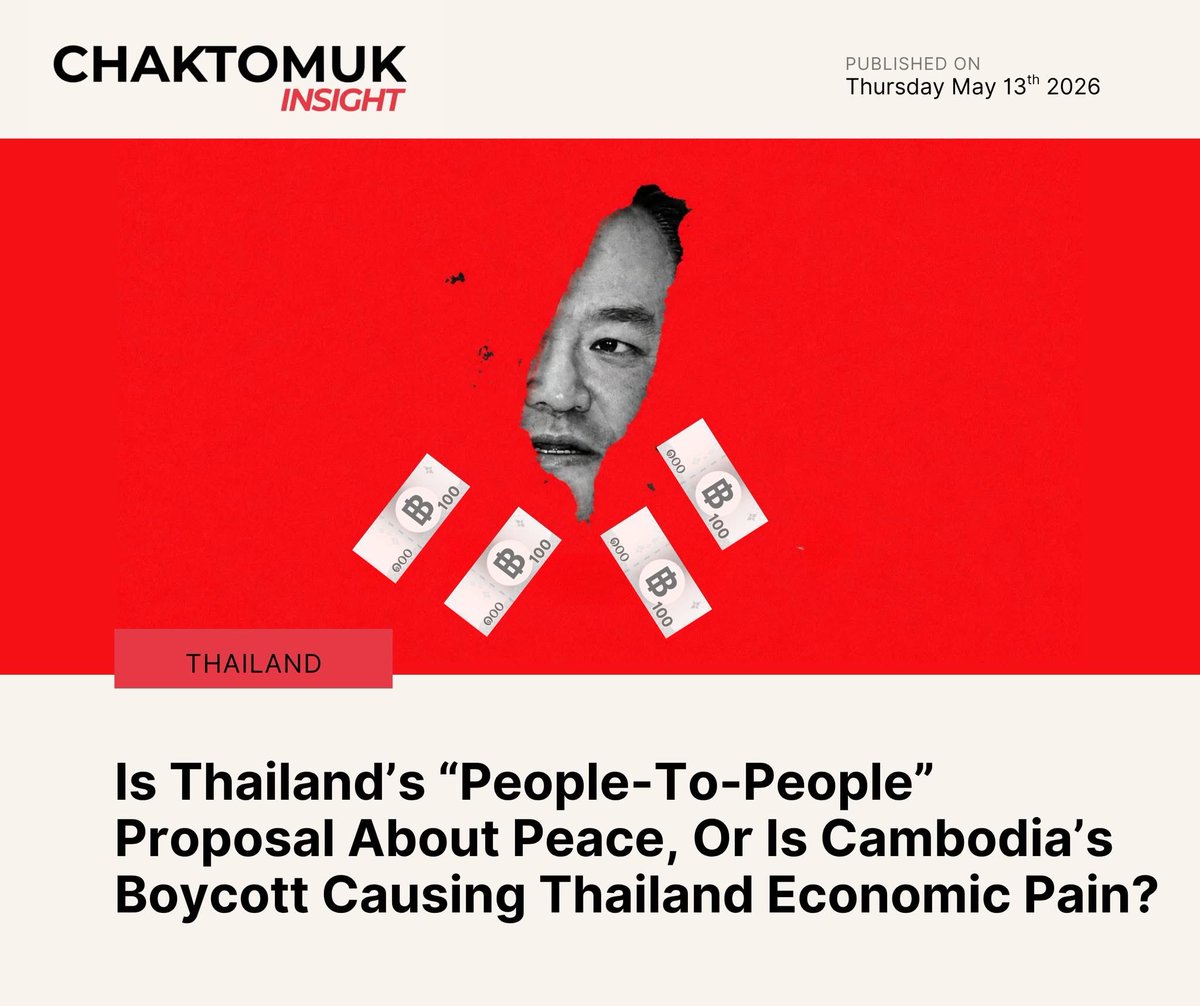
Thailand is currently presenting itself as a peace-seeking actor, framing the Cambodia–Thailand dispute as a moment for both sides to “move on.” Yet, the situation has not truly softened since the December 2025 ceasefire. Tensions remain visible through barbed-wire installations and reported Thai military presence in several areas claimed by Cambodia, while the dispute became even more complicated after Thailand withdrew from the MoU framework.
Against this backdrop, Thailand’s proposal for a “people-to-people” approach during the meeting in the Philippines should not be read only as a gesture of goodwill. It also raises a deeper question: is Thailand seeking reconciliation because it wants peace, or because prolonged tension is starting to damage its economic interests in Cambodia?
After 28th May 2025, many Thai netizens and commentators mocked Cambodia as a poor and country that is full of baggars. Yet, the strength of Cambodia’s boycott of Thai products has shown that Cambodian consumers still hold real economic leverage. According to The Nation, the impact has forced around 30% of border businesses to close and has negatively affected Thai investments in Cambodia worth around US$4–5 billion, particularly in retail, hotels, and manufacturing.
Voratat Tantimongkolsuk, chairman of the Thailand-Cambodia Business Council, told Thansettakij that it is difficult to clearly determine which side has been more affected by the border situation. However, the trade structure itself shows why Thailand has strong incentives to ease tensions: for years, Thailand has enjoyed a large trade surplus with Cambodia, with Cambodia functioning largely as the buyer and Thailand as the seller.
The border conflict and rising anti-Thai goods sentiment in Cambodia have also created openings for other regional suppliers. According to Voratat, Singapore’s trade value with Cambodia has increased by more than 200%, while Vietnam’s has grown by more than 20% and Malaysia’s by around 30–40%. In other words, the longer the conflict continues, the more Thailand risks losing not only short-term trade, but also its long-term market position in Cambodia.
The famous commercial district of Pratunam Market and Platinum Fashion Mall, once among the main wholesale shopping destinations for international tourists, especially Cambodians, is now facing a serious crisis. Approximately 60% of shops have reportedly decided to close their businesses. According to Thai media reports, this wave of closures has been driven by a combination of factors such as decline in domestic purchasing power, the loss of target tourists, and, most notably, a severe disruption from the e-commerce sector.
For many Cambodians, this area was once more than just a shopping destination. It was a familiar stop in Bangkok, a place connected to border-crossing buses, budget hostels, wholesale shopping, and even medical trips to Thai hospitals. In this sense, the decline of Pratunam and Platinum Fashion Mall also be the reason of the loss of target tourists.
Interestingly, on 13 May, a leaked voice clip allegedly featuring Prime Minister Anutin Charnvirakul claimed that Thailand would do its best to reopen border checkpoints by June and urged Cambodia to release detained Thai nationals. However, Anutin said the clip was clearly generated by artificial intelligence, adding that his English was not that good. #chakinsight #chaktomukinsight #Thailand #Economy
Author: PanhaCHEZDA
After the Thai Cabinet terminated the 2001 Memorandum of Understanding (MoU 44), Cambodia began shifting the maritime dispute from a stalled bilateral framework into the more structured arena of international maritime law by announcing its move toward UNCLOS compulsory conciliation.
During a trilateral sideline meeting facilitated by Philippine President Ferdinand Marcos Jr. and attended by Cambodian Prime Minister Hun Manet and Thai Prime Minister Anutin Charnvirakul, Thailand reportedly acknowledged Cambodia’s position to pursue compulsory conciliation under the United Nations Convention on the Law of the Sea (UNCLOS) regarding overlapping maritime claims, according to a high-ranking official.
However, on 11 May 2026, Thai Foreign Minister Sihasak Phuangketkeow rejected Cambodian media reports claiming that Thailand had already agreed to UNCLOS compulsory conciliation. The response also appeared intended to counter Cambodian media narratives, such as Fresh News and Khmer Times, etc.
Beyond Cambodian media, Khaosod English also reported on 6 May that Prime Minister Anutin confirmed a move toward a common legal framework after Cambodian leader Hun Manet announced plans to use compulsory conciliation.
Notably, Foreign Minister Sihasak used very careful wording. He did not state in absolute terms that Thailand would never enter UNCLOS compulsory conciliation with Cambodia. Instead, he attempted to reposition Thailand as the actor controlling the diplomatic process by emphasizing that “the process must begin with sincere bilateral talks.”
This language is politically important domestically. Some Thai nationalist groups that supported the termination of MoU 44 may perceive any movement toward compulsory conciliation as a sign of weakness by the Anutin government, particularly if it appears Thailand is simply following Cambodia’s initiative. In this regard, according to The Nation Thailand, Sihasak also stated that Cambodia and Thailand could consider other mechanisms under UNCLOS if bilateral negotiations fail.
This leaves strategic flexibility because Thailand can still eventually participate in compulsory conciliation while framing the move as a last resort after bilateral negotiations prove unsuccessful.
From a legal perspective, Sihasak’s broader point partially makes sense. Maritime boundary disputes are generally not expected to jump directly into third-party mechanisms without attempts at negotiation first. Under Article 298 of UNCLOS, compulsory conciliation may apply when states have failed to reach an agreement within a reasonable period of negotiations.
However, the minister’s additional statement, that the process “could not proceed unless both Thailand and Cambodia agreed to it”, is more questionable. That interpretation appears to confuse compulsory conciliation with other consensual dispute-settlement mechanisms. Compulsory conciliation under UNCLOS is specifically designed so that one party may initiate the process if the legal conditions are met, even without the other side’s political consent.
At most, Thailand could challenge whether the conciliation commission has jurisdiction or competence over the case. But this would not be a total rejection of the process, and it would function more as a delaying strategy.
A clear example is the Timor-Leste v. Australia Conciliation Case, where one state initiated compulsory conciliation under Article 298 and Annex V of UNCLOS despite the other side’s reluctance. Australia initially objected to the commission’s competence, yet the Commission rejected Australia’s objections and held that it was competent to continue the conciliation proceedings. ##chakinsight #chaktomukinsight #Cambodia #UNCLOS #compulsoryconciliation
Author: PanhaCHEZDA
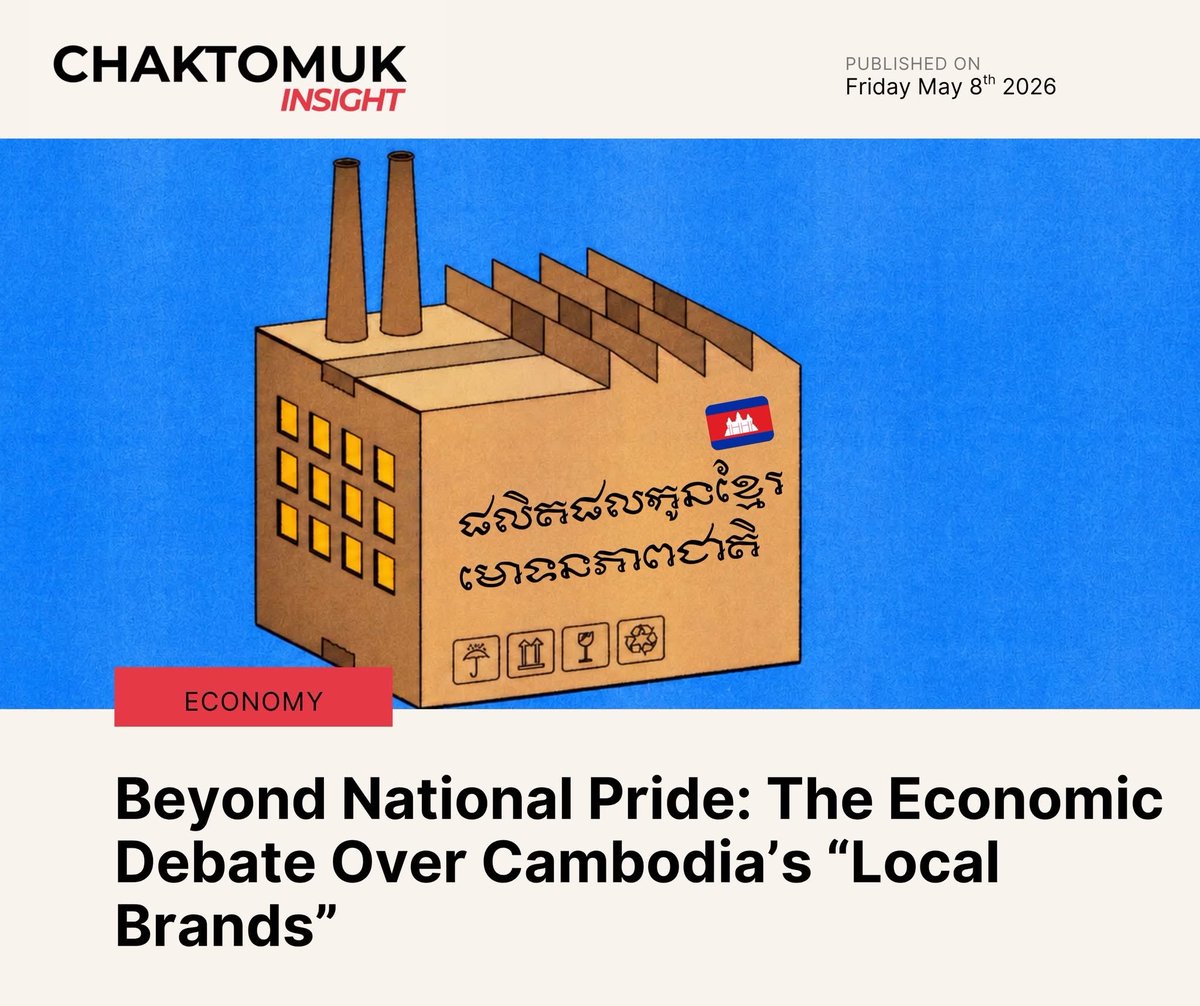
ផលិតផលកូនខ្មែរ, or “Cambodian Products,” has been widely used in the Cambodian market, especially following the boycott of Thai products. Some of these products are genuinely produced or grown in Cambodia, while others are imported from countries such as China, Korea, Vietnam, and Malaysia. On the other hand, many businesses use the marketing term “Local Brand” even though the products are imported from abroad, while the brand itself is owned by Cambodians.
According to Thmey Thmey, Dr. Prum Devi, an economic researcher at the Royal Academy of Cambodia, clarified that purchasing finished goods from overseas—such as face creams, body lotions, or other products—and simply repackaging them under one’s own brand does not significantly contribute to the national Gross Domestic Product (GDP).
In fact, the term “Local Brand” for imported products is more legitimate than using the phrase “Cambodian Products.” Many global brands operate in a similar way. For example, Apple is an American brand, yet many of its products are manufactured in countries such as China. This is often the argument Cambodian “Local Brands” use when questioned about importing their products. However, while such practices are common worldwide, international brands are usually very specific and transparent in the wording they use. For instance, Apple packaging famously states: “Designed by Apple in California. Assembled in China.”
In this case, the key issue for local brands is transparency toward consumers, rather than relying excessively on Cambodian national pride as a marketing strategy. Cambodia currently does not strictly regulate this issue, despite having the Law on Consumer Protection and the Law on Competition. These loopholes allow some businesses to avoid being specific and transparent about the true nature of their products, particularly regarding whether the products are “locally manufactured,” “locally formulated,” or “locally sourced.”
Some Cambodian local products and brands are genuinely produced in Cambodia and have their own formulas and production processes. However, in many cases, businesses claim to be “local brands” while it remains unclear whether they actually develop their own formulas or source materials locally. In such situations, some brands continue relying heavily on foreign suppliers without possessing their own formulas or local sourcing systems, yet still use “local brand” marketing to boost national pride. In many ways, this resembles “a burger without meat” — essentially the same product, only with different packaging and branding.
Dr. Prum Devi pointed out a critical issue: local brands or Cambodian-branded products that are entirely imported do not create substantial added value within Cambodia’s economic system. Although local brands still contribute to the economy through business activity, Cambodia continues to face a structural bottleneck. The country has many sellers, distributors, resellers, and importers, but relatively fewer industrial producers, research and development (R&D) firms, and manufacturing ecosystems.
Similar situations occurred previously in Vietnam during the 2010s and in Thailand during the 2000s. The issue could worsen if policymakers ignore it. These practices carry the risk of polluting the market environment, causing genuinely local products and authentic local brands to suffer from declining consumer trust. Another concern is that Cambodia could eventually face the “middle-income trap,” a challenge Thailand itself has struggled to overcome for many years.
To achieve the ambition of becoming a high-income country by 2050, Cambodia should not focus solely on attracting new investment. The country must also pay attention to organizing a business ecosystem that promotes industrial development, strengthens consumer trust, and creates a fair and protected environment for genuinely local products and brands. #chakinsight #chaktomukinsight #Cambodia #Economy #localbrand
Author: PanhaCHEZDA