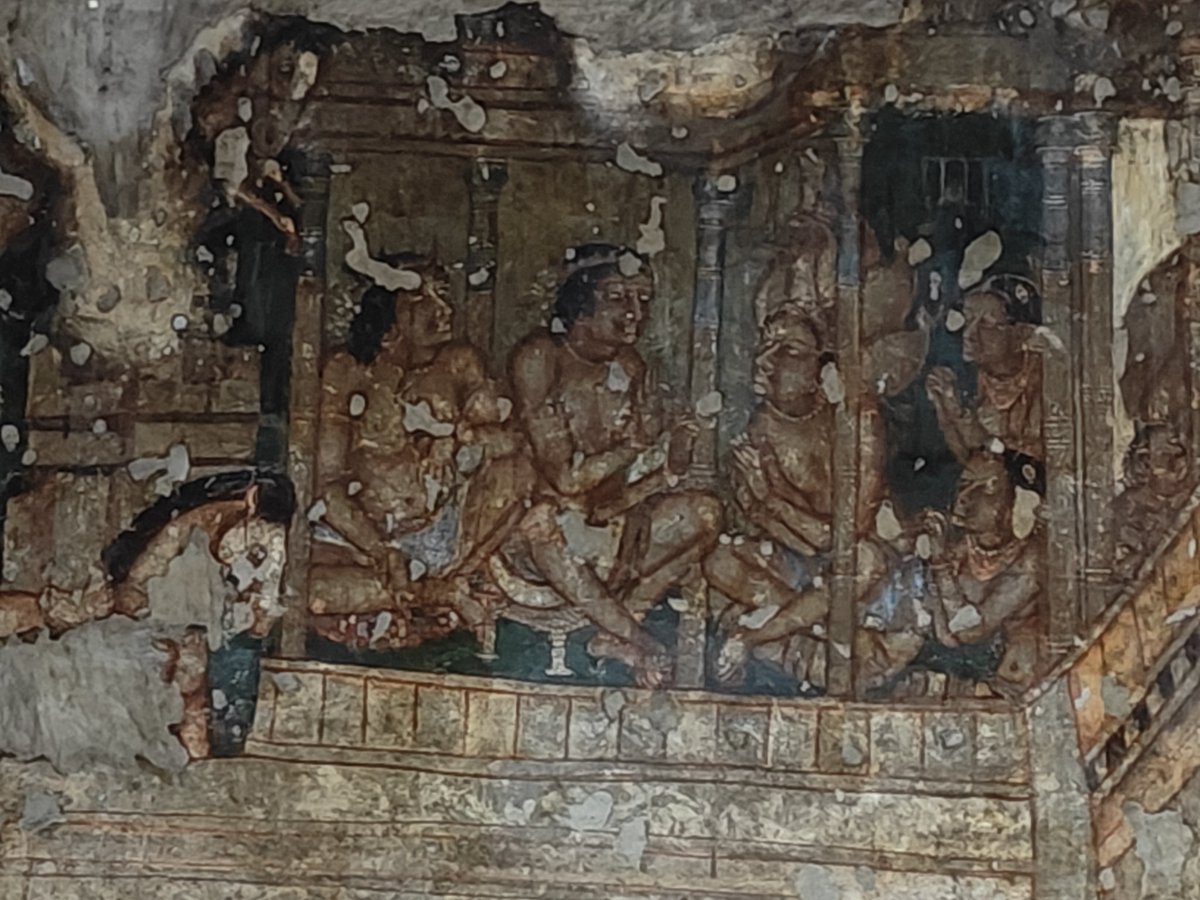
A testament to Indian art and architecture. To even imagine that this was more than 2,000 years ago! Somehow, the paintings survived. And give us a peek into the then society and culture. A time machine of sorts. #Ajanta#Ellora
Wow! The audacity! Conveniently blind.
My fellow Indians, please stop worshipping this person. If you need facts, please see the replies to his tweet and the numerous quote tweets.
It wasn’t.
With rare exception, colonies were unprofitable, meaning more was spent building infrastructure like roads, railways, buildings, etc. than was exported.
And look at places like Singapore and Hong Kong. Both were colonies for a long time and yet they are extremely prosperous.
We really have to build our own LinkedIn, FB, Google, WhatsApp, Maps, Twitter, Insta, Youtube etc. Which are better and solve our problems. No more time left. When I say build, I meant the whole startup, not the product. Product can be built, but the companies have to be built. Youngsters have to come forward. The approach is not to build a Insta beater in one week. You build something which replaces Insta in your college. That's all. Start there. FB started only in Harvard.
We really have to build our own LinkedIn, FB, Google, WhatsApp, Maps, Twitter, Insta, Youtube etc. Which are better and solve our problems. No more time left. When I say build, I meant the whole startup, not the product. Product can be built, but the companies have to be built. Youngsters have to come forward. The approach is not to build a Insta beater in one week. You build something which replaces Insta in your college. That's all. Start there. FB started only in Harvard.
Updated my open source Wisprflow alternative to now work for Hinglish too. All it needed was only change, changed model to new gpt transcription model from OpenAI :)
Didnt Wisprflow run a whole campaign on how they have started supporting Hinglish? Turns out the wrapper just needed to change the model.
I didn't update the code in the open source; I just updated it in the settings. Abhi to yeh bhi kaam karega.
What have we done. Where has all this talent gone. Corrupted by a colonial education? We have had serious discussions on this at https://t.co/ikXhKScEAz.
Need to revive this. Using new age tools. As a quick trial, we have started an incubator. Will make formal announcement soon. Only open source Telugu focussed startups. This will be an in person incubator. Before the formal announcement is made, interested people can DM me.
The trouble with @svembu's appeal to NRIs is that it continues to demand more sacrifices from Indians while demanding no change from India's governments. Resident Indians have more than enough talent in every domain but they are already choked. He makes no attempt to demand removal of existing bottlenecks. It's not TALENT that India is starved of, it is ACCOUNTABILITY.
Some reform ideas which I'd like to see implemented in India:
- (0) Improve nutrition and environmental safety. Safe air, water and food is the bare minimum expectation.
- (1) Encourage skin-in-the-game for political and administrative leaders (for eg: require an exit tax for them and their kids).
- (2) Radical transparency in govt systems. Anonymized files should be digital and public by default, unless marked confidential for valid reasons.
- (3) Increase actual Ease of Doing Business (eg: improve contract enforcement).
- (4) Discourage young talented people from wasting away their most precious years into civil services exam prep, or pseudo-scientific professions like degrees in AYUSH.
- (5) Do not allow the world to dump inferior hardware and software products on Indians. Insist on interoperability, technology transfer and repairability by third-parties.
- (6) Prepare the workforce for the future: For eg: Decrease the number of specializations by bundling subjects in Engg, achieving a better balance of employability and national interest.
- (7) Reduce the need for affirmative action in later years by improving access in earlier years.
- (8) Create conditions for healthy competition among states so that we can have more experiments in governance.
I came back to India in 2002. Back when coming back to India was not the fashion or when we could post on social media about why we were coming back :)
I came back because I felt my talents would be more useful for India than the US.
I came back because I was a fool.
But you have to be a fool to make a change.
Vembu asking Indians to come back is the right thing. But coming back or not is a very personal choice. And its a tough choice.
Dont come back because you think India is rising(back in 2002 atleast people were not defending drinking cow urine) or India will become great and US will go down.
Come back only if you think you can help become India great and are willing to sacrifice to make that happen. Not just you, your family should be willing to sacrifice. And you are willing to stick it out without regret.
You will most probably not even be remembered for your sacrifice. Some nepo baby will get all the credit. Only you will know what change you made. You will be poorer, you will work harder, you will die faster.
But you will have made a change for the better. However small it might be. And that will help India and its future generations.
In the end that's all that matters.
BTW, there is almost nothing new in what I said. My dad told me almost the same things when I told him I am coming back after my Masters and not staying back for H1B etc. And he has been proven right.
This. You can keep building. And building. Without the rubber ever hitting the road. Learnt the hard way. Put your product out in the hands of the people already!
Every startup founder who comes for advice, the first thing I tell them is stop building. All of them already have lots of features. I tell them to spend all their time in sales and marketing.
Everyone nods their head. They understand.
But no one listens.
They come back to me couple of months later with a new feature and ask me if this will help their startup take off the ground.
✅ We are growing our small team at CRASH Lab. And will be recruiting for many positions soon.
⬇️ The payscales are academic (capped by ICMR and DBT norms and hence cannot compete with your industry salary) but most projects we do have a startup spin off potential.
✅ Those who are full time with the lab, will get the first choice to lead these spin offs.
🔥 Stay tuned and follow @KCDH_A.
🚀 CRASH Lab is our bet to show that world class research and innovation in medical AI is possible in India through interdisciplinary collaborations. And I am all in to prove this. 🤝
India is adding AI everywhere. Even where it’s not needed.
HDFC replaced “press 1” with “say yes”.
Now I have to speak in meetings to confirm a transaction 🤦♂️
Earlier it was silent. Press 1 and done.
Unnecessary voice AI added. Bad UX. This is a downgrade, not an upgrade.
Great, you have a successful MVP. What's the next step for making your product famous. The previous playbooks used to be posting on producthunt and many other saas and micro saas launch pages and reddit and hackernews and make sure you respond to every comment and keep the conversation going. It is generally at that time you realize that building a startup does not mean coding. It is everything other than coding. The SaaS playbook is well defined and we have experts in that. Build SEO, calculate ROAS etc.
But that rate of growth is not enough in this AI world. In this AI world you need to do $10 million ARR on 2 months.
That will not happen with the old playbook.
The hustlers have found a new playbook for this. Supported by the VC money.
They are calling it UGC, user generated content. It is basically influencer marketing.
You see all these posts everyday about some new AI tool and how it's completely changed the life of so many people, that's UGC. You would have been surprised at how frequently the disruptions are happening given the posts from these influencers. You would have assumed the whole world has changed multiple times. Well, the influencers lives certainly changed with the money they are getting from the companies :).
I have been following enough AI people and their posts to know that almost everyone is posting ads without disclosing.
So, let's say you have $1 million dollars. How would you spend to get users for your AI product.
You would identify, the best influencers for your product(high followers, right content etc), reach out over DMs and make an offer. They will post about how great your product is and how it will kill off other products and create fomo for users.
Say your product is $10 but your are giving for $1. Let's say you are able to get 1000 influencers. And each gets you some 10 customers. They all sign up for the discounted $10 plan. Make sure you run this campaign on a particular day. So, on that day you get 10,000 signups and and $100,000 worth of MRR or more than $1 million ARR.
Now announce you are fastest to $1 million ARR and create more fomo and reach out to more influencers and ask them to post about fastest to million dollars and suddenly you are at 10 million ARR.
Now the VCs are behind you to give you a billion dollar valuation.
Congrats!
My story when I was a teacher. I was known to be a strict professor especially in lab practicals. A few days before the practicals I get a visit from a political person(guess the party :)). Turns out his daughter was taking the exam in a few days and he asked me to be lenient with her. I said no, and I suggested to him that it will be much more beneficial if he had this talk with his kid and asked her to study better. He said she was anyway studying only so that she can get married off after getting the degree, so what does it matter. I told him, it matters. To me and to her. She needs to know that she can succeed in life even without her dad doing wrong things for her. The dad left threatening that he will see what he can do if I don't help.
A few hours later the girl came to my office. She had found out that her dad had come. I explained what had happened and told her that if she needed extra help I can sit with her and coach her more. She was apologetic. The class knew my principles. She said she did not ask her dad to do this and she was sorry. She said she will talk to her dad and will do her best in preparing for the practicals. I said all the best.
She passed.
On #InternationalMotherLanguageDay
Our Corpus App is now localised in Telugu our contribution to #Indic l10n project. Help build strong Telugu & Indic AI by contributing Text, Speech, Video & Image datasets.
🌐 https://t.co/504VYZrebe
Android App: https://t.co/U7tUJSJIy6
Fighting the GPU fight is a dead end. We cannot be self reliant by just buying more GPUs.
We need to improve our datasets.
We need better algorithms.
We need better implementations.
All the above need more PhDs.
🚨I don’t comment on every tech launch, but after eight years in healthcare AI, I have to ask: is India handing over its healthcare sovereignty to foreign platforms? 🇮🇳
I must share some raw thoughts about the launch of ChatGPT Health (for patients) and OpenAI for Healthcare (for doctors) this week, because the implications are enormous, and we as Indians need to pay attention (which we aren’t!)
In the last 24 hours, OpenAI has initiated a direct play to become the “operating system” for global healthcare data. This is not just about replacing human doctors but about becoming the default interface where your health data, wearables, lab reports, clinical notes, fitness logs (and literally everything related to you) gets stored, organized, interpreted and ultimately monetized!
🚀 Healthcare is now one of the world’s biggest data economies. In India, this market is exploding, well over 500 billion dollars, with digital health leading the way.
In India have more than a billion people (and potential customers). The diversity of cases we see in hospitals is unmatched! TB, rheumatic heart disease, tropical infections, cancers all of them present differently in Indian populations. A treasure trove of clinical information that does not exist anywhere else in the world!
And for decades, most of this data has been siloed and stuck in different places. Fitness apps stored your steps and activity. Hospitals locked up imaging in their PACS. Half our X-rays and ultrasounds are still physical films or printouts lol
AI has changed everything in the last few years.
Today, models can read scans, parse clinical notes, integrate vitals, understand behavior, and connect it all. We have patient health record apps which store all our information, so it’s easier for us to connect them to AI apps through APIs and MCP servers.
The truth is: Whoever controls the layer that stitches this together will control diagnostics, healthcare policy, and population health at scale. I have absolutely no doubt about that!
That is what OpenAI is building. Connect your records. Connect your wearables. Let the platform learn how your body, your disease, your life works. It starts free. Later, you pay for the smarter version.
We have seen this movie before. Google Drive. iCloud. Google Photos. Once your data and your habits live inside a system, how do you ever leave? Right?
But healthcare is not just your email or photos. There is sovereign angle to it. If India’s imaging, clinical records, and behavioral data flow only into foreign platforms, (and yes, many Indian startups have already been forced to share data just to survive), we are reduced to data suppliers, not data owners, and definitely not builders.
If this continues it will be disastrous!!! Our diagnostic standards. Our clinical pathways. Our public health priorities. All of it may eventually be shaped by decisions made outside this country!
I see something every day in practice. Indian TB. Rheumatic heart disease. Infections and patterns Western models still struggle to understand. If we allow foreign entities to own the “brain” trained on this data, we will end up paying for insights generated from our own people.
I have worked, often pro bono, with some of the most brilliant health-tech founders in this country. They are hardworking, creative, deeply committed. But most are just fighting for survival. No one has the runway to build national infrastructure!
An Indian “ChatGPT for Health” cannot be another under-funded startup. We need patient capital. Serious policy support. Digitization of decades of legacy records. Multimodal datasets that connect hospitals, labs, public systems, wearables, and wellness platforms. Long-term governance that balances privacy, equity, and innovation.
And I am not being anti-global. This is not anti-free market. And honestly, anyone who reduces this to that is missing the point!
We absolutely need global collaboration. But the core intelligence built on Indian health data MUST be governed in India.
Because The stakes are massive.
Whoever controls health data and health AI will set the rules for medical care, public policy, and healthcare innovation for the next decade.
If we build our own now, we control our future.
If we wait, we will be locked out and locked in.
The clock is ticking.
So my question is: Are we going to do something about it, or are we going to remain passive users while a few companies in Silicon Valley decide how healthcare for 1.4 billion Indians should work?
Organizations adapting AI is the biggest problem that businesses are facing right now. Even in Ozonetel | oneCXi I face this problem day in and day out. The employees who really use AI to its full potential are minuscule. I can count on my fingertips. We need to overcome this in the right way or we will face the same problems we faced during industrial revolution. India needs to be in the forefront of AI. Wrote a little about it today.
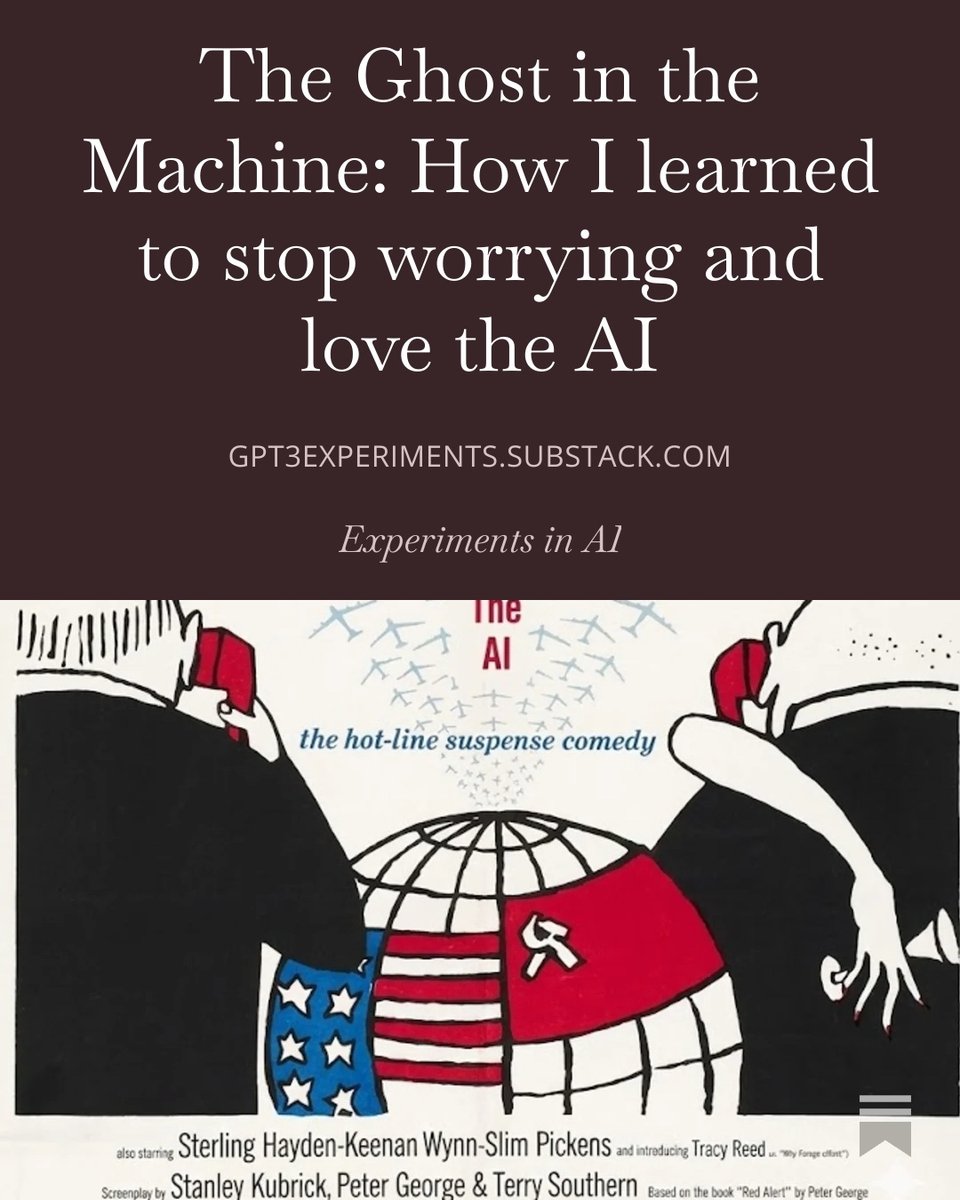
The Ghost in the Machine: How I learned to stop worrying and love the AI
History has a funny way of repeating. It tells us don’t do this. If you do this you will suffer. But like kids in a school or like teenagers rebelling we say, I will do this. This time it will be different. Well guess what, it’s not going to be different.
Thanks for reading Experiments in AI! Subscribe for free to receive new posts and support my work.
Today, we stand at the precipice of the Artificial Intelligence age. The tools available to the average employee right now are nothing short of revolutionary. Yet, a strange paralysis has taken hold. Many organisations and individuals are hesitating, eyeing these tools with suspicion rather than curiosity. And with good reason. People like Sam Altman and Satya Nadella have not helped the cause by pushing AI in places its not needed and hyping it up to the levels of AGI :)
But this hesitation feels eerily familiar, especially when viewed through the lens of India’s economic history. If we are to thrive in this new era, we must confront the uncomfortable truth: the mistake of resisting technological change is one we have made before, and it is one we cannot afford to make again.
Lessons from the Industrial Past
India’s relationship with the Industrial Revolution in the 18th and 19th centuries was complicated, to say the least. While colonial rule actively deindustrialized the nation to serve British interests, there was also significant internal cultural and philosophical resistance to mechanization.
Consider the textile industry. While Britain embraced the power loom and the steam engine, India’s legendary artisanal weaving sector struggled to adapt. There was a deep-seated wariness of machines that threatened traditional livelihoods and social structures. The Charkha (spinning wheel) became a powerful symbol of resistance and self-reliance during the freedom struggle, but in the post-independence economic landscape, a lingering suspicion of rapid, large-scale mechanization contributed to decades of sluggish industrial growth.
We missed the bus because we failed to understand one basic concept:
The machine replaced the muscle.
We tried to glorify the human using his muscles to achieve perfection. While that works for niche products, it cannot survive industrial scale. In fact, even now we glorify the man over the machine as a recent movie shows.
We missed the first bus. We spent decades playing catch-up, protecting obsolete methods instead of innovating. It wasn’t until the economic liberalization of 1991 and the subsequent IT boom that India truly demonstrated its potential to not just adopt, but dominate, a technological wave.
We proved we could adapt. But are we forgetting that lesson now?
The Current AI Paralysis
Fast-forward to 2024. The “steam engines” of our time are Large Language Models (LLMs) and generative AI. The access is unprecedented. For a small subscription fee, or often for free, an employee has access to an intelligence that knows almost every coding language, has read the entire internet, and can draft a strategy document in seconds.
Yet, adoption is lagging behind access.
A significant disconnect exists. While company leaders are rushing to “implement AI,” the workers on the ground are often stalled.
As I have been observing in Ozonetel, the AI “native” employees in the organization are minuscule. I would say there are 3, maybe 4 employees who are using AI properly. The rest are going through the motions though the management is completely convinced on the switch to AI.
The Evidence and the “Copilot” Conundrum
We see this evidenced in the rollout of major enterprise tools. Take Microsoft Copilot, for instance. Microsoft has aggressively integrated AI into its ubiquitous Office suite. On paper, it’s a productivity dream. In reality, the reception has been disastrous.
Reports and user feedback indicate that for many, Copilot hasn’t been the instant magic bullet promised. Why? Part of the blame lies with the tech giants’ approach, shoving features at users without adequate training on how to integrate them into complex workflows. It can feel clunky, sometimes hallucinates, and requires a new way of interacting with software (prompt engineering).
But a larger part of the problem is user resistance. Many employees are not actively trying to bridge that gap. They try it once, it fails to perfectly execute a complex task, and they dismiss it. Frankly, they don’t care.
The fundamental problem is that for an employee, they wanna come in, do their job(which was mostly looking at a screen, move bits here and there) and go home to their life. Now AI means they have to learn something new. They will resist this change.
According to various 2023-2024 reports on the “AI divide,” while global awareness of GenAI is near universal among knowledge workers, regular, highly effective utilization is vastly lower. A Salesforce survey indicated that while many executives are keen, a significant percentage of workers lack the training or the mandate to use these tools effectively. They are ignoring the supercomputer sitting on their desktop.
The Root Error: Replacement vs. Augmentation
Why the hesitation? It boils down to fear, rooted in a fundamental misunderstanding of what this technology is.
Too many people are looking at AI through the lens of Replacement Technology. They see a tool that can write, code, and design, and they immediately jump to: “This thing is here to take my job.” When you view something as your executioner, you will not cooperate with it. You will resist it, hide from it, and hope it goes away.
This is the wrong framing. We need an urgent mindset shift toward seeing AI as Augmentation Technology.
If you are spending four hours a day summarizing endless PDF reports, writing generic outreach emails, or debugging basic code, you are wasting your human potential. AI can do those tasks in minutes. By resisting AI, you aren’t protecting your job; you are insisting on doing drudgery that a machine is better suited for.
It’s like in the movie above, we have a grinding machine. But if you choose to grind by hand for some unseen uptick in taste, who are you doing it for? For yourself, or for the hungry man who needs some idli as breakfast which he can gobble down quickly before going to work.
AI is not here to replace the employee. It is here to help them. As I told above, why should the employee care? They will care if their work becomes better or easier. They know they have to sit in a cubicle from 9-5. How can AI make that time better. The companies which will solve this will make bank.(My brother’s stealth startup is working on exactly this).
The New Paradigm: AI as Your Coworker
To survive this transition, employees need to stop treating AI as a suspicious piece of software and start treating it as a junior coworker.
A very smart, very fast, sometimes naive junior coworker who needs clear instructions.
When you shift to this mindset, the fear evaporates, replaced by utility. The AI handles the “blank page problem,” the data crunching, and the repetitive drafts, freeing you up for higher-level strategic thinking, creative problem solving, and emotional intelligence, things AI is terrible at.
Conclusion: Adapt or Perish
The industrial revolution proved a harsh reality: history does not kindly judge those who refuse to adapt to technological paradigm shifts. The difference today is speed. The industrial revolution unfolded over a century; the AI revolution is unfolding over months.
The historical wariness of change that once held India back cannot be allowed to resurface. The tools are here. They are accessible. The teams and individuals who cling to the old ways of working out of fear or inertia will find themselves obsolete.
Those who embrace AI not as a replacement, but as the ultimate augmentation tool won’t just survive the coming changes. They will define them.
The next step in our Telugu LLM journey, mid training. Before we get into supervised fine tuning, most new methods follow a mid training approach to get the system used to instruction following. Our current pre trained model can just spit out Telugu text. But what we want is a system that listens to us, not some random word generator :)
So we start with mid training. Sharing our approach here. We went with some small talk, news articles, paraphrasing summarization and stories. For some of these, again we had a data problem, so we had to generate some synthetic data. No way around it.
https://t.co/z147ZC6GrT
Once we had a good enough tokenizer(we still need to do lots of research in this. If any one is interested, please connect, IIIT-H profs are also interested), the next step is to build the pre training model. This is where we start to get into "intelligence". The model we get out of this will start spitting out grammatically correct Telugu, though most of it wont make sense :)
More details about how we did the pretraining below.
https://t.co/DOMjdiNpU3