Hope everyone enjoys a fabulous 4th of July celebration of the 250th anniversary of the founding of this great country. Those of us who are U.S. citizens are so privileged to live here!
However, we cannot become too complacent. Our brilliant founders warned us, including Ben Franklin, who was asked at the conclusion of the Constitutional Convention in Philadelphia whether our new government would be a republic or monarchy, Franklin replied: "A republic if you can keep it."
Today, there are modern leaders who would prefer other forms of government - as they try to move the country towards monarchy/despotism or a "socialist democracy."
Also from Franklin: "When the people begin to think they can vote themselves money, it will herald the end of the republic."
John Adams: “Remember Democracy never lasts long.
It soon wastes, exhausts and murders itself.
There never was a Democracy yet, that did not commit suicide. It is in vain to say that Democracy is less vain, less proud, less selfish, less ambitious or less avaricious than Aristocracy or Monarchy. It is not true in Fact and nowhere appears in history."
For the big spenders in the Executive branch and Congress that have brought us to a $39.3 trillion dollar National Debt, here's a pertinent comment from Scottish historian and author, Alexander Fraser Tytler (1747-1813): “A democracy is always temporary in nature; it simply cannot exist as a permanent form of government. A democracy will continue to exist up until the time that voters discover that they can vote themselves generous gifts from the public treasury. From that moment on, the majority always votes for the candidates who promise the most benefits from the public treasury, with the result that every democracy will finally collapse due to loose fiscal policy, which is always followed by a dictatorship.”
And another quote from Tytler: "The average age of the world's great civilizations has been two hundred years. These nations have progressed through the following sequence: from bondage to spiritual faith, from spiritual faith to great courage, from courage to liberty, from liberty to abundance, from abundance to selfishness, from selfishness to complacency from complacency to apathy, from apathy to dependency, from dependency back to bondage."
A final quote from Charles Louis de Secondat, baron de La Brède et de Montesquieu, a French political philosopher (1689-1755) best known for developing the theory of separation of powers (our founding fathers understood this concept so well): "The deterioration of every government begins with the decay of the principles on which it was founded."
20 stocks I'll add in this May/June 2026 $SPY crash.
Remember, market always bounces back to all time highs.
1. $NVDA $225
Buy: $180–190 Prior breakout and massive institutional demand zone.
2. $MU $725
Buy: $500–$550 Strong support and AI memory demand acceleration zone.
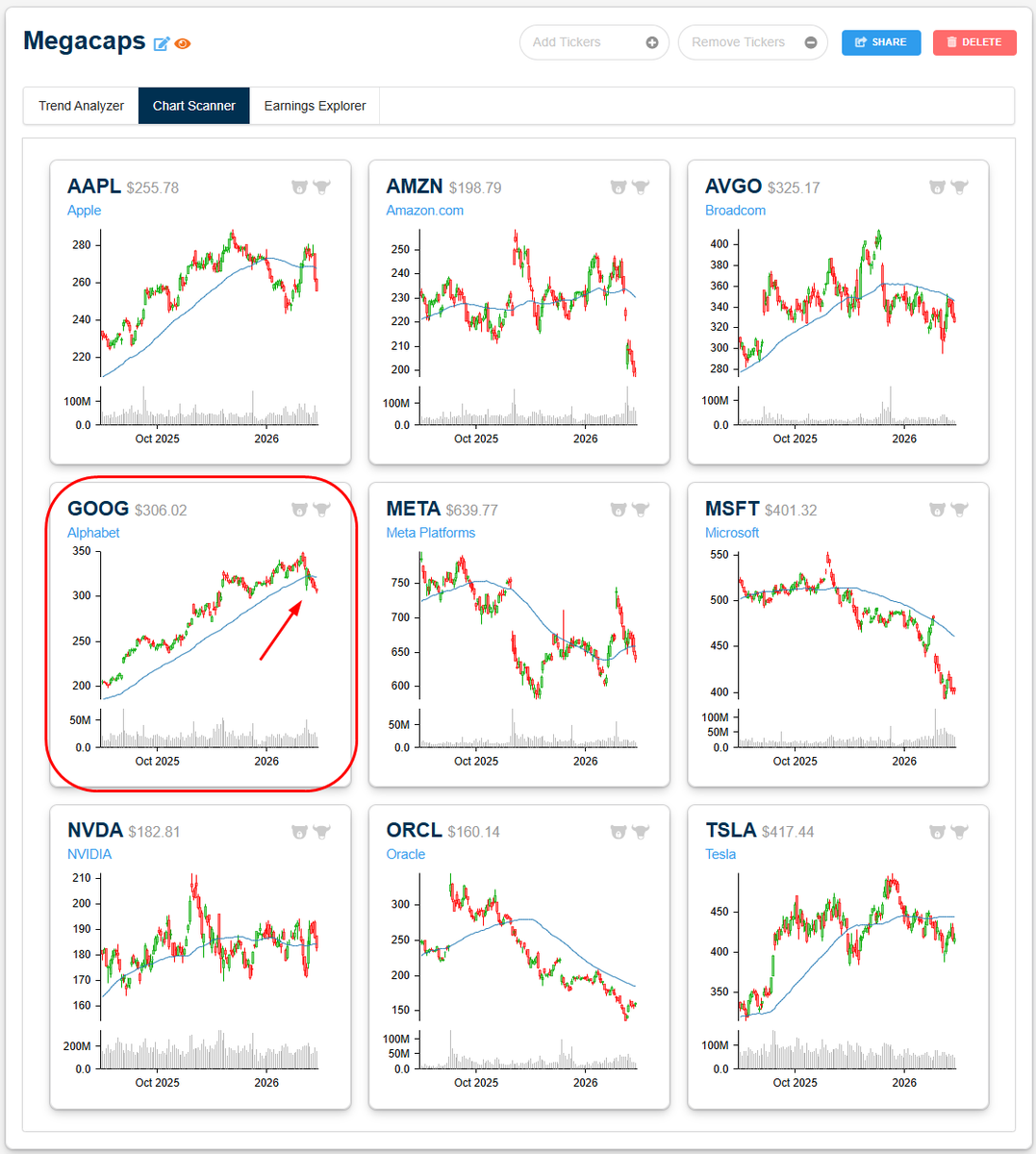
3. $GOOG $392
Buy: $350–360 Historical accumulation zone and long-term AI infrastructure support.
4. $AAPL $300
Buy: $260–270 Major support with massive cash flow and buyback strength.
5. $IONQ 51
Buy: $25–38 Prior breakout zone with aggressive future growth potential.
6. $POET $16
Buy: $7–9 Early-stage AI photonics accumulation zone before mass adoption.
7. $DGXX $7
Buy: $3–3.50 Deep support zone with speculative AI infrastructure upside.
8. $MRAM $52
Buy: $14–15 Long-term semiconductor accumulation and breakout retest area.
9. $CIFR $20
Buy: $11–12 Oversold support with strong long-term cybersecurity demand potential.
10. $MSFT $42
Buy: $360–370 Major institutional support and AI cloud dominance zone.
11. $META $610
Buy: $530–540 Historical support and heavy AI monetization opportunity area.
12. $AMD $420
Buy: $340–350 Major support before next AI data center expansion cycle.
13. $INTC $107
Buy: $65–70 Multi-year support with asymmetric turnaround potential.
14. $ORCL $192
Buy: $140–150 Prior breakout zone with accelerating AI enterprise demand.
15. $QCOM $200
Buy: $150–160 Strong support with long-term edge AI opportunity.
16. $NOW $95
Buy: $80–85 Institutional demand zone and enterprise AI transformation support.
17. $ADBE $247
Buy: $224–235 Long-term support with massive AI productivity monetization potential.
18. $BE $42
Buy: $16–19 High-risk support zone with AI energy demand tailwinds.
19. $LITE $971
Buy: $600–650 Prior breakout zone and major AI infrastructure support.
20. $SNDK $1381
Buy: $800–900 Strong semiconductor support with rising AI storage demand.
21. $DRAM $50
Buy: $32–35 Early accumulation zone before broader AI infrastructure expansion.
If the $SPY sells off under $700 towards $650 by the end of June, I'm interested in $SPY calls for $750 June 2027 calls.
♻️RESHARE this post and make 1 comment if you want $SPY contract less then $10 to buy so you can hold it through volatility.
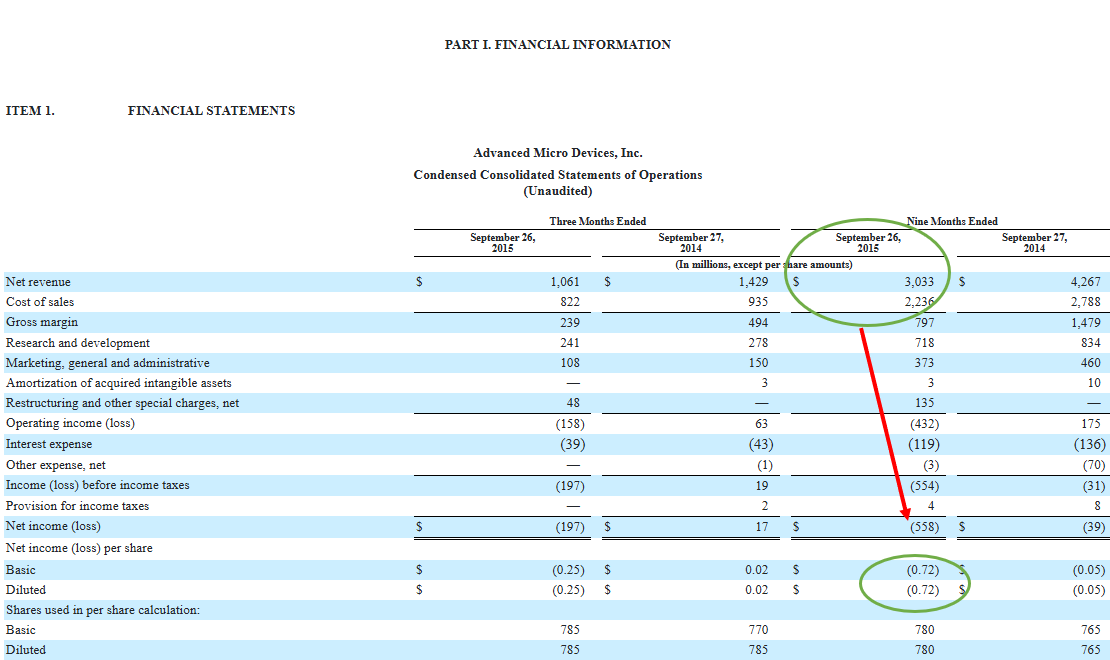
10 years ago, AMD was trading at $2 and up 21500% now.
AMD was losing money, but their technology was powerful.
20 stocks with same set-up as AMD (price target 1 year from now):
1. $SMCI (~$35) Full-rack liquid-cooled AI GPU servers shipped direct to data centers at scale. PT: $70
2. $APLD (~$40) Building AI factory campuses for hyperscalers just signed a $7.5B lease. PT: $120
3. $VIAV (~$54) Tests and validates every optical AI data center link before it goes live. PT: $200
4. $SOUN (~$9) Conversational AI agents handling drive-thrus, healthcare, and enterprises at scale. PT: $30
5. $DOCN (~$161) Inference cloud for AI startups saving 15% vs AWS — 254% ARR growth. PT: $600
6. $FORM (~$150) Advanced probe cards that test every AI chip before it ships from the fab. PT: $400
7. $AEHR (~$96) Burns-in and stress-tests silicon carbide and AI chips before deployment. PT: $225
8. $ACMR (~$55) Wet cleaning tools that remove nanoscale contaminants from every AI wafer. PT: $160
9. $POWI (~$78) Power conversion chips cutting energy waste inside every AI server. PT: $210
10. $WOLF (~$43) Silicon carbide wafers enabling more efficient power delivery for AI data centers. PT: $100
11. $AMBA (~$75) Edge AI inference chips for surveillance, autonomous vehicles, and robotics. PT: $120
12. $SLAB (~$220) Mixed-signal chips connecting the sensors and IoT devices in every AI edge system. PT: $600
13. $MKSI (~$300) Gas and power delivery systems used inside every AI semiconductor fab. PT: $600
14. $OSIS (~$240) AI-powered inspection systems securing airports, ports, and critical infrastructure. PT: $400
15. $KOPN (~$5) Microdisplay chips for AR/VR headsets running AI at the edge. PT: $12
16. $MAPS (~$1) Maps and spatial data powering AI navigation and autonomous vehicle systems. PT: $2
17. $IONQ (~$54) Quantum computing hardware that will run AI workloads beyond classical chip limits. PT: $200
18. $AUR (~$7) Autonomous trucking AI hitting commercial launch across U.S. freight lanes. PT: $22
19. $SERV (~$10) Sidewalk delivery robots bringing AI physical autonomy to last-mile logistics. PT: $25
20. $BBAI (~$4) AI decisioning software for defense and intelligence agencies at classified scale. PT: $12
My favorite 4 are AUR, APLD, IONQ, SERV. Especially if the world becomes more automated with robots and self-driving.
Do not use the wrong math on Bitcoin. The right math is the math of self-organizing systems like cities.
I get it people are not familiar with it because they don't know the physics of self organization.
But this is why a revolution in thinking what Bitcoin works it is fundamental. This is why I wrote an entire book on this.
To answer your precise question:
The dividend discount model values cash-flow-producing assets. It's the right tool for stocks and bonds. It's not the right tool for gold, silver, raw land, fine art, or any monetary commodity — none of which produce cash flows, and none of which are Ponzi schemes. If your framework declares all non-cash-flow assets to be Ponzis, your framework is wrong, because gold has held value for 5,000 years on the same logic Bitcoin uses.
The relevant valuation frameworks for monetary commodities are stock-to-flow, network-value (Metcalfe-type), monetary-demand, and cost-of-production models. None of them use P = D/r, and none of them need to.
But the deeper argument of my article is empirical, and it does have explicit math. Here it is.
The math of the power law.
A power law is a relationship of the form:
y = A · xᵏ
Take the log of both sides and you get:
log(y) = log(A) + k · log(x)
Which means a power law shows up as a straight line on a log-log plot, with slope k. That's the signature. If your data plots as a straight line in log-log space over many orders of magnitude and many years, you have a power law.
Bitcoin's price as a function of time since genesis fits:
log(price) ≈ a + k · log(t)
with k roughly 5.7 over 15+ years and across many orders of magnitude in price, with the entire bull-bear cycle structure oscillating around that line. That's not a curve fit to a few points. That's a stable scaling law holding across nearly every market regime Bitcoin has lived through, including multiple 80%+ drawdowns.
Why this matters: power laws are the signature of self-organizing systems, not Ponzis.
Power laws arise from multiplicative growth processes with feedback and constraint — preferential attachment, network effects, distributed adoption. They are the mathematical fingerprint of:
City populations (Zipf's law: rank · size ≈ constant)
Wealth distribution (Pareto)
Word frequencies in language (Zipf again)
Earthquake magnitudes (Gutenberg-Richter)
Internet topology and link distributions
Scientific citation counts
Firm sizes in economies
All of these are emergent systems with no central designer. The power law arises from the bottom-up structure. You cannot fake it from the top down.
Now compare to a Ponzi.
A Ponzi scheme has a completely different mathematical structure. It requires the operator to pay returns to existing investors out of new investor inflows. If existing investors are promised return r, and new inflows must cover those obligations, the required new money grows as:
N(t) = N₀ · (1 + r)ᵗ
That's pure exponential growth. On a log-linear plot, exponential growth is a straight line. On a log-log plot — which is where power laws appear straight — exponential growth is a sharply upward-curving function, not a line. The two are mathematically distinct signatures, and you can tell them apart visually.
More importantly, exponential growth in required recruitment is unsustainable by construction, because no real population can support indefinite exponential extraction. Every Ponzi in history has therefore followed the same pattern: exponential growth, then sudden terminal collapse to near zero. Madoff, Ponzi himself, Bitconnect, OneCoin — all of them. The math forces it.
No Ponzi in recorded history has produced a stable multi-decade power-law signature on a log-log plot, because the structure mathematically cannot produce one. The growth requirement curves the wrong way.
So the empirical question is straightforward:
Bitcoin's 15+ year price history plots as a straight line on a log-log chart with slope around 5.7. That is, by definition and by mathematical structure, the signature of a self-organizing network-effect system, the same signature cities and languages and the internet produce. It is not, and cannot be, the signature of a Ponzi, which mathematically must produce an exponential curve terminating in collapse.
If you want to argue Bitcoin is a Ponzi, you have to explain how a Ponzi produced 15 years of power-law scaling that no actual Ponzi has ever produced — and you have to do it with math, not vibes. "Tell me the math" cuts both ways.
The dividend discount model is the wrong math for this asset class. The right math — the math that distinguishes Ponzis from emergent monetary networks — is the math of scaling laws, and Bitcoin's scaling-law signature is on the side of cities, not Madoff.
This is what true 3D looks like.
Not reconstructed slices. Not compressed tissue. A full 360° view of the breast in 10 seconds - no compression, isotropic resolution, every angle visible.
For dense breast tissue, overlapping structures are where cancers hide. Koning Vera removes that problem entirely.
Detection down to 2mm lesions and 200-micron calcifications. FDA PMA approved.
We're not going to travel beyond the solar system, according to Leonard Susskind. And neither are aliens, coming to visit us.
We may not be alone, but we are stuck here for, essentially forever.
1. The nearest star is 4.24 light years away. The fastest spacecraft ever built would require 6,600 years to get there.
2. Surely we can just build faster spacecraft. The problem is to get to anywhere close to the speed of light, we need exponentially more energy.
3. Chemical rockets will just not work. Even fusion rockets won't work. Even 10% of the speed of light is not achievable. The Tsiolkovsky Rocket Equation prevents it.
4. Interstellar dust becomes hand grenades when traveling anywhere close to the speed of light. Ships break.
5. Space radiation will kill us over the time need to travel interstellar distances. Impossible to protect without massive shields, which require massive energy to accelerate and de-accelerate.
“I’ve always loved to play games, and face it, investing is one big game. You need to be decisive, open-minded, flexible and competitive.”
— Stanley Druckenmiller
Tidbits from China trip:
Confidence matters, and it feels like people have largely made peace with the (post 2020/21) new normal. Coffee shops are packed again. Consumer energy is back, and sentiment feels calm, even quietly hopeful. A key driver is the wealth effect: the Shanghai index is up 50% from the Oct-2024 lows and has steadily reached its highest level since 2015.
On tech, research talent is genuinely world-class. VCs are "employed" again - IC cadence has gone from 2–3 deals a month to ~20 a week. Valuations are rising, and the IPO window looks at least as open - arguably more open - than in the US.
Beijing is deliberately ending “involution.” One underappreciated move is the rollback of export-side support. Starting 4/1/2026, China is cutting export VAT rebates in key categories: solar PV goes from 9% to 0% immediately, with batteries seeing similar treatment. The implication is less dumping, faster consolidation, and fewer survivors. China is shifting from exporting deflation to exporting inflation, while pulling itself out of a deflationary spiral.
Real estate is still washed out, but a path to stabilization is visible. If mortgage rates reset toward ~3% and rental yields drift toward ~2%, carry becomes roughly neutral. That’s typically the point where transaction velocity returns and sentiment stops deteriorating.
Healthcare is moving from me-too toward best-in-class. China has aligned more closely with global drug-development standards, improving predictability and baseline quality across trials, CMC, and filings. The combination of talent and manufacturing/process engineering is a durable advantage. Clinically, large patient pools, dense hospital networks, and a mature CRO ecosystem enable faster enrollment and iteration - speed that translates into a real edge in reaching best-in-class outcomes.
The most cited investment themes were Consumer Hardware, Aerospace, Robotics, and Domestic Chip Substitution. Each could produce multiple multi-baggers, and the A-share market is increasingly welcoming to tech companies - "you invest/ work in sectors that's encouraged by Beijing".
Consumer hardware is shifting from pure supply chain to product definition and global branding. Over 80% of Kickstarter launches now come from Chinese teams. Companies like Bambu Lab, EcoFlow, and Insta360 show China can win globally with strong product and software.
Voice is far more dominant than in the US. I heard estimates that ~30% of Doubao queries are voice. In EVs - now over 80% of new car sales - voice is the default UI.
Daily life is also far more contactless. Boarding and identity checks feel closer to “walk through” than “show documents.”
+++
LLM deep dive (see post below)
+++
full article on China observations: https://t.co/R1yVILfHoj
My understanding about silver or PMs big drop today: 1)Kevin Warsh is nominated as next Fed chair and is perceived as hawkish while market expecting a dovish nominee; 2) no gov closure as worried earlier; 3) margin hiked for the futures; 4) the price rising too high too fast.
Silver long term up trend looks intact, while short term up trend will likely resume: 1)industrial demands exceed supplies and the situation can last for a few years; 2) the 36% drop is about the same as 30% pullbacks seen in 2011; 3) $76 was 50% Fab for SLV move from 42 to 110.
From this level, the more rapidly $SLV rises, the more volatility you will experience soon after. The rate of advance is simply unsustainable. That doesn't mean the insanity can't continue - and for how long is anyone's guess. But my guess is we are within days of at least an intermediate term top, and certainly we are in for a big pickup in volatility. The alpha monster is about ready to turn into a beta beast.
For 2026 and beyond: I’ll refrain from options and individual stock names. I simply just lost too much money in options and stocks trading: it’s painful to look back. Did make some money in 2025 with silver that I bought on Aug 10 2020 suffered drawback of 40% without cut loss.
$MSTR has the chance to do the funniest thing ever. Right when everyone believes Bitcoin will keep following a perfect cycle and is definitely in a bear market a tidal wave of liquidity is building.
*NFA