Initial Lineup of Speakers and Stock Pitches include (more to follow):
- Keynote Presentation hosted by Dan Rasmussen, Verdad Advisers @verdadcap
- Keynote Q&A hosted by Jeffrey Tory, Chair, Partner, Director, Portfolio Manager at Pembroke Management @Pembroke1968 with Brad Bourne, President and CEO at Firan Technology Group Corporation $FTG.TO $FTGFF
- Mathieu Martin, Portfolio Manager, Rivemont MicroCap Fund @Stocks_Stones
- Jesse Gamble, Senior Vice President & Portfolio Manager at Donville Kent Asset Management @DonvilleKent
- Jason Senensky, Investor & Writer at Chapter Twelve Capital @ChapTwelveCap
- Ryan Irvine, President & CEO at Keystone Financial @RyanIrvine75
- Sharon Wang, Senior Investment Analyst at PenderFund Capital Management
- Nicholas Cortellucci, Co-Founder & Equity Research Analyst @Atrium_Research
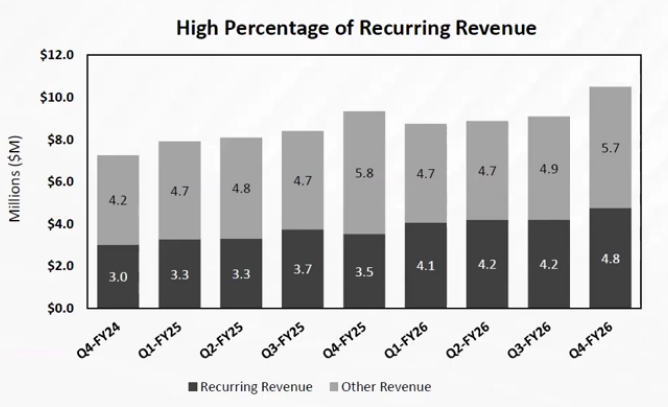
$XX.V posted strong March-quarter and FY26 results last week. Q4 rev +12% Y-Y, led by +35% in recurring rev. Gross margin +950 bps Y-Y to 45.2%, while adj EBITDA +77% Y-Y despite elevated year-end expenses and investment in growth initiatives.
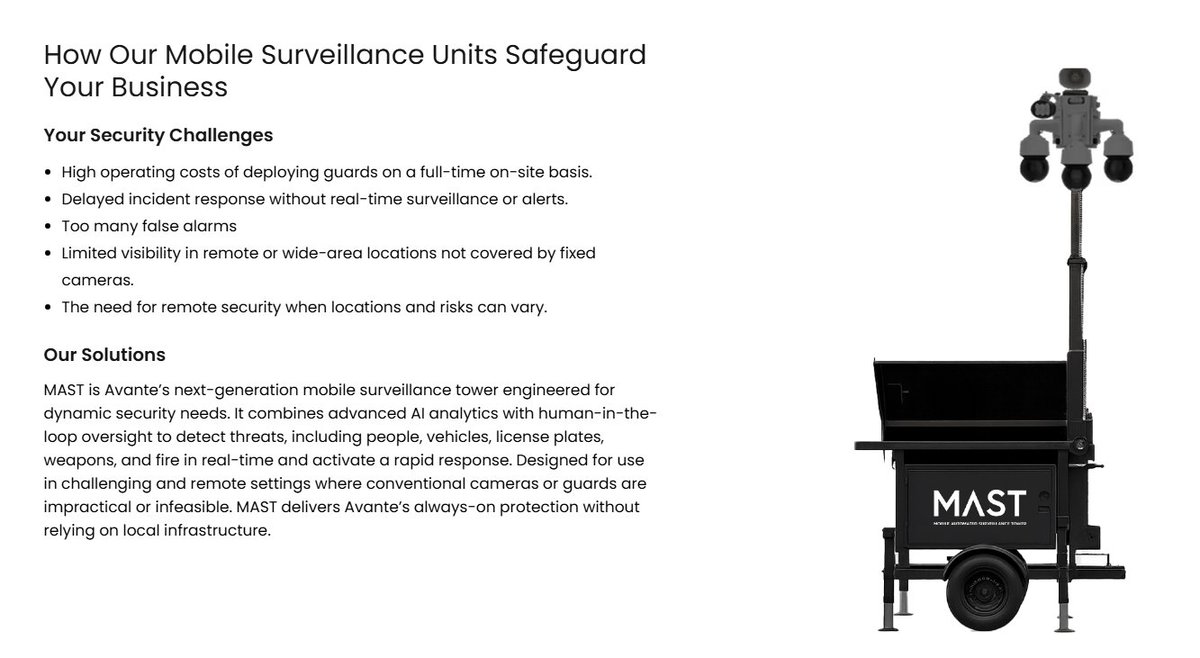
Mgmt remains highly bullish on MAST. Avante now has 29 units deployed, with 18 additional on order for delivery within four weeks. Recent traction includes Target Park, law enforcement, events and paid international pilots, with opportunities developing across Europe and Africa.
Mgmt expects its traditional security operations to grow 10–15% annually, supplemented by rapid growth from NSSG and MAST. It also expects gross margin and adj EBITDA margin to improve as higher-margin products scale and operating efficiencies increase.
Even after the recent stock appreciation, $XX.V trades at roughly 1.0x consensus NTM revenue and 13.5x NTM adjusted EBITDA. I think this remains an attractive valuation considering strong recurring revenue growth, margin expansion and meaningful upside if MAST converts its pipeline into recurring deployments.
https://t.co/0pkLyrZGL6
This deal feels like...
Our core business is highly cash generative but is going to shrink (or at least not grow)
We need/want to pivot to something else.
We are gaining first-hand experience with implementing AI within our own organization.
Let's deepen ties with AltaML and see if we can use our cash plus first-hand experience to pivot into some kind of agentic AI/using AI to help companies drive efficiency.
$XX.V Avante announces its first major commercial agreement for MAST, with Target Park Group, which has 700+ parking locations across Canada and the U.S.
MAST will serve as the primary security layer across select above-ground lots, with potential future modules including vehicle ID, real-time lot monitoring and customer access.
Even at 100 locations, assuming only $2,500/month per unit before any technology add-ons, that would equal $3M of annual recurring revenue. More importantly, this gives real commercial validation to management’s bullish outlook for MAST.
https://t.co/h5sCgEzp3q
Depth/knowing a company well to me means understanding which factors drive a stock and having a read on where those factors are at a point in time. It also means you are confident you are in the top tier of investors following the company on understanding the factors and where they sit, so that you are not at an informational/analytical disadvantage and price action is more likely to present opportunities than a signal.
It does not mean knowing the name of the plant manager in Michigan or other such trivia.
I think to build depth on a company requires an initial burst of diligence, conversations with management, expert calls, other investors, and then following news/quarters/stock and periodically speaking to management.
In the small/microcap space, if you are doing this full time over the span of years, I don't see why you couldn't get to 50-100 companies in your investable universe.
Turning over more rocks is overrated versus getting to know companies well, following them consistently over years, and investing at the right moment when fundamentals and price/sentiment are most disconnected.
$PHA.v filed for CCAA today. This is the second total loss I have had on a stock in my career.
It's important to learn from mistakes and maybe even celebrate them. It probably doesn't make sense to celebrate the mistake itself, but the lessons learned from the mistake.
Here are my lessons from $PHA.v:
1. Don't buy highly levered lottery tickets. Period. Period.
2. If you forget #1 and buy a highly levered lottery ticket absolutely never add to the position if things are progressing worse than expected. The best course of action if developments disappoint even modestly is to sell immediately. No exceptions.
3. Management in these sorts of dicey situations is likely to be overly optimistic. You should always by default assume over-optimism on the part of the management of publicly traded companies, but this is especially so for companies experiencing financial distress. To even be realistic in these cases might be to admit defeat, and so there is strong incentive to paint a scenario where the lenders are repaid and the equity has value - to buy more time and keep the window open for additional funding. Management may also be reluctant to crystallize the financial and psychological defeat for themselves, especially so with founder/family-led businesses.
I applied this lesson by selling my shares in $DII/b.to earlier this year.
@Bootstrap68 This is the way.
Also helps with sizing/conviction.
I basically can't make something a top 5 position unless I've been following it closely for at least a year.
Just dropped! @MicroCapClub Business Breakdown: @ChapTwelveCap, private investor, and I sit down CareRx Corporation’s $CRRX.TO President and CEO, Puneet Khanna, and Suzanne Brand, CPA, CA, CFO.
CareRx delivers prescriptions to long-term care and retirement homes across five provinces, with provincial governments as the primary payer, and 92,000 residents currently under contract.
This discussion took place live on May 19th, 2026, on the MicroCapClub Community. Join MicroCapClub and unlock the ability to listen and participate live in these discussions - https://t.co/QAg7SbTHh5
In this Business Breakdown, Puneet and Suzanne cover the hub-and-spoke automation model CareRx is piloting, centralizing high-volume robotic filling to expand capacity without replicating expensive robotics at every location, the Ontario capitation fee situation and what the removal of step-down language means for the company's revenue floor, why bed count has been flat for four years and when they expect growth to resume, and how they're approaching M&A after doing prior deals at two to six times EBITDA.
✉️ Share your feedback - [email protected]
✉️ David’s X (Twitter) - https://t.co/cUGSwW2aHi
Chapters
00:00 Introduction to CareRx and Leadership Backgrounds
04:31 Understanding CareRx's Unique Business Model
07:15 Market Dynamics and Growth Opportunities
10:35 Operational Excellence and Technology Integration
13:27 Financial Performance and Capital Priorities
16:37 The CareRx Advantage and Competitive Landscape
19:58 Technology's Role in Scaling Operations
22:50 Hub and Spoke Model Implementation
25:41 Challenges in Bed Count and Market Growth
28:36 Future Outlook and Strategic Growth Plans
37:48 Regional Competition and Market Dynamics
40:39 Margin Outlook and Future Strategies
43:56 M&A Opportunities and Strategic Growth
46:34 Government Relations and Funding Outlook
51:49 Valuation and Integration in M&A
56:46 Internal Priorities and Misunderstandings
01:00:30 Future Growth and Internationalization Opportunities