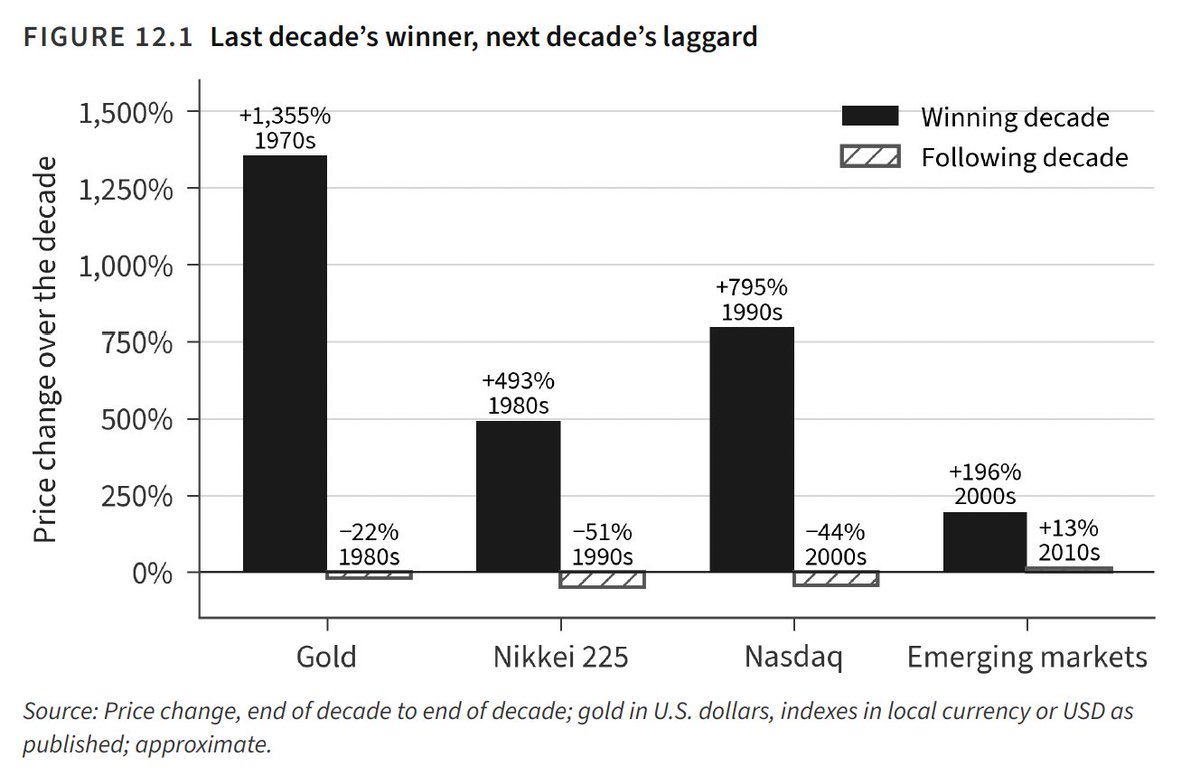
Each of the last several decades had a clear winner, an asset that rose so far and so persistently that it came to seem like the obvious place for money.
Each went on to disappoint in the decade that followed.
The pattern is consistent across very different assets:
* Gold rose more than thirteen-fold in the inflationary 1970s, then lost ground through the 1980s as inflation fell.
* Japanese stocks rose nearly six-fold in the 1980s, then lost half their value in the 1990s, beginning a slump that lasted decades.
* The Nasdaq rose roughly nine-fold in the 1990s, then fell 44 percent in the 2000s.
* Emerging market stocks nearly tripled in the 2000s, then barely moved in the 2010s.
In each case, the decade’s winner ended it with the widest following, the most confident forecasts, and the highest prices relative to its fundamentals.
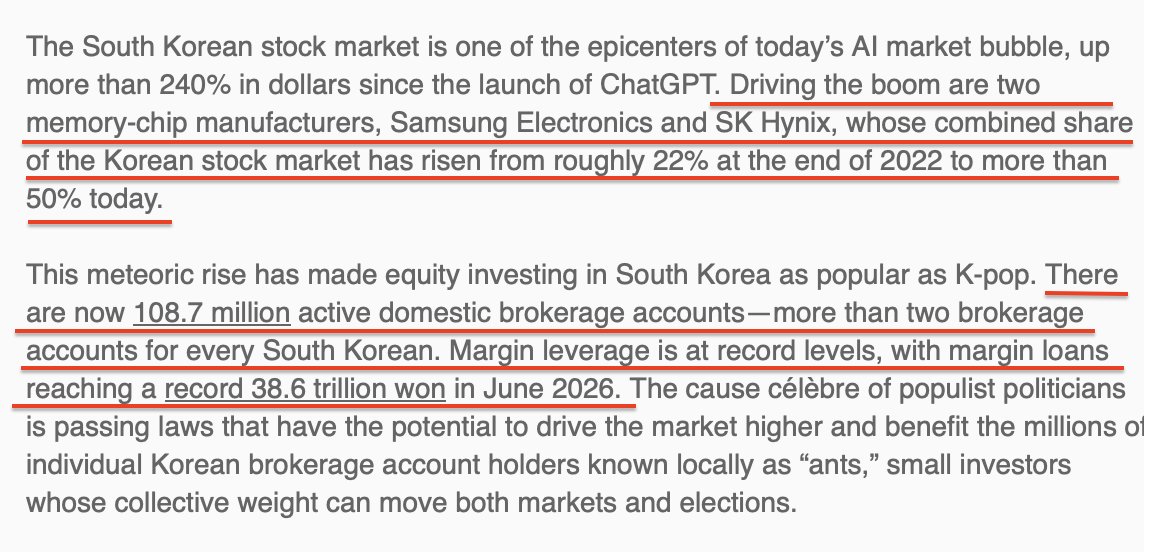
As South Korea continues to push ahead with investor-friendly reform policies across its equity markets, the opportunity set seems quite decent.
(@verdadcap)
The Secret History of the "Rise of Alternatives"
It's a story of "belief coordination":
Consultants changed their minds TOGETHER,
and institutions followed.
Massive Allocation Shift in private risky assets:
* 14% in 2001 to 39% in 2021 *
Driven by the "consultant class" -> highly incentivized to get their clients to allocate to Alts because if they do... they get paid MORE money! More due diligence, more operational due diligence, more monitoring. MORE MONEY!!!
"Alpha" expectation in private equity rose +88 bps (2003 -> 2021) relative to public equities, despite NO evidence!
"Belief Contagion" Consultants published higher return assumptions (which mean nothing) ->
Peers followed => Group Think 101
>Consultants extrapolated good news,
>ignored tail risk,
>and moved in clusters
Will this end in disaster or merely decades of blah?
https://t.co/sloOIz4AEa
@verdadcap
Dan Rasmussen @verdadcap on private equity buying insurers and investing the float in their own assets, "I think it's sketchy as hell."
On where the culture is headed, "We might be at peak libertine-ism and peak immorality in the public square relative to what's coming."
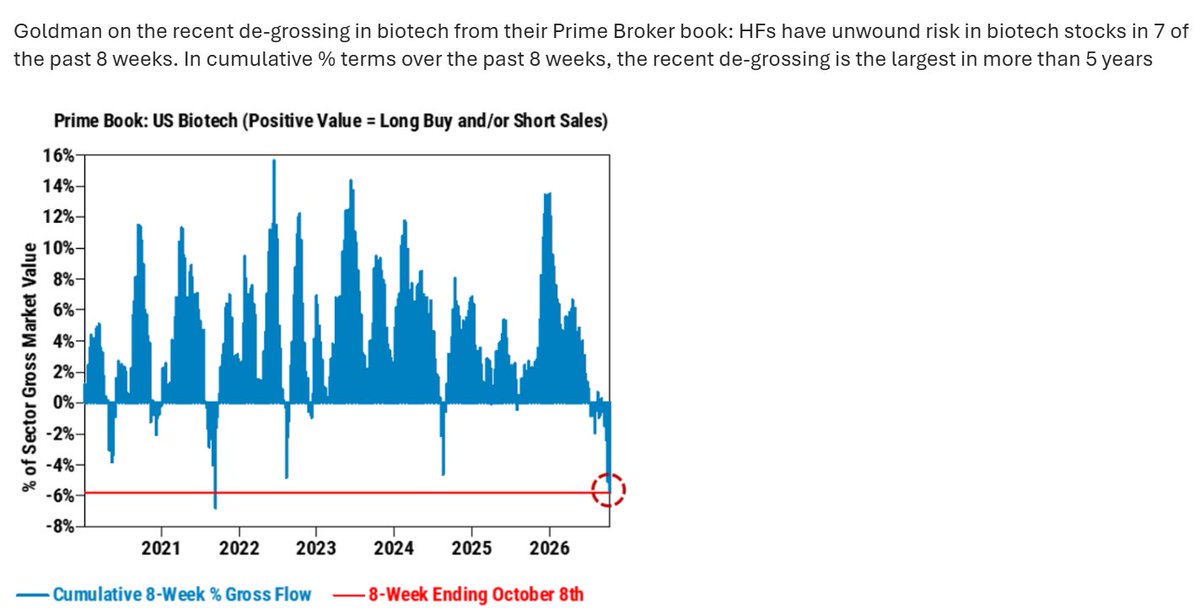
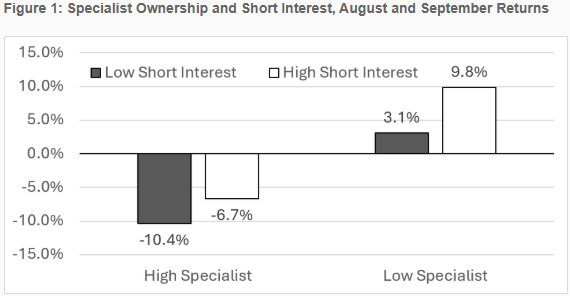
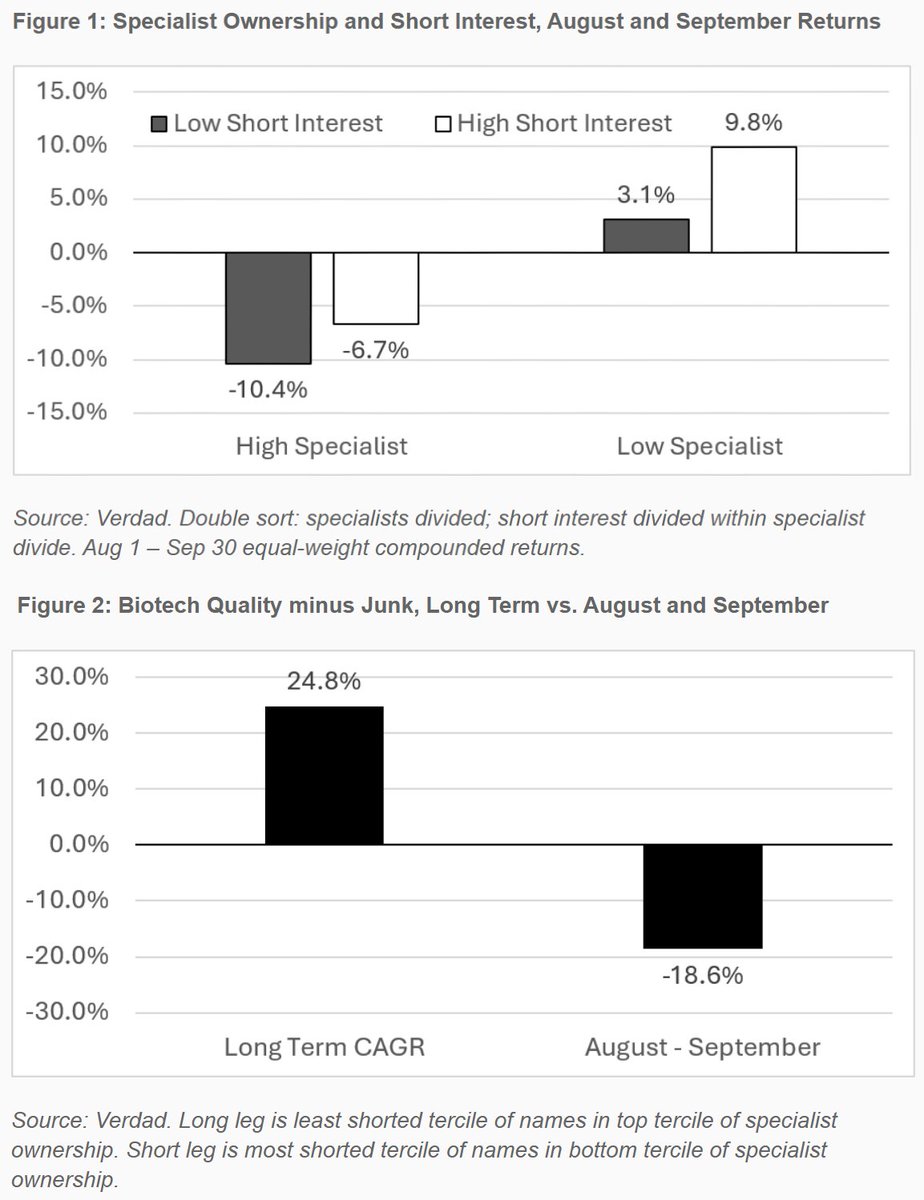
@verdadcap usually publishes banger research & this is another one. Quantifies what we all feel; high quality biotechs like $ABVX down, shitco like $MRNA up. $LQDA blow up another contributor to sector degrossing. I covered my $MRNA short just in time. 😬 https://t.co/wUJ9sDM1uJ
"For specialist biotech investors, the market has turned upside-down. The most plausible explanation is a major degrossing event.
"When will it end? We don’t know. But the stocks favored by specialist investors and short sellers have gotten substantially cheaper relative to the stocks they dislike."
Biotech Uno Reverse: When Up Turned to Down in Biotech Long–Short Investing (Obenshain, Rasmussen) @verdadcap
I love the stuff @verdadcap cap puts out, and had this one flagged in my mailbox, finally got to reading it: "Ambiguity, Hubris, and AI"
Not going to summarize it, since it's short and interesting enough to read in its entirety.
This bit resonated. Also, Seeing Like A State is an excellent book.
"Technology development and adoption follow surprising paths. Confident predictions about the future, whether in economics, technology or even science, quite often fail to come true. We see through a glass dimly. The world is simply too complex and the future too uncertain."
https://t.co/QgBNqiMNse
“One of the main lessons to come out of Tetlock’s work is that the best generalist forecasters are usually better at telling the future than domain-specific experts, even when it comes to those experts’ areas of study. This is because forecasting itself is its own science that requires a unique way of thinking, and a person having a great deal of knowledge about a field is no guarantee that they have good epistemological habits. If you’re going to ask, for example, whether American democracy is falling apart, an expert might start by making a superficial comparison between the modern US and the Weimar Republic. Someone with a forecasting mindset would be more likely to begin with a question like “how often do advanced democracies slide into dictatorships?” The answer is not very often.”
Important reminder from @RichardHanania that domain experts are not the best at predicting what happens, even in their own domains.
https://t.co/ePkfdfNKHU