@JoachimDan87142 We can win many of those genuine cases. With right expertise, fighting is better and fully justify multiple folds ROI. Here’s our app, comes with 14 days free trial.
https://t.co/NdnFTYOVJV
A chargeback is not a refund you disagree with. It works on different rules, and merchants often learn that the hard way.
With a refund, you and the customer work it out directly. With a chargeback, the customer's bank makes the call first, weighing your submission against the cardholder's account and its own transaction records. Some cases go further, to the card network.
What the process usually looks like:
- The bank notifies your payment provider, and the disputed amount plus a fee is typically pulled from your account right away - before anything is decided.
- You get a deadline to respond. Miss it, and the case can be lost by default, no matter how good your evidence is.- Your response is a written case: order details, delivery proof, customer communication, your policies. Your submission is your side of that record.
- Then you wait. Depending on the network, a decision can take weeks to months.
Two things matter long before the bank gets involved: whether your policies and checkout records would hold up if read by a stranger, and whether you can find your evidence quickly when a dispute lands.
Worth checking before you need it.
#ecommerce #shopify #chargebacks
With a refund, you and the customer work it out directly. With a chargeback, the customer's bank makes the call first, weighing your submission against the cardholder's account and its own transaction records. Some cases go further, to the card network.
What the process usually looks like:
- The bank notifies your payment provider, and the disputed amount plus a fee is typically pulled from your account right away - before anything is decided.
- You get a deadline to respond. Miss it, and the case can be lost by default, no matter how good your evidence is.
- Your response is a written case: order details, delivery proof, customer communication, your policies. Your submission is your side of that record.
- Then you wait. Depending on the network, a decision can take weeks to months.
Two things matter long before the bank gets involved: whether your policies and checkout records would hold up if read by a stranger, and whether you can find your evidence quickly when a dispute lands.
Worth checking before you need it.
With a refund, you and the customer work it out directly. With a chargeback, the customer's bank makes the call first, weighing your submission against the cardholder's account and its own transaction records. Some cases go further, to the card network.
What the process usually looks like:
- The bank notifies your payment provider, and the disputed amount plus a fee is typically pulled from your account right away - before anything is decided.
- You get a deadline to respond. Miss it, and the case can be lost by default, no matter how good your evidence is.
Check your tracking before you respond to a dispute: same address, delivered status, right date. If it doesn't line up, better to know before you spend the afternoon on the response. #ecommerce#chargebacks
Dropshipping? Slow supplier shipping can become your dispute risk. Keep the listing's delivery promise, supplier confirmations and tracking for every order - you can only respond with the records you kept. #dropshipping
The order amount is often only part of what a chargeback costs.
When a chargeback is filed, many providers pull the disputed amount while the case is reviewed, plus a fee on top. Some refund the fee if you win, some don't - it depends on your provider and where you're based. Then the hours: finding the order, the tracking, the emails, writing the response inside the deadline the card network sets.
None of this means fight everything. Sometimes accepting a dispute costs less than winning it. The point is to decide on the math, not in a panic.
What helps: knowing your real numbers before the next notice lands - your dispute rate, your average fee, the time each response takes. #ecommerce #shopify #chargebacks
A dispute notice comes with a response deadline. That's when organized order data, tracking and customer messages stop being admin and start being evidence. #ecommerce#shopify
Subscriptions need two kinds of records: proof the customer agreed at signup, and proof you kept them informed - receipts after every charge and a working cancel link. Keep both. #ecommerce#shopify
A stalled tracking scan is worth acting on before the customer asks. Check with the carrier, tell the customer what happens next with a date, and keep the tracking and delivery records - they're the evidence if a 'not received' dispute lands. #ecommerce#shopify
We’ve added a new task to our daily routine lately:
Checking whether any of our app reviews have mysteriously disappeared. 🕵️
Last time reviews went missing, we subscribed to a few free tools to track which stores had left reviews.
The result? A list of reviewers… and a whole bunch of promotional emails we never asked for. 😂
This time, we’re getting smarter.
No extra tools. No unnecessary subscriptions. Just a daily record of our reviews and a quick check to see if any have vanished.
Building an app is one thing. Keeping track of its reviews is apparently a daily operation too. 😅
https://t.co/A9ErMFSUo8
'Where is my order?' is often just a worried customer - until it goes unanswered. Reply fast, with tracking and a real date. A complaint left sitting can end up as a dispute instead. #shopify#dropshipping
When your chargeback response lands at the issuer, it is judged on what is in it - not on what you meant to include.
What helps your evidence get assessed fairly:
- Answer the exact reason code. "Not received" is about delivery - lead with delivery proof. "Fraud" is about authorization - tracking shows a package moved, but it does not by itself show who placed the order.
- Put the decisive evidence first, where it cannot be missed.
- Keep the timeline clean: order date, ship date, delivery date, every customer message - in order, in one place.
- Match every claim to a document. "The customer was told" means nothing without the checkout page or email that shows it.
- Keep it tight. A short response where every page answers something is easier to assess than a long upload where the key document is buried.
AI can help draft the first version of a response. The draft is not the decision - the decision is made on the evidence in front of the reviewer.
Make that evidence easy to assess.
via @Shopify Fall '26 Editions: https://t.co/hS6mge0Y3Y
#Chargebacks #Ecommerce #Shopify #DTC
What helps your evidence get assessed fairly:
- Answer the exact reason code. "Not received" is about delivery - lead with delivery proof. "Fraud" is about authorization - tracking shows a package moved, but it does not by itself show who placed the order.
- Put the decisive evidence first, where it cannot be missed.
- Keep the timeline clean: order date, ship date, delivery date, every customer message - in order, in one place.
- Match every claim to a document. "The customer was told" means nothing without the checkout page or email that shows it.
e key document is buried.
What helps your evidence get assessed fairly:
- Answer the exact reason code. "Not received" is about delivery - lead with delivery proof. "Fraud" is about authorization - tracking shows a package moved, but it does not by itself show who placed the order.
What helps your evidence get assessed fairly:
- Answer the exact reason code. "Not received" is about delivery - lead with delivery proof. "Fraud" is about authorization - tracking shows a package moved, but it does not by itself show who placed the order.
- Keep the timeline clean: order date, ship date, delivery date, every customer message - in order, in one place.
- Match every claim to a document. "The customer was told" means nothing without the checkout page or email that shows it.
- Keep it tight. A short response where every page answers something is easier to assess than a long upload where the key document is buried.
Long shipping times can turn into 'item not received' disputes. Showing the real delivery window before checkout - and keeping proof the buyer saw it - gives you something concrete to respond with if a dispute lands. #dropshipping#shopify
Stripe says a dispute can take 2-3 months from start to final decision, with the review after you submit usually 60-75 days depending on the network. Plan for the wait. #ecommerce
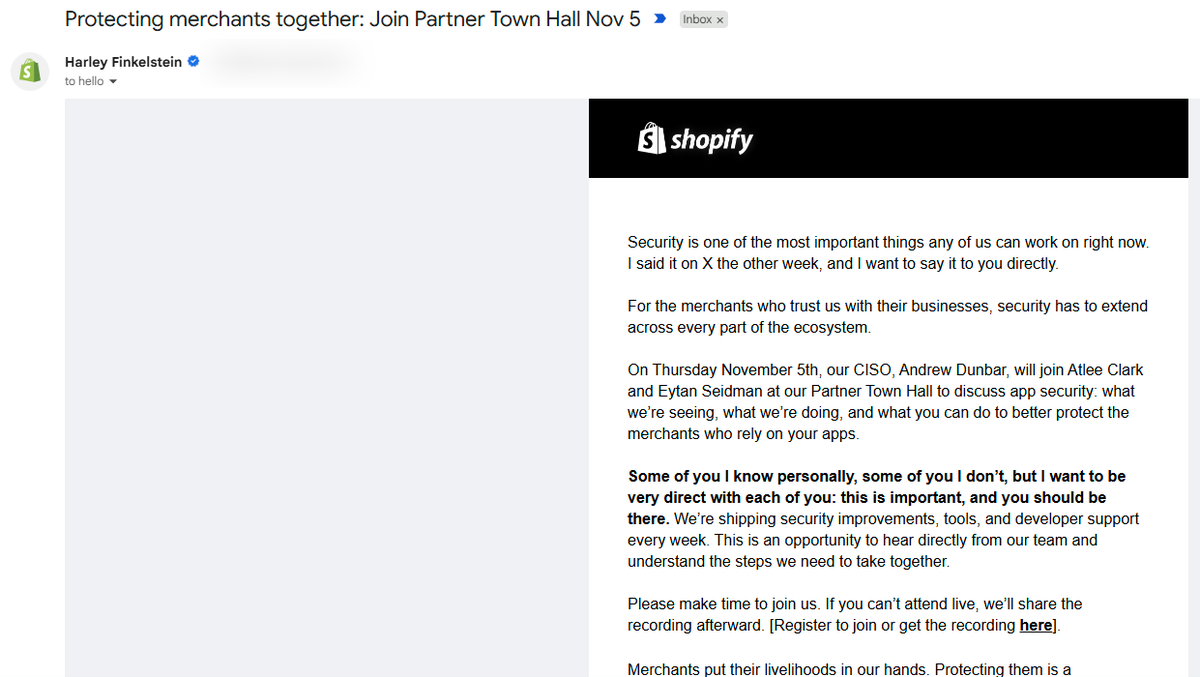
Today we unpublished hundreds of apps from the App Store. They came from a small group of high-volume submitters and had no merchant installs.
The App Store exists to solve real problems for merchants. Mass submissions distract from the partners who are doing that work.
We’ll soon be announcing new restrictions that limit the number of apps that can be submitted at once and we’ll keep raising the bar.
Seeing two charges? It may be an authorization hold. Check the transaction IDs before you reply, then answer what the customer actually claimed. #shopify#ecommerce
🚀 Shopify Fall ’26: What’s changing, and what it means for you:
Shopify’s latest Edition, launched on 28-Oct-2026, signals a major shift toward AI-powered, agentic commerce where AI agents can discover products, help customers shop, and facilitate checkout.
But the implications differ depending on what you do.
🛍️ If you run a Shopify store:
AI product discovery: Shopify Catalog can help eligible products get discovered across AI shopping channels, including ChatGPT, Gemini, and Microsoft Copilot.
Sidekick gets more powerful: Plan changes, approve them, and let Sidekick execute multiple store updates at once.
Smarter store management: Generate policies, improve product descriptions, and manage more tasks through AI.
Better experimentation: Use AI-powered simulations and scheduled rollouts to test changes before applying them broadly.
Fraud and disputes: Shopify Protect continues expanding its fraud and dispute-management capabilities.
What it means: More opportunities to reach customers and automate operations but merchants still need to monitor performance, protect customer trust, and manage disputes effectively.
💻 If you build apps or develop:
Shopify Catalog + AI agents: Build shopping experiences using Shopify’s product catalog.
WebMCP: Give AI agents structured tools to discover products, update carts, and guide shoppers through checkout.
https://t.co/RwYbVNCbDO: Connect apps and agents to Shopify shopping capabilities, including Shop Pay.
Expanded Catalog API: Search products beyond Shopify in beta and build new discovery experiences.
Improved developer tooling: Shopify is making it easier to build, manage, secure, and distribute apps.
What it means: AI is lowering the barrier to building software. The opportunity is shifting toward solving real merchant problems, delivering reliable integrations, and earning merchants’ trust.
🤝 If you’re an agency or Shopify partner:
Build before signup: Create store previews in an agent and retain the work when the merchant is ready to proceed.
Scheduled rollouts and A/B testing: Coordinate changes across themes, checkout, POS, and other surfaces.
SimGym: Simulate shopping behavior and identify potential improvements before rolling out changes.
What it means: Agencies can move beyond implementation and offer more strategic, data-driven optimization services.
🛡️ One important point for everyone: fraud and Chargebacks:
As commerce becomes more automated, protecting revenue remains essential.
Fraud prevention tools and chargeback alerts can help, but no single tool eliminates every dispute. Someone still need to understand the transaction, evaluate the evidence, and respond appropriately when a legitimate sale is challenged. That's where we come in.
At @chargebacksp, we combine AI + Human experts in the loop; experienced, certified chargeback professionals to help merchants prepare stronger dispute responses, reduce manual work, and protect revenue.
AND Our belief is simple:
Automate repetitive work. Keep human judgment where the stakes are high.
The next era of ecommerce won't be defined by AI alone. It will be defined by how effectively businesses combine automation, expertise and trust.
🔗 Explore the full Shopify Fall ’26 Edition:
https://t.co/hS6mge0Y3Y
Independent commentary by Chargeback Specialist; not affiliated with Shopify.
#Shopify #ShopifyPartners #Ecommerce #AgenticCommerce #AI #DTC #Chargebacks
Strong evidence improves your chances but doesn't guarantee a win. Banks can rule for the customer even when you have delivery proof, per Shopify's help center. #chargebacks