4 Seasons Global Village by Charles Park, BA in Political Economy and MA in International Relations. Focusing on US-China relations, Inter-Korean Relations
TSMC passed over one veteran engineer for a promotion in 2009.
His name was Liang Mong-Song.
He walked out, jumped to Samsung, then moved to China's SMIC, shocking both Taiwan and Washington along the way.
Here is how one engineer sped up TSMC's two biggest rivals by years.
1992-2009
- earned a UC Berkeley PhD under Chenming Hu, the inventor of the FinFET transistor
- spent 17 years inside TSMC R&D and built over 450 patents
- helped drive the 130nm copper breakthrough in 2003 that put TSMC ahead of IBM
- walked out in February 2009 after TSMC sidelined him for a top promotion
2009-2015
- taught at a Samsung backed university in South Korea during his noncompete, then joined Samsung in July 2011
- pushed Samsung to skip 20nm and jump straight to 14nm FinFET roughly six months ahead of TSMC's 16nm rollout, taking a major share of Apple's iPhone 6s A9 orders
- TSMC sued, and forensic experts told Taiwan's courts that Samsung's 14nm and TSMC's 16nm transistors were almost impossible to tell apart structurally
- on August 24, 2015, the Taiwan Supreme Court set a historic precedent by barring him from working for Samsung even after his noncompete had expired
2017-2023
- joined China's top foundry SMIC as joint CEO in late 2017
- led over 2,000 engineers across five generations from 28nm to 7nm in just over three years, work that usually takes a decade
- when U.S. sanctions blocked ASML EUV machines, his teams stretched older DUV tools past normal limits
- on August 29, 2023, during U.S. Commerce Secretary Gina Raimondo's visit to China, Huawei launched the Mate 60 Pro with a SMIC 7nm Kirin 9000S chip inside
2026 to Today
- despite lower yields without EUV, Liang still runs SMIC's tech roadmap and landed on the TIME100 AI 2026 list
Governments still keep tightening chip export rules.
You can stop lithography machines at the border.
You still can't stop what's already inside one engineer's head.
Placard at Huawei: "We would rather die on our feet than live on our knees"
Before the trade war, Huawei was just a telecom company. But now, they're basically the national lab of China, leading the development of:
🔹EUV and DUV lithography machines
🔹EDA Tools (Chip Design Software)
🔹Chip Manufacturing & Advanced Packaging
🔹HBM (High-Bandwidth Memory)
🔹Semiconductor Materials & Components
🔹AI Chips (Ascend Series)
🔹AI Computing Clusters & Data Centers
🔹AI Frameworks & Software Stack
🔹Cloud Computing
🔹6G Agentic Core Networks
🔹Autonomous Driving (ADS)
🔹Operating System (HarmonyOS) and Smart ecosystem lifestyle.
🔹Intelligent Vehicle Components (Lidars, domain controllers and sensors etc)
🔹Smart Grid & Low-Voltage Management
🔹Energy Storage (PCS & Systems)
🔹Solid-State Batteries
🔹Server & Industrial OS (openEuler)
🔹Database (GaussDB)
🔹ERP Software (MetaERP)
🔹Programming Language (Cangjie)
🔹Industrial Software (IntePLM system)
And many more.
These were all technology/industry bottlenecks identified by the Chinese government, and Huawei took it upon themselves to resolve.
PS: The more literal translation of the Chinese text should be "We would rather die when advancing a step forward, than taking half a step backward just to live"
I’ve spent the entire day filming empty European car company exhibitions at the Guangzhou Auto Show.
There is literally zero interest in Audi, BMW, VW, Mercedes even Volvo in the Chinese market.
This will be a hard blow for the European auto industry, the export flow will completely stop.
And it’s not even about price. The Chinese consumers do not want old or outdated designs and pay extra to unlock features that are paywalled.
The Chinese brands are much nicer and bolder designs. They are coming jam-packed with tech. High-end sound, modular interiors, massage seats, ventilated seats, massive touch screens, infotainment system.
Not to mention driver assist, most companies in China has advanced ADAS, many start to offer L2 or L2++ self-driving.
There are fridges, zero gravity seats, long range, ultra-fast charging, home grown innovation.
Then the European cars, have Chinese components and look a decade old.
If you are into EV’s and Europe, go follow Andre 👇
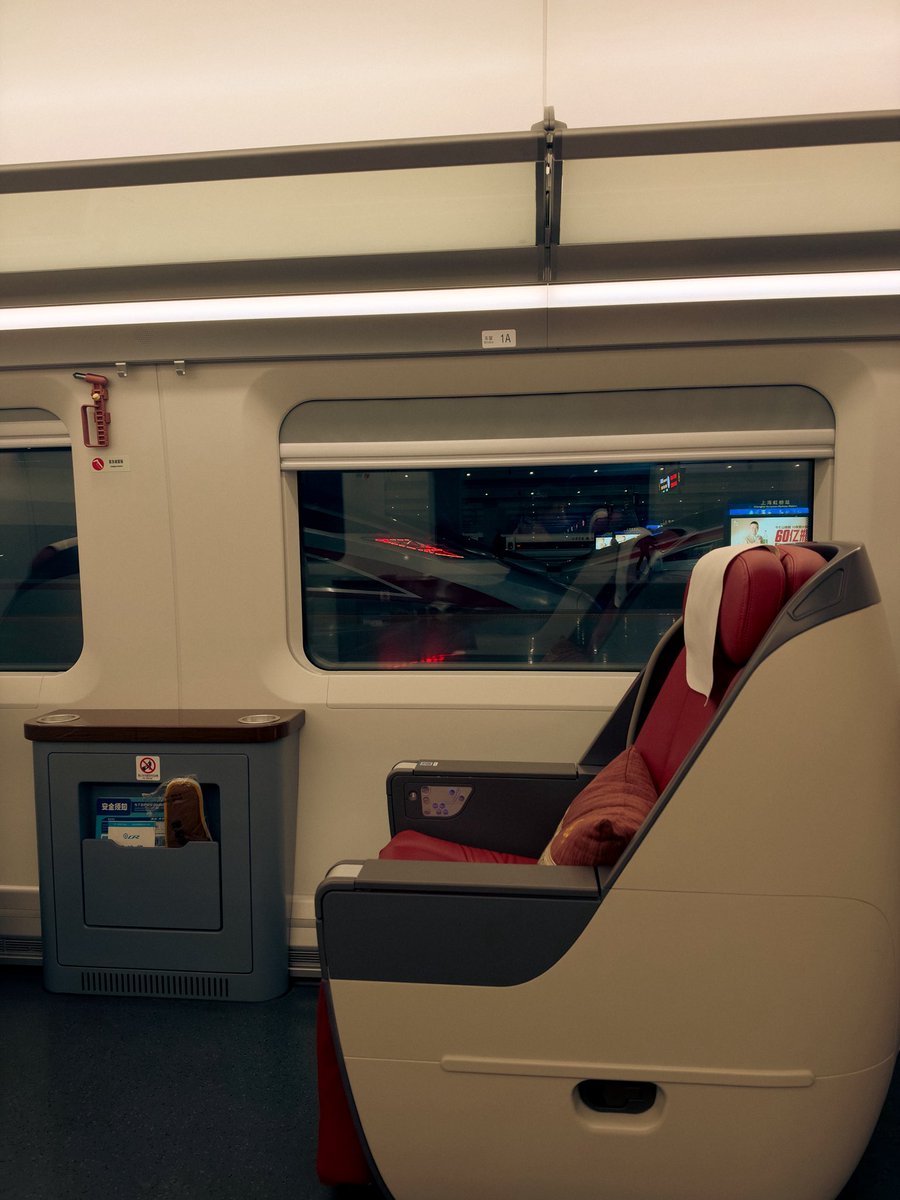
Prendre le train en Chine, c’est prendre une petite claque. 🇨🇳
Ce matin, direction Hangzhou. J’arrive à la gare : vérification d’identité, sécurité, check-in… 5 minutes chrono. Les gares ressemblent à des aéroports.
Je teste la Business Class, siège totalement inclinable comme dans l’avion, cabine calme, hôtesse dédiée, boissons et même de l’Internet qui fonctionne très bien. Pour 1h de trajet, c’est presque abusé. La nourriture, on va éviter d’en parler. 😂
Je commande un Didi à mon arrivé et découvre un écran géant qui attribue automatiquement une place de parking à chaque chauffeur. Ton numéro apparaît, tu vas à l’emplacement indiqué et ta voiture t’attend.
Zéro chaos, zéro taxi dans tous les sens, zéro perte de temps.
La Chine a parfois quelques années d’avance sur des choses qu’on considère encore comme compliquées chez nous.
Americans aren't free. They're conditioned to believe they are while living under the dictatorship of capital. They mistake consumer choices for freedom, elections for democracy, and national mythology for reality. The greatest trick is convincing the captive they're liberated.
Dünyada, okyanusların dibine internet kablosu döşeyecek teknolojiye sahip başlıca 4 şirket var.
Bu dört şirket, dünya pazarının yaklaşık %83’ünü kontrol ediyor.
2020-2024 yılları arasında dünyada döşenen denizaltı internet kablolarının uzunluk üzerinden %33,7’si Fransızlar, %23,7’si Amerikalılar, %15,1’i Japonlar ve %10,2’sini Çinliler döşedi.
Bu işin en büyük şirketi olan Alcatel Submarine Networks’ün sahibi 2024 yılına kadar Finlandiyalı Nokia’ydı. Fransız devleti, şirketin stratejik önemini fark etti ve Nokia ile masaya oturup şirketin %80’ini satın aldı.
Bu kablolar genellikle bahçe hortumu kalınlığında. İçlerinde insan saçı kalınlığında cam lifler var. Verileri bu liflerin içinden ışıkla taşıyorlar.
Kabloları en az 25 yıl dayanacak şekilde üretiyorlar. Sinyaller yolda zayıflamasın diye de belli aralıklarla güçlendirici cihazlar koyuyorlar.
Dünyada her yıl yaklaşık 150-200 kablo arızası yaşanıyor. Bunların önemli bir kısmı da gemilerin çapaları yüzünden oluyor.
2024-2025 sektör verilerine göre dünya genelinde bu kabloları döşemek ve tamir etmek için kullanılan yaklaşık 80 özel gemi var. Amerikan SubCom şirketinin 8, Fransız Alcatel’in 7, Çin ve Singapur ortaklığındaki S.B. Submarine Systems şirketinin 6 gemisi var.
Japonlar ise yıllardır bu işte olmalarına rağmen işleri büyük ölçüde başka şirketlerden gemi kiralayarak yapıyor.
Japon devleti, bu durumun ileride Japon şirketinin rekabet gücünü azaltabileceğini düşündüğü için satın alınacak yeni kablo gemilerinin maliyetinin yarısını karşılamayı düşünüyor.
Bu arada Çinliler bu sektöre rakiplerinden çok daha geç girdiler.
2017 yılına gelindiğinde Çinliler, denizaltı internet kablolarını kendi imkanlarıyla üretip döşeyebilecek seviyeye geldiler.
2018 yılında Kamerun ile Brezilya arasına yaklaşık 6 bin kilometre uzunluğunda internet kablosu döşeyerek Atlantik Okyanusu’nu geçtiler.
2018-2022 yılları arasında dünyada tamamlanan 106 denizaltı internet kablosu projesinin uzunluk olarak %18’ini Çinli şirket gerçekleştirdi.
Yani Çinliler, yaklaşık 15 yıl içerisinde sektörün en büyük oyuncularından birisi oldular.
Ama tabii bu sektör kritik. Dolayısıyla burada istedikleri gibi hareket edemiyorlar.
Mesela 2020 yılında Singapur ile Fransa arasına yaklaşık 19 bin kilometre uzunluğunda internet kablosu döşenmesi için bir ihale yapılıyor.
Amerikalılar bu işi yapmak için yaklaşık 750 milyon dolar istiyorlar. Çinliler ise 500 milyon dolara yapabileceklerini söylüyorlar.
Arada 250 milyon dolar fark var. Başlangıçta işi Çinlilere vermeye karar veriyorlar. Ancak Amerikan devleti devreye giriyor.
Amerikan bankasının finansman desteğiyle Amerikan şirketi teklifini 600 milyon dolara kadar düşürüyor. Amerikan devleti de projeye katılan bazı yabancı telekomünikasyon şirketlerine Amerikan şirketini seçmeleri karşılığında mali teşvikler sunuyor.
Bir yandan da Çinli şirkete yaptırım uygulayacağını söyleyerek yatırımcıları uyarıyor. Nitekim 2021 yılında Çinli şirkete yaptırım uygulamaya başlıyor.
Sonuç olarak işi Amerikalılar alıyor.
Eskiden bu kabloların döşenmesi için daha çok telekomünikasyon şirketleri bir araya gelip para topluyorlardı. Şimdi Google, Meta, Amazon ve Microsoft gibi şirketler de kendi ihtiyaçları için bu kablolara milyarlarca dolar yatırım yapıyorlar.
TeleGeography’nin tahminlerine göre 2026-2035 yılları arasında okyanusların dibine 1 milyon kilometreden fazla yeni internet kablosu döşenecek. Bu kablolara toplamda yaklaşık 50 milyar dolar yatırım yapılacak.
Sadece Asya ülkeleri arasındaki yeni kablolara yapılacak yatırımın 11 milyar doları bulması bekleniyor.
Bugün kıtalar arasındaki veri trafiğinin yaklaşık %99’u okyanusların dibindeki bu kablolar üzerinden gerçekleşiyor.
Fransızların neden gidip bu şirketi satın aldığını, Japonların neden gemi parasının yarısını karşılamayı düşündüğünü buradan anlayabilirsiniz.
Zaten Çin bir sektörde büyümeye çalışıyorsa orada pasta büyüktür…
SHOCKING.
The Constitutional Court of CR ordered that I am let out to go to a hotel and rest and the immigration police does not let me.
Am I detained??
HELP.
Academic freedom has steadily deteriorated since I returned to Norway in 2020. However, the main turning point came when I ran for parliament last year as the knives came out on all fronts. Thereafter, I withdrew from the election campaign, my position at the university became increasingly untenable, government-funded “NGOs” intensified their attacks, and the media became even more vicious in its dissemination of unsubstantiated accusations. The campaign of censorship and cancellation was legitimised on the grounds that academics should face scrutiny and challenges to their arguments—a principle with which I wholeheartedly agree. Yet there was no substantive debate or discussion of my arguments. Instead, arguments were replaced with empty labels and unsubstantiated accusations: “controversial”, “propaganda”, “conspiracy theory”, “pro-Russian”, and “anti-Ukrainian” etc. These labels were not intended to facilitate debate but to shut it down, and questions from the media were exclusively limited to asking me to respond to accusations, and then journalists selected quotes and sometimes even changed the context in the most brazen way to fit their pre-written conclusions. Rather than challenging the arguments, they only went after the person making them. I wrote this article at the time.
https://t.co/hMtMttyeAS
WHAT A FUCKING JOKE.
46 out of 46 Anthropic-funded politicians in Congress attacked Jensen Huang the second he returned to Nvidia. Not 1 defended him. 26 Senators and 20 House members reading the exact same script.
Anthropic's cofounder even wrote the quiet part in print:
In an Aspen Institute report (pages 60 and 63), Jack Clark wrote that export controls are worth pushing even though taking chips away "fucks with the money" of a massive industry. He added that if timelines land in late 2026 or 2027, labs and governments "may want to take more extreme actions" even if they later regret them.
Look at the checkbook behind that 100% alignment between Nov 7 and Nov 26: Sen. Pete Ricketts ($628K), Rep. Scott Wiener ($210.8K), Sen. Mark Warner ($132K), Rep. Brett Guthrie ($131.4K), Sen. Tom Cotton ($105K), Sen. John Thune ($100K), and Sen. Adam Schiff ($98K).
Months later, Clark testified to Congress pushing to wire "secure AI tools" into federal defense and intelligence workflows while locking down Nvidia H20 exports, cloud rentals, and rival open weights.
They wrap regulatory capture in safety speeches, buy 100% of both aisles in D.C., and act shocked when builders call bullshit.