@thsottiaux I manually reset my usage, then in Codex i said 'usage reset now. resume', Codex then automatically used another reset. this is quite unexpected - it should either know it's not necessary to reset or require user confirmation.
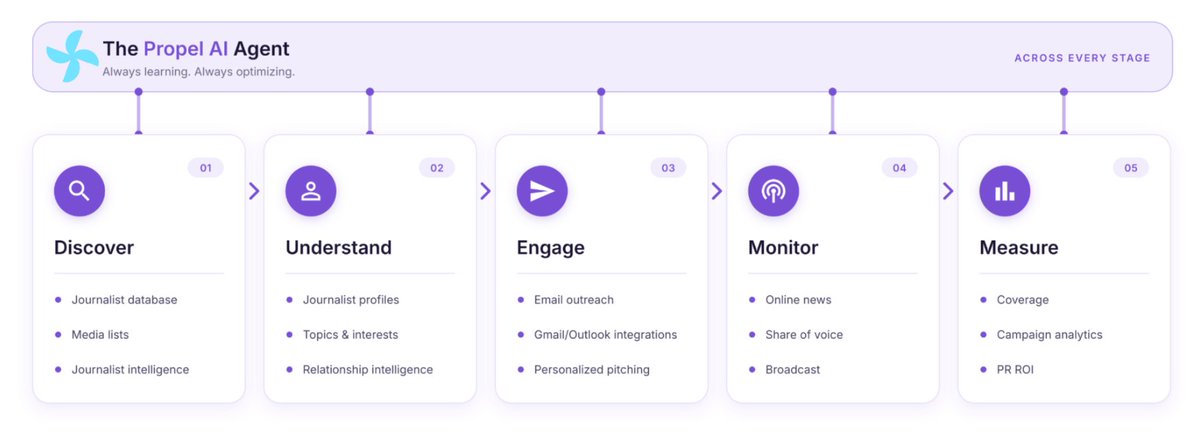
@PropelPRM this looks impressive—but when will you respond to our repeated emails and pay the more than $46,000 in outstanding invoices that have remained unpaid for over a year? Please contact us immediately to resolve this. @PropelPRM @ZachMCutler
this looks impressive—but when will you respond to our repeated emails and pay the more than $46,000 in outstanding invoices that have remained unpaid for over a year? Please contact us immediately to resolve this. @PropelPRM @ZachMCutler
1/ Introducing Propel AI: the first LLM built specifically for PR professionals!
Trained on 25 million pitches, 500,000 journalist profiles, and 2 billion articles…
This is a new era for PR.
🚀 DeepSeek-V4 Preview is officially live & open-sourced! Welcome to the era of cost-effective 1M context length.
🔹 DeepSeek-V4-Pro: 1.6T total / 49B active params. Performance rivaling the world's top closed-source models.
🔹 DeepSeek-V4-Flash: 284B total / 13B active params. Your fast, efficient, and economical choice.
Try it now at https://t.co/GCdiMzk1Dl via Expert Mode / Instant Mode. API is updated & available today!
📄 Tech Report: https://t.co/drlDrxkYtp
🤗 Open Weights: https://t.co/T13Y8i7SDM
1/n
💻 API Update
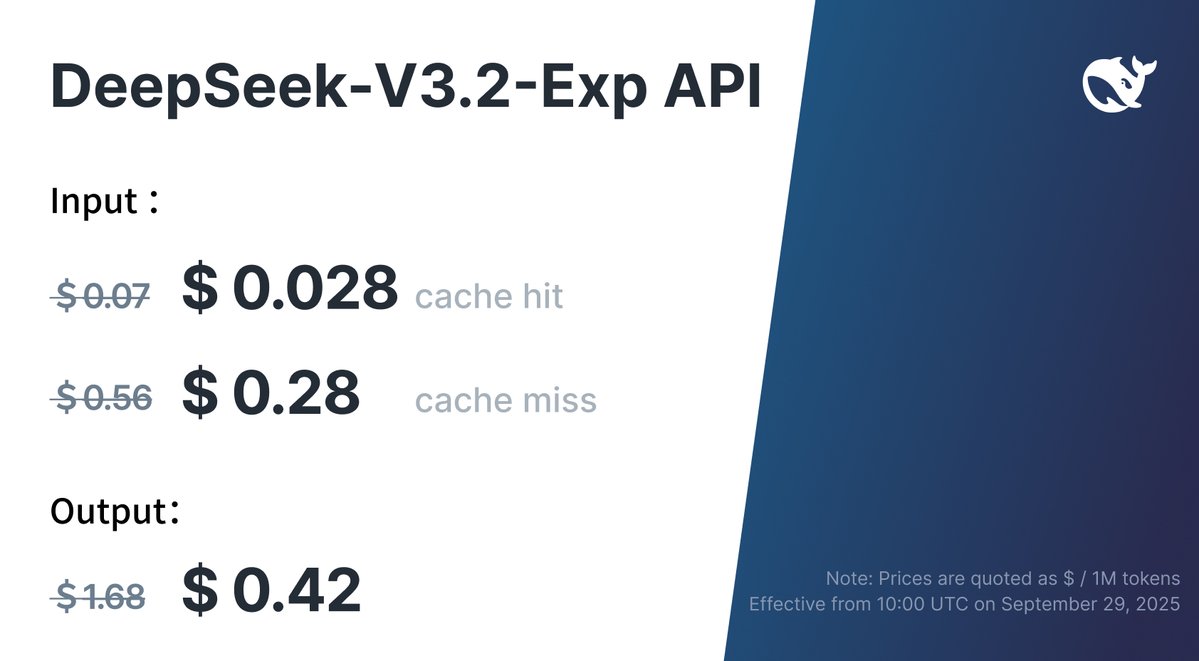
🎉 Lower costs, same access!
💰 DeepSeek API prices drop 50%+, effective immediately.
🔹 For comparison testing, V3.1-Terminus remains available via a temporary API until Oct 15th, 2025, 15:59 (UTC Time). Details: https://t.co/KHpCpeKylK
🔹 Feedback welcome: https://t.co/hKxEi7FDPr
3/n
🚀 Day 0: Warming up for #OpenSourceWeek!
We're a tiny team @deepseek_ai exploring AGI. Starting next week, we'll be open-sourcing 5 repos, sharing our small but sincere progress with full transparency.
These humble building blocks in our online service have been documented, deployed and battle-tested in production.
As part of the open-source community, we believe that every line shared becomes collective momentum that accelerates the journey.
Daily unlocks are coming soon. No ivory towers - just pure garage-energy and community-driven innovation.
Finally took time to go over Dario's essay on DeepSeek and export control and to be honest it was quite painful to read. And I say this as a great admirer of Anthropic and big user of Claude*
The first half of the essay reads like a lengthy attempt to justify that closed-source models are still significantly ahead of DeepSeek. However, it mostly refers to internal unpublished evals which limit the credit you can give it, and statements like « DeepSeek-V3 is close to SOTA models and stronger on some very narrow tasks » transforming in a general conclusion « DeepSeek-V3 is actually worse than those US frontier models — let’s say by ~2x on the scaling curve » left me generally doubtful. The same applies to the takeaway that all discoveries and efficiency improvements of DeepSeek have been discovered long ago by closed-models companies, this statement mostly resulting from a comparison of DeepSeek openly published $6M training numbers with some vague « few $10M » on Anthropic side without providing much more details. I have no doubts the Anthropic team is extremely talented and I’ve regularly shared how impressed I am with Sonnet 3.5 but this longwinded comparison of open research with vague closed research and undisclosed evals has left me less convinced of their lead than I was before I reading it.
Even more frustrating was the second half of the essay which dive into the US-China race scenario and totally misses the point that the DeepSeek model is open-weights, and largely open-knowledge due to its detailed tech report (and feel free to follow Hugging Face’s open-r1 reproduction project for the remaining non-public part: the synthetic dataset). If both DeepSeek and Anthropic models had been closed source, yes the arm-race interpretation could have make sense but having one of the model freely widely available for download and with detailed scientific report renders the whole « close-source arm-race competition » argument artificial and unconvincing in my opinion.
Here is the thing: open-source knows no border. Both in its usage and its creation.
Every company in the world, be it in Europe, Africa, South-America or the USA can now directly download and use DeepSeek without sending data to a specific country (China for instance) or depending on a specific company or server for running the core part of its technology.
And just like most open-source library in the world are typically built by contributors from all over the world, we’ve already seen several hundred derivative models on the Hugging Face hub created everywhere in the world by teams adapting the original model to their specific use cases and explorations.
What's more, with the open-r1 reproduction and the DeepSeek paper, the coming months will clearly see many open-source reasoning models being released by teams from all over the world. Just today, two other teams, AllenAI in Seattle and Mistral in Paris both independently released open-source base models (Tülu and Small3) which are already challenging the new state-of-the-art (with AllenAI indicating that its Tülu model surpasses the performance of DeepSeek-V3).
And the scope is even much broader than this geographical aspect. Here is the thing we don’t talk nearly enough about: open-source will be more and more essential for our… safety!
As AI becomes central to our lives, resiliency will increasingly become a very important element of this technology. Today we’re dependent on internet access for almost everything. Without access to the internet, we lose all our social media/news feeds, can’t order a taxi, book a restaurant, or reach someone on WhatsApp. Now imagine an alternate world to ours where all the data transiting through the internet would have to go through a single company’s data centers. The day this company suffers a single outage, the whole world would basically stop spinning (picture the recent CrowdStrike outage magnified a millionfold).
Soon, as AI assistants and AI technology permeate our whole life to simplify many of our online and offline tasks, we (and companies using AI) will start to depend more on more on this technology for our daily activities and we will similarly start to find annoying or even painful any downtime in these AI assistants from outages.
The most optimal way to avoid future downtime situations will be to build resilience deep in our technological chain.
Open-source has many advantages like shared training costs, tunability, control, ownership, privacy but one of its most fundamental virtue in the long term –as AI becomes deeply embedded in our world– will likely be its strong resilience. It is one of the most straightforward and cost-effective ways to easily distribute compute across many independent providers and to even run models locally and on device with minimal complexity.
More than national prides and competitions, I think it’s time to start thinking globally about the challenges and social changes that AI will bring everywhere in the world. And open-source technology is likely our most important asset for safely transitioning to a resilient digital future where AI is integrated into all aspects of society.
*Claude is my default LLM for complex coding. I also love its character with hesitations and pondering, like a prelude to the chain-of-thoughts of more recent reasoning models like DeepSeek generations.
Let’s be clear: DeepSeek r1 isn’t about who “races faster”—it’s about the inherent flaw in closed models. The future of AI isn’t owned by those who hide code or stockpile chips. It’s built on trust, and trust requires transparency. When models are black boxes, you surrender control over data privacy, culturally aligned ethics, and post-training customization for real world scenarios. That’s not leadership—it’s liability.
China’s pretraining consolidation proves a simple truth: AI is becoming a commodity. The real value lies not in the model but in what you do with it. Why waste billions reinventing closed-source base models when the market craves applications that solve poverty, climate crises, or healthcare gaps? Labs clinging to secrecy risk irrelevance—like doubling down on fax machines as email took over.
Consider the irony: Today, free models come from quant firms while “nonprofits” charge premiums for access. OpenAI’s pivot from “open” to walled gardens betrays the very ethos that birthed modern AI. Meanwhile, market economy principles prevail: restrict access, and replacements emerge.
The lesson? Trust beats control. Open models engage developers. Closed models breed suspicion—and suspicion fuels replacement. How to “maintain leads”? Stop gatekeeping. Build open infrastructure the world trusts, like the internet.
History doesn’t reward those clinging to scarcity. It rewards those who empower the many. The choice is yours.
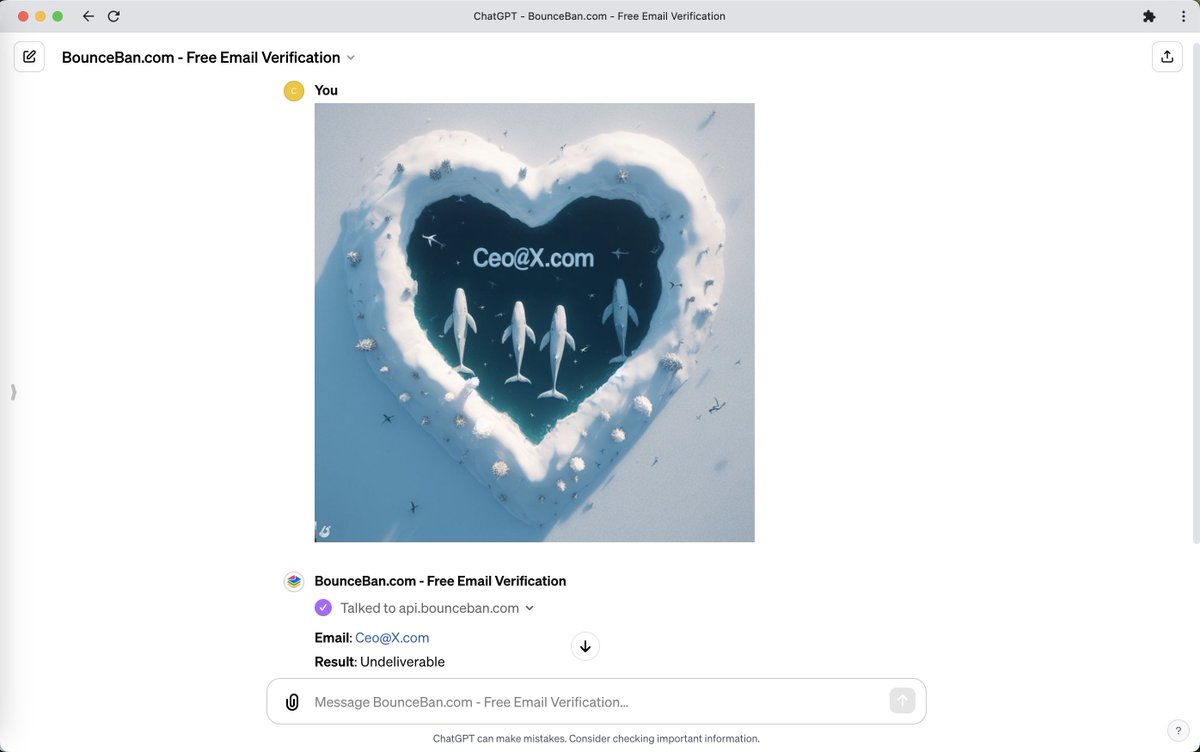
@jovan___jovan @zenorocha I think we're on different pages about what "email verification" means. I'm referring to the process of checking if an email address is valid before sending anything. By the way, we just hit a big milestone of 10M verifications in a single day at https://t.co/hRfSuGp1tu!
@jn_jackk Co-founder of BounceBan here. Can you please DM your account email so that we can take a look? The bounce rate shown in your screenshot is not normal. The expected bounce rate for deliverable email is less than 3%.
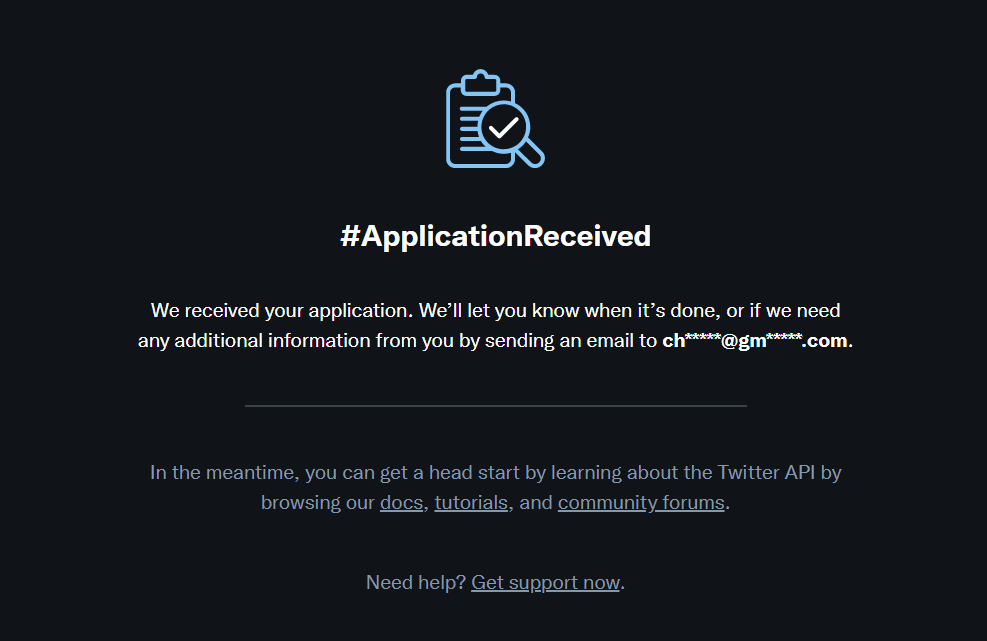
@TwitterDev I think we accidently clicked to Apply for Enterprise and are now stuck at the #ApplicationReceived page and cannot access the developer portal. Can you help? @charmgene is the dev account. Thanks!