It's been almost 4 years since the collapse of FTX
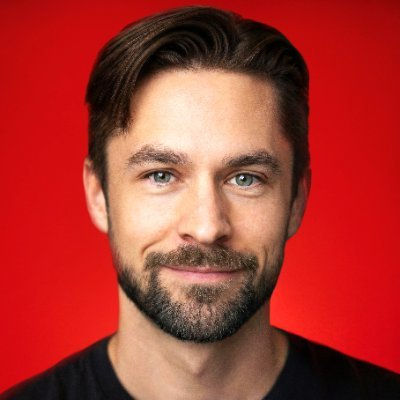
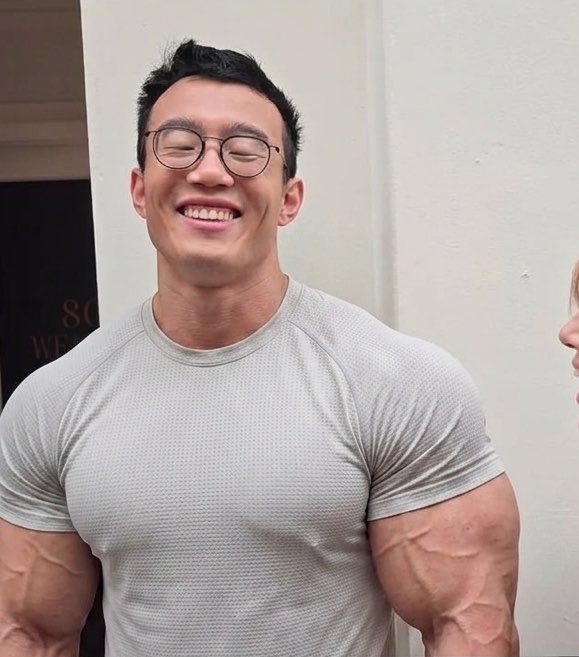
I'd like to re-establish the context of this photo, as I've let other people rewrite it's history.
FTX took over 5 days to implode. The @Bankless podcast with @ErikVoorhees and @SBF_FTX happened on a Friday.
The bank run accelerated over the weekend, and by the following Tuesday, FTX stopped processing withdrawals.
By Thursday, it was clear it was all over, and the sharp decline from crypto's 2021 highs suddenly became an obvious and prolonged bear market.
All the momentum crypto had acquired from 2020-2021 was obviously gone. Burned. Wasted. Squandered.
The Warren/Gensler era hadn't arrived yet, but you could feel the foreboding threat of the regulators descending, while crypto still was relatively young.
During the slow-motion fall of FTX, we streamed every day. We covered the fall of FTX better than anyone.
That whole week my life was:
- Wake up, open Twitter
- Piece together the pieces of the last 24 hours (it wasn't clear what was actually happening at the time)
- Put it into a podcast episode agenda
- Go live and stream, doing our best to answer questions and get clarity
I was stressed out and sleep deprived. I remember the night before this, I had gotten about 3-4 hours of sleep.
On Thursday, the emotions I had been suppressing finally all caught up to me while recording.
People got hurt.
The curses of centralization, once again, lost people their life savings. It felt like 2008, but our own smaller version of it.
The crypto industry, which supporting felt like my lifes work, was in the biggest hole I had ever experienced.
It felt like we had lost YEARS of progress, which ended up being mostly true! - the Gensler era came and fucked us all.
And so I was sad about all of that, so I let out some tears on the podcast.
I worked harder in 2020-2022 than I ever have in my life, and to have that era conclude with some amphetamined autistic gnome fuck it up for me, my friends, and my industry felt like shit.
So I cried about it.
People use this photo all the time for memes. It's funny - I enjoy it.
But I just wanted to make a statement about the context around this photo, because I never did in the first place.
Some things are worth crying over, and that's okay 👍
The downfall of David Hoffman:
- builds Bankless into one of the biggest crypto podcasts
- spends years telling people Ethereum is the future
- becomes one of the biggest $ETH supporters on crypto Twitter
- launches a VC fund while also running a media company
- people start questioning if promoted projects are connected to investments
The BanklessDAO drama starts:
- DAO asks for huge token grants using the Bankless name
- backlash gets so bad Bankless separates itself from the DAO
- then reports appear about quiet layoffs within the company.
- then the biggest twist happens
- After years of being extremely bullish on Ethereum.
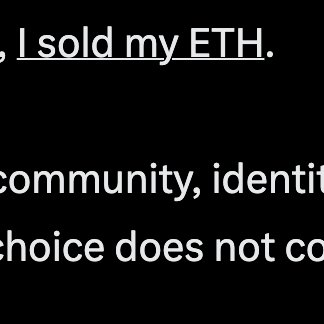
- David says he sold all his ETH
- Who cares
Heard from LPs this week: more than a bit of fatigue What’s driving it?
- Constant fundraising by GPs in their portfolio, but little liquidity
- Portftolios that seem promising, but deep concern about disruption and / or bubble pricing 🫧
- Constant headlines on the model companies - on financials, on capital raising and innovation - hard to keep up
- The “how concentrated should I be in these same companies” question
- The “how worried should I be about all of the PE software in my book” dynamic
- Huge dispersion in public markets
- It’s annual meeting season so they are traveling nonstop
- Oh yeah, and there’s a war on top of it…
Hug an LP today! 🙏
this is insanely impressive
perplexity just launched an AI employee that works for you 24/7 and runs on a $600 machine. this is their openclaw killer
> it completed 3.25 years of work in 4 weeks, runs on any device, accesses any file, tool or task.
but the bigger picture is they've built a brand new operating system for AI
> previously - you command the computer to do things
> now - just give an agent an objective and it just... figures it out lol
huge winner imo is also Apple. their devices have become the de-facto choice for ai agents.
perplexity has really grown on me, this is awesome.
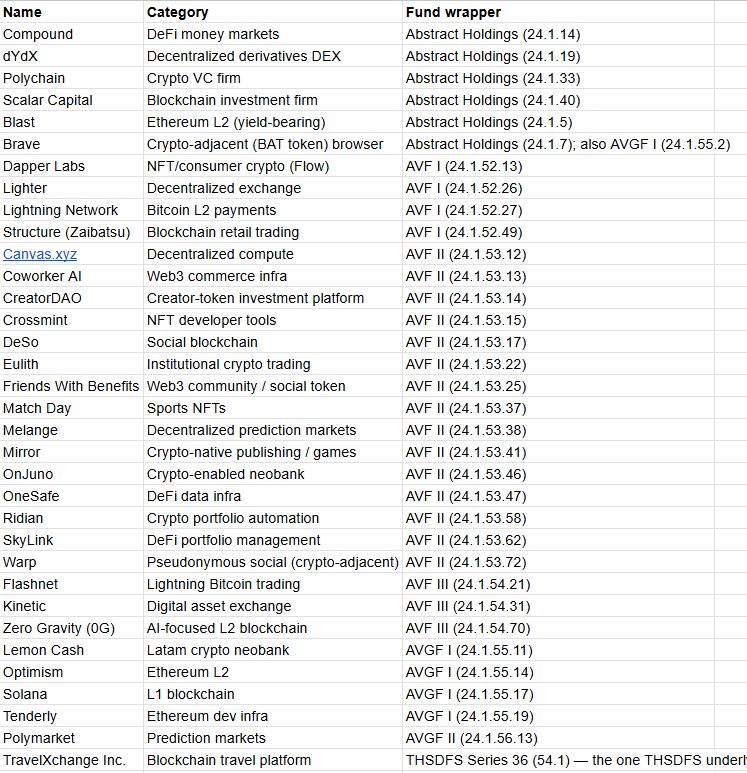
Kevin Warsh owns 30+ crypto projects and youre brearish
the next Fed Chair's disclosure includes: Solana, Optimism, Blast, Compound, dYdX, Polychain, Scalar Capital, Lightning Network, Lighter
the next Fed Chair is more degen than you
People have asked me how I feel about Udemy’s sale to Coursera. Honestly, I’m kinda pissed about it.
I want to be clear - I’m grateful for the opportunity to start and benefit from Udemy’s success. It changed my life.
But there’s another side to Udemy. A story of what could have been.
After our Series B, founders owned less than 30% of the company. Our investors took over and installed their own CEO to run it. We all liked this new CEO and honestly, for years it looked like a brilliant move. The company kept growing and growing. They launched B2B and built a $500M ARR business. Eventually, the company IPO’ed for $3B.
Yet all along there were clear cracks under the surface. Over Udemy’s history, there have been 7 CEO’s. The board replaced the second CEO with dud after dud. I’d often try to meet with the board or the new CEO, and was completely ignored. Eren had influence as Chairman of the Board but Oktay and I were so ignored they didn’t even invite us to the IPO. LOL WTF. There are like 50+ people invited to these things and nobody thought: “oh maybe we should invite the people who fucking invented the thing we’re all celebrating.” It shows how little respect they had for founders and for product innovation as a discipline.
I think they wanted a CEO they could control, a buttoned-up suit instead of a brash founder/CEO that is risk-taking, visionary, but a bit of a pain. For awhile, it looked like it didn’t even matter who was CEO - the company was run by the incredibly talented team that reported to them anyways.
Well, it worked until it didn’t.
The company made no major product innovations for 15 years. Instead, they took the original idea (video-based courses) and sold it in every place imaginable. It got us to $800M run-rate. That’s no joke; that takes serious execution and a great team that hustled hard to win the market.
But eventually the consumer business stopped growing. The B2B business has now flattened out as well. Meanwhile, Coursera was catching up.
Original Coursera was a far worse product than Udemy, but it got a ton of press. Learning ivory tower bullshit from academics doesn’t get you a real education, but it does create prestige. They raised from better investors on better terms, and had better leadership.
Udemy to this day has more revenue than Coursera, but Coursera won the court of investor opinion. They got higher multiples from both private and public markets.
Coursera innovated heavily. They added corporate courses to their university catalog, built fully-online degree programs, and offered a B2B competitor that kept Udemy on its toes. Still, the Udemy B2B business (and team) out-performed and so the two companies were deadlocked. Coursera was better at B2C, Udemy at B2B.
A merger was inevitable.
But WHY IN GODS NAME did we sell to Coursera instead of the other way around? Why are the combined companies under $3B in market cap?
Three reasons:
First, edtech didn’t live up to its promise. While these two companies had solid revenue and cash positions, their growth slowed, and public markets balked. This meant compressed multiples and significantly lower valuations.
Second, the companies stopped innovating. They are selling a product to businesses that their customers don’t love. They were category leaders, but they lead the category into mediocrity. They captured a significant share of learning and development (L&D) spending, but L&D as a whole actually lost budget within their organizations. That’s Udemy’s fault, and it doesn’t even realize it.
That brings me to my final point: I personally believe Udemy traded upside opportunity for downside risk. Us founders were unproven and young. We made lots of mistakes, including fighting amongst ourselves. A good investor would have supported us through it because they believe founders drive the highest long-term returns. Instead, they brought in outside CEOs to replace us. I sometimes wonder if they recognize this error; everyone makes mistakes and maybe they learned from it.
Either way - the consequences are real. By ignoring the founders, Udemy failed to innovate, which led to slowing growth which led to mediocre public market results. Furthermore, they don’t have a good evangelist and public markets don’t like a headless horse.
I sold my Udemy stock awhile ago. I think the merger was critical for both companies’ survival. Now, though, the new combined entity needs to innovate again.
On B2B, Coursera needs to help L&D become the heroes of the AI era so the entire market starts growing again. On B2C, they need to build the most educational AI product on the planet. (I’d focus on the former, since the latter is a lot harder and riskier).
Coursera can still achieve our original vision and likely build a $10B+ company in the meantime. Even though I’ve got no stake in its future, I’m mission-driven and I REALLY hope they figure it out.
The current education system sucks and the world deserves something better.
Key takeaway from the Colossus feature on @chameleon_jeff is he simply refused to play stupid crypto games many founders think were necessary lol
> “you have to pay exchanges gorillions to list or your coin is dead”
> “you have to say yes to term sheets at $1B at seed”
> “you need to appease the anons complaining about airdrops”
This is the story of Hyperliquid, the most profitable startup per employee on earth, told from a guarded office in Singapore.
Last year, its team of 11 generated $900 million in profit. It's 3 years old, has never taken a dollar of venture capital, and is beginning to change how century-old markets work.
Its founder, Jeffrey Yan (@chameleon_jeff), had never taken a physics class when he picked up a textbook at 16. Two years later, he won gold at the International Physics Olympiad. In 2019, he started trading with $10,000 from a living room in Puerto Rico—working off a television because he didn't own a monitor.
Within 3 years, he was running one of the largest anonymous crypto trading firms.
Then he shut it down. Yan was rich and free, but he had spent years inside crypto, watching it betray itself. Bitcoin's central premise was decentralization. Yet the biggest exchanges were centralized. Crypto kept reintroducing the dependence on trust it was built to eliminate. He set out to create what should have existed.
Hyperliquid is a blockchain with a trading exchange on top, and anyone can build on it. Yan's vision is to house all of finance. In 3 years, it has done over $4 trillion in volume. And in the past few months, it has begun to outgrow crypto.
Markets for oil, silver, and the S&P 500 now trade on Hyperliquid around the clock, weekends included, and are growing roughly 40% week on week. When the US and Israel bombed Iran on a Saturday in February, Hyperliquid was the venue traders turned to.
Hyperliquid's success has cost Yan his freedom. He works out of a secret office in Singapore and cannot travel without two bodyguards. Even the team's housekeeper doesn't know what they do.
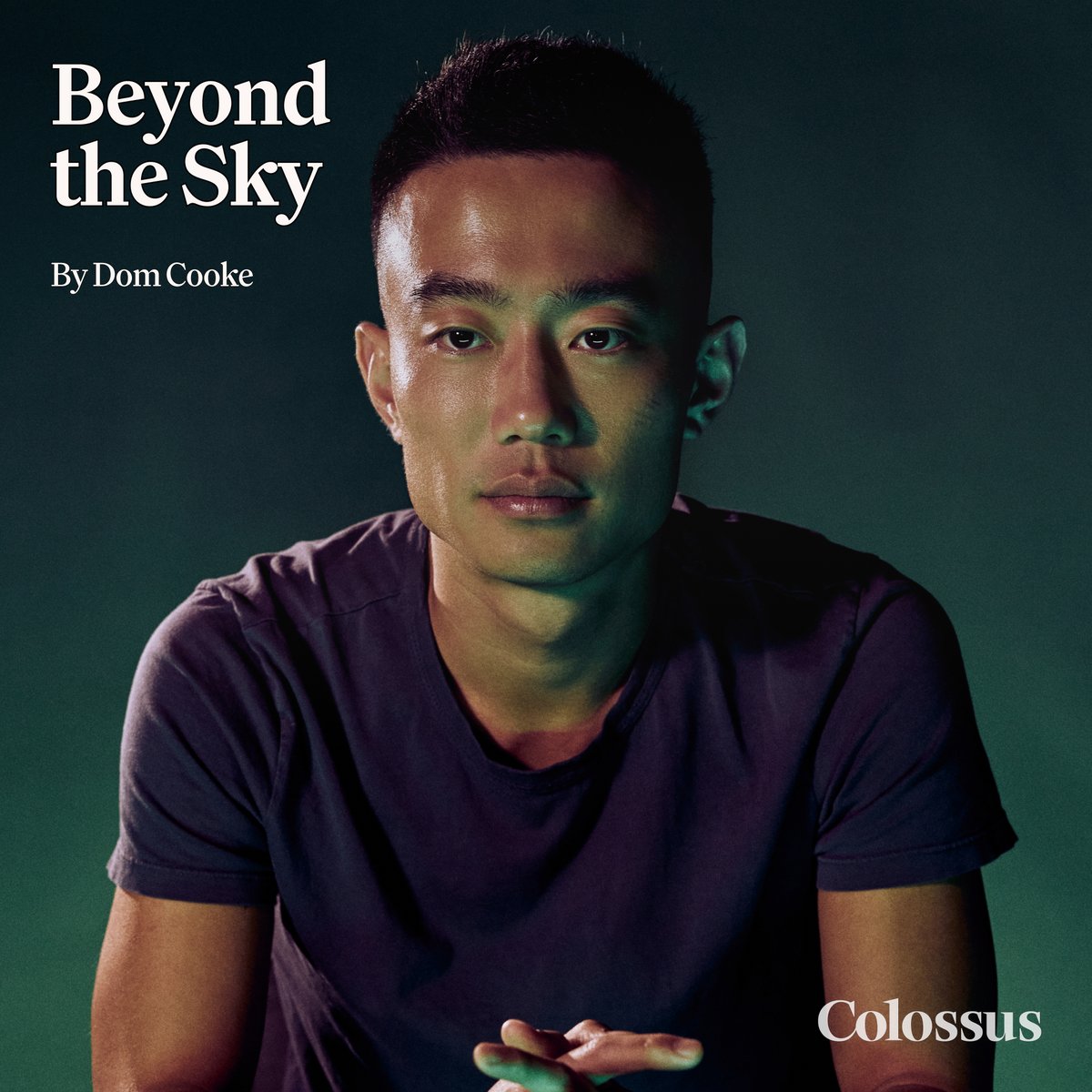
In January, @domcooke spent a week at their office. Read his profile on Yan and @HyperliquidX below.
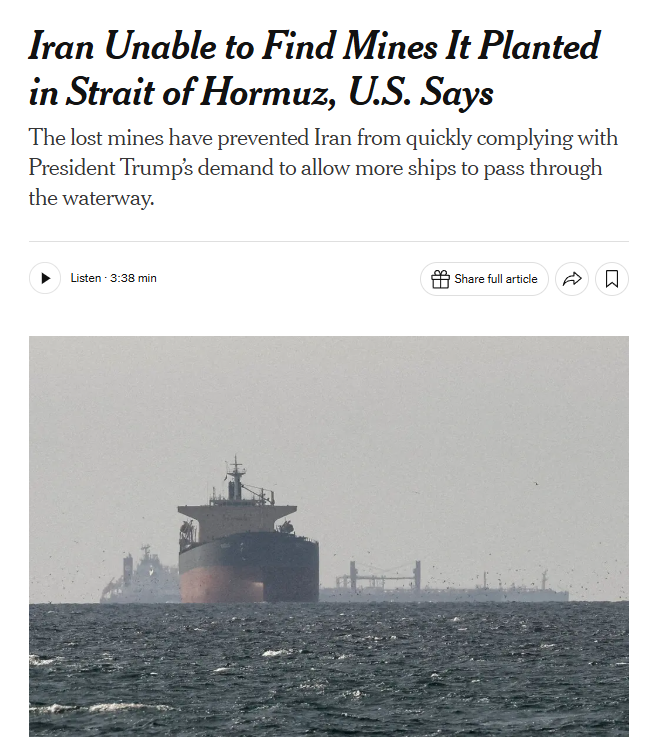
🔥 IRAN CAN’T REOPEN STRAIT OF HORMUZ AFTER LOSING TRACK OF ITS OWN MINES
U.S. officials say Iran no longer knows where many of its naval mines are, making reopening the strait difficult.
The mines were reportedly deployed in a chaotic manner, with little to no accurate records kept.
Even where coordinates existed, mines have drifted with currents, leaving only a narrow “safe corridor” for ships willing to pay transit fees.
Furthermore, Iran lacks the tech to clear them.
This is a very good article and a very important one too, courtesy of @neha, head of the MIT DCI
She is the most influential Bitcoiner to publicly and clearly acknowledge the problem and call for real progress on the matter, and she deserves a ton of credit for taking a public stance like this when many others are choosing silence and hoping it goes away.
The FAQ also debunks most of the very silly objections that people keep raising.
https://t.co/AYVYQSfAcJ
Google is basically saying:
“We’ve cut the quantum resources needed to break Bitcoin’s encryption by 20x. We can now break it. We can prove it. We’re just not going to tell you how.
We’ve slowed down research to give crypto a chance. You have until 2029 to figure out a solution. Good luck.”
Today is a monumentous day for quantum computing and cryptography. Two breakthrough papers just landed (links in next tweet). Both papers improve Shor's algorithm, infamous for cracking RSA and elliptic curve cryptography. The two results compound, optimising separate layers of the quantum stack. The results are shocking. I expect a narrative shift and a further R&D boost toward post-quantum cryptography.
The first paper is by Google Quantum AI. They tackle the (logical) Shor algorithm, tailoring it to crack Bitcoin and Ethereum signatures. The algorithm runs on ~1K logical qubits for the 256-bit elliptic curve secp256k1. Due to the low circuit depth, a fast superconducting computer would recover private keys in minutes. I'm grateful to have joined as a late paper co-author, in large part for the chance to interact with experts and the alpha gleaned from internal discussions.
The second paper is by a stealthy startup called Oratomic, with ex-Google and prominent Caltech faculty. Their starting point is Google's improvements to the logical quantum circuit. They then apply improvements at the physical layer, with tricks specific to neutral atom quantum computers. The result estimates that 26,000 atomic qubits are sufficient to break 256-bit elliptic curve signatures. This would be roughly a 40x improvement in physical qubit count over previous state-of-the-art. On the flip side, a single Shor run would take ~10 days due to the relatively slow speed of neutral atoms.
Below are my key takeaways. As a disclaimer, I am not a quantum expert. Time is needed for the results to be properly vetted. Based on my interactions with the team, I have faith the Google Quantum AI results are conservative. The Oratomic paper is much harder for me to assess, especially because of the use of more exotic qLDPC codes. I will take it with a grain of salt until the dust settles.
→ q-day: My confidence in q-day by 2032 has shot up significantly. IMO there's at least a 10% chance that by 2032 a quantum computer recovers a secp256k1 ECDSA private key from an exposed public key. While a cryptographically-relevant quantum computer (CRQC) before 2030 still feels unlikely, now is undoubtedly the time to start preparing.
→ censorship: The Google paper uses a zero-knowledge (ZK) proof to demonstrate the algorithm's existence without leaking actual optimisations. From now on, assume state-of-the-art algorithms will be censored. There may be self-censorship for moral or commercial reasons, or because of government pressure. A blackout in academic publications would be a tell-tale sign.
→ cracking time: A superconducting quantum computer, the type Google is building, could crack keys in minutes. This is because the optimised quantum circuit is just 100M Toffoli gates, which is surprisingly shallow. (Toffoli gates are hard because they require production of so-called "magic states".) Toffoli gates would consume ~10 microseconds on a superconducting platform, totalling ~1,000 sec of Shor runtime.
→ latency optimisations: Two latency optimisations bring key cracking time to single-digit minutes. The first parallelises computation across quantum devices. The second involves feeding the pubkey to the quantum computer mid-flight, after a generic setup phase.
→ fast- and slow-clock: At first approximation there are two families of quantum computers. The fast-clock flavour, which includes superconducting and photonic architectures, runs at roughly 100 kHz. The slow-clock flavour, which includes trapped ion and neutral atom architectures, runs roughly 1,000x slower (~100 Hz, or ~1 week to crack a single key).
→ qubit count: The size-optimised variant of the algorithm runs on 1,200 logical qubits. On a superconducting computer with surface code error correction that's roughly 500K physical qubits, a 400:1 physical-to-logical ratio. The surface code is conservative, assuming only four-way nearest-neighbour grid connectivity. It was demonstrated last year by Google on a real quantum computer.
→ future gains: Low-hanging fruit is still being picked, with at least one of the Google optimisations resulting from a surprisingly simple observation. Interestingly, AI was not (yet!) tasked to find optimisations. This was also the first time authors such as Craig Gidney attacked elliptic curves (as opposed to RSA). Shor logical qubit count could plausibly go under 1K soonish.
→ error correction: The physical-to-logical ratio for superconducting computers could go under 100:1. For superconducting computers that would be mean ~100K physical qubits for a CRQC, two orders of magnitude away from state of the art. Neutral atoms quantum computers are amenable to error correcting codes other than the surface code. While much slower to run, they can bring down the physical to logical qubit ratio closer to 10:1.
→ Bitcoin PoW: Commercially-viable Bitcoin PoW via Grover's algorithm is not happening any time soon. We're talking decades, possibly centuries away. This observation should help focus the discussion on ECDSA and Schnorr. (Side note: as unofficial Bitcoin security researcher, I still believe Bitcoin PoW is cooked due to the dwindling security budget.)
→ team quality: The folks at Google Quantum AI are the real deal. Craig Gidney (@CraigGidney) is arguably the world's top quantum circuit optimisooor. Just last year he squeezed 10x out of Shor for RSA, bringing the physical qubit count down from 10M to 1M. Special thanks to the Google team for patiently answering all my newb questions with detailed, fact-based answers. I was expecting some hype, but found none.