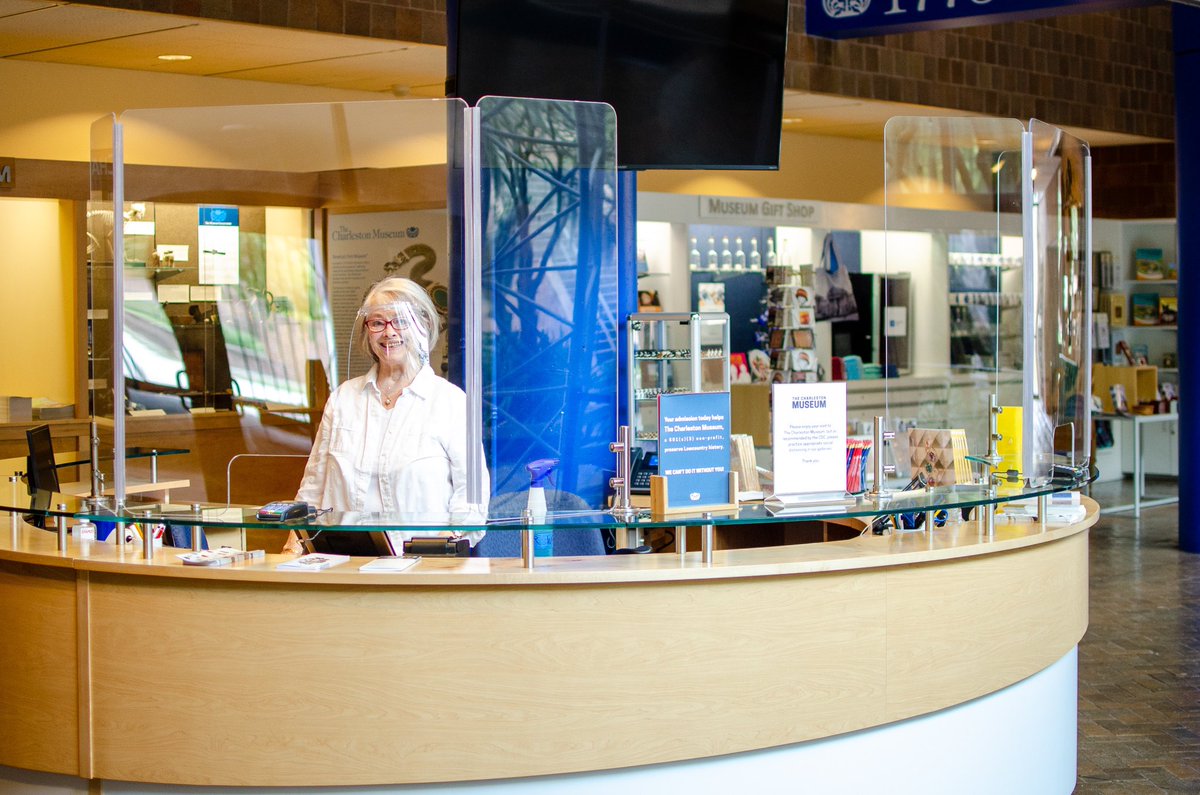
The Charleston Museum is now open with new safety protocols and guidelines in place for staff and visitors. Visit our website to learn what to expect - we look forward to welcoming you back to America’s First Museum. https://t.co/dAZqBIzU9N #charleston@HolyCitySinner@ExploreCHS
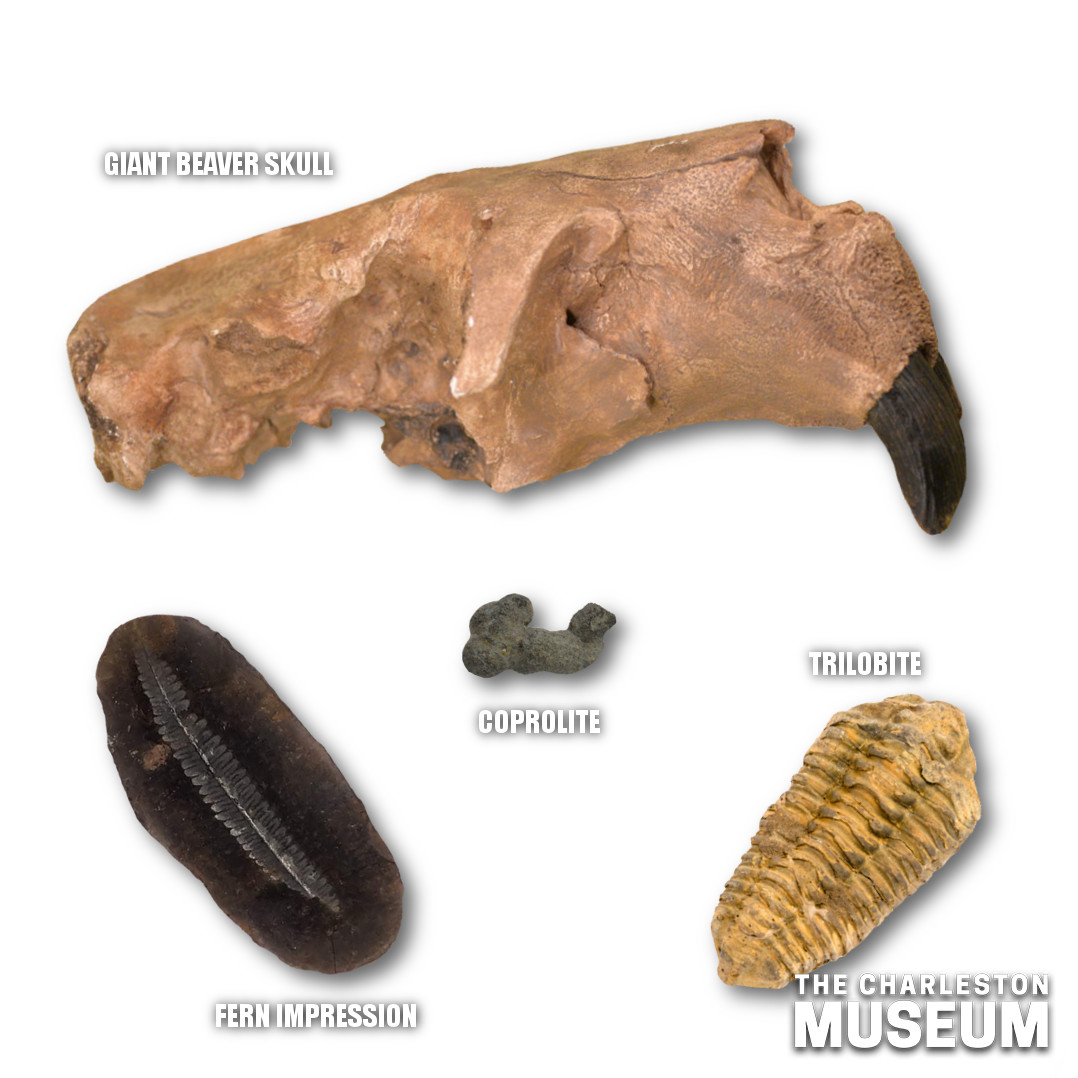
Vertebrate paleontologists specialize in animal with backbones, like reptiles and mammals. The Charleston Museum has a wide variety of fossil organisms on display, both plant and animal, but specializes in the marine organisms that would have been found in the Lowcountry.
Paleontology is the study of fossils. While most people think of dinosaurs, the diversity of different organisms that paleontologists could study is much wider. Many paleontologists tend to specialize in particular groups. #NationalFossilDay#mychasmuseum
For example, paleobotanists study plants however some may specialize even further into just studying ferns. The same can be said for paleontologists who study animals. Invertebrate paleontologists focus more on animals lacking a backbone, like mollusks or insects.
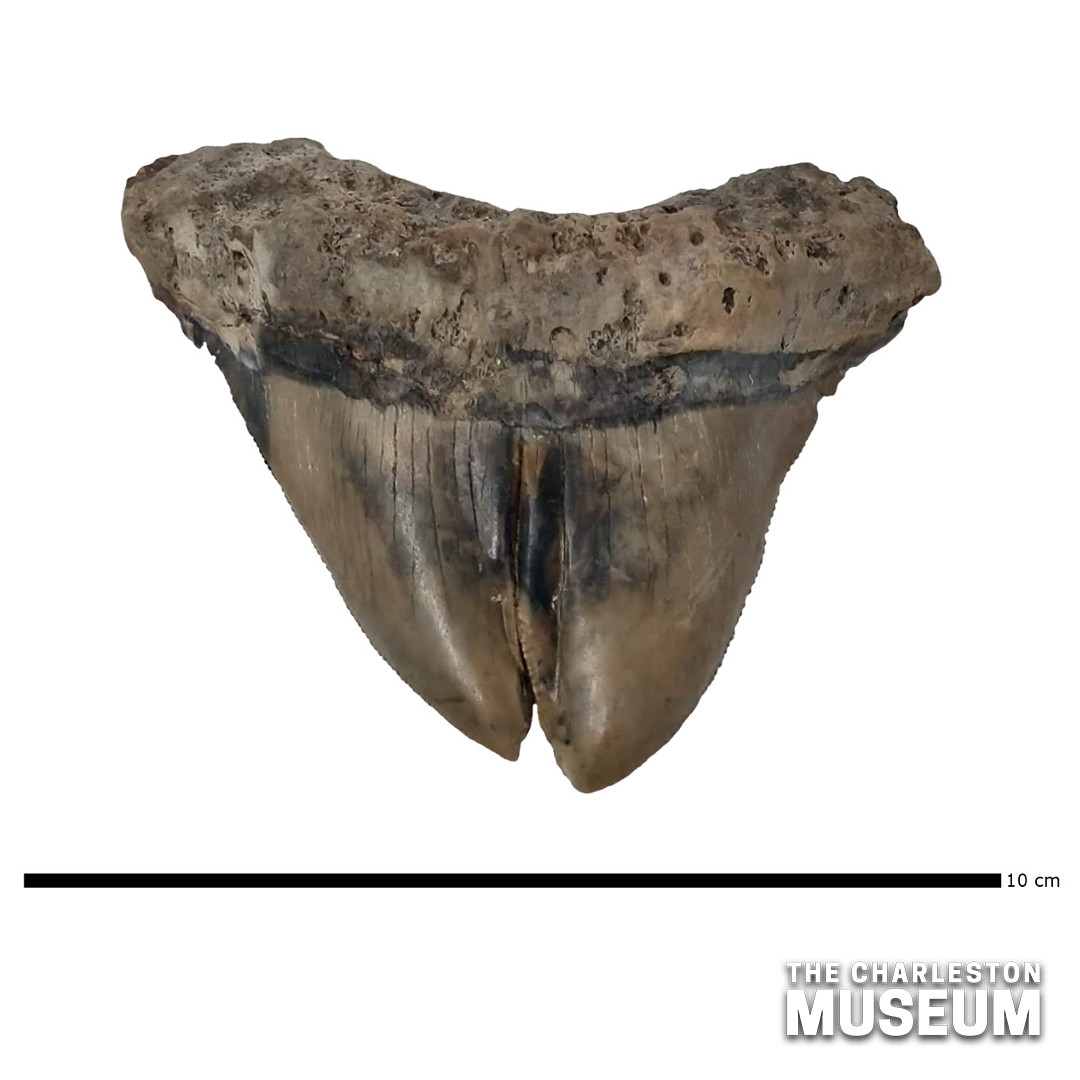
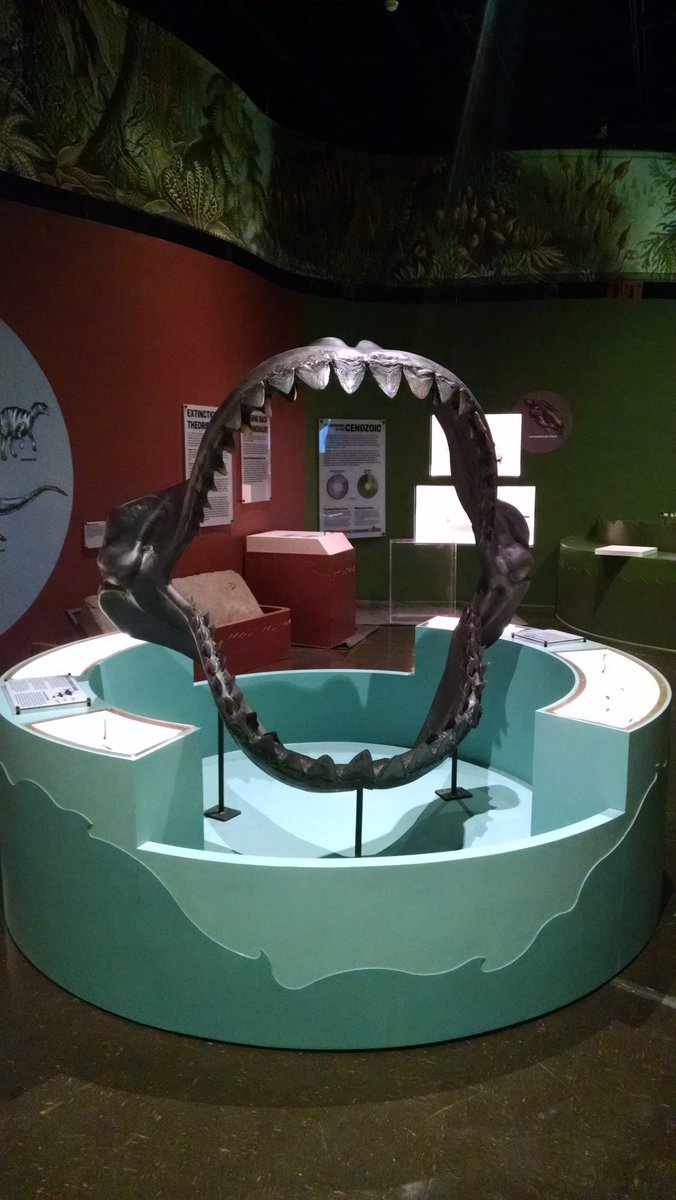
Shark teeth are commonly found on beaches and in riverbeds in the Lowcountry. The most prized teeth among collectors are often the giant teeth left behind by Carcharocles (Otodus) angustidens and Carcharocles (Otodus) megalodon. #sharkweek#fossils#sharks#paleontology 1/2
However, even more interesting than large teeth are those that have unique characteristics. This C. angustidens tooth has a deformity that cause it to “twin”, essentially forming two teeth when there should have only been one. 2/2
The Oligocene mega toothed shark Carcharocles (Otodus) angustidens was the focus of a recent study conducted by Addison Miller & Bobby Bossensecker (@CoastalPaleo) from the College of Charleston & NH Curator Matt Gibson (@fossiljockeymg). 1/ 5 #fossils#sharks#paleontology
This suggests that approximately 23 to 26 million years ago that the Charleston area would have been a nursery for this species of shark. A juvenile tooth can be seen on the left, whereas an adult tooth is on the right. 4/5
Two Saurornitholeses teeth and a single claw (seen in the first post) are on display in the Museum’s Bunting Natural History Gallery. #ondisplay#onexhibit
#FossilFriday - Saurornitholestes is a small maniraptoran dinosaur, a clade that also includes the famous Velociraptor as well as modern birds. Like birds, non-avian dinosaurs in this clade are thought to have had feathers. #mychasmuseum#museum#naturalhistory#fossil#dinosaur
Although some non-avian dinosaurs may have been capable of gliding or rudimentary flying, none were as capable as modern birds. Some other uses dinosaurs may have had for feathers include attracting mates or warmth. #feathers#cladistics#fossiladdict#southcarolina#sc
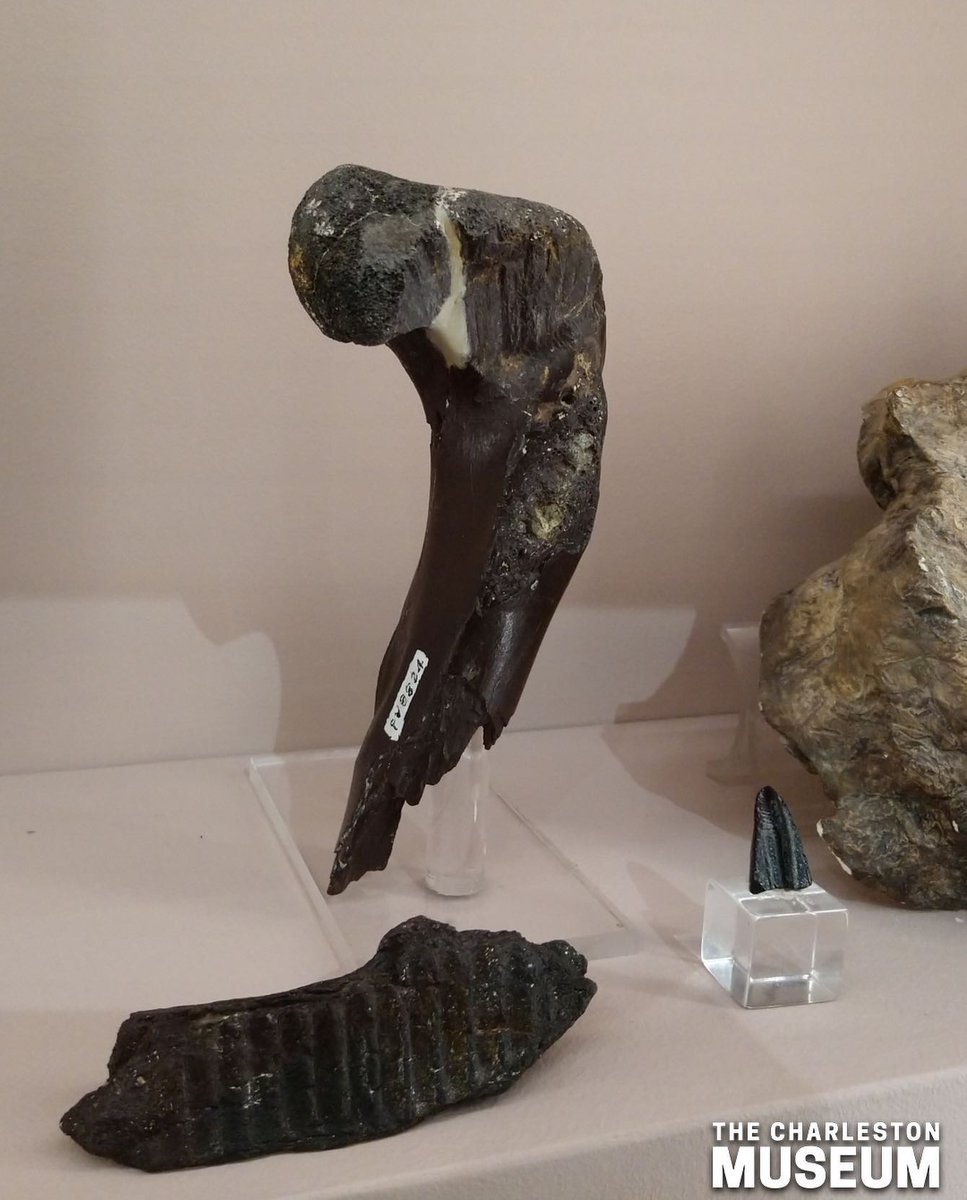
#FossilFriday - Hadrosaurs, aka duck-billed dinosaurs, would have been found in upstate South Carolina 86 - 66 million years ago. A hadrosaur leg bone (top middle), a jaw fragment (bottom left), and a tooth (bottom right) are currently on display in the Museum.
#mychasmuseum
Hadrosaurs are typically thought to have been herbivores. However, recent studies of their coprolites have shown that some may have also consumed shellfish. Most of the hadrosaur fossils found in SC are fragmentary, so it is unknown which particular species inhabited the area.