A Civil Engineer with lifetime experience delivering dams and hydropower projects and helping government, investors, and developers. Interest in social reforms.
India's Public Shame: Why We Litter the Public Spaces We Share
Post 2:Where India’s Civic Sense Breaks Down: Understanding the Filth in Our Public Spaces?
In Part 1 of this 4-part series, we discussed the mindset of the people and the flawed mindset of people separating the 'private' from the 'public'.
In Part 2, we will do the post-mortem of the physical spaces that bear the brunt of this detachment and how our streets, railway stations, bus stations and marketplaces reflect collective neglect for the Civic Sense Failure.
The shame of littering in India is a tangible, visible tragedy playing out across our most vital and our daily life infrastructure. Every day, we can see the overflowing waste bins at the city railway stations, bus stops, marketplaces, to the betel nut-stained staircases in the government offices. The physical evidence of our collective disregard is everywhere to be seen.
These places are not just dirty; they are the literal "Ground Zero" where our public cleanliness goals, like those of the Swachh Bharat Abhiyan, are systematically demolished by a simple act of ours when we treat our shared and public spaces like disposable property.
This post dives into the dirty geography of India, mapping the shame onto the three critical domains that define our public life, which are: our transit hubs, bureaucracy, and culture.
The Curse on the Transit Hubs: Spitting and Stains (Railway Stations, Hospitals, Roads)
The busiest and most essential nodes of public life are our railway stations and bus stations, and these are often the most ravaged by civic sense failure. These hubs, meant to be the welcoming gateways to our cities, instead present a message of decay and despair to millions of daily commuters and first-time visitors to the country.
The Problem of Paan and Gutka Stains
No symbol is quite as potent in depicting India's public cleanliness crisis as the tenacious, blood-red splatter of chewed betel nut (paan) and chewing tobacco (gutka) all over our public properties and spaces.
These stains cover virtually every vertical surface, like walls, pillars, staircases, and even ceilings in the railway stations, bus depots and other public spaces.
Many a time, one can notice that the spitter would make a loud guttural sound to spit every dirty stuff he harbours in his throat to splutter it on the open space or the wall or the park surface unashamedly, with full force. That is so disturbing and shameful.
This indiscriminate spitting is more than an aesthetic issue; it is a profound ethical violation:
Public Health Risk: Spitting is a direct mode of transmission for highly infectious diseases, most notably Tuberculosis (TB), turning public spaces into health hazards.
Infrastructure Vandalism: The stains are incredibly difficult and expensive to remove, requiring chemical cleaning and frequent repainting. This vandalism of public property consumes vast public resources that could be better spent elsewhere. But more often than not, these are almost permanent scars on the public infrastructure one gets to see daily.
Flagrant Disregard: The act of spitting a paan stain is the most aggressive and visible manifestation of the "Mera Nahi" mentality. It is often done consciously, in plain sight, demonstrating a total lack of fear of social or legal consequences.
When a fresh coat of paint is immediately marred by a fresh red stain, the effort to enforce public cleanliness is immediately defeated.
I have travelled all over the world- be it America, Canada, all over Europe, the UAE, Malaysia, Thailand, Singapore, China, Uganda, Niger in Africa, I have never ever noticed somebody defacing the public spaces.
Roads, Flies, and the "Convenience Litter"
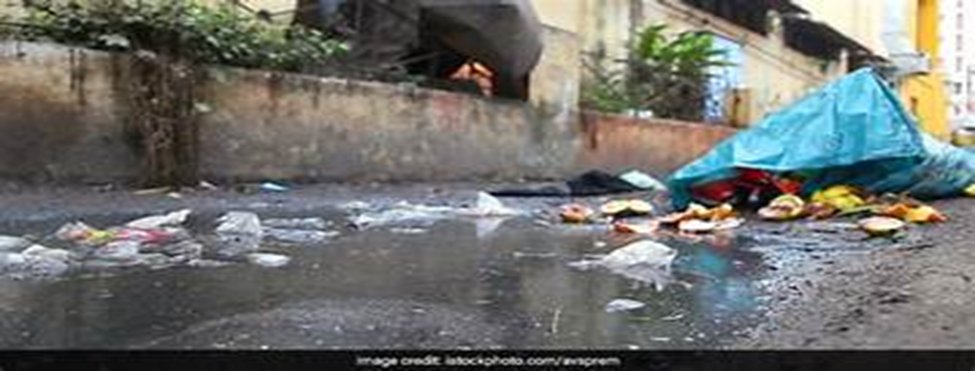
Beyond the hubs, our roads and sidewalks are perpetual grounds of waste. This is largely fueled by the convenience of litterwhether it is the wrapper of a packaging, the plastic bottle, the cigarette butt, which is discarded the moment it ceases to be useful to the individual. The ease of disposal onto the road, footpath negates any sense of civic responsibility.
When this is compounded with inadequate municipal waste management and often overflowing open bins, our streets quickly descend into chaos, attracting vectors of disease, a breeding ground for the flies and mosquitoes, and a feeding ground for the cows and dogs.
The Irony of Filth: Health and Bureaucracy
The presence of filth in places dedicated to public welfare and governance is arguably the most horrifying irony of India's public cleanliness crisis.
The Paradox of Government- Run Hospital Hygiene
,
The Hospitals are meant to be sanctuaries of healing, yet many state-run facilities struggle desperately with hospital hygiene in India. The filth here is not just an eyesore; it is life-threatening.
Infections: Poor sanitation, overflowing bio-waste bins, and stained floors directly contribute to Hospital-Acquired Infections (HAIs), putting vulnerable patients at severe risk.
Contempt for Service: The lack of cleanliness in waiting areas, restrooms, and even corridors suggests a deep disrespect for the public seeking medical aid. If the staff and visitors cannot maintain the basic hygiene of a place dedicated to life, what does that say about our collective values?
Toilets in Hospitals: I have seen many toilets in the hospitals that overflow with human excreta, creating very unhygienic conditions and preventing the next users from using these toilets. And the overpowering stench that emanates from these toilets is unbearable. There would be no water to wash them and no one to take care of them. What a shame!
Poor Cleanliness of the Government Offices
Similarly, Indian government offices, the seats of bureaucracy and public service are often monuments of neglect. The peeling paint, spit-stained walls and restrooms that are perpetually unusable are a common sight in these government offices. The very environment of governance communicates a message of dysfunction:
User Contempt: Citizens, frustrated by bureaucratic delays, often treat these spaces poorly, viewing the building itself as an extension of the inefficient system they resent.
Custodian Apathy: Conversely, the government employees and custodians often display the same lack of ownership as the public, allowing decay to proliferate. The civic sense failure here is a two-way street, where both the provider and the user of public service degrade the shared space.
Desecration of Heritage Sites
India’s rich cultural heritage, consisting of abundant ancient monuments, religious sites, and its parks, should normally be sources of national pride and meticulously maintained. Yet, these too are often overwhelmed by the carelessness of domestic tourists.
Plastic and Picnics
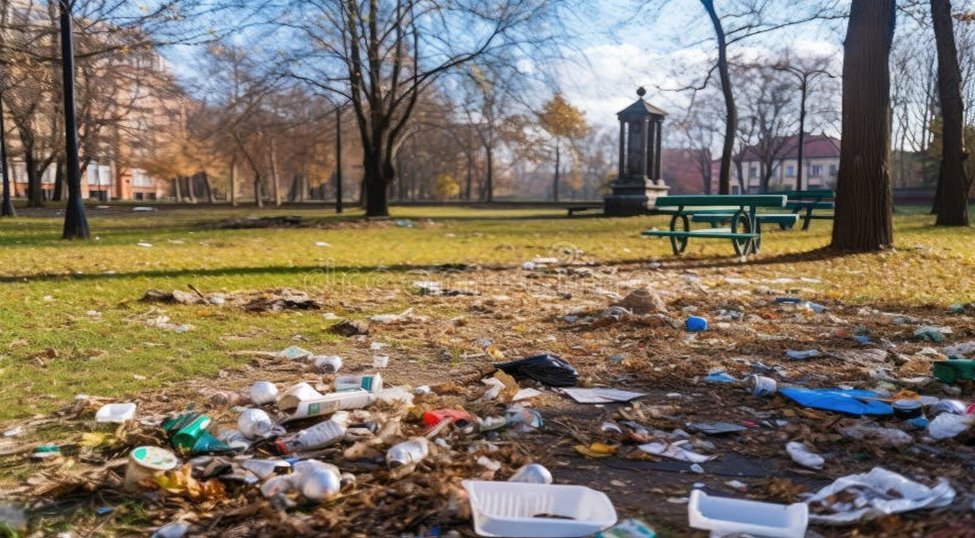
Public parks and picnic spots suffer intensely from disposable culture. After a family outing, the grass is often littered with single-use plastics, food wrappers, and cardboard boxes. This littering in India near natural spaces destroys the environment and frustrates any attempts at beautification.
It signals that the temporary convenience of the picnic outweighs the long-term health and beauty of the shared green space.
I have a beautiful park near my home, and I go to a nearby park to find on a regular basis that the picnic seekers or the casual visitors to the park leave a heap of waste at the same place where they sat a while ago, and enjoy the serenity of the trees, flowers and the park facilities. The waste is usually in the form of food packaging, plastic bottles, polythene bags, and disposable plates or glasses.
Defacing Monuments
Tourist destinations and ancient walls are frequently defaced by graffiti, scratched names, and discarded waste, showing a profound lack of historical respect. This physical defacement of monuments is a direct attack on our collective past, proving that the Mera Nahi mentality extends even to objects of national and historical importance.
I have personally seen and challenged the guides on why they can’t at least make a small, pleasant gesture to the domestic tourists not to deface the monuments or litter the spaces. The guides seemed helpless and unconcerned.
I went to Lucknow in August 2025 and went to Imam Wada. It is a beautiful heritage structure that we Indians must protect, as it was built on the taxpayers’ money. I found that there is utter disregard for cleanliness, and the spaces are littered with food packaging, plastic bottles. I asked the guide since it was their bread and butter, so why don’t they confront the litterers? He was not impressed.
The Spiral of Decay: The Broken Windows Effect
The specific examples above about the paan stains at the railway stations, the overflowing bins on the roads, and poor hygiene at the hospital are not isolated incidents. They are the visible broken windows that propel the entire cycle of decline, as discussed in Part 1 of this series.
When a public space shows signs of neglect, it results in the following:
Lowered Standards of Civility: The visible mess lowers the acceptable standard of civil behaviour for everyone present.
Futility of Carrying Your Waste: Those who might otherwise dispose of their waste properly see the surrounding decay to believe and decide that their small act of responsibility is futile.
Reinforcement of the Civic Sense Failure: The original civic sense failure is reinforced, and the area rapidly moves from dirty to abandoned, creating a vicious loop that multiplies the effort and the cost required to reverse the damage.
The problem, therefore, is not just the volume of the waste, but the speed with which the visible mess breaks the social behaviour and accelerates the descent into disorder. We are trapped in a self-inflicted wound of filth.
The Urgent Need for Accountability
Understanding the Filth in Our Public Spaces in India proves that the core problem is not poverty or lack of government effort, but a fundamental ethical gap in how we view our collective domain. Every stain, every discarded bottle, is a small act of violence against the community and a refusal to participate in the nation-building project and are knowingly opposed to Swachh Bharat Abhiyan.
We have clearly identified the places where our civic sense dies. But if the evidence of the mess is so overwhelming, then why do we continue to tolerate it? Why does the system fail to correct this widespread behavior?
It's easy to blame the government, but in Part 3, we ask tough questions. What are the root causes of our behavior, and why are there no consequences for littering? We will examine the collapse of legal and social enforcement system that allows the cycle of public shame to continue unabated.
#PublicShameIndia #CivicSense #SwachhataParadox #CleanIndiaMovement
@TheKhelIndia This is a good tradition being set to welcome and glorify our sportspersons of sports other than cricket!! Many congratulations to Asmita Dey!
@shauryabjym Our History is full of great people and one of them seems to be Rani about whom I never heard or studied. We bow before such great personalities of India.
Vande Matram!
@thebetterindia Indians have been waiting for so long now to hear a victory podium performance from P V Sindhu. Proud of her.
Keep it up and deliver many more such performances.
@Pvsindhu1
Heartiest congratulations to Skyroot Aerospace on the spectacular success of Vikram-1!
From Hyderabad to the stars, this milestone by the brilliant team at Skyroot showcases the power of Indian innovation, indigenous technology, and the unstoppable spirit of our private space sector.
A giant leap for India’s growing space economy and a proud moment for the entire nation!
To every engineer, scientist, and dreamer at Skyroot: You didn’t just launch a rocket; you launched India’s future in commercial space. The sky is no longer the limit!
#Vikram1 #SkyrootAerospace #MissionAagaman #MadeInIndia #IndianSpace #VandeMataram🚀 📷
@CommanMan777589 That is an achievement. I wish we had more sports facilities in our cities, towns, ,and villages for our young ones to develop their talents in different fields of sports.