Given that I have built two companies in widely different fields to trillion dollar plus valuations simultaneously, I am might be getting a few things right once in a while
Announcing a new Claude Code feature: Remote Control. It's rolling out now to Max users in research preview. Try it with /remote-control
Start local sessions from the terminal, then continue them from your phone. Take a walk, see the sun, walk your dog without losing your flow.
@InterestingSTEM@elonmusk@grok can I buy something like this that lets me keep it on my coffee table and also teach my kids? If so, where are possible places and what are they called and how much would they cost?
This is the only tweet you will need to survive the AI era.
10 rules. No fluff.
Read it carefully.
1. Be fast. The #1 skill in the AI era is high agency. Information is no longer a moat - you can prompt AI and find out anything in seconds. Your edge is speed. How fast can you spot an opportunity, act on it, fail, learn, and go again? While most people are still just reading about AI, a small % are already building with it. The gap between those two groups gets wider every single day. Don't overthink. Don't wait for perfect conditions. Move, test, learn, repeat. Speed is the new intelligence.
2. Build a business. Not many talk about it, but this is by far the best way to capitalise. I am personally focused on consumer products/media. There is still a massive arbitrage between the tech and the market. The gap is closing but it's still there. Playbook: Hire global talent before everyone else catches on (i.e. an EA in the Philippines costs ~$800/mo). Stack a small team around you, use AI to 10x their output, and you now run a machine that prints leverage. The gap between "solo operator with AI + a team" and "traditional company with 50 employees" is closing fast. Be on the right side of that. If you don't know how, move on to the next point.
3. Use AI EVERY single day. Use it to automate the boring stuff. SOPs, research, first drafts, data analysis, scheduling, and email. Anything repetitive that you do on a daily/weekly basis. Free up your brain for the stuff AI can't do yet - taste, judgment, relationships, decisions under uncertainty. People who use AI to replace their own thinking are getting dumber. Instead, use it to automate workflows and bring ideas to life. I post plenty of content on how to do this.
4. Understand that EQ is the new IQ. When everyone has access to the same AI tools, the differentiator is no longer intelligence, it's how you make people feel. How you read a room. How you negotiate. How you lead when things get messy. The most valuable skill in an AI-saturated world is being a human that other humans actually want to work with. This can't yet be automated.
5. Your health is your biggest edge. When everyone has access to the same AI tools, the person who sleeps 8 hours, trains hard, and eats clean will outperform the genius running on 5 hours and caffeine. Energy, clarity, and consistency are the new unfair advantages. Optimise sleep above everything - the work sorts itself out when your brain is firing on all cylinders. Side note: AI can replace a lot of things, but it can't replace your health. It's the one thing that you truly own, and that will never change. Respect it.
6. Build a personal brand. Now. AI can generate content, build products, write code. but it can't be YOU. Your story, your taste, your track record, your reputation - that's the one thing that compounds and can't be cloned. I was a 20-year-old kid tweeting from my parents' house in Australia. That decision to build in public changed my entire life. You don't need to be an influencer. You just need to be visible. Distribution IS the moat once barrier to code is no longer a factor.
7. Learn to sell. This is the skill no one talks about. AI can build the product, write the copy, design the site, and run the ads. It still can't shake a hand, read hesitation in someone's voice, or close a deal over dinner. Sales and marketing are the last pure human skills — and the most valuable ones in a world where building is no longer the bottleneck. Distribution is. If you can sell, you will never be replaceable.
8. Invest in the picks and shovels. Aside from investing in your own tools, education and business, invest in the broader AI economy. Think: energy (AI needs insane amounts of power), infrastructure, compute, robotics, cybersecurity, biotech, blockchain, hard assets. Work out where the world will be in 10-15 years and reverse engineer your capital allocation today to reflect that.
9. Network and surround yourself with good energy. Stop hanging around people who complain about AI taking jobs. Start spending time with people who are using it to create them. Your network in the next 12 months will determine your net worth for the next 12 years. This isn't motivational fluff - the collaborations, ideas, and deals that come from being in the right rooms compound faster than anything else. Networking and human interaction is also something that AI can't replace. It might be the most powerful thing the machines can't take from us.
10. Stay curious. This is the meta-skill that feeds everything above. The AI landscape is shifting weekly. The people who win won't be the ones who "figured it out" once - they'll be the ones who never stopped learning. Read, explore, go down rabbit holes, try new tools, break things. I've been experimenting with all kinds of workflows, OpenClaw, MCPs, automations etc. If you want to see what I'm working on give me a follow, I share a lot of stuff for free.
@Scobleizer@DanKornas How do I get State of the Heart Recovery on your list? We are using Empowerment Engineering to revolutionize the “treatment industrial complex”. Thanks @Scobleizer !
President Trump's term limits proposal restricts House members to 6 years and senators to 12 years, potentially replacing 73% of the 115th Congress—318 House representatives and 46 senators—to advance his "Drain The Swamp" initiative.
Do you support this?
Make some noise if you would like to see a
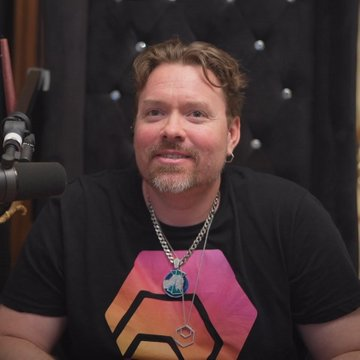
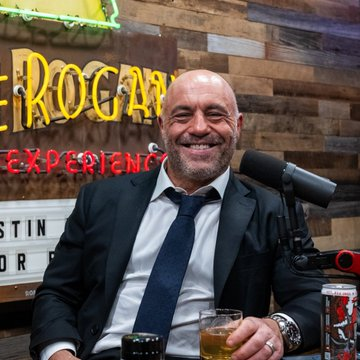
@joerogan and @RichardHeartWin
podcast!
Hey Joe, big fan. If you're looking to talk to the most wanted man who beat the SEC, rumored billionaire, crypto expert, and leader of a cult community, he's your guy.
$PLS $PLSX $HEX
🚨BREAKING: Elon Musk has been nominated for a Nobel Peace Prize for protecting Free Speech.
Simple poll. Please be honest! As of today, how much do you still trust this man?
A. 100 % B. 75%
C. 50% D. 25%
E. 0%
MAKE THIS GO VIRAL ON 𝕏. LET’S GO 👏
Solve your health problems using an LLM with my detailed prompting flow:
(Inspired by the framework I developed to re-engineer human biology when it's not acting the way it should)
------------------
INITIAL PROMPT
------------------
You are now a Root Cause Analysis Expert with expertise in functional medicine and holistic health. Your task is to help me identify the root cause of a health problem using a series of tests, symptoms, and the analyses that I've developed thus far.
Here is your first case:
I have provided a series of PDF documents with comprehensive blood testing and range of other tests.
{ATTACH up to 10 PDF test results as files}
Key symptoms the individual is experiencing:
1. {INSERT symptom 1}
2. {INSERT symptom 2}
3. {INSERT symptom 3}
4. {INSERT symptom 4}
5. {INSERT symptom 5}
Here is my assessment thus far:
{INSERT detailed assessment, be specific and provide a clear timeline of events, diagnoses, what worked/didn't—the longer the assessment the better}
Please identify the root cause of the individuals health problems, using the tests provided and my assessment as a starting foundation.
Guidelines for your responses:
- Start your analysis by understanding what each marker in the PDFs provided are, their mechanism of action, and what causes each marker to be higher or lower than the benchmark provided
- Consider each marker provided in the tests, looking for connections between them and connections to the individuals symptoms
- Summarise the findings of each PDF and highlight key abnormalities or out-of-range markers
- Group related findings into clusters to identify systemic dysfunctions (e.g., methylation, immune dysregulation, microbiome imbalances)
- When reviewing tests, consider when abnormalities first appeared or worsened to identify whether the issue is chronic, acute, or progressing
- Do not assume that the assessment provided is correct, there may be mistakes—use independent clinical reasoning
- Your response will be used to formulate a solution to the problem, so please clearly identify and state any and all root causes of the individuals health issues (there may be more than one root cause)
In your response, please provide:
- A visual breakdown of the cause-effect chain: Use a bullet or indented format to represent the cause-effect chain (e.g., Marker → Dysfunction → Symptom), or if possible, generate a simple flowchart
- A list of identified root cause(s), clearly labelled
- Initial suggestions or therapeutic areas to begin addressing each root cause
-----------------
1ST RESPONSE
-----------------
Please can you make one 12-week supplement protocol that addresses all of the root causes identified, as opposed to a phased protocol. Unless you believe it would be more effective to follow a phased protocol—in this case please explain why this is the case.
Format the supplements in a table, providing a recommended dosage and frequency, as well as the time of day to consume the supplement and whether it should be consumed with or away from meals, with or away from other supplements, or any further best practices on how to take them. (e.g., “away from magnesium,” “with fat,” etc.)
Include a summary of any lifestyle or behavioural strategies that would synergise with the supplement protocol (e.g., sauna, meal timing, circadian rhythm alignment).
Note: You may use general or brand-agnostic recommendations. I will refine based on availability and preference.
{Internal Note: 10 times out of 10 I use pre-existing knowledge to add supplements + remove what's not necessary. Unless project knowledge is used—meaning I've educated ChatGPT with my own strategies}
------------------
2ND RESPONSE
------------------
Now look, we don't want to just manage this situation. If we were to really stretch our thinking: What are our options to suppress or even reserve the individuals health condition? Think outside of the box.
Please:
- Explore novel therapies (e.g., peptides, off-label pharmaceuticals, mitochondrial therapies, microbiome transplants, frequency-based medicine, regenerative tools, etc.)
- Prioritise interventions that are safe but underutilised or under-discussed
- Include any promising but experimental directions that may not be mainstream, but are grounded in early research or clinical practice
Where possible, explain the mechanism of action or theoretical rationale behind the experimental or emerging strategy.
{Internal Note: You'll be provided with advanced, alternative, and emerging techniques/therapies—these facilitate marginal gains and help to stretch your thinking}
==END==
The world is changing.
Health now belongs to data-scientists and those that can co-exist with AI.
Which is why i'm building an AI-powered system for reversing health conditions, sharing my learnings along the way.
All backed by years of experience, working on 1,500+ cases to fix health issues doctors couldn't.
Read more about my framework in this article:
For $5,000 worth of Claude Code credits, I vibe coded something that replaces tens of thousands of dollars of psychological evaluations.
Let me explain...
Last month, my girlfriend and I sat in our den with our jaws on the floor…
We were in front of my laptop, taking turns reading a report out loud, line by line.
The document read like a CIA dossier—incisively breaking down each of our repeated fights and nailing our relationship dynamics.
We had to laugh. We couldn’t believe it.
A few days earlier, I’d asked ChatGPT a simple but loaded question:
“What information would you need in order to become the ultimate personalized relationship coach?”
It replied with a long list of personality tests—the same ones psychologists use to evaluate mental health, personality, and relationship satisfaction.
The tests were all available online, but scattered across annoying PDFs and awkward, old-school forms.
For someone with ADHD, like me, the idea of doing them one by one was pure torture.
I just wanted to pound through them as one big test.
So I asked Claude Code to build a simple app that combined them.
I listed all the tests I wanted and asked it to build a web app that would.
I’d done some vibe coding last year with tools like Replit and Lovable, but nothing prepared me for how good Claude Code has become.
Within a few hours, I had a beautiful web app that combined all of these tests into one.
When I say beautiful, I mean it looked like I employed a $50,000-a-month payroll of talented designers and engineers who’d spent two months working on it.
Except I didn’t have a $50,000-a-month payroll.
I’d paid Claude around $500 in AI credits — and what would normally take months had taken hours.
Crazier yet, I’d just talked to it like it was a human employee.
Once a beta version was ready, we completed our tests and exported our results into ChatGPT—no names, no context—and asked:
“Based on this couple’s psychological test results, tell me as much as you can about their relationship.”
That’s how we ended up in our kitchen, in shock, as ChatGPT broke down our relationship patterns with eerie precision.
How my ADHD makes me want quick resolution, while Zoe needs to talk things through.
How her high openness craves novelty, while I’m a stick-in-the-mud who craves routine.
How my avoidance causes me to pull away and shut down when I’m stressed.
It felt like a report written by a world-class therapist who’d spent dozens of multi-hour sessions carefully dissecting our dynamic and suggesting remedies.
It told us where we were most compatible, and where we’d struggle if we didn’t put in the work.
It even wrote personal deep dives on each of us, our personalities, and our individual gifts and challenges.
And it knew all of this from 45 minutes of multiple-choice questions.
I started thinking about friends who’d never been to therapy, or couldn’t afford anything like this, and how much it could help them.
That’s when I realized this was a business.
Something that would solve a valuable problem for a lot of people.
So I got to work.
For the last month, I’ve been jolting out of bed at 5:30 a.m., too excited to sleep, obsessively building this product.
And today, I’m excited to launch Deep Personality.
I think it’s one of the most comprehensive mental-health screening tools on the internet.
It’s not a replacement for professional help, but a roadmap to it.
Most people stumble blindly into a random therapist or doctor’s office without knowing what type of treatment they are even trained in or its efficacy for their specific problems.
Deep Personality will screen you across 30+ mental health conditions and provide you with a detailed roadmap of how to get the help you need.
In under an hour, it gives you a high-signal snapshot of your mental health across dozens of dimensions:
Big Five Personality
The gold standard for understanding why you do what you do.
Attachment Styles
The hidden patterns behind pushing people away, clinging too tightly, or choosing unavailable partners.
Anxiety & Depression
Screens for what you might be dismissing as “just stress.”
Relationship Satisfaction
Measures the real health of your relationship — often surfacing problems you’ve been avoiding.
Sensory Processing
Why crowded rooms drain you — or why you need things just so to focus.
Neurodivergence
Flags potential ADHD and autism-spectrum traits that often go undiagnosed into adulthood.
Trauma
Maps early experiences shaping your triggers and stress responses.
Values & Career Fit
Shows what actually motivates you, and why some work quietly drains your soul.
You can do this individually, or compare yourself to anyone in your life.
This is where it gets really interesting…
Have your partner, coworker, friend, or family member take the assessment, upload their profile, and wait while the app analyzes your personalities and how they interact with one another.
For romantic relationships, it analyzes attachment compatibility, conflict styles, emotional regulation, and values alignment — telling you exactly where you’ll clash and what to do about it.
For work relationships, it focuses on communication, motivation, and how you’ll collaborate — or blow up under pressure.
For friendships, it looks at shared values, social energy, and the dynamics that help relationships thrive (or quietly fade).
For Zoe and me, having our relationship laid out with this kind of clarity — patterns we’d felt but never articulated — was deeply meaningful.
Once you complete the assessment, you get a 50+ page deep dive on your personality.
It felt like finally getting the owner’s manual for myself.
You also get a custom AI prompt pre-loaded with your psychological data.
Drop it into ChatGPT, Claude, or any AI assistant — and you have a therapist who already knows your attachment style, anxiety patterns, values, trauma history, and emotional regulation tendencies.
No more spending six therapy sessions explaining who you are.
The AI already gets it.
And if you’re in therapy, or going to start with a new therapist, you can also export a clinical PDF designed for practitioners—raw scores, thresholds, severity flags, discussion points, and citations.
Or… it can help you attract your perfect romantic partner.
This one’s just fun.
Deep Personality can generate dating bios based on your actual personality data — tailored to Hinge, Bumble, or Tinder — in tones like witty, sincere, adventurous, or intellectual.
The AI turns what makes you unique into something that attracts compatible people.
Once it knows you, it helps you get the help you need.
Based on your results, it recommends books, podcasts, and treatment options backed by peer-reviewed research.
The full assessment covers 30+ psychological screens and 300+ questions, and it costs a fraction of a single therapy session (free for the basic analysis, $19 for the full report, $29 for a couples comparison).
It’s really crazy and I think it's going to help a lot of people.
Who is this for?
• High achievers who want to understand their edge
• People who feel stuck and don’t know why
• Curious minds who want real data
• Pattern repeaters, same story — different chapter
• Anyone who wants better relationships
I’d love it if you’d try it and send me your thoughts!
👉 Click here to check it out: https://t.co/gcox8pCY6Y