BREAKING: Total US debt officially hits $40 trillion for the first time in history.
That's $119,699 in US debt for every American.
This puts the total US debt balance up +$17 trillion since 2020 and +$30 trillion since 2008.
We are on an unsustainable fiscal path.
Key Events This Week:
1. July Housing Starts data - Tuesday
2. July Pending Home Sales data - Tuesday
3. Fed Meeting Minutes - Wednesday
4. August Philly Fed Manufacturing Index - Thursday
5. August S&P Global Services PMI data - Friday
6. August S&P Global Manufacturing PMI data - Friday
The S&P 500 is now up +13.5% year-to-date.
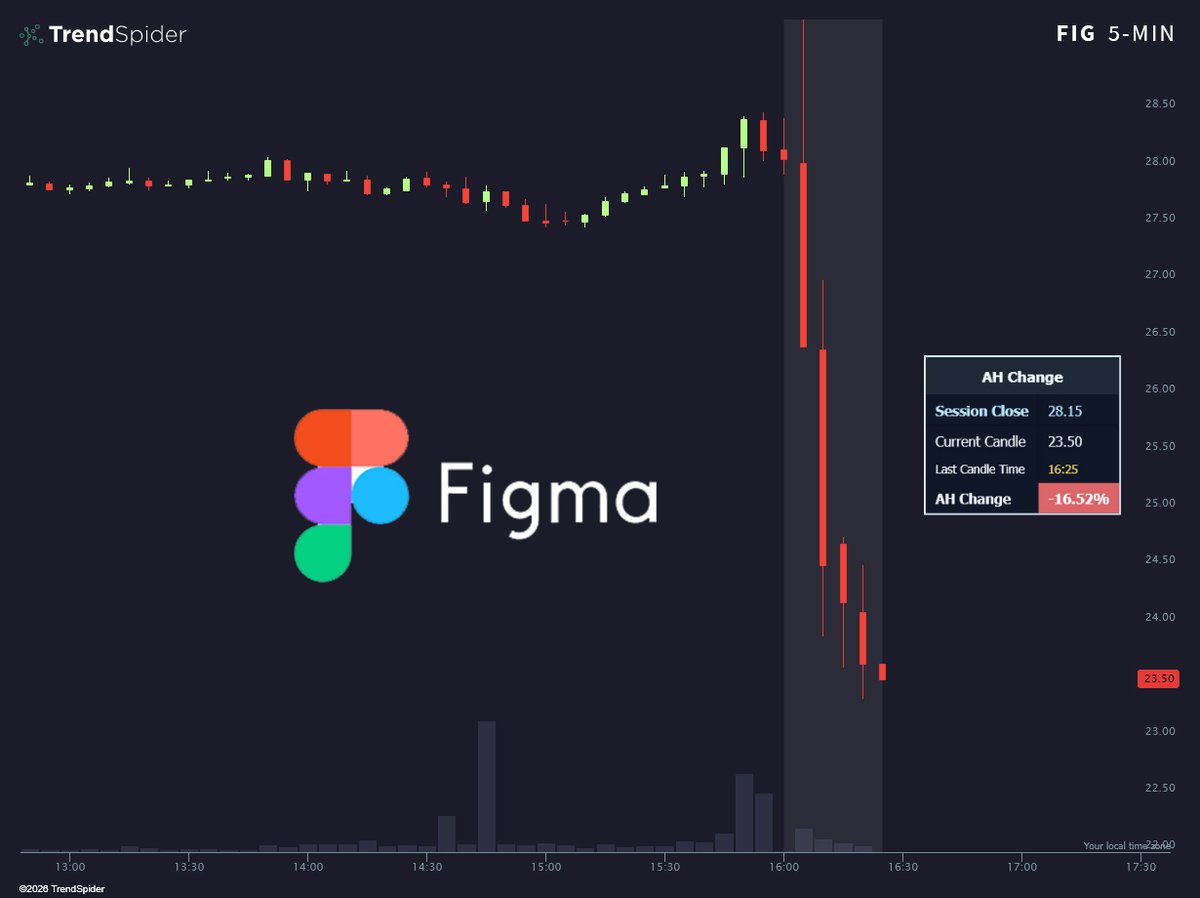
$FIG DOWN ON A DOUBLE BEAT & RAISED GUIDANCE 🩸
Q2 Adj. EPS: $0.08 vs $0.04 est
Q2 Sales: $370.083M vs $351.560M est
Raised FY2026 Sales Guidance
🟥 -16.52%
CITADEL: JULY RESET THE BULL MARKET, NOT ENDED IT
Citadel's Scott Rubner says July's sharp selloff and sector rotation cleared out excessive positioning without breaking the broader bull market.
Retail investors turned net sellers, AI and semiconductor stocks were heavily sold, and leveraged ETF assets fell by more than $60B from their June peak.
"July did not change the structural bull market. It reset it," Rubner said, adding investors can now focus more on company fundamentals than positioning.
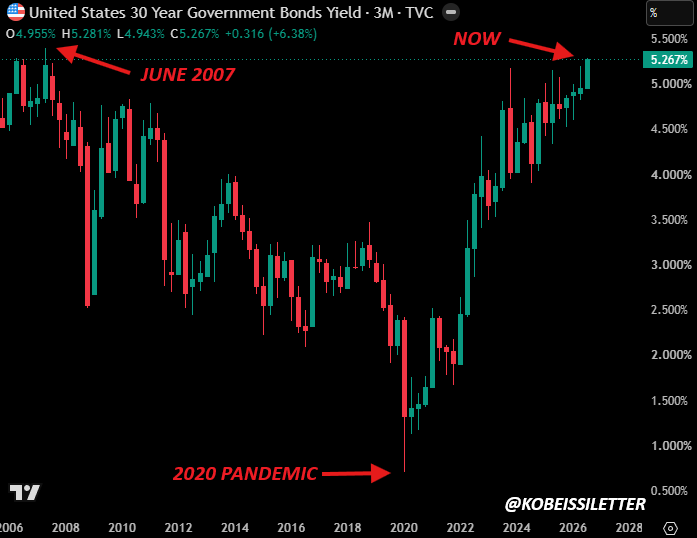
The bond market situation is crazy.
While everyone focuses on AI, US borrowing rates just hit the highest level since June 2007.
Credit card "serious delinquencies" are at the highest since 2010 and mortgage rates could near 8%.
What's happening? Let us explain.
(a thread)
Borrowing costs on 15-year fixed-rate mortgages, often sought by borrowers refinancing a home loan, also rose this week.
Read more: https://t.co/ns4dyPC95Y
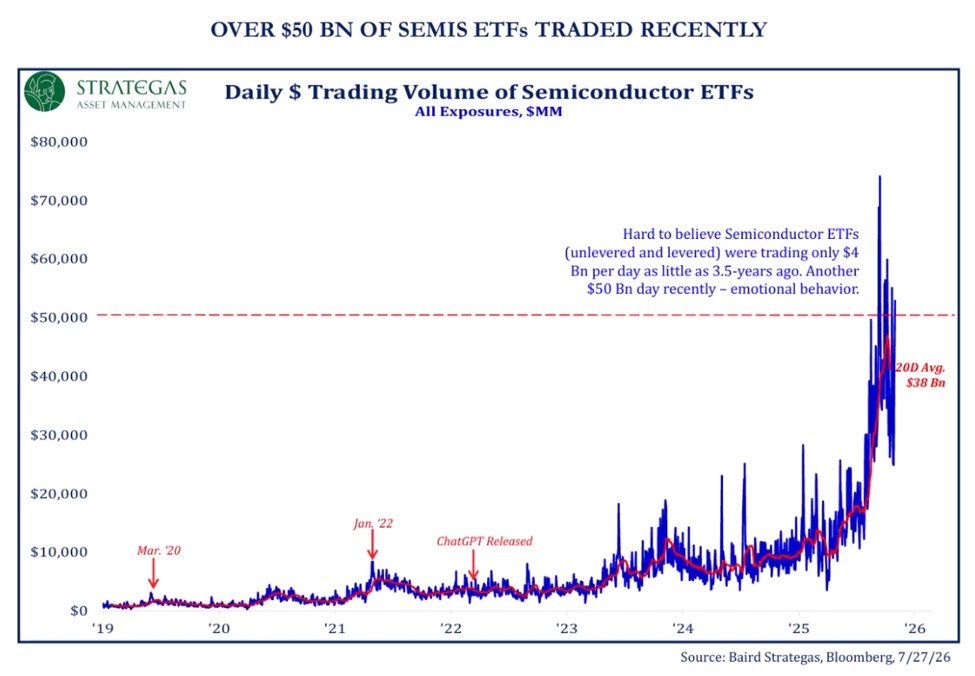
Semiconductor ETFs are crushing every record.
The trading volume of US semiconductor ETFs has now surged to $50 billion per day.
This figure has more than quadrupled since January 2025.
At one point in June, daily trading volume surged to a record $75 billion.
As a result, the 20-day average of this metric is up to $38 billion per day, near the highest on record.
To put this into perspective, in 2021 and 2022, daily trading volume never exceeded $10 billion.
Semiconductor ETFs have become one of the market's strongest drivers.
BREAKING: SUPERMICRO $SMCI SAYS IT BOOKED MORE THAN $60B IN NEW ORDERS LAST QUARTER, ROUGHLY 5X ITS QUARTERLY REVENUE
The preliminary Q4 update cuts three ways:
- New orders: in excess of $60B in the quarter, pushing backlog to record levels, to be delivered over future quarters
- Gross margins: estimated 15%-17%, nearly double the 8.2%-8.4% guidance, on favorable customer and product mix
- Revenue: expected near the low end of the $11.0B-$12.5B guide
The read: fewer dollars shipped this quarter, much more profit per dollar shipped, and a demand pipeline far larger than current output.
Two caveats from the release itself:
- The figures are preliminary and unaudited, and the company notes some orders may not be firm commitments and can be canceled or delayed
- The board's previously disclosed independent review of alleged export-control issues could affect these results and prior periods
Full results land August 11.
Data centers in the United States 🇺🇸 will reportedly account for ~20% of the electricity consumption in 2035, up from 5.9% today, according to BloombergNEF
BREAKING: President Trump is preparing to announce 10% tariffs on "dozens of countries" this week, per FT.
Details include:
1. These new tariffs come as President Trump's current 10% tariffs expire later this week
2. President Trump's advisors have reportedly warned him against doing so
3. Advisors are reportedly worried about risking the economic shocks of the original trade war ahead of the midterm elections
4. The Trump Admin is also working on other investigations that could grant it the legal authority to propose higher tariffs
More tariffs are on the way.
Everyone wants US stocks.
Foreign private sector net purchases of US stocks rose +$35.2 billion MoM in May, to $121 billion, the 2nd-largest inflow on record.
This marks the 2nd consecutive monthly increase.
By comparison, the record monthly inflow was ~$130 billion in November 2024.
Year-to-date, foreign private investors have purchased ~$270 billion of US stocks.
To put this into perspective, foreign investors dumped -$31 billion and -$28 billion of South Korean stocks in June and May, respectively, the two largest monthly outflows on record.
Furthermore, foreign investors also sold -$18 billion of Taiwanese stocks in June, the 2nd-largest sale on record.
Global capital continues to favor US equities over the rest of the world.