BREAKING: I asked Claude to upgrade my LinkedIn profile.
It didn’t just “upgrade” it. It turned it into a recruiter magnet.
Here are the exact 7 prompts I used:
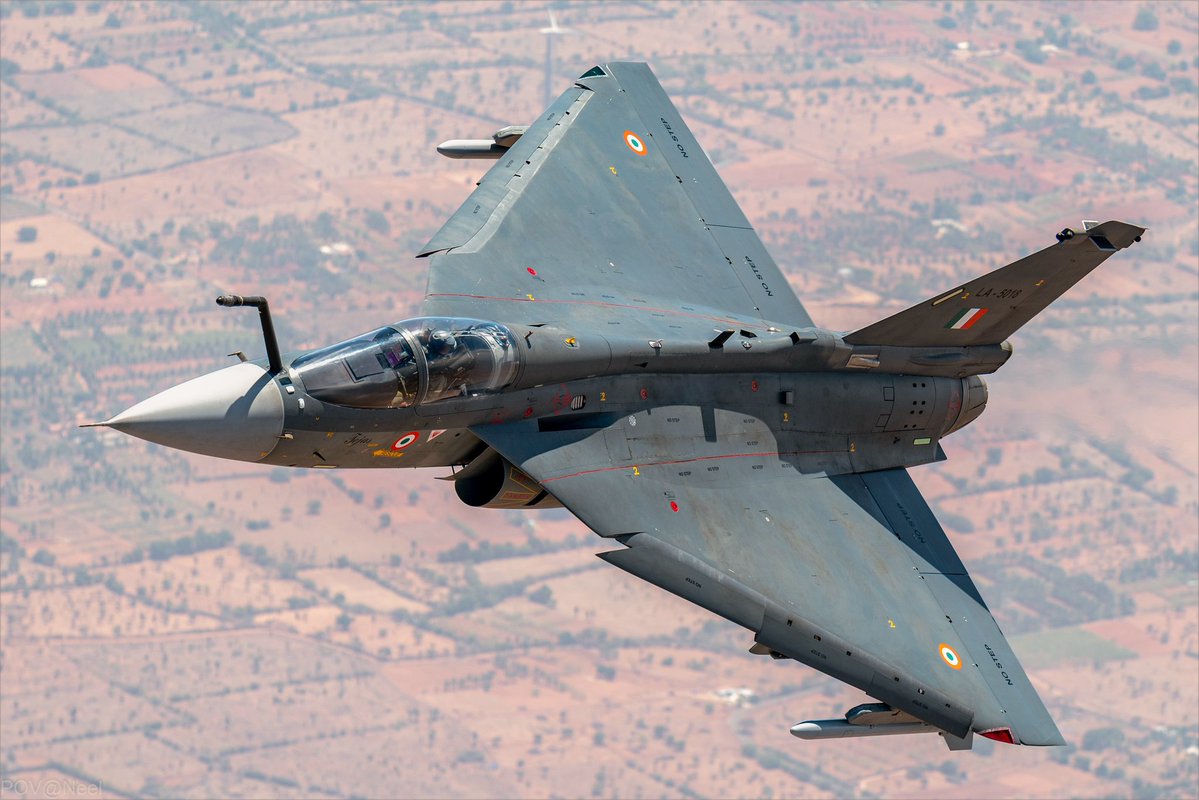
One Tejas crash.
One pilot gone.
And suddenly…
X is On Fire..
LinkedIn on Fire.
I saw the videos.
I saw the fake outrage.
I saw people milking tragedy for Trending.
Circulating crash clips like gossip.
Dropping “RIP” posts like Instagram filters.
Where was this energy for 50 years?
Where was the concern when 400+ MiGs fell?
Where was the outrage when 170+ pilots died?
Where were the hashtags when families shattered?
Silence.
Complete silence.
Because those jets were imported.
Those crashes were “normal.”
But the moment one Made-in-India jet goes down?
Suddenly everyone wakes up.
Suddenly everyone has an opinion.
Suddenly Tejas becomes a punching bag.
Suddenly Indian scientists become a joke.
Suddenly Indian engineers become memes.
Suddenly everyone becomes an expert on G-forces.
The hypocrisy is not subtle.
It screams.
I didn’t react for 24 hours.
I didn’t post condolences.
I didn’t amplify the crash videos.
Because the pilot deserves dignity.
But then… I saw the pattern.
Influencers pushing negativity.
Politicians jumping in for mileage.
Foreign lobby bots pushing,
“India can’t build jets.”
“Tejas is unreliable.”
So I dug into the data.
And it was hiding in plain sight.
Here is the total loss count for each fighter jet.
Ranked from highest to lowest.
F-16: 674 losses
MiG-21: 600 losses
MiG-29: 300 losses
F-35: 29 losses
Su-35S: 10 losses
Gripen: 9 losses
Rafale: 8 losses
Eurofighter: 8 losses
F-22: 6 losses
Su-57: 3 losses
Tejas: 2 losses
Now the average losses per year since service began.
This is where the truth hits hard.
F-16: 14.3 per year
MiG-21: 9.1 per year
MiG-29: 7.1 per year
F-35: 2.9 per year
Su-35S: 0.9 per year
Su-57: 0.6 per year
Typhoon: 0.36 per year
Rafale: 0.33 per year
Gripen: 0.31 per year
F-22: 0.3 per year
Tejas: 0.22 per year
Tejas is statistically one of the safest jets ever built.
Not just in India.
Globally.
And yet, this is the jet people mock.
So what they really want?
They want outrage against Bharat.
They want to shout “India can’t build.”
They want to feed their colonial inferiority.
They want to attack anything proudly Indian.
A jet crash is tragic.
Always.
But it is normal in aviation.
Every nation loses jets.
Every air force accepts risk.
Every aircraft has failures.
An inquiry committee will investigate.
They will give the facts.
Until then, we should stop humiliating our own country.
Tejas is a miracle.
A generational leap.
A symbol of India standing on its own feet.
A machine built by Indian brilliance.
Very soon we will have our own engine too.
And if the empire loyal crowd can’t digest that?
We don’t care.
Stop mocking our engineers.
Stop sharing crash porn.
Stop pretending to care.
Stop cheering for failures of Indian innovation.
Because here is the truth.
Tejas didn’t crash Bharat.
Bharat crashed the colonial mindset.
And some people just can’t handle it.
Jai Hind 🇮🇳
Copied
If this story of Marvan Atapattu dosent motivate you, nothing might👇
Making his debut in Test cricket for Sri Lanka, Marvan scored a duck in his first innings & again, in his second innings.
They dropped him. So he went back to the nets for more practice. More first class cricket. More runs. Waiting for that elusive call.
And after 21 months, he got a second chance. This time, he tried harder. His scores: 0 in the first innings, 1 in the second. Dropped again, he went back to the grind & scored tonnes of runs in first class cricket. Runs that seemed inadequate to erase the painful memories of the Test failures.
Well, 17 months later, opportunity knocked yet again. Marvan got to bat in both innings of the Test. His scores: 0 & 0. Phew! Back to the grind. Would the selectors ever give him another chance? They said he lacked big-match temperament.
3 yrs later, he got another chance. This time, he made runs. He came good. And in an illustrious career thereafter, Marvan went on to score over 5000 runs for Sri Lanka. That included 16 centuries & 6 double hundreds & he went on to captain his country. All this despite taking over 6 years to score his second run in Test cricket.
How many of us can handle failure as well as he did? 6yrs of trying & failing. He must have been tempted to pursue another career. Change his sport perhaps. Play county cricket. Or, oh well, just give up. But he didn’t. And that made the difference.
The next time you are staring at possible failure or rejection, think of Marvan.
NEVER GIVE UP!
BELIEVE IN YOURSELF 😊
Used to spend a couple of hours reading through an Annual report
But now you need to spend only 10-15 minutes using AI to read a summary and then cross-check or delve deeper into it.
Use Gemini 2.5 -
Upload a company's latest annual report and type the below prompt -
Summarize this uploaded Annual report for me
- Explain the business model to me like a 5-year-old, state the key inputs, outputs, and factors affecting the same
- Focus on the Management discussion and Analysis section
- Are the sales, operating profit (USE EBITDA and Not EBIT), and PAT increasing
- Are the Operating profit margins (EBITDA) and net profit margins increasing? Show a breakdown of how they are growing and why they are increasing
- calculate free cash flow for the given financials
- calculate EBITDA to Cash flow from operation conversion % and tell me if it's increasing
- Is the balance sheet of the company healthy? Are there any signs of stress?
- Identify the red flags in the company
- Tell me more about the related party transactions
Competitive & regulatory landscape
• Regulatory updates, compliance costs, licenses, litigation, scheme/subsidy benefits, and sunset risks.
• Management's Industry View (Structural vs. Cyclical): Summarize any explicit commentary from management on whether they view current industry trends as structural or cyclical.
• Customer Health Read-Through: Note any commentary on the health, demand, or inventory cycles of key customer industries.
Conclusion -
- End with five firm takeaways.
- Assume a role: “You are a seasoned equity analyst and have evaluated thousands of public companies globally...”
Formatting -
- Easy to read language
- Use bullet points
Share your prompts and let's learn together!
Please note - AI is only good for data retrieval and a bit of data crunching. After it gives you a result, you need to delve deeper to draw conclusions.
All the best!
SHORT POST: Time for contra #SIPs?
Since SIP has become the new LIC.
A herd behavior
Quoting from the movie “Drishyam 2”
“Sawaal ye nahin hai ke aapke ankhoon ke saamne kya hai. Sawaal ye hai ki aap dekh kya rahe hain ? “
#FIIs don’t matter anymore in Indian markets as they hold just 15% of market now. However, FIIs are speaking with their money. They’re selling. They see these prices as an opportunity to exit. But the focus on FIIs is a distraction.
With 85% of Indian markets held by domestic money, the valuation is purely a function of how domestic investors value India. It is also a function of fund flows & your SIPs.
Indian markets have capital controls. So money can’t freely invest outside. This makes the market overvalued compared to other developed peers like UK, Korea, Japan, etc where investors don’t have such restrictions.
Promotor holdings have dropped from 48% to 40% in last few years. This should make investors think. While you’re buying, the owners are selling. Why ?
Even the erstwhile US registered firms are now registering in India to list on #NSE. It’s not out of patriotism. It is because India is now listing the most expensively priced #IPOs. Everyone wants that.
Real money is made by going against the herd. #SIPs are now a popular herd strategy. Hypothetical SIP works as nobody was doing that before. Now that everyone does that, it may not work anymore.
A herd strategy doesn’t make money. Popular strategy becomes a #LIC. A generation invested there building dream castles. Nothing happened. These policies provided 5% returns when FDs were at 15% interest.
SIPs are being used to buy expensive new #IPOs that is being leveraged by private equity players for smarter exits. This strategy can never make money for retail. Everyone is trying to time the listings here. Isn’t it fair for the investors also to “time the SIPs”?.
Five years later, probably by 2030, most of us would realize that SIPs at these high valuations were poor investments. They are unlikely to provide the 15% to 25% returns that most are secretly plugging into their excel sheets. It has not worked anywhere outside the US market. How are you so sure?
What will work is being smart about the strategy. Stop SIPs when markets are expensive & do a FD SIP. But when ,markets drop 20% or more, pull the funds into equity.
This could be the only way to make more than 12% to 15% returns. It’s not for everyone but this is the only strategy.
FIIs are timing. Promotors are timing. IPOs are timing. Everyone is timing the markets. Why shouldn’t you do the same?
RBI is getting very active & making sure it is supporting the market much faster than it has in the past
RBI announced 2 things,
- 1,00,000 cr of OMO
- 87,000 cr of USD/INR Swap
Let me explain what it means in this 🧵 (1/4)
@AshwiniVaishnaw@IRCTCofficial@PMOIndia
Travelling by Sealdah rajdhani, train no. 12314, pnr no. 2120407537. Have traveled all my life in A rajdhani but never seen ppl without tkts, gamcha sellers, eunuchs in Rajdhani. Horrible & a big let down