Sunday reminder for women in surgical training:
You don't need to figure this out alone. The system wasn't built for you — but we're building a new one.
Beyond my research in cardiothoracic surgery, another area that matters deeply to me is resident training. That’s why surgical education is one of my priorities — and a field I’m eager to continue developing in. https://t.co/73FCNgSKgz
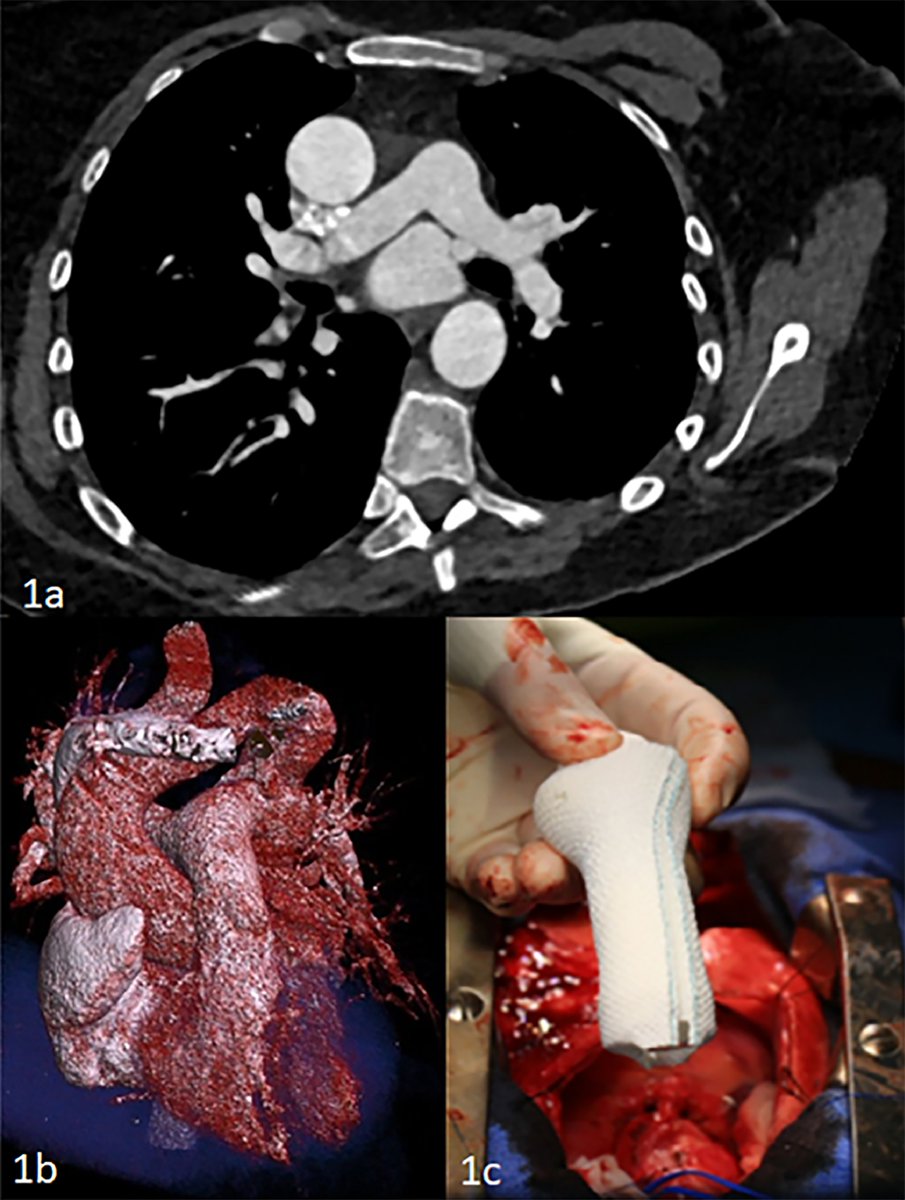
This article on the Ross-PEARS procedure nicely illustrates how 3D planning and a bespoke PEARS mesh can be used to proactively support the pulmonary autograft in the aortic position. It offers a practical roadmap for centres aiming to reduce autograft dilatation while preserving the advantages of the Ross operation in young patients.
By integrating personalized root geometry into the operative strategy, Ross-PEARS has the potential to extend the durability of the autograft and broaden the applicability of the Ross procedure in adults with an enlarged aortic root. At the same time, careful patient selection and long-term follow-up will be crucial to understand how this elegant technical concept translates into sustained clinical benefit.
New in Operative Techniques: Personalized External Root Support for the Pulmonary Autograft in the Aortic Position: The ROSS-PEARS Procedure. Learn more about the indications and technical considerations by logging in: https://t.co/nq3NjOaZpq
Over the past two years, I have attended several major cardiovascular meetings — including the Aortic Symposium in New York, the Aortic Forum in Prague and Brussels, and the EACTS Annual Meeting in Copenhagen — and one trend has become unmistakably clear: the Ross procedure is gaining renewed global attention as a leading solution for young adults with aortic valve disease.
Across multiple expert panels and surgical master sessions, internationally respected surgeons such as @OuzounianMD and @IHamamsy consistently emphasized that, when performed in high-volume centres with refined surgical technique, the Ross procedure provides outcomes unmatched by any other aortic valve intervention in this patient group.
Recent evidence strongly supports these observations.
- Long-term studies (David et al., JTCVS 2014; Mastrobuoni et al., EJCTS 2016) demonstrate survival comparable to the age-matched general population, with excellent autograft durability extending into the third decade after surgery.
- Large comparative analyses (Mazine et al., Circulation 2016; El-Hamamsy et al., JACC 2022) show that the Ross procedure offers lower valve-related mortality, fewer thromboembolic and bleeding events, and better global outcomes than both mechanical and bioprosthetic AVR in young adults.
- Meta-analytic data (Flynn et al., Ann Cardiothorac Surg 2021) further confirm sustained valve performance and favourable quality of life, when patient selection and postoperative surveillance are optimised.
For a young surgical generation, this shift is inspiring. It reflects not only improved outcomes, but a broader movement toward reconstructive, physiology-preserving aortic surgery.
This is a truly compelling direction in contemporary aortic surgery, and one that I am deeply motivated to learn and master.
#RossProcedure #AorticSurgery #CardiacSurgery #ValveReconstruction
I am truly honored to share that I have been awarded the Francis Fontan Fund Travelling Leadership Fellowship for Women in Cardiothoracic Surgery 2025/26, in partnership with AtriCure.
This fellowship, created by the EACTS Women in Cardiothoracic Surgery Committee, supports women in surgery by fostering leadership, mentorship, and international collaboration.
I look forward to this journey of growth, exchange of experience, and contributing to building a stronger and more inclusive future in cardiothoracic surgery.
#EACTS #WiCTS #Leadership #CardiacSurgery #WomenInSurgery #Fellowship
Aortic Forum — Day 2: Size Matters!
The second day of the #AorticForum included a detailed presentation by Dr. B. Yang, who discussed his technique for Y-incision aortic annular enlargement (Y-AAE) — a surgical approach aimed at enabling the implantation of larger aortic valve prostheses in patients with small annuli.
🔹 Normal aortic annulus dimensions:
•Males: 23.1 ± 2.0 mm
•Females: 21.0 ± 1.8 mm
(Source: Capps SB, JTCVS 2000)
Yet, the most commonly implanted SAVR valves are size 21–23 mm — often due to anatomical constraints.
🔹 A critical fact:
The inner diameter of prosthetic valves is 5–7 mm smaller than the labeled size.
👉 Size 25 valve = 20 mm
👉 Size 21 valve = only 14 mm!
This hidden mismatch is a major cause of moderate-to-severe PPM (patient–prosthesis mismatch) — affecting 52–60% of patients.
🔹 Annular enlargement is underused:
Performed in only 1–4% of SAVR cases. Yet it has massive potential to improve outcomes by enabling implantation of larger valves.
🔹 Dr. Yang’s Y-AAE technique:
Transforms the annulus from 16 mm to 23 mm, allowing safe placement of a 29 mm valve instead of a 21–23 mm one.
💡 Bigger valve = better flow, lower gradients, and future options.
🔹 Why does this matter long-term?
Smaller valves limit lifetime management.
Starting with a 29 mm valve opens doors for safer ViV-TAVR in the future, while starting with a 21 mm valve might close them.
📍 Bottom line: Sizing matters. The initial surgical strategy directly impacts the patient’s future.
#AorticForum #CardiacSurgery #SAVR #AorticValve #AnnularEnlargement
Yesterday was the first day of the #AorticForum by @EACTS – and it couldn’t have started with more energy, insight, and inspiration. ✨
Among all the excellent talks, one stood out as my personal highlight: Dr. Maral Ouzounian’s compelling presentation on the Ross Procedure.
She addressed a question many of us face in daily practice:
🫀 Who is the right candidate for a Ross?
Her answer was clear and evidence-based:
✔️ Young, healthy patients
✔️ Those with unrepairable aortic valves
✔️ Patients who want to avoid lifelong anticoagulation – e.g., women planning pregnancy, or those with VKA contraindications
She also shared expanded indications – including selected patients up to age 65 and certain redo or endocarditis cases.
But what really hit home was this:
📊 At 20 years, the rate of any valve reintervention is
🔹 56.8% for BioAVR
🔹 Only 11.3% for the Ross
P = 0.002. That speaks for itself.
And this quote summed it up perfectly:
🗣️ “Ross is the only valve replacement option that restores survival to that of the general population.”
It was a powerful reminder of what we’re aiming for: not just valve replacement, but restoration of life expectancy and quality.
#RossProcedure #CardiacSurgery #EACTS2025 #WomenInCTS #AorticSurgery #ValveSurgery
Gefäßchirurgischer Forschungspreis 2023 geht an zwei Preisträgerinnen der Klinik für Herzchirurgie, Universitätsklinik Düsseldorf: Dr. med. Kathrin Assmann und Dr. med Agunda Chekhoeva.
#dgthg#herzmedizin#herzchirurgie https://t.co/8vXcZRQtke
👀NEW VIRTUAL PRE-CONFERENCE COURSES LAUNCHED👀
EDI Online Workshop, exclusive to delegates of #ASiT2022 Annual Conference. 4th March 2022, register now, for FREE!
🔗https://t.co/spTHtVOcJQ for programme and to sign up!
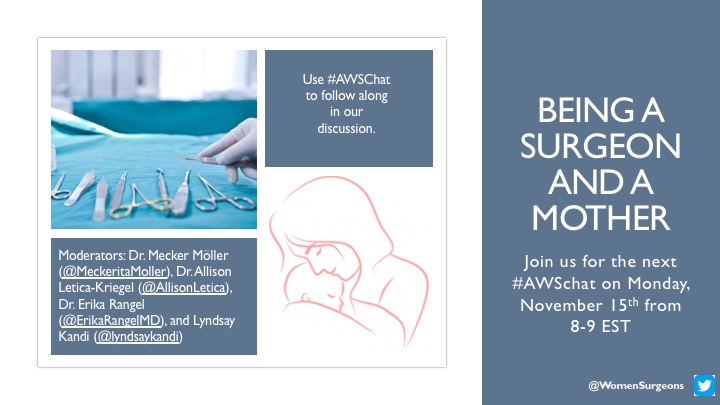
Join us tonight from 8-9 PM EST for Being a Surgeon and Mother with @ErikaRangelMD @MeckeritaMoller @AllisonLetica @lyndsaykandi. #AWSchat Looking forward to tonight's discussion!