We discuss the findings in relation to the issue of digital inequality and propose the importance of technology education programs and inclusive tech design practices.
New pub! We found that older adult population is less likely to reciprocate favors and to contribute information online compared to younger population (college students), primarily due to their unfamiliarity with communication technology.
https://t.co/HpZZ0qFtx6
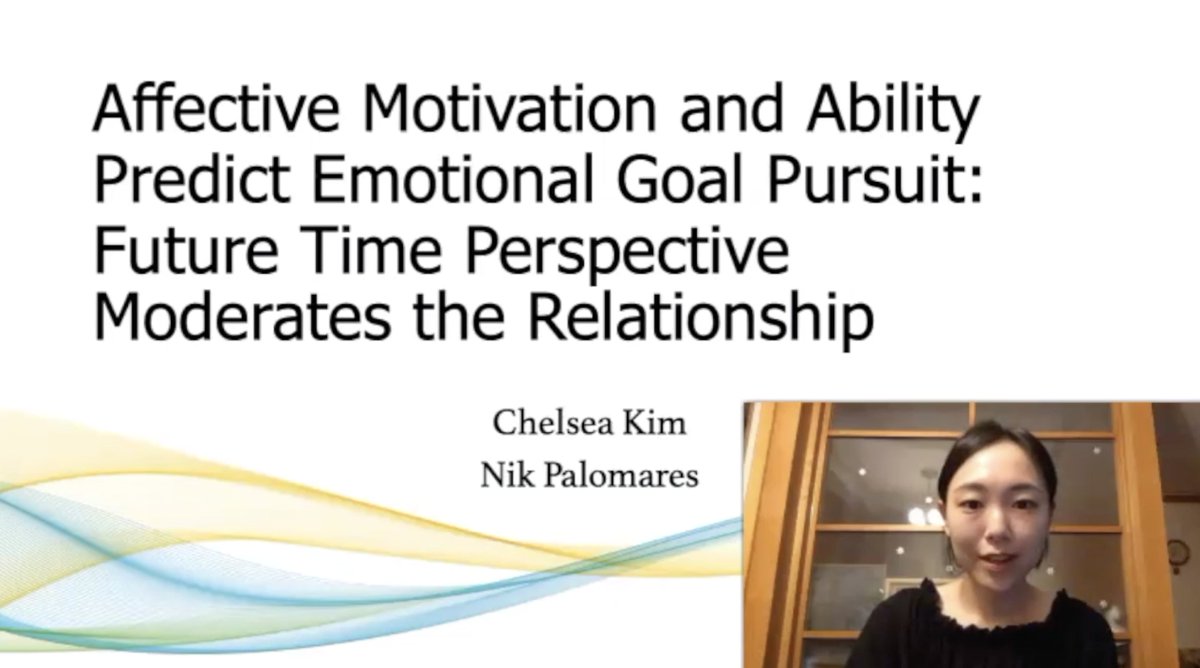
Hey #ica20 ! Check out my presentation about how people pursue emotional goals in their social life differently depending on how much time is left in their lives and how affectively motivated and capable they are #ica_ipc
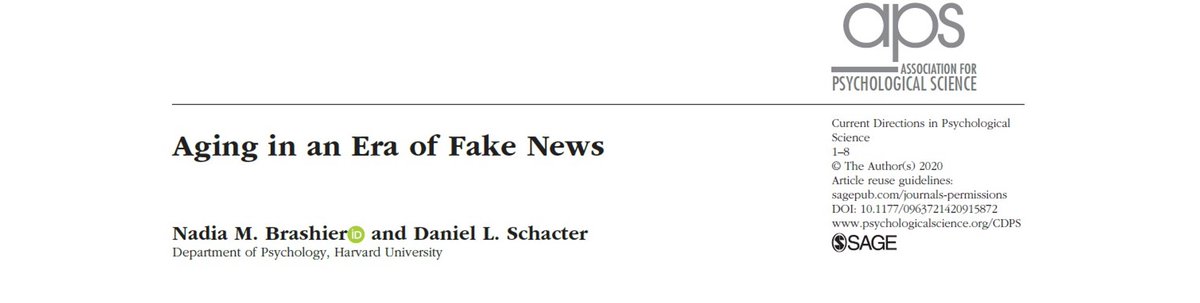
Why do older adults share the most fake news? In a new paper in Current Directions, I argue that cognitive declines are only part of the problem. 1/13
https://t.co/le3IiwcDay
1. Tomorrow I am going back to work after 2 weeks off, in which my family - myself (35/pregnant), husband (40) and daughter (2.5) - had Covid. I am grateful to be alive. We had "mild" cases, but it was a nasty bug that left me confined to bed for the better part of a week.
What most of us have probably not yet realized—but will soon—is that things won’t go back to normal after a few weeks, or even a few months of the coronavirus pandemic. Some things never will. https://t.co/dfc70L2ak8
"Research shows that during disasters, people can show strikingly altruistic behavior, but interventions by authorities can backfire if they fuel mistrust or treat the public as an adversary rather than people who will step up if treated with respect." https://t.co/kd5y2fR17c
Looking for social scientific research on risk, crisis, and disaster communication? Communication Research has organized a list of articles on exactly this topic, and made each open access: https://t.co/frXTZrfluH
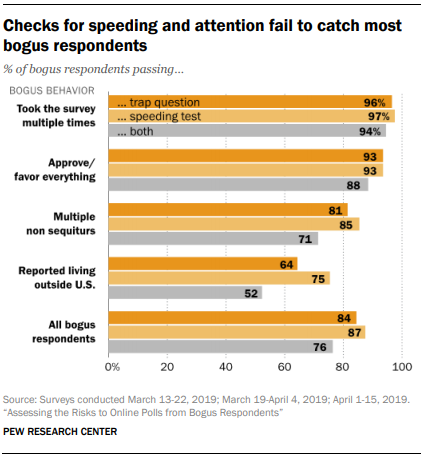
Our new study finds that two of the most common checks to detect low quality online interviews – flagging respondents who answer items too fast or fail an attention check (or "trap") question — are not very effective for identifying bogus respondents: https://t.co/5RFoJ5Wxls
Communication Monographs special issue call: Theorizing Social Media! Link now up on publisher's website. Let me know if you have any questions, and please consider submitting! https://t.co/FumltkcQPT
Today Microsoft announced an ambitious goal and a detailed plan to become carbon negative by 2030, remove our historical carbon emissions by 2050, and launch a $1B climate innovation fund. https://t.co/wrkkcRCntw
Check out our study of how different FB activities affect younger and older users' life satisfaction differently, just published in Computers in Human Behavior! https://t.co/CeRmSpfdbZ @cuihua
This is the largest age demographic by decade, and one of the most competitive.
Is extreme athleticism the new midlife crisis? https://t.co/YvfkLzAjvJ?
"Memories of happy experiences — especially ones that involve social interaction — seem to benefit people because they reshape how we see ourselves for the better." @markhamh strikes again! https://t.co/elgfCulTnH
Recent research by @KUnews Comm Prof Jeffrey Hall and co-authors suggests that abstaining from social media does not make people happier or less lonely. https://t.co/BuLqFqRGYe