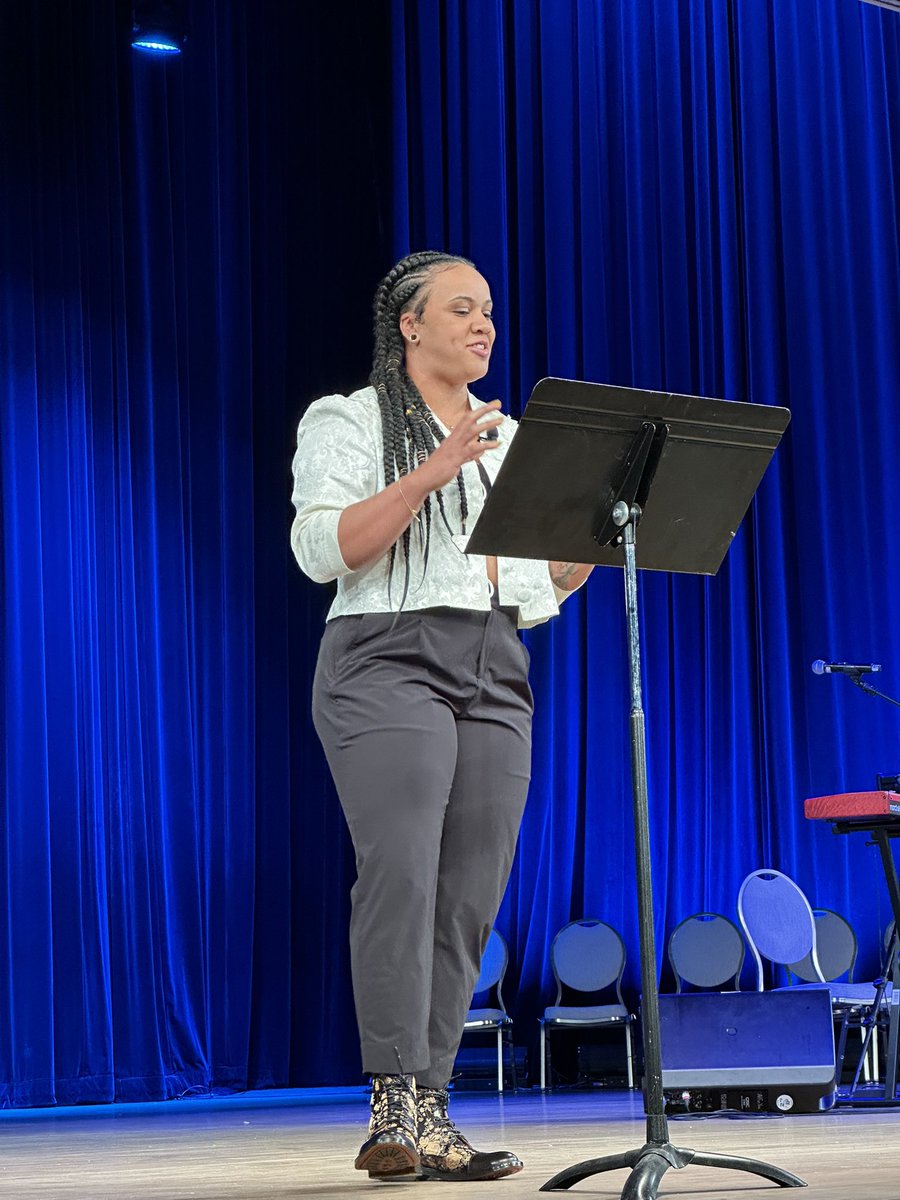
"Sanctified imagination: What is it like to be like Jesus when you are affirmed in two verses and then afflicted in the next?" - @stewartdantec at #EvolvingFaith2023
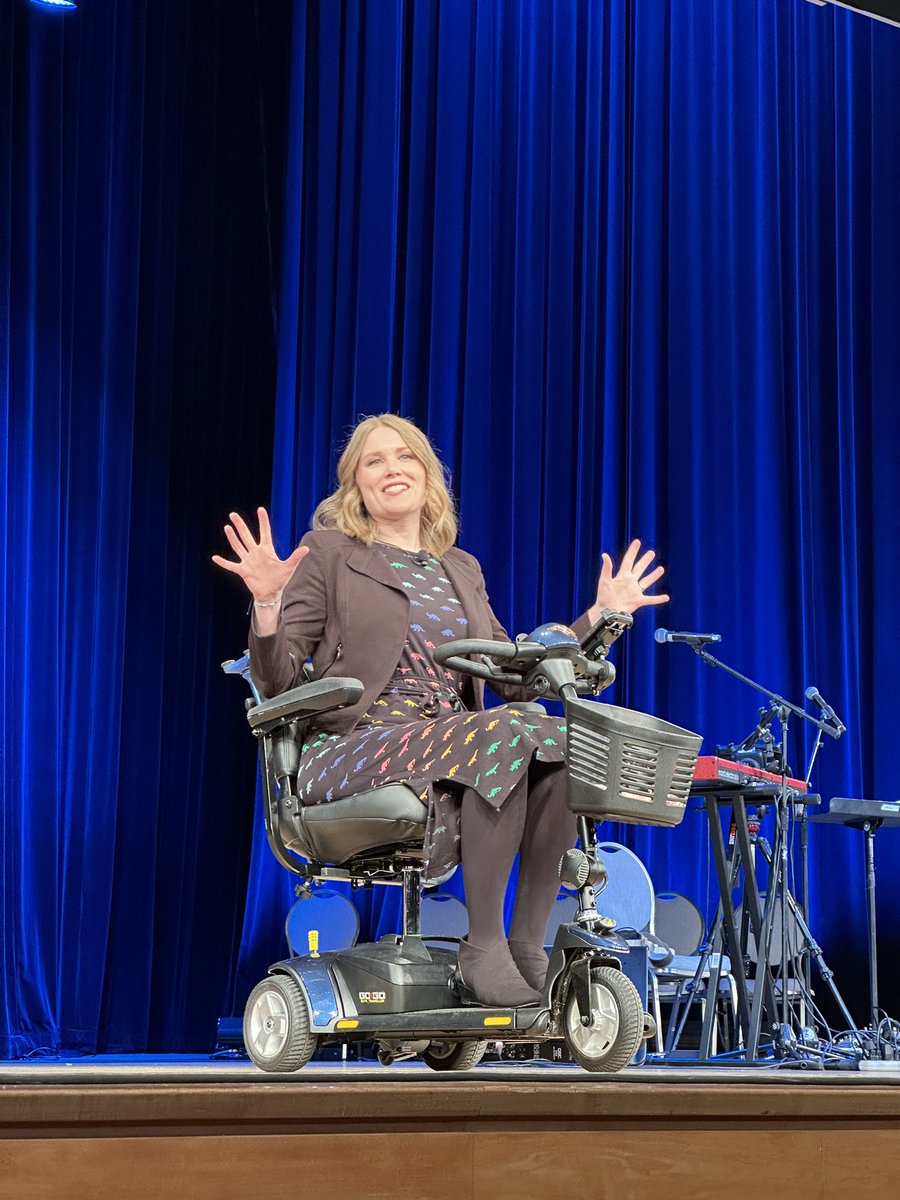
“Creation is crooked: the snaking branches of trees, the ragged edges of maple leaves. Creation is vibrantly crooked. The canvas of creation is wild, unruly, and exquisitely messy." - Dr. Amy Kenny at #EvolvingFaith2023
"Solidarity is not just a political term; it's theological. Solidarity as seeing God in one another, and then locking elbows with one another, standing with one another, protecting one another, building with one another." -@miheekimkort at #EvolvingFaith2023
“If listening well means serving as witness to life in this moment, earth can use some witnesses right now.” - Barbara Brown Taylor at #EvolvingFaith2023
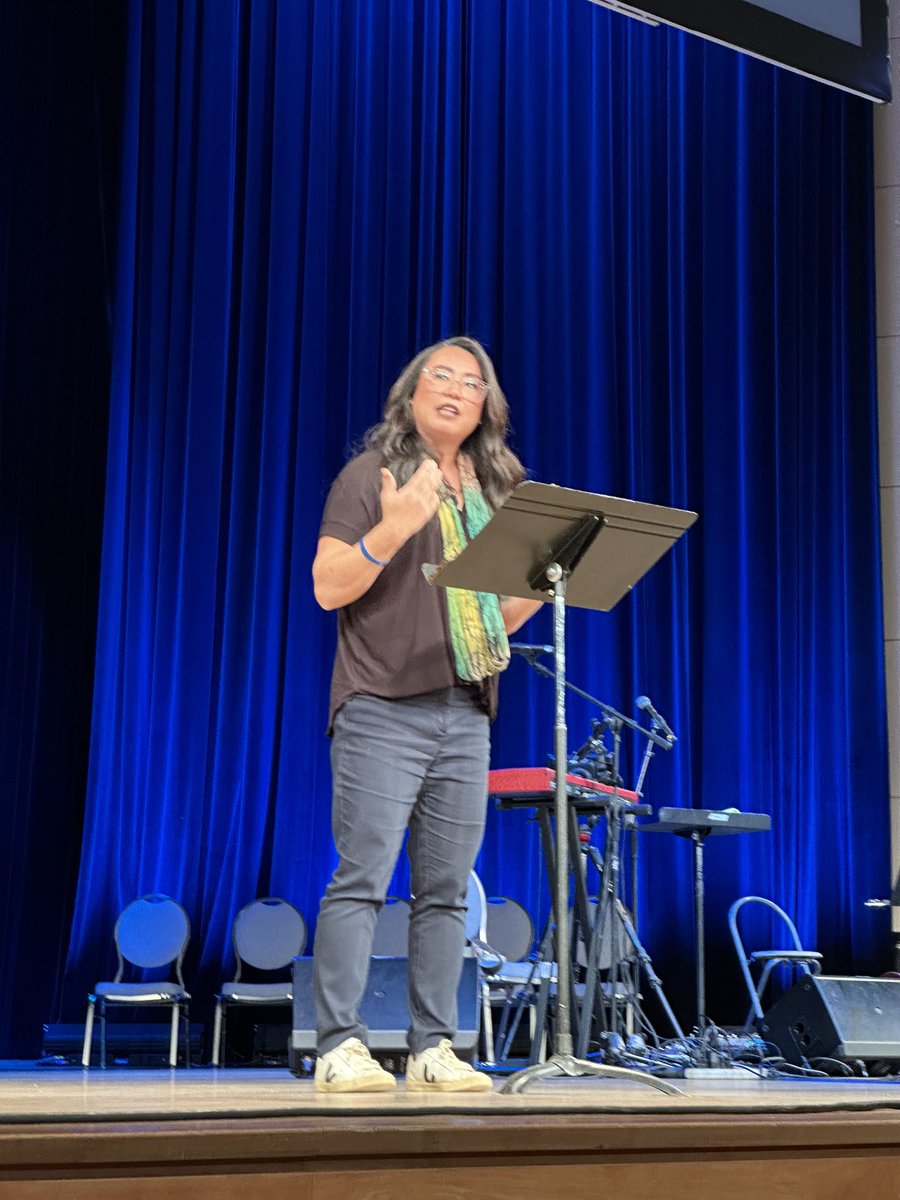
“I needed to grieve the death of this [white] theology. Because I was trying to be better and a more obedient lover of Jesus Christ, but I couldn't live my full whole self with this white Jesus male." - Dr. Joyce del Rosario at #EvolvingFaith2023
“What are needs that are usually met through religion? And how are those needs getting outside the institution? Are they being met well?” - The Rev. Nadia Bolz-Weber (@Sarcasticluther) #EvolvingFaith2023
“If you want to hear the story, you have to hear it from the people who have been oppressed. Many of the people who wrote the Scriptures were oppressed, but that's not who interpreted them.” - Rev. Dr. Randy Woodley at #EvolvingFaith2023
Tickets for the 2023 Evolving Faith in-person event in Minneapolis on Oct. 13-14 are now on sale! You’re invited to join us in making our own beautiful, diverse, and messy table in the wilderness. Get your ticket here: https://t.co/qmD4Mc4Z0j #EvolvingFaith2023
A lot of fear on the timeline tonight.
Seems like a good moment for us to remember this timeless banger CS Lewis left us with.
I know you know this one. It’s okay. Read it again. It helps. 💜:
“In one way we think a great deal too much of the atomic bomb. ‘How are we to live in an atomic age?’ I am tempted to reply: ‘Why, as you would have lived in the sixteenth century when the plague visited London almost every year, or as you would have lived in a Viking age when raiders from Scandinavia might land and cut your throat any night; or indeed, as you are already living in an age of cancer, an age of syphilis, an age of paralysis, an age of air raids, an age of railway accidents, an age of motor accidents.’
In other words, do not let us begin by exaggerating the novelty of our situation. Believe me, dear sir or madam, you and all whom you love were already sentenced to death before the atomic bomb was invented: and quite a high percentage of us were going to die in unpleasant ways. We had, indeed, one very great advantage over our ancestors—anesthetics; but we have that still. It is perfectly ridiculous to go about whimpering and drawing long faces because the scientists have added one more chance of painful and premature death to a world which already bristled with such chances and in which death itself was not a chance at all, but a certainty.
This is the first point to be made: and the first action to be taken is to pull ourselves together. If we are all going to be destroyed by an atomic bomb, let that bomb when it comes find us doing sensible and human things—praying, working, teaching, reading, listening to music, bathing the children, playing tennis, chatting to our friends over a pint and a game of darts—not huddled together like frightened sheep and thinking about bombs. They may break our bodies (a microbe can do that) but they need not dominate our minds.”







![EvolvFaith's tweet photo. “I needed to grieve the death of this [white] theology. Because I was trying to be better and a more obedient lover of Jesus Christ, but I couldn't live my full whole self with this white Jesus male." - Dr. Joyce del Rosario at #EvolvingFaith2023 https://t.co/0H31dIUlTo](https://pbs.twimg.com/media/F8a-ftZW8AAVGxi.jpg)