Neuroscience PhD. In pursuit of elegant, evidence-based solutions.
More than any other discipline, we should be thankful for the existence of cell biology.
New issue alert!👉https://t.co/uP2kI6DjtL
On the cover: Brann et al. demonstrate that each olfactory sensory neuron selects one of approximately 1,000 receptors to express based on its spatial position within the olfactory epithelium, thereby creating a stereotyped receptor map
The brain works hard to clear waste, and impairments are central to neurodegeneration. In @CellCellPress, Innovation Investigator @andcyang, w/ @NaliniRRao, Yuichi Chayama, and team map it from the inside out, following the brain's own proteins to see where waste actually goes.
@parmita Well, now you know that you have a big fan here (from a while back, at least 2 years). I do hope you find my responses engaging. I firmly believe that actively trying to resolve disagreements can be a catalyst for science progress (at the very least, for refining q's)!
@parmita I think the NanoDrop spectrophotometer is pretty spectacular. I remember how amazed I was when I realized it was possible to quantify my samples using just a couple of uL
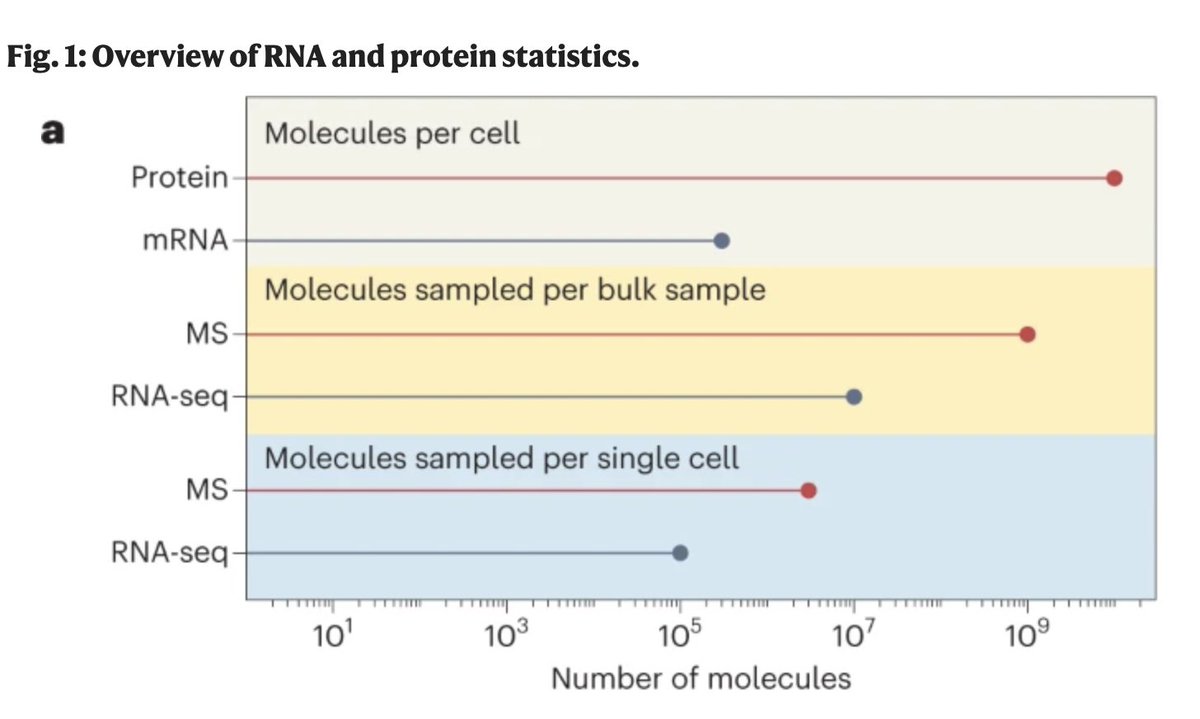
These numbers are key to understanding RNA and protein analysis.
The different counting statistics fundamentally shape technological challenges and opportunities.
https://t.co/UKsQ2AEuro
@parmita The question is why do you want to do that. Protein abundance in cells is a couple of orders of magnitude larger than RNA abundance. See recent post by @slavov_n
@parmita@markwbudde@JeffriesFreeway My reaction every time I read "proteins can't be PCRed" is, why on earth would you want to do such a thing? It's almost like the question itself makes little sense, PCR is a process developed for a very different type of molecule