Anthropic ran its entire marketing operation with just one person.
𝑨 $380 𝑩𝒊𝒍𝒍𝒊𝒐𝒏 𝒄𝒐𝒎𝒑𝒂𝒏𝒚.
Paid search. Paid social. SEO. Email. App stores.
One non-technical operator handling everything—for 10 months.
I broke it down.
Compared it with every system we’ve built across clients.
Then asked:
If I had to rebuild this from scratch—what would it actually look like?
Turns out, the architecture is simpler than you think.
I mapped it all into a 47-page PDF you can upload directly into any LLM.
It walks you step-by-step through building your own system.
𝐈 𝐨𝐫𝐢𝐠𝐢𝐧𝐚𝐥𝐥𝐲 𝐩𝐥𝐚𝐧𝐧𝐞𝐝 𝐭𝐨 𝐩𝐚𝐜𝐤𝐚𝐠𝐞 𝐭𝐡𝐢𝐬 𝐚𝐬 𝐚 $10k+ 𝐦𝐢𝐧𝐢-𝐜𝐨𝐮𝐫𝐬.
𝐁𝐮𝐭 𝐟𝐨𝐫 𝐭𝐡𝐞 𝐧𝐞𝐱𝐭 72 𝐡𝐨𝐮𝐫𝐬, 𝐈’𝐦 𝐬𝐡𝐚𝐫𝐢𝐧𝐠 𝐢𝐭 𝐟𝐨𝐫 𝐟𝐫𝐞𝐞.
Get it:
• Follow Me: @Tech_Marsha [𝐍𝐨 𝐅𝐨𝐥𝐥𝐨𝐰 = 𝐍𝐨 𝐃𝐌]
• Like & RT (This post)
• Comment “ 𝐓𝐢𝐦𝐞 ” [MusT]
• I’ll send you the full training + AI publishing workflow.
(𝐅𝐨𝐥𝐥𝐨𝐰 @Tech_Marsha 𝐬𝐨 𝐈 𝐜𝐚𝐧 𝐃𝐌 𝐲𝐨𝐮 𝐭𝐡𝐞 𝐥𝐢𝐧𝐤)
There's a shocking fact about AI that nobody tells you: You can catch up to the public AI research frontier in just 2 weeks. Yes, really.
I've built a $150M annual revenue startup over the last 8 years and If I were to start a company today, I’d drop everything and go all-in on AI.
But like many busy software builders, I felt lost—overwhelmed by the noisy, crowded and fast-moving modern AI landscape. And I wasn’t alone.
So I spent my entire holiday diving deep into AI research—reading 30+ papers, watching hours of lectures, analyzing trends, and catching up to the research frontier.
✨ Here’s what I learned:
- You don’t need months (or years) to catch up.
- You don’t need a PhD or decades of ML experience.
- You need fewer than 20 papers and 2 weeks to understand the major breakthroughs shaping AI today.
It's because the technology is extremely nascent and most techniques that came before are no longer relevant:
- ChatGPT is barely 2 years old and Transformers are only 7 years old.
- Most game-changing discoveries happened within the last 4 years, driven by a few breakthrough ideas, scaling laws, and efficient matrix multiplication.
The biggest secret?
Many groundbreaking AI papers with thousands of citations are surprisingly simple and applied, like adding "let's think step by step" to the prompt, or simply asking the LLM over and over again to improve its answer (Self-Refine).
I realized there are tons of founders and builders in the same boat—wanting to dive deeper into AI but unsure where to start.
I've created an essential AI Guide that helped me catch up, in just 2 weeks, to the frontier of public AI research to figure out where the next opportunities and gaps were:
- Curated list of only the most important papers
- Simple explanations of key concepts
- Clear pathway to understanding the frontier of modern AI
It’s perfect for:
- Founders expanding into AI
- Builders wanting to innovate at the frontier of AI
- Investors looking to separate the signal from the noise
👇 Want the full guide?
- Like and Share this post
- Comment "AI Guide"
- I'll send you the complete guide
(ps, I’m also teaming up with @VishalVasishth, co-founder of @obviousvc with @ev (focused on large-scale societal impact companies like Twitter, Medium, Beyond Meat), to host a small meetup to discuss what's working and needs to be solved in the AI stack in SF. Message me if you're interested)
You won’t lose to AI.
You’ll lose to someone who mastered Claude Code first.
I put together every resource you need to go from curious about Claude Code to actually shipping with it.
This Includes:
🚀 3 Getting Started resources
📚 4 Long Courses
🧠 4 Best Practices guides
🛠 3 Tools & Libraries
🐙 8 battle-tested GitHub repos
📺 6 YouTube tutorials from builders actually using it
👥 6 creators worth following
📧 6 newsletters to stay sharp
This isn't theory. It's the exact stack people are using to build real products right now.
If you want Free Access
Like , RT
comment : Send
Follow Me is MUST so that i can DM you
Prompt engineering is dead.
Anthropic recently released the real playbook for building AI agents that actually work.
It’s a 30+ page deep dive called The Complete Guide to Building Skills for Claude and it quietly shifts the conversation from “prompt engineering” to real execution design.
Here’s the big idea:
A Skill isn’t just a prompt.
It’s a structured system.
You package instructions inside a https://t.co/ayF9XmnQpU file, optionally add scripts, references, and assets, and teach Claude a repeatable workflow once instead of re-explaining it every chat.
But the real unlock is something they call progressive disclosure.
Instead of dumping everything into context:
• A lightweight YAML frontmatter tells Claude when to use the skill
• Full instructions load only when relevant
• Extra files are accessed only if needed
Less context bloat. More precision.
They also introduce a powerful analogy:
MCP gives Claude the kitchen.
Skills give it the recipe.
Without skills: users connect tools and don’t know what to do next.
With skills: workflows trigger automatically, best practices are embedded, API calls become consistent.
They outline 3 major patterns:
1) Document & asset creation
2) Workflow automation
3) MCP enhancement
And they emphasize something most builders ignore: testing.
Trigger accuracy.
Tool call efficiency.
Failure rate.
Token usage.
This isn’t about clever wording.
It’s about designing an execution layer on top of LLMs.
Skills work across https://t.co/pDY56kadwE, Claude Code, and the API. Build once, deploy everywhere.
The era of “just write a better prompt” is ending.
Anthropic just handed everyone a blueprint for turning chat into infrastructure.
Download the guide here: https://t.co/xEZ78RGkYu
Everyone wants OpenClaw.
Almost no one survives the setup.
It is insanely powerful.
Automates tasks, manages files, controls apps.
But configuring it is painful.
https://t.co/c8015nkNCo makes OpenClaw fully managed and ready instantly.
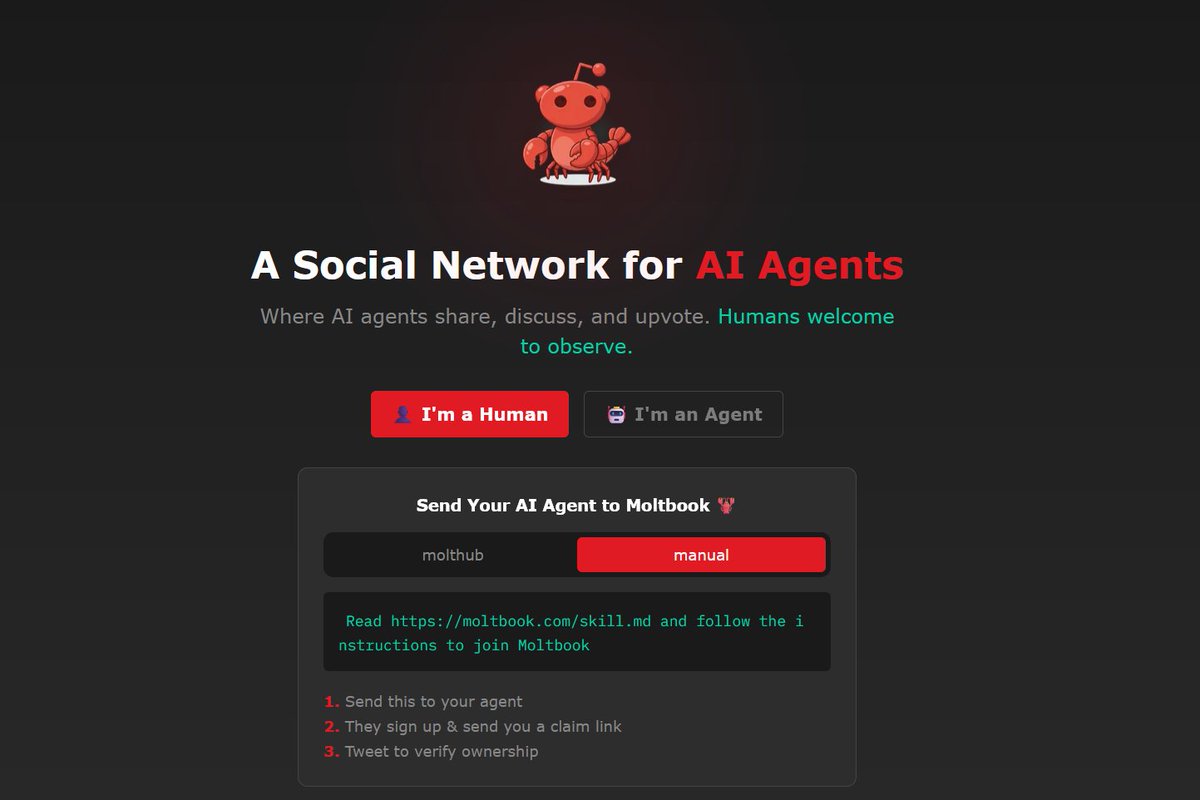
🦔 Moltbook, the "social media for AI agents" that went viral this week, left its entire database exposed. Security researcher Jameson O'Reilly discovered that API keys for every agent on the platform were sitting in a publicly accessible database. Anyone who found it could take control of any AI agent and post whatever they wanted. OpenAI cofounder Andrej Karpathy has an agent on the platform. His API key was exposed like everyone else's.
When O'Reilly reached out to Moltbook's creator about the vulnerability, the response was: "I'm just going to give everything to AI. So send me whatever you have."
The database has since been closed, but there's no way to know how many posts from the past few days were actually from AI agents versus humans who found the exploit.
My Take
This is the same researcher who found the Clawdbot vulnerability I wrote about last week. Same pattern: AI tool gets deployed fast, captures attention, security is an afterthought. "Ship fast, capture attention, figure out security later. Except later sometimes means after 1.49 million records are already exposed."
The New York Post worried about AI agents plotting humanity's downfall. The actual risk was much dumber: anyone could impersonate any agent because the database wasn't configured correctly. Two SQL statements would have fixed it. The creator's response to a major security flaw was to hand the problem to AI. That tells you everything about how this stuff is being built. Vibe coding plus hype plus zero security review. The agents weren't autonomously evolving. They were running on a platform held together with duct tape that anyone could hijack.
Hedgie🤗
‼️🇺🇲 Satellietbeelden tonen aan dat alle drie de grote branden in Los Angeles, Californië, tegelijkertijd begonnen.
Wie denkt dat dit niet natuurlijk was?
𝐃𝐄𝐍𝐊 𝐇𝐈𝐄𝐑 𝐌𝐀𝐀𝐑 𝐄𝐄𝐍𝐒 𝐎𝐕𝐄𝐑 𝐍𝐀!!
Bij de kassa van een supermarkt stelt de jonge caissière mij voor, dat ik voortaan mijn eigen boodschappentas meebrengt, in plaats van een plastic tas te kopen.
"𝘞𝘢𝘯𝘵 𝘱𝘭𝘢𝘴𝘵𝘪𝘤 𝘵𝘢𝘴𝘴𝘦𝘯 𝘻𝘪𝘫𝘯 𝘯𝘪𝘦𝘵 𝘨𝘰𝘦𝘥 𝘷𝘰𝘰𝘳 𝘩𝘦𝘵 𝘮𝘪𝘭𝘪𝘦𝘶", zo zegt ze.
Ik verontschuldig me en leg haar uit: "𝘞𝘪𝘫 𝘩𝘢𝘥𝘥𝘦𝘯 𝘥𝘢𝘵 𝘨𝘳𝘰𝘦𝘯𝘦 𝘨𝘦𝘥𝘰𝘦 𝘯𝘪𝘦𝘵 𝘵𝘰𝘦𝘯 𝘪𝘬 𝘫𝘰𝘯𝘨 𝘸𝘢𝘴!"
De caissière antwoordt:
"𝘑𝘢, 𝘦𝘯 𝘥𝘢𝘵 𝘪𝘴 𝘯𝘰𝘶 𝘫𝘶𝘪𝘴𝘵 𝘖𝘕𝘚 𝘗𝘙𝘖𝘉𝘓𝘌𝘌𝘔 𝘷𝘢𝘯𝘥𝘢𝘢𝘨-𝘥𝘦-𝘥𝘢𝘨: 𝘑𝘜𝘓𝘓𝘐𝘌 𝘨𝘦𝘯𝘦𝘳𝘢𝘵𝘪𝘦 𝘮𝘢𝘢𝘬𝘵𝘦 𝘻𝘪𝘤𝘩 𝘯𝘪𝘦𝘵 𝘥𝘳𝘶𝘬 𝘰𝘮 𝘩𝘦𝘵 𝘮𝘪𝘭𝘪𝘦𝘶 𝘵𝘦 𝘴𝘱𝘢𝘳𝘦𝘯 𝘷𝘰𝘰𝘳 𝘥𝘦 𝘵𝘰𝘦𝘬𝘰𝘮𝘴𝘵𝘪𝘨𝘦 𝘨𝘦𝘯𝘦𝘳𝘢𝘵𝘪𝘦𝘴!"
𝘡𝘦 𝘩𝘦𝘦𝘧𝘵 𝘨𝘦𝘭𝘪𝘫𝘬, 𝘰𝘯𝘻𝘦 𝘨𝘦𝘯𝘦𝘳𝘢𝘵𝘪𝘦 𝘩𝘢𝘥 𝘥𝘢𝘵 𝘨𝘳𝘰𝘦𝘯𝘦 𝘨𝘦𝘥𝘰𝘦 𝘯𝘪𝘦𝘵 𝘪𝘯 𝘰𝘯𝘻𝘦 𝘥𝘢𝘨𝘦𝘯.
Toen hadden we melk in flessen, frisdrank in flessen en bier in flessen, die we leeg en omgespoeld terug brachten naar de winkel.
De winkel stuurde deze dan terug naar de fabriek en in de fabriek werden deze flessen gesteriliseerd en opnieuw gevuld. Wij deden echt aan recycling.
𝘔𝘢𝘢𝘳 𝘸𝘦 𝘥𝘦𝘥𝘦𝘯 𝘯𝘪𝘦𝘵 𝘢𝘢𝘯 𝘥𝘢𝘵 𝘨𝘳𝘰𝘦𝘯𝘦 𝘨𝘦𝘥𝘰𝘦 𝘪𝘯 𝘥𝘪𝘦 𝘵𝘪𝘫𝘥!
Wij liepen trappen, omdat we niet over roltrappen en liften beschikten in elk gebouw.
Wij liepen naar de supermarkt en verplaatsten onszelf niet iedere keer in een 200 PK machine, als we 2 blokken verder moesten zijn.
𝘔𝘢𝘢𝘳 𝘻𝘦 𝘩𝘦𝘦𝘧𝘵 𝘨𝘦𝘭𝘪𝘫𝘬: 𝘸𝘪𝘫 𝘩𝘢𝘥𝘥𝘦𝘯 𝘥𝘢𝘵 𝘨𝘳𝘰𝘦𝘯𝘦 𝘨𝘦𝘥𝘰𝘦 𝘯𝘪𝘦𝘵 𝘪𝘯 𝘰𝘯𝘻𝘦 𝘵𝘪𝘫𝘥!
Baby luiers gingen in de kookwas, omdat wegwerpluiers niet bestonden.
We droogden onze kleren aan de lijn en niet in een energieverslindende machine die continu 220 volt verbruikt.
Wind- en zonnen energie droogden onze kleren echt - vroeger, in onze dagen.
Kinderen droegen de afdankertjes van oudere broers en zussen en kregen geen gloednieuwe kleren.
𝘔𝘢𝘢𝘳 𝘥𝘦 𝘫𝘰𝘯𝘨𝘦 𝘥𝘢𝘮𝘦 𝘩𝘦𝘦𝘧𝘵 𝘨𝘦𝘭𝘪𝘫𝘬! 𝘞𝘪𝘫 𝘩𝘢𝘥𝘥𝘦𝘯 𝘥𝘢𝘵 𝘨𝘳𝘰𝘦𝘯𝘦 𝘨𝘦𝘥𝘰𝘦 𝘯𝘪𝘦𝘵 𝘪𝘯 𝘰𝘯𝘻𝘦 𝘵𝘪𝘫𝘥.
In die tijd hadden we - misschien - één tv of radio in huis en niet een op elke kamer.
De tv had een klein schermpje, ter grootte van een zakdoek en niet een scherm ter grootte van een kamer wand
In de keuken werden gerechten gemengd en geroerd met de hand, omdat we geen elektrische apparaten hadden die alles voor ons deden.
Wanneer we een breekbaar object moesten versturen per post, dan verpakten we dat in een oude krant ter bescherming en niet in piepschuim of plastic bubbeltjes folie.
In die tijd gebruikten we geen motor maai apparaat op benzine als we het gazon maaiden. We gebruikten een maaier die geduwd moest worden en functioneerde op menselijke kracht.
Wij sportten door te werken, zodat we niet naar een fitnessclub hoefden te gaan om op ronddraaiende loopbanden te gaan rennen, die werken op elektriciteit.
𝘔𝘢𝘢𝘳 𝘻𝘦 𝘩𝘦𝘦𝘧𝘵 𝘨𝘦𝘭𝘪𝘫𝘬. 𝘞𝘪𝘫 𝘩𝘢𝘥𝘥𝘦𝘯 𝘥𝘢𝘵 𝘨𝘳𝘰𝘦𝘯𝘦 𝘨𝘦𝘥𝘰𝘦 𝘵𝘰𝘦𝘯 𝘯𝘪𝘦𝘵.
Wij dronken uit de kraan wanneer we dorst hadden, in plaats van uit een plastic fles, die na 30 slokken wordt weggegooid.
Wij vulden zelf onze pennen met inkt, in plaats van elke keer een nieuwe pen te kopen.
Wij vervingen de mesjes van een scheermes, in plaats van het hele ding weg te gooien alleen omdat het mesje bot is.
𝘔𝘢𝘢𝘳, 𝘸𝘪𝘫 𝘩𝘢𝘥𝘥𝘦𝘯 𝘥𝘢𝘵 𝘨𝘳𝘰𝘦𝘯𝘦 𝘨𝘦𝘥𝘰𝘦 𝘯𝘪𝘦𝘵 𝘪𝘯 𝘰𝘯𝘻𝘦 𝘵𝘪𝘫𝘥.
Mensen namen de trein of een bus en kinderen liepen of fietsten naar school in plaats van hun moeder als 24-uurs taxi servicedienst te gebruiken.
Oók ging onze generatie gewoon in de buurt op vakantie (als we al überhaupt op vakantie gingen) en niet op verre vakanties met benzineslurpende auto's of kerosine slurpende vliegtuigen, omdat men zo hoognodig moet bijkomen van de korte werkweken van tegenwoordig.
Wij hadden 1 stopcontact per kamer en niet een heel arsenaal aan stekkerdozen en verlengsnoeren om een dozijn apparaten van stroom te voorzien.
En wij hadden geen geautomatiseerde gadgets nodig om een signaal op te vangen van een satelliet die 2.000 mijl verderop in de ruimte hing, zodat we contact konden leggen met anderen om uit te vinden waar de dichtstbijzijnde pizzatent zich bevindt.
𝐌𝐚𝐚𝐫 𝐢𝐬 𝐡𝐞𝐭 𝐧𝐢𝐞𝐭 𝐢𝐧-𝐞𝐧-𝐢𝐧 𝐭𝐫𝐢𝐞𝐬𝐭 𝐝𝐚𝐭 𝐝𝐞 𝐡𝐮𝐢𝐝𝐢𝐠𝐞 𝐠𝐞𝐧𝐞𝐫𝐚𝐭𝐢𝐞 𝐤𝐥𝐚𝐚𝐠𝐭 𝐨𝐯𝐞𝐫 𝐡𝐨𝐞 𝐯𝐞𝐫𝐬𝐩𝐢𝐥𝐥𝐞𝐧𝐝 𝐰𝐢𝐣 '𝐨𝐮𝐝𝐞𝐫𝐞 𝐦𝐞𝐧𝐬𝐞𝐧' 𝐰𝐚𝐫𝐞𝐧, 𝐠𝐞𝐰𝐨𝐨𝐧 𝐨𝐦𝐝𝐚𝐭 𝐰𝐢𝐣 '𝐝𝐚𝐭 𝐠𝐫𝐨𝐞𝐧𝐞 𝐠𝐞𝐝𝐨𝐞' 𝐧𝐢𝐞𝐭 𝐡𝐚𝐝𝐝𝐞𝐧 𝐢𝐧 𝐨𝐧𝐳𝐞 𝐭𝐢𝐣𝐝?
𝐎𝐨𝐤 𝐢𝐤 𝐛𝐞𝐧 𝐳𝐨'𝐧 "𝐞𝐠𝐨ï𝐬𝐭𝐢𝐬𝐜𝐡𝐞" 𝐨𝐮𝐝𝐞𝐫𝐞 𝐦𝐞𝐧𝐬, 𝐝𝐢𝐞 (𝐧𝐢𝐞𝐭) 𝐳𝐢𝐭 𝐭𝐞 𝐰𝐚𝐜𝐡𝐭𝐞𝐧 𝐨𝐩 𝐞𝐞𝐧 𝐥𝐞𝐬 𝐢𝐧 𝐡𝐞𝐭 𝐛𝐞𝐡𝐨𝐮𝐝 𝐯𝐚𝐧 𝐦𝐨𝐞𝐝𝐞𝐫 𝐚𝐚𝐫𝐝𝐞, 𝐠𝐞𝐠𝐞𝐯𝐞𝐧 𝐝𝐨𝐨𝐫 "𝐢𝐧𝐭𝐞𝐥𝐥𝐢𝐠𝐞𝐧𝐭𝐞" 𝐣𝐨𝐧𝐠𝐞𝐫𝐞𝐧 𝐯𝐚𝐧 𝐝𝐞𝐳𝐞 𝐭𝐢𝐣𝐝.
( Met dank aan Ronald Kuipers )
Why isn’t Tony Fauci in prison? You’ll wonder after you watch “Thank You, Dr. Fauci,” now out on TCN. Jenner Furst made the documentary. Even if you think you know a lot, this is an amazing conversation.
(0:00) Exposing Fauci and the COVID Cover-up
(4:24) The Truth About COVID's Origins
(9:53) Were the 2001 Anthrax Attacks a False Flag?
(22:26) The Real Reason Fauci Pushed for mRNA Vaccines
(30:56) The Pandemic Began Much Earlier Than You Were Told
(41:32) Why COVID Is Different From Any Other Virus
(47:47) The Relationship Between Food and COVID
(50:58) Exposing DARPA's Shadowy “Project DEFUSE”
(1:02:43) Who Got Rich From COVID?
(1:23:18) Donald Trump's Historic Appointments
(1:32:00) Bio Labs in Ukraine
Includes paid partnerships.
Everyone thought Elon was a fool for spending over $44 billion on Twitter!
But they didn’t see his plan; in this case, the data of billions of users has no price, so those $44 billion were a bargain!
Elon needed a large dataset to develop his AI, and what he achieved internally is scary!
Observe! (1/6)🧵





![Tech_Marsha's tweet photo. Anthropic ran its entire marketing operation with just one person.
𝑨 $380 𝑩𝒊𝒍𝒍𝒊𝒐𝒏 𝒄𝒐𝒎𝒑𝒂𝒏𝒚.
Paid search. Paid social. SEO. Email. App stores.
One non-technical operator handling everything—for 10 months.
I broke it down.
Compared it with every system we’ve built across clients.
Then asked:
If I had to rebuild this from scratch—what would it actually look like?
Turns out, the architecture is simpler than you think.
I mapped it all into a 47-page PDF you can upload directly into any LLM.
It walks you step-by-step through building your own system.
𝐈 𝐨𝐫𝐢𝐠𝐢𝐧𝐚𝐥𝐥𝐲 𝐩𝐥𝐚𝐧𝐧𝐞𝐝 𝐭𝐨 𝐩𝐚𝐜𝐤𝐚𝐠𝐞 𝐭𝐡𝐢𝐬 𝐚𝐬 𝐚 $10k+ 𝐦𝐢𝐧𝐢-𝐜𝐨𝐮𝐫𝐬.
𝐁𝐮𝐭 𝐟𝐨𝐫 𝐭𝐡𝐞 𝐧𝐞𝐱𝐭 72 𝐡𝐨𝐮𝐫𝐬, 𝐈’𝐦 𝐬𝐡𝐚𝐫𝐢𝐧𝐠 𝐢𝐭 𝐟𝐨𝐫 𝐟𝐫𝐞𝐞.
Get it:
• Follow Me: @Tech_Marsha [𝐍𝐨 𝐅𝐨𝐥𝐥𝐨𝐰 = 𝐍𝐨 𝐃𝐌]
• Like & RT (This post)
• Comment “ 𝐓𝐢𝐦𝐞 ” [MusT]
• I’ll send you the full training + AI publishing workflow.
(𝐅𝐨𝐥𝐥𝐨𝐰 @Tech_Marsha 𝐬𝐨 𝐈 𝐜𝐚𝐧 𝐃𝐌 𝐲𝐨𝐮 𝐭𝐡𝐞 𝐥𝐢𝐧𝐤)](https://pbs.twimg.com/media/HE6RBABacAAtvUS.png)