I’m not an expert on bad first dates, but this might be the funniest 😂
Jay Leno went into the audience to find the most embarrassing first date that a woman ever had. The winner described her worst first date experience. There was absolutely no question as to why her tale took the prize!
She said it was midwinter, snowing and quite cold... and the guy had taken her skiing in the mountains outside Salt Lake City, Utah. It was a day trip (no overnight).
They were strangers, after all, and had never met before. The outing was fun but relatively uneventful until they were headed home late that afternoon. They were driving back down the mountain when she gradually began to realize that she should not have had that extra latte !!
They were about an hour away from anywhere with a restroom and in the middle of nowhere! Her companion suggested she try to hold it, which she did for a while.
Unfortunately, because of the heavy snow and slow going, there came a point where she told him that he had better stop and let her go beside the road, or it would be the front seat of his car.
They stopped and she quickly crawled out beside the car, yanked her pants down and started. In the deep snow she didn't have good footing, so she let her butt rest against the rear fender to steady herself.
Her companion stood on the side of the car watching for traffic and indeed was a real gentleman and refrained from peeking. All she could think about was the relief she felt despite the rather embarrassing nature of the situation.
Upon finishing, however, she soon became aware of another sensation. As she bent to pull up her pants, the young lady discovered her buttocks were firmly glued against the car's fender.
Thoughts of tongues frozen to poles immediately came to mind as she attempted to disengage her flesh from the icy metal. It was quickly apparent that she had a brand new problem, due to the extreme cold.
Horrified by her plight and yet aware of the humor of the moment, she answered her date's concerns about' what is taking so long' with a reply that indeed, she was 'freezing her butt off' and in need of some assistance!
He came around the car as she tried to cover herself with her sweater and then, as she looked imploringly into his eyes, he burst out laughing. She too got the giggles and when they finally managed to compose themselves, they assessed her dilemma. Obviously, as hysterical as the situation was, they also were faced with a real problem.
Both agreed it would take something hot to free her chilly cheeks from the grip of the icy metal! Thinking about what had gotten her into the predicament in the first place, both quickly realized that there was only one way to get her free. So, as she looked the other way, her first-time date proceeded to unzip his pants and pee her butt off the fender.
As the audience screamed in laughter, she took the Tonight Show prize hands down. Or perhaps that should be 'pants down'. And you thought your first date was embarrassing.
Jay Leno's comment..... 'This gives a whole new meaning to being pissed off.'
Oh, and how did the first date turn out? He became her husband and was sitting next to her on the Leno show. 😂
Sorry, aber als Journalistin muss ich ganz klar immer wieder betonen: Es geht nicht um den „Schutz von Kindern“. Denn SO wie der DSA gestaltet ist, kann man nur zum Schluss kommen, dass es eindeutig um eine Kontrolle über alle EU-Bürger geht.
Ich verstehe die Debatte nicht: Den Krankenkassen fehlen bis 2030 rund 40 Milliarden Euro, heißt es. Gleichzeitig erfahren wir, dass die Bundesregierung für Bürgergeldempfänger pro Jahr 12 Milliarden Euro zu wenig an die Kassen zahlt. Viermal 12 sind 48 Milliarden. Das Loch wäre also gestopft, wenn die Bundesregierung für die Bürgergeldempfänger, die sie alimentiert, die vollen Beiträge in die Krankenkassen zahlt. Das will sie nicht, sie will die Kosten auf alle Beitragszahler umverteilen. Das ist die Wahrheit.
.@Frollein_VogelV über die geschichte mit der 🥝.
aktueller status: transfeindliche, rechtsextreme doghwhistle, dessen verwendung als verdachtsfall meldestellen oder den behörden gemeldet werden soll. 🙄
‚wenn schon ein so harmloses symbol wie die kiwi durch framing, durch wiederholung, durch moralisches aufladung, durch die zusammenarbeit von social media, medien [und] institutionen zu einem so gefährlichen symbol gemacht werden kann, dann kann das eigentlich mit jedem zeichen, jeder aussagen und jeder anderen person auch geschehen.‘
ja. und das ist das kafkaesk bedrohliche an der aktuellen situation.
Jeffrey Epstein hatte über 40 Bankkonten bei der Deutschen Bank – sein Pädo-Netzwerk hat die EU offenbar nicht interessiert. Aber jetzt will genau diese EU unsere Chats und sozialen Medien massenüberwachen – natürlich „zum Schutz der Kinder“. Na klar!
Ursula von der Leyen stand bei der Europawahl auf keinem Stimmzettel. Der Bürger hatte nie die Wahl, sie zu wählen oder abzuwählen. Dass Merkel im Hinterzimmer bei der polnischen PiS um Stimmen betteln musste, um sie durchzudrücken, entlarvt das Demokratie-Defizit der EU. Das ist keine Wahl, das ist Postenschach!
Kein Wahlkampf, kein Stimmzettel, keine Legitimation: Ursula von der Leyen ist das Ergebnis von Merkels Hinterzimmer-Deals, nicht des Wählerwillens. Eine EU, die sich ihre Chefs selbst aussucht, statt sie wählen zu lassen, ist undemokratisch. Punkt.
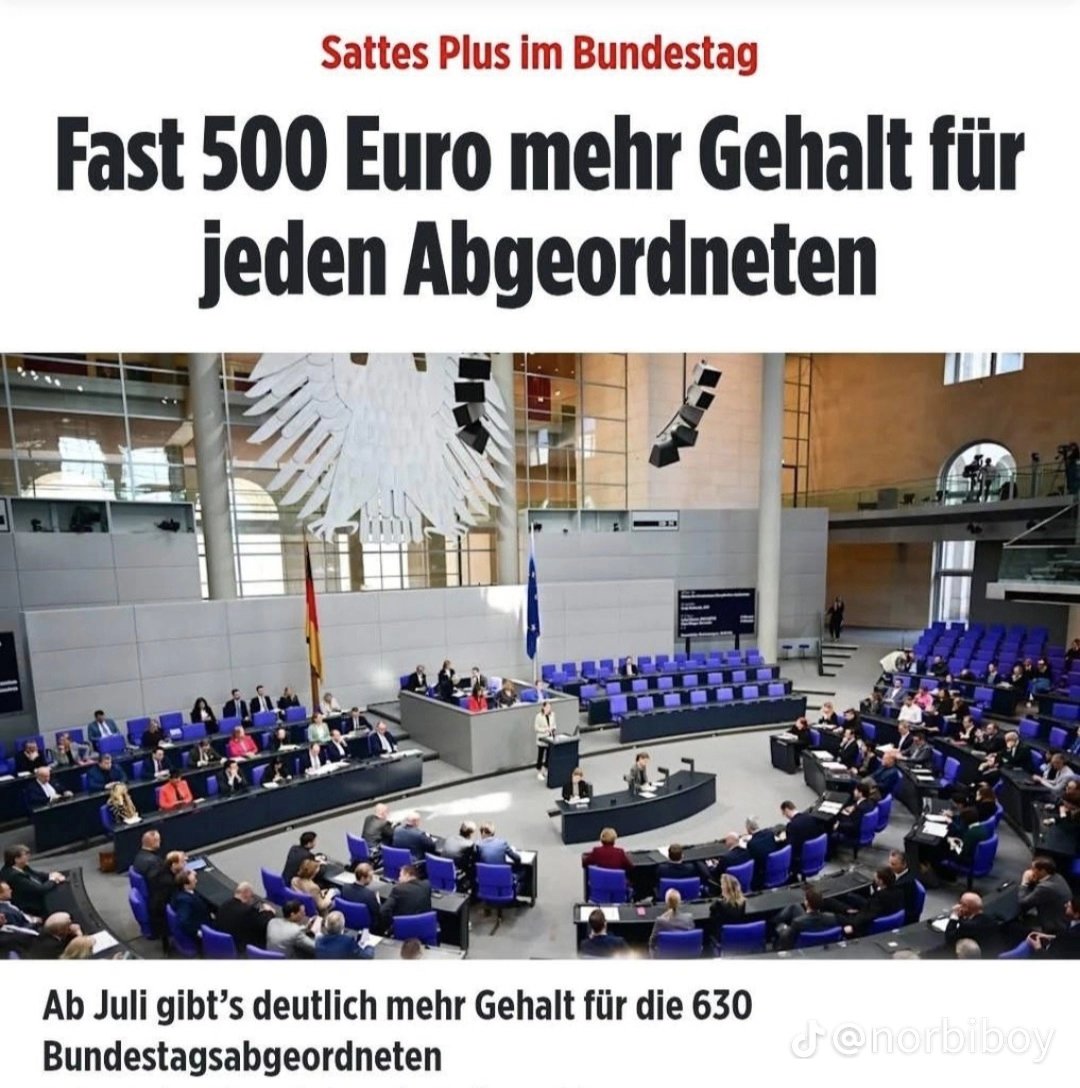
Ab Juli genehmigen sich die 630 Bundestagsabgeordneten also rund 500 Euro mehr im Monat. Ein nahezu artistischer Akt politischer Selbstfürsorge, während die Bevölkerung weiter zum Belastungs-Jonglieren eingeladen wird. Und das Absurde daran: Rechtlich könnten sie auf die 500 Euro sogar verzichten. Einfach so. Ohne Drama, ohne Gesetzesänderung, ohne Tränen. Aber warum sollte man verzichten, wenn man stattdessen demonstrieren kann, wie mühelos man die eigene Brieftasche polstert, während man anderen erklärt, dass "alle ihren Beitrag leisten müssen". Ein politisches Kunststück, so bitter-komisch, dass es fast schon als Satire durchgehen könnte – wäre es nicht real.😌
Man hätte nie einen alten Mann zum Bundeskanzler wählen sollen, der nur gewählt werden wollte, um einmal im Leben Bundeskanzler zu sein.
#Merz scheint gar nicht die Ambitionen zu haben, regieren zu wollen und Deutschland besser zu machen. #CDU
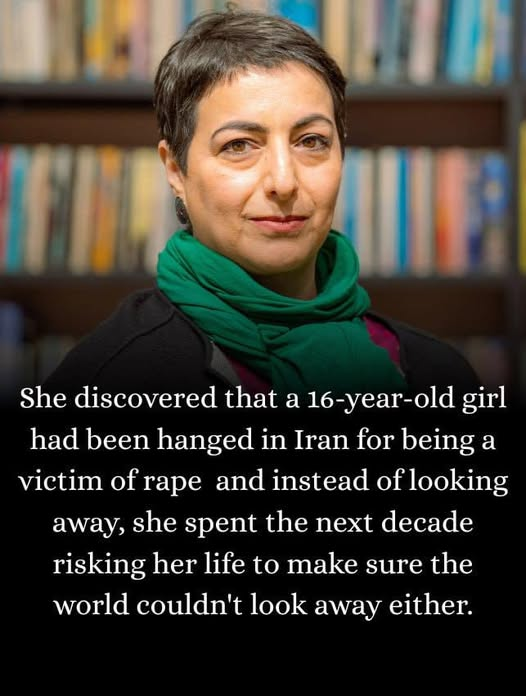
n 2004, a journalist named Asieh Amini came across a story from a small town in northern Iran.
A 16-year-old girl named Atefeh Sahaaleh had been publicly hanged.
The official charge: "acts incompatible with chastity."
The reality, which Amini uncovered through careful, dangerous investigation: Atefeh had been repeatedly raped by a neighbor and other men beginning when she was nine years old. She had been neglected by her family and paid to keep silent — money she used simply to survive. At 13, Iran's morality police arrested her. A judge sentenced her to one hundred lashes. Under Iranian law, a woman could be sentenced to lashings three times — the fourth offense carried the death penalty.
She was 16 when they hanged her.
Amini wrote the story. Her newspaper refused to publish it. Another paper refused as well. A women's publication finally agreed to run an edited version.
She kept going.
Born in 1973 in the Mazandaran province of northern Iran — one of four sisters who spent their childhood painting, reading, and playing outdoors — Amini had built her career as a journalist through the brief flowering of press freedom following President Khatami's election in 1997, editing a women's affairs newspaper called Zan until hardline clerics shut it down in 1999. She had known the Iranian state's capacity for silencing voices. She had not yet known the full depth of what it was capable of doing to girls.
After Atefeh, she knew.
Case after case began reaching her. Leyla — a 19-year-old with diminished mental capacity, herself a victim of child rape, facing execution. The judge in her case told Amini plainly that Leyla was a threat to family life because of her "sexual availability." Amini enlisted human rights lawyer Shadi Sadr, published Leyla's story, drew international attention, and helped get her out of prison and into the care of a women's organization in Tehran.
One life at a time. One story at a time. Against a legal system that had no interest in being exposed.
In 2006, Amini discovered that despite a government moratorium on stoning — a directive issued in 2002 that carried no binding legal force — a man and woman had been stoned to death in Mashhad for adultery. The judge claimed he answered only to Sharia law. The Ministry of Justice denied the stoning had happened. State media attacked Amini's credibility.
That October, Amini and Sadr co-founded the Stop Stoning Forever (SSF) campaign — systematically documenting stonings occurring across Iran and sharing their findings through colleagues abroad who could publish without fear of arrest.
The state took notice.
In March 2007, Amini was among 33 women arrested during a silent sit-in at a Tehran courthouse. During interrogation she realized — with the specific clarity of someone who had been investigating surveillance — that the police had been investigating her for some time. She was released after five days. Her phones, she was certain, were tapped. Her movements tracked.
She kept reporting.
The sustained pressure of the work eventually took its physical toll — stress-induced symptoms that included headaches, vision problems, and muscle paralysis forced her to step back briefly while her partners reorganized the campaign from outside Iran.
She recovered. She continued.
In 2009, following the disputed reelection of Mahmoud Ahmadinejad, Amini was among the demonstrators beaten in the protests that swept Iran. She continued reporting — under pseudonyms, in the chaos. Then came the warning: police were questioning prisoners about her. She needed to leave.
She had been invited to a poetry festival in Sweden.
She took her daughter Ava and she went.
They did not come back.
Amini settled eventually in Norway, supported by the International Cities of Refuge Network — a program that protects writers facing state persecution. From exile, she continued her advocacy, published two books of Norwegian-language poetry, and kept doing what she had always done: making sure that the stories of girls and women the Iranian state wanted silenced were heard by the world instead.
She was awarded the Human Rights Watch Hellmann/Hammett Award in 2009 — the same year she fled. The Oxfam Novib/PEN Award in 2012. The Ord i Grenseland prize in 2014.
Asieh Amini picked up a pen in a country that punished women for existing outside the law's narrow definitions — and she used it, at enormous personal cost, to push against every wall that pen could reach.
The girl from Mazandaran who dreamed of becoming a painter and writer became something rarer and harder:
A witness who refused to look away.
And a voice that — no matter how many times the state tried to silence it — kept finding new ways to be heard.
@rosenbusch_ Man stelle sich vor, wie lange es wohl gedauert hätte, wenn die Mitglieder der Weißen Rose ihre Briefe mit Klarnamen unterzeichnet hätten?! https://t.co/bWkBg2LuXJ
Bill Gates is calling for biometric digital IDs to be tied directly to your bank account and payment systems so they can monitor your health, track farmers, and manage climate policy. That is exactly the kind of centralized control free people are supposed to reject. When your identity, your money, and your daily life are all linked in one system, you are no longer free. #wakeup