Spent the break in Nigeria, where I also sat down for this podcast with @thisisone2one on the health sector and my time at NCDC.
Thanks @drtsbey for pushing :).
https://t.co/t3DV3MEvG7
#Ituri 🇨🇩. À l'occasion de la rentrée scolaire, 500 élèves de l’Ecole Primaire Fataki ont été mobilisés avec leurs enseignants pour renforcer la riposte contre #Bundibugyo : détection précoce, lavage des mains, acceptation de la réalité d'Ebola & diffusion de messages préventifs.
Do you have deep expertise in emerging zoonotic diseases & high-impact epidemic threats?
Are you passionate about global health security, outbreak preparedness & epidemic response?
Do you feel you are ready to lead @WHO’s work in this space?
Apply now👇🏿
https://t.co/9xOawCqxCU
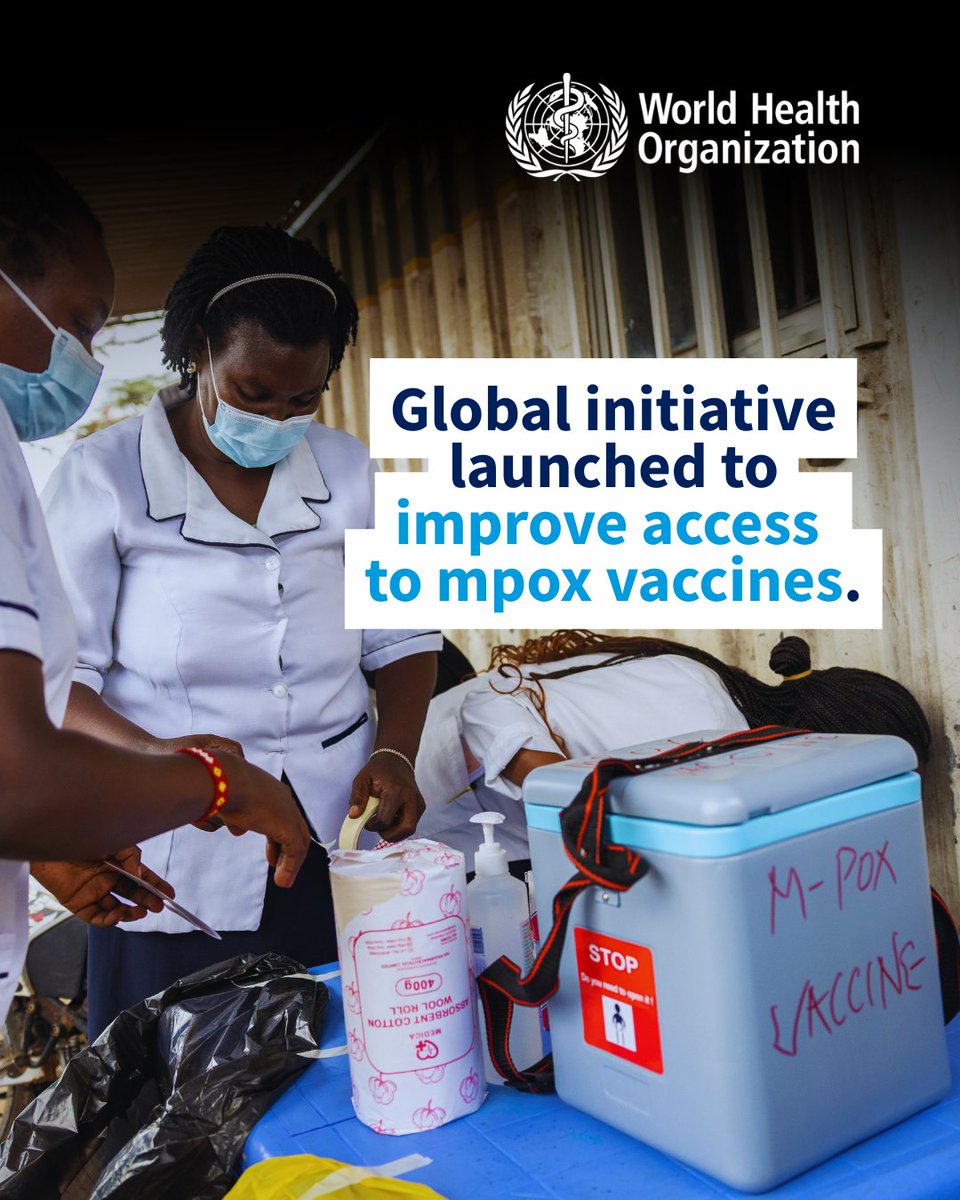
The new International Coordinating Group initiative to improve access to #mpox vaccines will
✋ help countries stop mpox outbreaks.
🛡️ protect those most at risk.
🌍 reduce the impact of future epidemics.
A global initiative to establish a stockpile of mpox vaccines was launched on 27 August. The initiative ensures that countries have access to vaccines when responding to mpox outbreaks.
Mpox is a viral disease that continues to cause outbreaks globally, with two-thirds of reported cases occurring in the African Region.
Learn more: https://t.co/I2iJsK6uWY
Five years ago, we set out to build something new in Berlin.
Today, the @WHO Hub for Pandemic & Epidemic Intelligence supports countries worldwide to rapidly detect & respond to health threats.
I'm proud of what we achieved together.
More from @devex ⬇️
https://t.co/EWCmNv2ITH
🆕guidance by @WHO Strategic Advisory Group of Experts on Immunization (SAGE) on the use of Ervebo during the Bundibugyo virus disease outbreak in #DRC🇨🇩.
More here ➡️: https://t.co/haQb04Uk2l
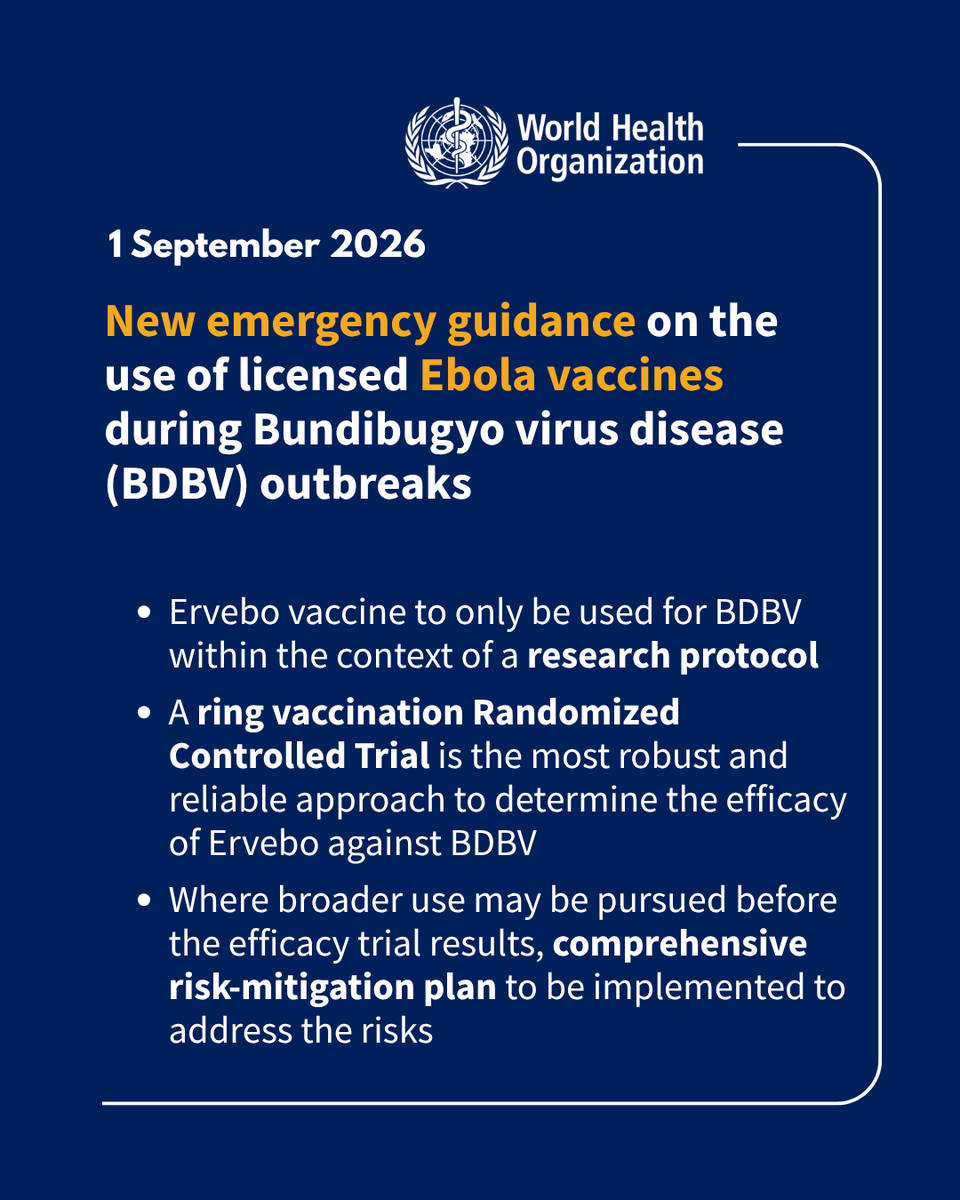
WHO has issued new emergency guidance on the use of licensed Ebola vaccines during Bundibugyo virus disease (BDBV) outbreaks, following an Extraordinary Meeting of the Strategic Advisory Group of Experts on Immunization.
Since evidence remains insufficient to support the programmatic use of the Ervebo vaccine for the prevention of BDBV disease, WHO recommends Ervebo should only be used for BDBV within the context of a research protocol.
Read more: https://t.co/rlEqw01v4d
Sad days for the @WHO family, with the sudden passing of Dr Vasee Moorthy.
Vasee joined WHO in 2009 and made a major contribution to advancing the Organization’s work on clinical trials, especially in low- and middle-income countries.
Most recently, he was leading the R&D Blueprint for Epidemics, which included advancing trials of vaccines and therapeutics for the current #Ebola epidemic.
Vasee was undertaking this work with passion and commitment, bringing partners together to advance trials as fast as possible.
The fact that we have three vaccines and three therapeutics now in trials is due in no small part to Vasee’s determination and energy.
Beyond his professional accomplishments, Vasee will be remembered for his kindness, humility and collegial spirit.
My deepest sympathies are with his family and with all WHO colleagues who knew him and worked with him.
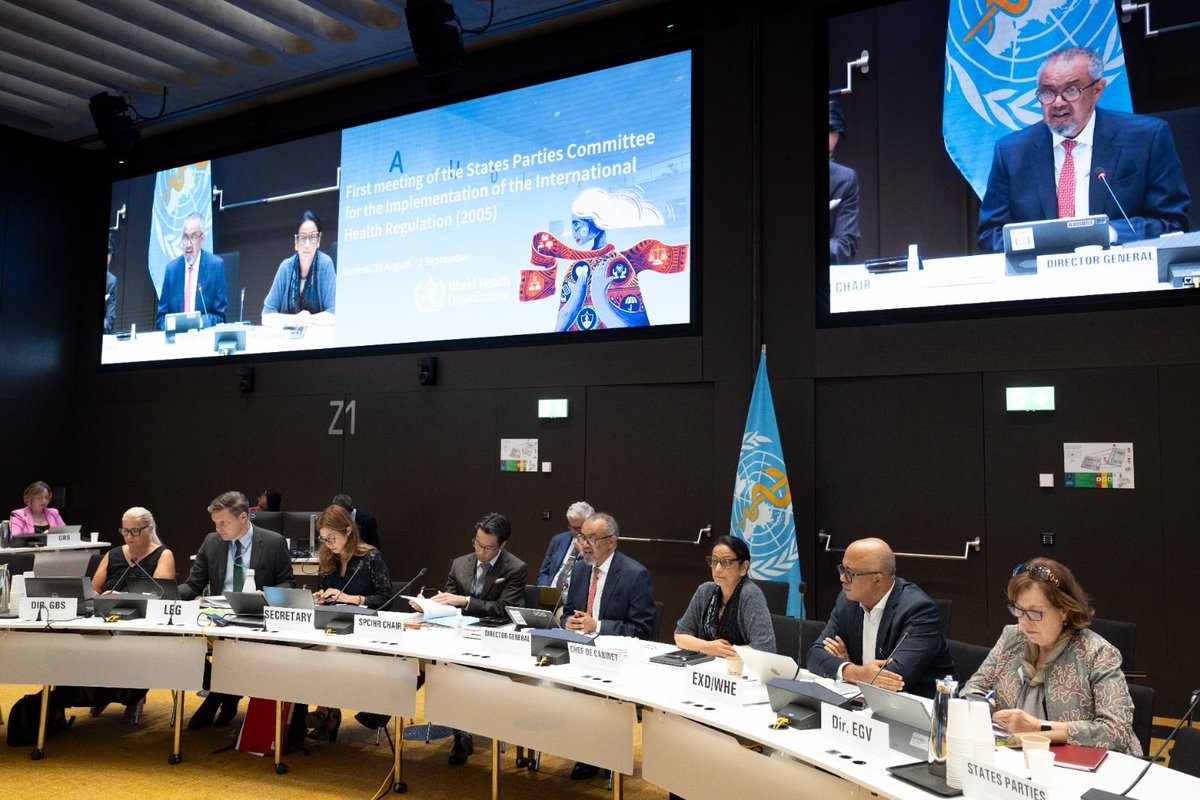
Health threats do not respect borders. From disease outbreaks and humanitarian crises to climate-related shocks, countries are increasingly confronted with risks that no nation can tackle alone.
At the first meeting of the States Parties Committee for implementation of the International Health Regulations (#IHR), I reiterated the importance of collective action to strengthen county abilities to prevent, detect and respond to public health threats while advancing global health security.
This requires:
- Country-level implementation to translate commitments into action
- Measurable progress to drive accountability
- Equity and solidarity to ensure no country is left behind
- Interoperability and coordination to avoid fragmentation and maximize impact.
Success in implementing the IHR will be measured not by commitments we make, but by stronger preparedness, surveillance, detection and response capacities in every country, making the world safer for all.
My remarks: https://t.co/6PULUWFKP7
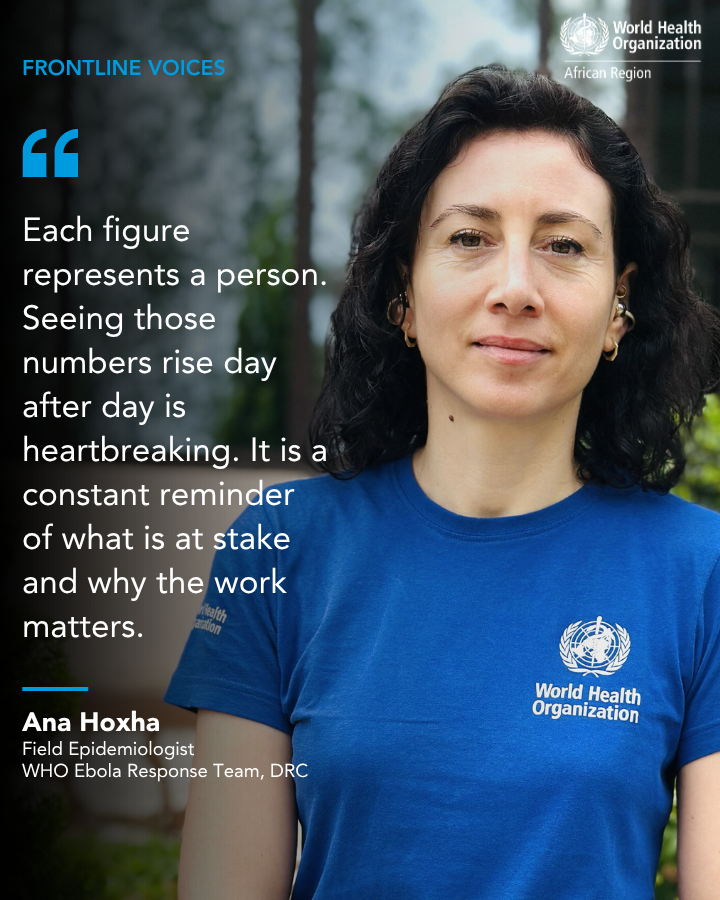
Every morning, Ana Hoxha starts with the numbers: new cases, surveillance data, situation reports and information from affected health zones. Her work is to turn these multiple streams of information into a clear picture of how the outbreak is unfolding.
As a field epidemiologist, she helps response teams understand where the virus is spreading, how the outbreak is evolving and where efforts need to be strengthened.
Following the floods in Nepal, communities are facing immense challenges
@WHO has mobilized emergency medical supplies & support teams to help sustain health services but gaps remain
Support WHO’s Emergency Surge Fund & help us reach those most in need
https://t.co/H15t7Wmcem
Highlights from Disease Outbreak News on #Ebola disease caused by Bundibugyo Virus Disease, Democratic Republic of the Congo #DRC - 28 August 2026:
🔴 Ebola outbreak in the country has now spread to 60 health zones
🔴 As of 26 August, there were 5794 confirmed cases and 2786 deaths (CFR 48.1%). This represents an increase of 1129 cases and 602 deaths since 14 August
🔴 Although surveillance has expanded, numbers of cases and deaths continue to rise due to sustained transmission and geographic expansion
🔴 Delays in recognizing cases increase the likelihood of onward transmission within households, communities and healthcare facilities
🔴 Health authorities in the DRC, in collaboration with WHO and partners, are continuing to implement and coordinate extensive public health measures, incl. disease surveillance, laboratory testing, infection prevention and control, clinical care and community engagement
Full Disease Outbreak News https://t.co/pzbMADGgkl
.@WHO is scaling up its response to #Nepal's flood emergency further, releasing US$150,000 in immediate funding, with additional resources expected to be released as needs assessments continue.
Within hours of the disaster striking, WHO deployed emergency supplies, including interagency emergency health supplies that could provide essential materials for nearly 10,000 people for 3 months, as well as tents, 10,000 masks, gloves and hand sanitizers.
Our immediate priority is to support health services for the affected communities and restore disrupted health services.
In addition, WHO is providing vital coordination among partners, surveillance and technical assistance to protect public health, all under the leadership of the Nepalese government.
As the flood-affected communities face immense challenges, sustained support from all partners will be critical. WHO stands with the Government and people of Nepal at this difficult moment and remains ready to provide support based on the country's evolving needs.
Honoured to be sworn in today by @UN Secretary-General @antonioguterres as Under-Secretary-General and Special Adviser on Africa at @UNOSAA1.
I'm humbled and grateful for the opportunity to continue to serve #Africa and the @UN at this important time.
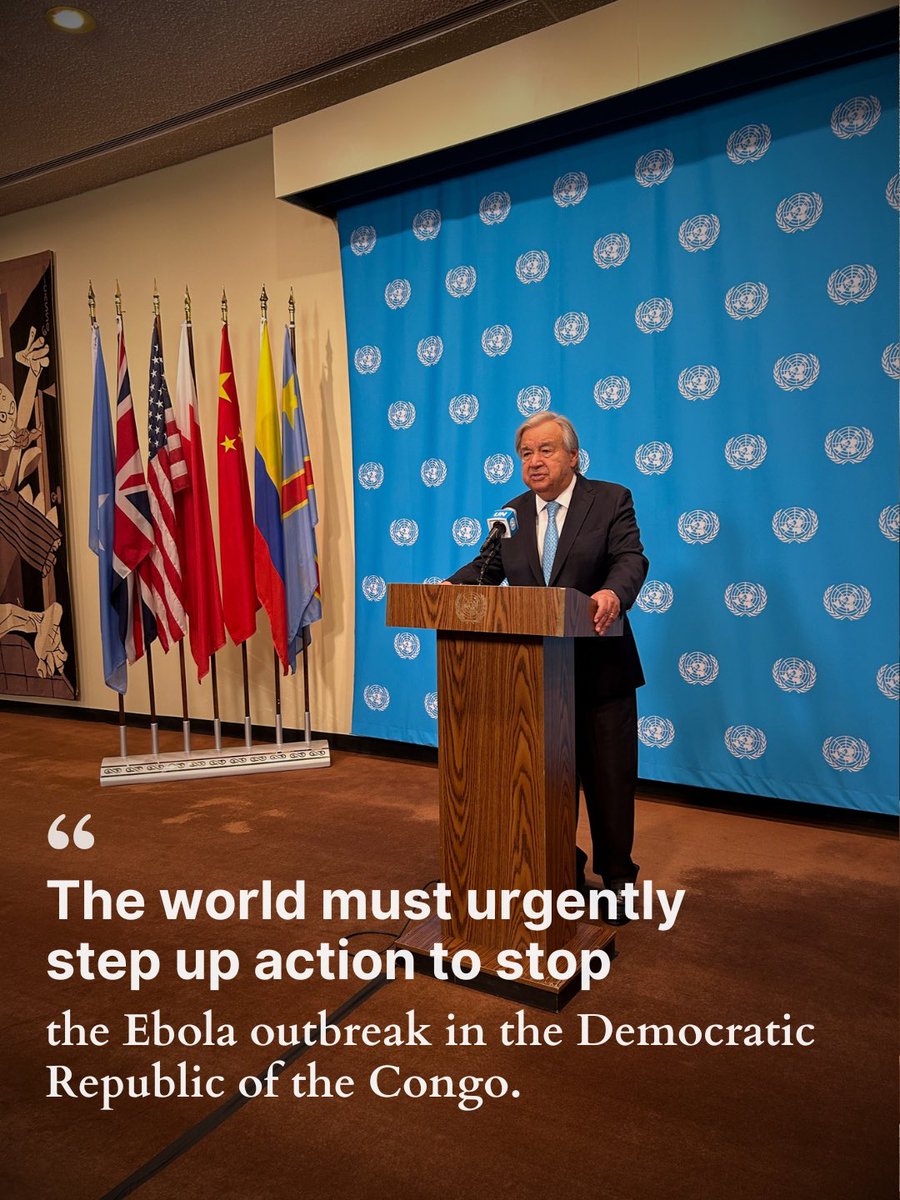
The Ebola outbreak in the Democratic Republic of the Congo is the fastest-spreading Ebola epidemic ever recorded.
It's growing faster & wider than the response to contain it.
But it can be stopped.
We know how to contain Ebola & save lives.
The world must urgently step up action to get it under control.
We are supporting rescue & relief efforts in Nepal after this week’s deadly floods have left hundreds killed & many more injured or missing.
UN teams on the ground are providing food, medical supplies, shelter & other life-saving assistance.
https://t.co/UpTfw2cdgn
I have seen the response to the #Ebola outbreak scaling & expanding in Ituri province #DRC, with government leadership, partner collaboration, and engaged communities working together to save lives.
We need the world to come together in solidarity to support
Uganda has passed the 42-day monitoring period with no new #Ebola cases. Congratulations to the government, health and care workers, partners, and all the responders.
.@AfricaCDC and @WHO today welcomed the end of the #Ebola outbreak due to Bundibugyo species in Uganda. This follows 42 consecutive days without a new confirmed case since the country’s last patient, an imported case, was discharged from care on 16 July 2026.
https://t.co/JLVWoRTd8V
.@WHONepal and partners are supporting the response to the devastating landslides on the Nepal-China border, with supplies and other assistance provided to the health sector.
Responding to the flash flood and mudslide in bordering Nepal-China, @WHONepal has mobilized and dispatched essential emergency medical supplies, including medicines and multipurpose tents to support continued delivery of health services.
Our office there is working closely with Nepalese authorities and other partners to identify further needs.
I thank everyone involved in this response, especially those working on the ground despite the challenging situations.
Responding to the flash flood and mudslide in bordering Nepal-China, @WHONepal has mobilized and dispatched essential emergency medical supplies, including medicines and multipurpose tents to support continued delivery of health services.
Our office there is working closely with Nepalese authorities and other partners to identify further needs.
I thank everyone involved in this response, especially those working on the ground despite the challenging situations.
Ebola & Marburg diseases are severe and often fatal, as we are seeing in #DRC
This is why early supportive care is important and can improve patient survival & health outcomes.
Join the next @WHO EPI-WIN webinar to hear more from our clinical experts⬇️
https://t.co/fB5N7iKzf4
Fantastic news.
"Local Manufacturing" is not a "manufacturing" challenge. Its about good science, strong regulation, excellent professionals and great institutions. Thanks @CEPIvaccines. Kudos to Minapharm. Congratulations #Egypt.
We've announced a new US$16.5 million partnership with African biopharmaceutical company Minapharm Group to develop their Bundibugyo vaccine candidate.
The Bundibugyo epidemic in the DRC is the fastest-growing and second-largest Ebola outbreak on record: https://t.co/nb0OcX20kE