📅 This Week in Markets — Aug 11–15
by Alfalfa Capital 🌱 | @alfalfa_capital
Earnings Highlights
🔋 OKLO (Oklo Inc.)
•Report Date: Monday, Aug 11 (AMC)
•EPS Estimate: –$0.11
•Last Quarter: Beat expectations (–$0.07 actual vs –$0.10 est) → Stock surged +15.6% the next day and has more than doubled since.
👟 ONON (On Holding AG)
•Report Date: Tuesday, Aug 12 (BMO)
•EPS Estimate: N/A
•Last Quarter: Beat expectations and posted strong growth momentum → Stock rallied double-digits post-release.
💳 NU (Nu Holdings)
•Report Date: Thursday, Aug 14 (AMC)
•EPS Estimate: $0.13 (+8% YoY)
•Revenue Estimate: $3.66B (+28% YoY)
•Last Quarter: Slight EPS miss ($0.12 vs $0.13 est) but stock still rose +2.7% as revenue growth stayed robust.
Key Economic Data & Events
📊 US CPI – Wed
📉 Jobless Claims – Thu
🛍 Retail Sales – Fri
📄 FOMC Minutes – Wed
🏔 Jackson Hole Symposium – Fri
Macro Watch: Tariffs vs. Monetary Policy
•Tariff Headlines Return → US–China tariff truce expires Tuesday. New 100% tariffs on semiconductors could ripple through electronics, autos, and appliance supply chains.
•Market Sentiment Tilted to the Fed → Traders remain focused on expected Fed rate cuts, largely discounting the potential economic drag from a renewed tariff war.
•Risk Balance → An escalation in tariffs could challenge the “soft landing” narrative and inject fresh volatility into rate-sensitive sectors
Why This Week Matters
•Earnings from OKLO, ONON, and NU span clean energy, consumer goods, and fintech — giving cross-sector insight into market sentiment.
•Macro data will either reinforce or challenge current Fed-cut expectations.
•Tariff headlines could become the wildcard catalyst, shifting market direction faster than any scheduled data release.
💡 Follow me for weekly market prep, asset allocation ideas, and macro strategy insights.
⚠️ Not financial advice — Always do your own research.
How strong is the scientific evidence for weight loss drugs like Ozempic?
(00:23) GLP-1, an incretin hormone, is released following food intake to help manage blood sugar levels and insulin secretion
(01:22) Semaglutide (AKA Ozempic) mimics the action of GLP-1 (it's a GLP-1 receptor agonist)
(01:57) GLP-1 slows the rate at which your stomach empties food into the intestines. This means the breakdown and absorption of nutrients into your bloodstream after eating is delayed, and as a result, the increase in your blood sugar levels is much more gradual (so there's no quick spike).
(05:33) GLP-1 receptor agonists affect appetite. Here's how: GLP-1 helps you feel fuller faster and eat less via interaction with the hypothalamus, a part of the brain involved in appetite regulation. So... medications that mimic GLP-1 help people lose weight because they make you feel more satiated.
(07:25) In a large study of ~4,000 overweight and obese individuals taking Ozempic (2.4 mg 1x/week) without diabetes, participants lost an average of 11.8% of their body weight compared to placebo
(07:55) Another 2-year trial of ~300 participants found people taking semaglutide lost an average of 15.2% of their initial body weight compared to 2.6% in the placebo group. Over 70% of the participants in the treatment group lost at least 5% of their body weight. The study also found the weight loss leveled off at ~60-68 weeks, but the reduced weight was maintained as long as the medication was continued.
(08:47) How much of the weight loss from GLP-1 receptor agonists comes from muscle mass?
(10:31) GLP-1 receptor agonists reduce appetite—and if you're reducing appetite, you're likely to decrease protein intake. Hence, some implications for reductions in muscle mass—especially if you're not resistance training.
(13:32) What happens after you stop taking Ozempic? One study found people regained two-thirds of the weight lost 1 year after discontinuing subcutaneous semaglutide treatment. Rhonda goes on to say, "I think it's pretty clear now from a variety of studies that in order to maintain the weight loss, those drugs need to be continued."
(14:38) Possible negative side effects of GLP-1 receptor agonists: Nausea, diarrhea, constipation, vomiting, and burning sensations in the stomach.
(15:54) Rhonda's concluding thoughts
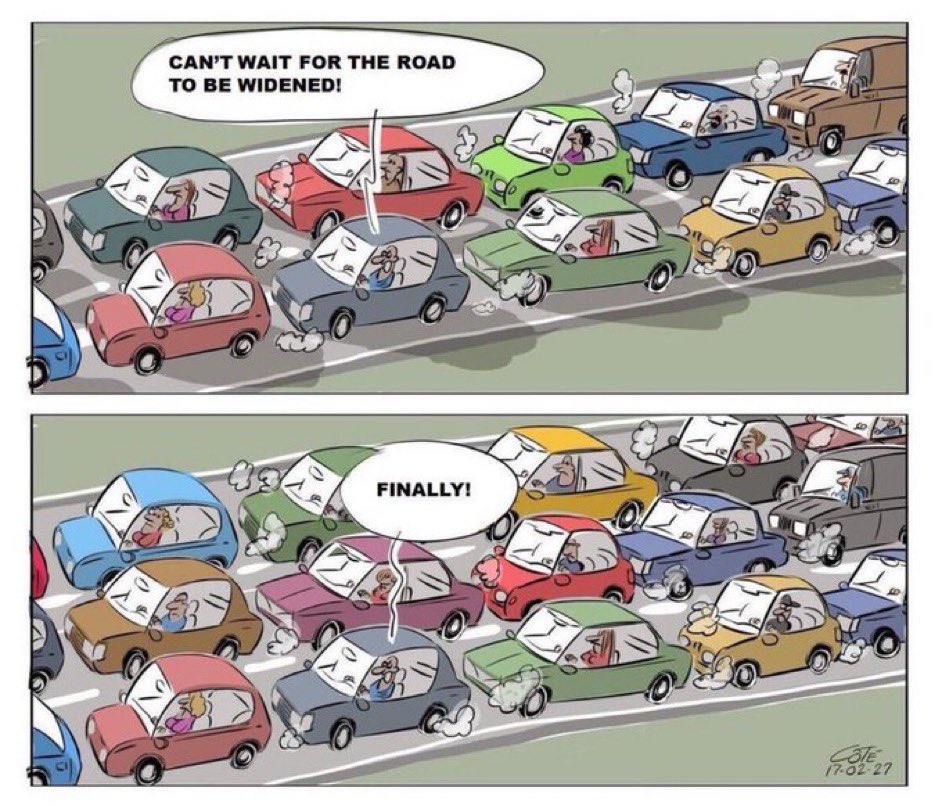
One thing we know for SURE — building & widening highways ALWAYS succeeds in helping sell more cars, gas & suburban sprawl; burning more public budgets; & increasing GHG emissions. So if THOSE are your goals, it’s the perfect thing to do.
Just don’t expect it to reduce traffic.