Going off X till Oct 16th because of end sems. FOMO will be through the roof.
Funny that I announce my X hiatuses like I have 100k followers who need to know where I am. But you know how I be.
But I desperately need the lore. I refuse to return to a timeline where I know nothing
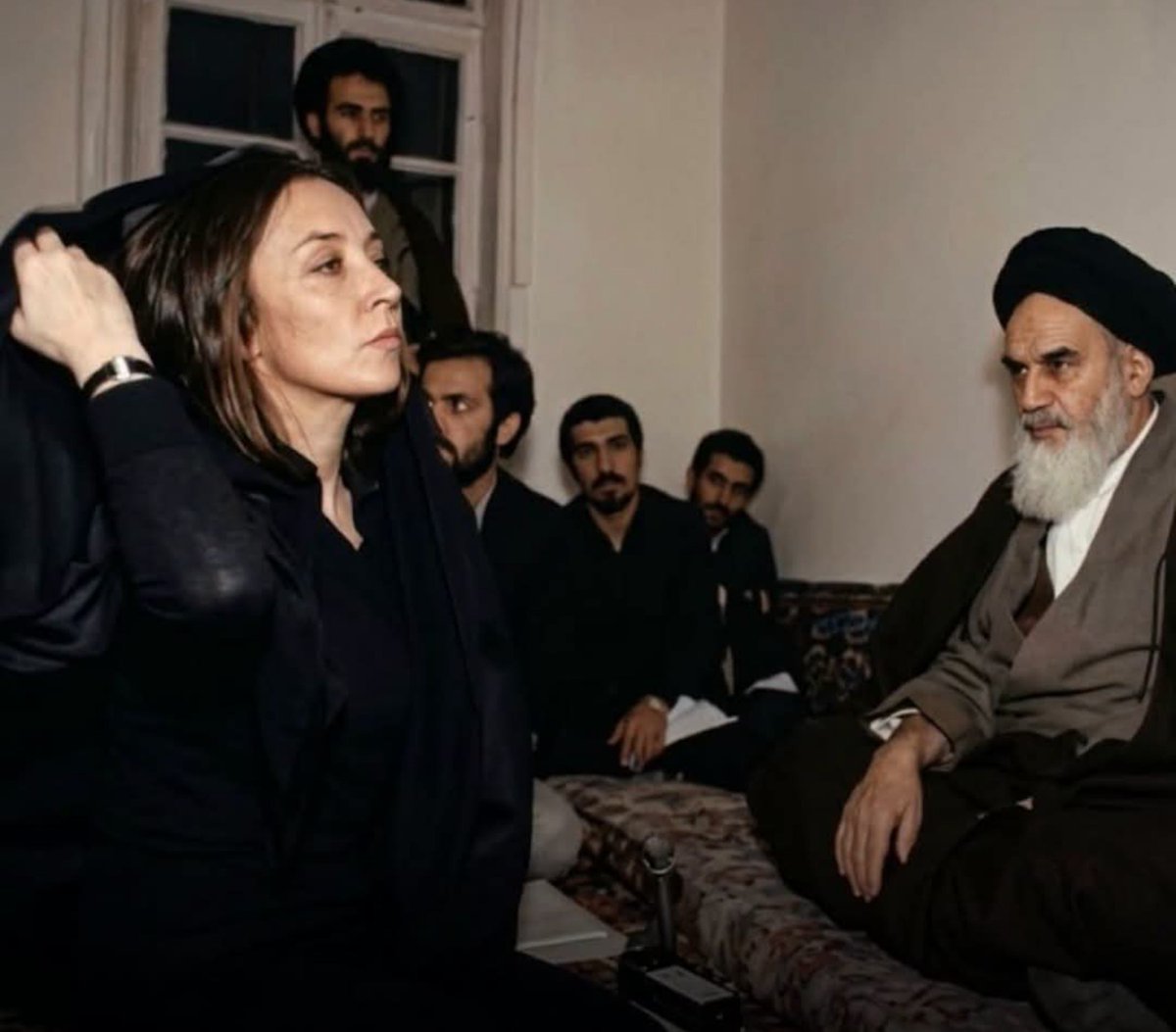
Italian journalist Oriana Fallaci removing her chador during her tense 1979 interview with Ayatollah Ruhollah Khomeini in Qom, Iran...
In October 1979, Italian journalist Oriana Fallaci traveled to Qom, Iran, to interview the Islamic Revolution's supreme leader. To get inside the room, Fallaci was forced to cover herself from head to toe in a heavy black chador, leaving only her face visible.
The conversation inside the room was tense from the very start. Fallaci did not hold back her questions.
She pushed the Ayatollah on political executions, the sudden shutdown of independent newspapers, and the sharp loss of rights for Iranian women under the new regime.
When she asked about the forced wearing of the veil, Khomeini dismissed her concerns and claimed the garment was meant to protect young and respectable women. He then added,
"If you do not like the Islamic dress, you are not obliged to wear it."
Fallaci took his words literally and replied, "Thank you, Mr. Imam. Since you tell me so, I am taking it off right now."
With a quick move, she pulled the chador off her head, leaving her hair completely exposed right in front of the Supreme Leader.
Khomeini was furious.
He stood up without saying another word and walked out of the room. The room fell silent, and the interview was abruptly stopped. However, Fallaci refused to leave Iran until he returned a day later to finish the conversation.
This confrontation became legendary in the history of journalism.
It showed a reporter refusing to bow down to authority, even in one of the most dangerous settings imaginable.
Fallaci proved that real journalism requires standing up to power, asking hard questions, and refusing to be silenced by fear or tradition.
When journalists trade raw courage for easy access and comfortable silence, we lose one of our strongest shields against tyranny.
In an era where true courage in reporting feels rare, her brave stand reminds us that honest journalism still has the power to light up the dark, giving a voice to the voiceless and inspiring future generations to speak truth without fear.
#archaeohistories
She was bought and sold seven times in just three months.
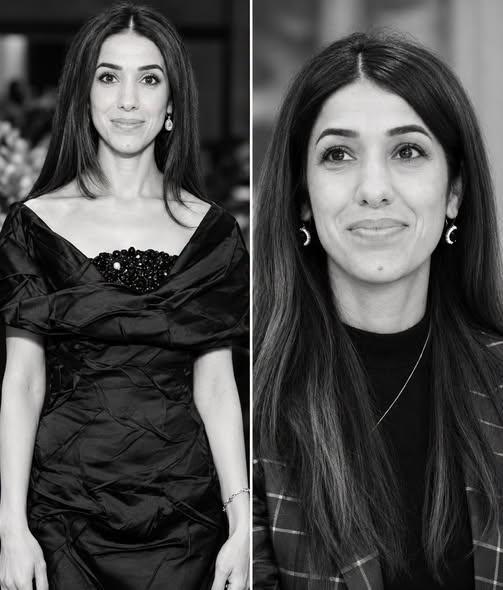
Years later, she stood before the United Nations and made the world face what had happened to her. At 25, she became a Nobel Peace Prize winner.
August 3, 2014.
Kocho, Iraq.
Nadia Murad was 21 when ISIS surrounded her Yazidi village. What happened next was genocide. Men and boys were taken away and executed. Six of Nadia’s brothers were killed.
Her mother was murdered and buried in a mass grave.
Nadia was taken to Mosul. To her captors, she was no longer a person. She was property.
She was bought, sold, and traded seven times in just 90 days. She was beaten, burned, and repeatedly sexually assaulted. At one point, Nadia tried to escape.
She was caught.
The punishment was horrific.
Six men raped her until she lost consciousness. She was beaten so badly that she could barely walk.
Her captors wanted to break her spirit.
They didn’t.
In November 2014, Nadia noticed an unlocked door.
She ran.
A local Muslim family took an enormous risk by hiding her and helping her get out of ISIS-controlled territory.
Eventually, she reached a refugee camp.
Then she made it to Germany.
For the first time in months, she was free.
She could have chosen to disappear and build a quiet life somewhere far from the attention.
Instead, she decided to speak.
In December 2015, Nadia stood before the United Nations Security Council. She was 22 years old.
She spoke about girls being sold like cattle, mothers being murdered, and an entire culture being deliberately destroyed.
The world listened.
In 2016, the United Nations formally recognized the genocide against the Yazidi people. But Nadia wasn’t finished. She turned what had happened to her into a fight for others.
In 2018, she founded Nadia’s Initiative, working to rebuild villages, schools, and clinics while helping survivors pursue justice.
That same year, at just 25, Nadia became the first Iraqi woman to receive the Nobel Peace Prize. The world celebrated her.
But Nadia’s attention remained on the people who were still missing and those who were still being held captive. For her, that was the prize that truly mattered.
Their freedom.
She continues to speak for the thousands who were killed and for those whose fate remains unknown.
Every time she tells her story, she has to carry the pain all over again.
But she knows what silence can cost.
Nadia turned suffering into purpose.
Trauma into testimony.
Survival into a demand for justice.
ISIS tried to strip her of her identity and reduce her to property.
History remembers her by her name.
Nadia Murad.
Not simply because she escaped.
But because she survived, stood before the world, and refused to let silence have the final word.
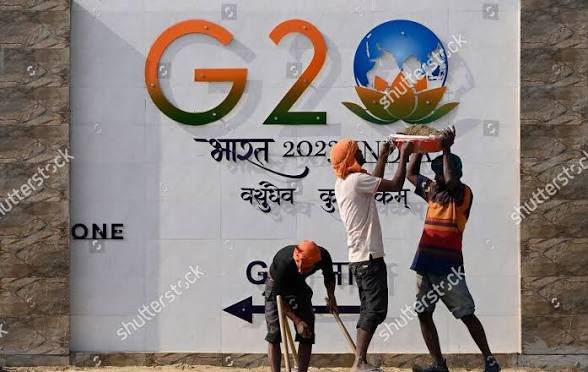
BRICS 2026: LOOK AT THE PICTURE THEY CHOSE. THESE SAY A LOT ABOUT THE INDIA THEY CHOSE TO DEPICT.
Across Western media coverage of the Delhi summit ONE striking visual depiction is dominating from NYT to DW to F24 to Al Jazeera among others. All pictures captured ordinary cyclists, mopeds and street-level scenes placed against BRICS banners and Modi posters. The visual emphasis is on the visibly less-developed side of India. Nothing wrong in depicting poverty framed against grand ambition. But don't pretend the depictions aren't suggestive of a pre-prescibed editorial slant.
"The BJP has won Rajasthan's urban local body elections, securing 4,179 of the 10,235 declared wards, against the Congress's 3,613. The BJP's seat share also rose from 35.7% in the previous election cycle (2019 to 2021) to 40.8%, while the Congress slipped from 40.7% to 35.3%." https://t.co/FuubHsxSTI
Round 2 of internal tests begins this Thursday. Two more gruelling presentations to complete before the week ends. And what's most befuddling is that by this time next month, we'll be done with this sem. Like..tf!
PS: Reading Kazantzakis half asleep is no walk in the park 😭
Dear Mr Javed Akhtar. Alhamdulillah. The quote is from Maulana Azad's Calcutta Speech. The speech was published in Khutbat-e-Azad. Here is the link: https://t.co/yXkvYTTW1j
The Maulana is exhorting the Indian Muslims to unite with Muslims around the world and save the Caliphate. He begins by stating that all relationships in the world can break down, father can turn against son, brother against brother, mother can shun her child but the relationship of a Muslim with a Muslim can never be severed.
The Maulana then continues: if even a grain of the soul of Islam is still alive in its followers, then if a thorn enters the foot of a Turk on the field of battle, I swear by Allah that no Muslim of Hindustan is a Muslim until he feels that prick in his own heart. For the Millat of Islam is one body, and Muslims, wherever they are, are its limbs. If a finger of the hand is cut, the rest of the body cannot remain at peace until it has felt the blow. This is not rhetoric. It is the plain meaning of the well-known hadith which Imam Ahmad related: the Messenger of God, peace and blessings be upon him, said that the likeness of the believers in their mutual love, mercy and compassion is that of one body: when one limb complains, the whole body responds with sleeplessness and fever. And there is the other hadith, related by Abu Musa al-Ash‘ari: The believer to the believer is like a building; each part supports the other. This is the first and last distinguishing mark of the people of Islam, to which the Qur’an itself has pointed.
Then, to reinforce Muslim unity, Maulana Azad provides his commentary after quoting the Quranic verse 48: 29.
The Messenger of Allah and those with him are severe against the Kafirs, merciful among themselves.
Whatever hardness they have is for falsehood and unbelief; whatever love and tenderness they have is for truth, sincerity, Islam and Tawhid. So be extremely hard against disbelievers but extremely sympathetic and kind among ourselves; take heed, then, and do not pass over this as if you had not heard it.
P.S. This is the second time I am enlightening you on your heroes and their lifelong sociopolitical stances. The first time was when you refused to believe that books were banned, editors sacked, films blocked, and Majrooh jailed, under Nehru's rule. Please don't ask me about Gandhi next - the Mahatma, not Rahul, though both are probably your heroes. Cheers, WDTP
You can call yourself woke all you want. But If your principles change with the person you're looking at, I'm sorry to break it to you, you're not progressive, you're just a whiny idiot who's been successfully manipulated.
Remember the Kriti Sanon Raksha Bandhan ad controversy? An American ad featuring Sydney Sweeney and the subsequent outrage that followed made me revisit the whole episode...and even think about the contradictions entrenched within our resident wokeists. 🧵
The “80% of Indians are non-vegetarian” claim needs some context.
NFHS-5 found that 83.4% of men and 70.6% of women aged 15–49 reported eating fish, chicken or meat daily, weekly or occasionally. But this is a frequency category, not a measure of whether meat constitutes a substantial part of someone’s diet. More importantly, NFHS-5 separately reports a much lower weekly consumption at 57.3% for men and 45.1% for women. The survey also shows that almost everyone consumes pulses/beans, fruits and green leafy vegetables, while 96.2% of men and 94.2% of women consume milk or curd daily, weekly or occasionally. So “80% non-vegetarian” certainly does not mean that 80% of Indians follow predominantly meat-based diets.
India’s culinary civilisation has never been defined by meat alone. Rice, wheat, millets, pulses, lentils, vegetables, fruits, milk, curd, ghee, oils, spices and seasonal produce form an enormous part of our food traditions. Meat and fish are equally part of India’s culinary diversity, but their place varies enormously by region, community, culture, geography and occasion.
So using a survey category to argue that vegetarian food does not represent “authentic India” is a category error. India can have a large non-vegetarian population and still have a culinary culture deeply shaped by plant-based staples.
Gandhiji understood this distinction. Addressing the London Vegetarian Society on 20 November 1931, he said: “I belong to a country which is predominantly vegetarian by habit or necessity.” He also explained: “The basis of my vegetarianism is not physical, but moral.”
The point is not to pit vegetarian food against non-vegetarian food. India is too diverse for either to have a monopoly on authenticity. A vegetarian spread can be every bit as Indian, indigenous and representative of our culinary civilisation as a non-vegetarian one.