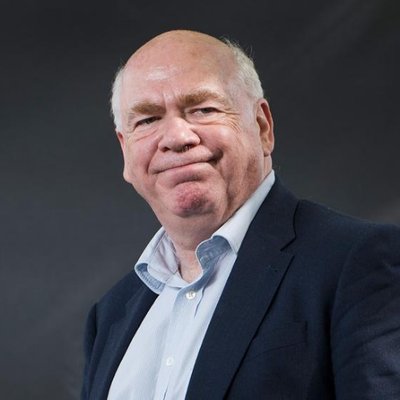
I wish to thank the many contributors and all the IISS editorial, design, and publications staff, as well as the office of the DG and CEO, who stylishly and stealthily produced this volume. Its surprise presentation to me on my departure moved me deeply. To all and sundry @IISS_org my warmest wishes. Onwards and Upwards! 🙏🙏🙏
This Adelphi book is a tribute to Sir John Chipman KCMG (@chipmanj) and his work at the IISS over the course of four decades.
It highlights three areas of intellectual leadership through his writings, spanning broadly the decades he worked at the IISS: strategic studies after the end of the Cold War; regionalism and regional security; and corporate foreign policy. Selected writings by Sir John in these three areas are reprinted here in their original form. They are paired with commentaries by a number of notable friends of the IISS, written specially for this book.
➡️Find out more: https://t.co/UwnjqrczqG
Reading this account of Jensen’s reliance on bullying & humiliation, you can see why many Silicon Valley leaders backed Trump: the belief that normal rules and standards need not apply to leaders who get things done, if you approve of what’s being done.
https://t.co/cWkpa57NyL
Sound advice … this would be less urgent if the UK invested in conventional deterrence, developed a a military doctrine for robust responses to so-called ‘grey zone’ attacks, and rapidly procured novel defence technologies. Transferring 5 percent of the welfare budget to defence would fund this; a strategist at the top of the MoD would be needed to design the doctrine….
24 years in the Marines taught me that being ready for emergencies is always a good idea.
Here is what to include in your kit to get through 3 days.
Everyone's situation is different, so check what you might need 👇
https://t.co/GIrtPZeZED
NATO routinely pronounces that it will defend ‘every inch of NATO territory’; yet breaches of sovereign maritime territory (see Bulgaria and Romania in recent days) seem to inspire less public resolve.
David Garrick (1716-1779) was criticised and celebrated for exactly Andrew Scott’s style of Shakespeare delivery in exactly the same way 250 years ago. See Lawrence Sterne. “—And how did Garrick² speak the soliloquy last night?—Oh, against all rule, my Lord,—most ungrammatically! betwixt the substantive and the adjective, which should agree together in number, case and gender, he made a breach thus,—stopping, as if the point wanted settling;——and betwixt the nominative case, which your lordship knows should govern the verb, he suspended his voice in the epilogue a dozen times, three seconds and three fifths by a stop-watch, my Lord, each time. ——Admirable grammarian!——But in suspending his voice——was the sense suspended likewise? Did no expression of attitude or countenance fill up the chasm?—Was the eye silent? Did you narrowly look?—I look’d only at the stop-watch, my Lord.——Excellent observer!
For the first time in its history, Russia cannot wage war without reinforcements from North Korea. It is now preparing to deploy an additional North Korean contingent on its territory. It has also received additional ballistic missiles from North Korea. Everyone around the world must understand what this means.
This is not only about the lives of people in Ukraine, and not only about the threats we face. North Korea’s ballistic missiles and other weapons are being improved through its collaboration with Russia. The more North Korean strikes there are here in Ukraine, in Europe, the more their missiles and soldiers are used, the more they correct their shortcomings and blind spots, the greater the danger will later be for Japan, the Republic of Korea, the Philippines, and other countries in the region.
That is why, when we speak about the need for joint action, for coordination and mutual support, when we speak about the need to help us strengthen our air defense, we are also, in fact, speaking about taking away North Korea’s appetite and any interest in coming here – to our land and into our skies – with its weapons in order to learn how to wage war. Everyone across the globe who respects human life must stand together in taking action to protect people.
From the evening address.
Ben — you know there is a third and much better option to fund defence other than more borrowing and higher taxes: a cut to welfare expenditure. We can have gold plated welfare or basic national security, but we can’t have both.
Really what we’ve seen with the Defence Investment Plan is a failure to make a choice. This is why. The UK is committed to four major defence projects:
• Renewing our nuclear force
• Meeting our NATO commitments
• The AUKUS submarine project with 🇺🇸🇦🇺
• The new GCAP fighter jet with 🇯🇵🇮🇹
You cannot afford that at current spend. You either need to drop one or move up to 2.5% GDP rapidly to keep up. It you don’t want to drop one — with all the diplomatic pain and security exposure that comes with it — you have to decide how to fund it and there are only two options:
• Borrowing hitting future taxpayers
• New taxes hitting current taxpayers
But 2.5% of GDP is not even the sum necessary for war readiness rearmament — all those drone, AI, equipment and manpower upgrades — which is at a minimum 3% and probably closer yo 3.5%.
What went wrong is the Strategic Defence Review said yes to all four projects, the government then adopted the rhetoric and diplomatic posture of war readiness rearmament but failed to make a decision on how to pay for all this — costing us merely one Defence Secretary, one Armed Forces Minister and the government’s credibility when it comes to defence.
And that’s before a serious attempt has even been made to build a totally new procurement and delivery process to confront the fact the MoD is the Ministry of Armed HS2s, highly unlikely to deliver rearmament without insane overspend.
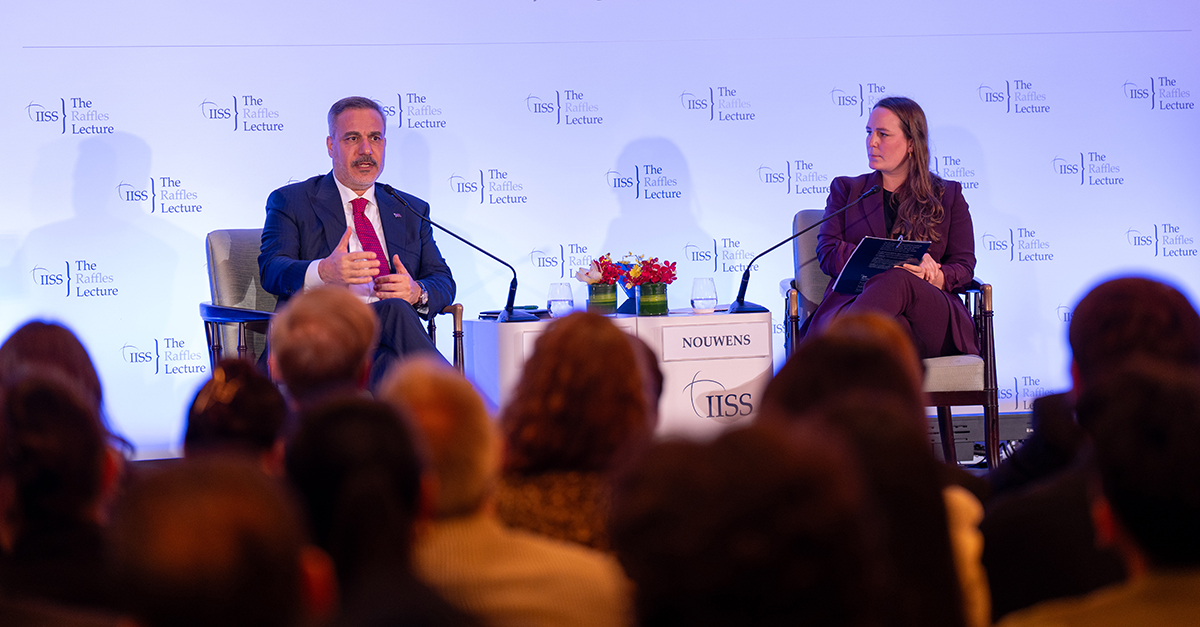
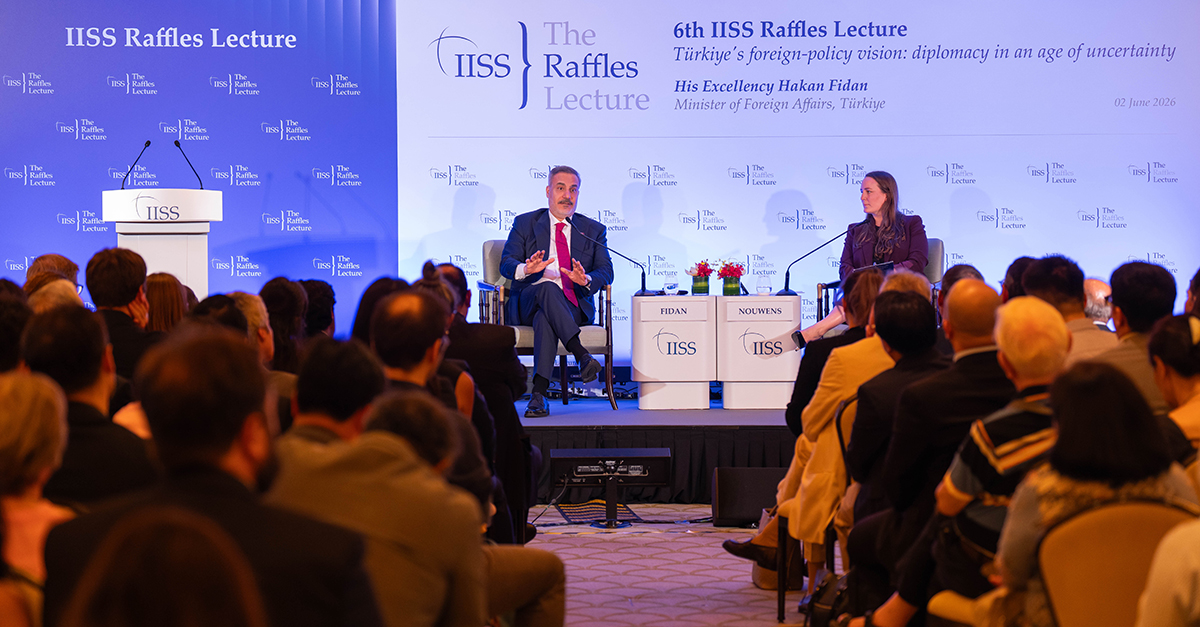
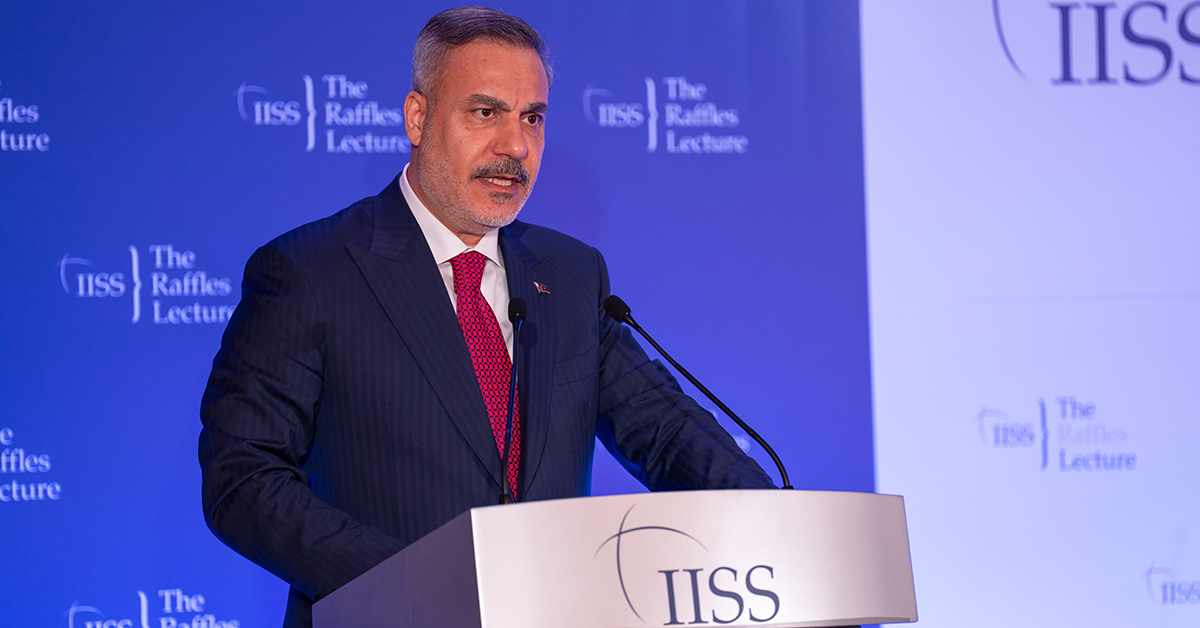
‘The international order no longer resembles a fixed constellation: it is an expanding universe where centres of gravity multiply and older hierarchies gradually lose their gravitational pull,’ said @HakanFidan, Minister of Foreign Affairs of Türkiye, as he addressed the IISS in Singapore on 2 June | Watch the lecture: https://t.co/QtpWpYQJMM
Two heads of state, 39 government ministers, over 550 delegates, 40 Young Leaders and over 1,500 supporting officials from nearly 80 countries translated into three packed days of defence diplomacy at #IISS_SLD26 | https://t.co/LOZqHJacXe
The Guiding Principles for Underwater Infrastructure Defence Exchanges (GUIDE) was launched on the sidelines of the 23rd SLD today, by 17 countries across the Europe, Middle East, Oceania and Southeast Asia regions. More: https://t.co/t0dEECTy1f
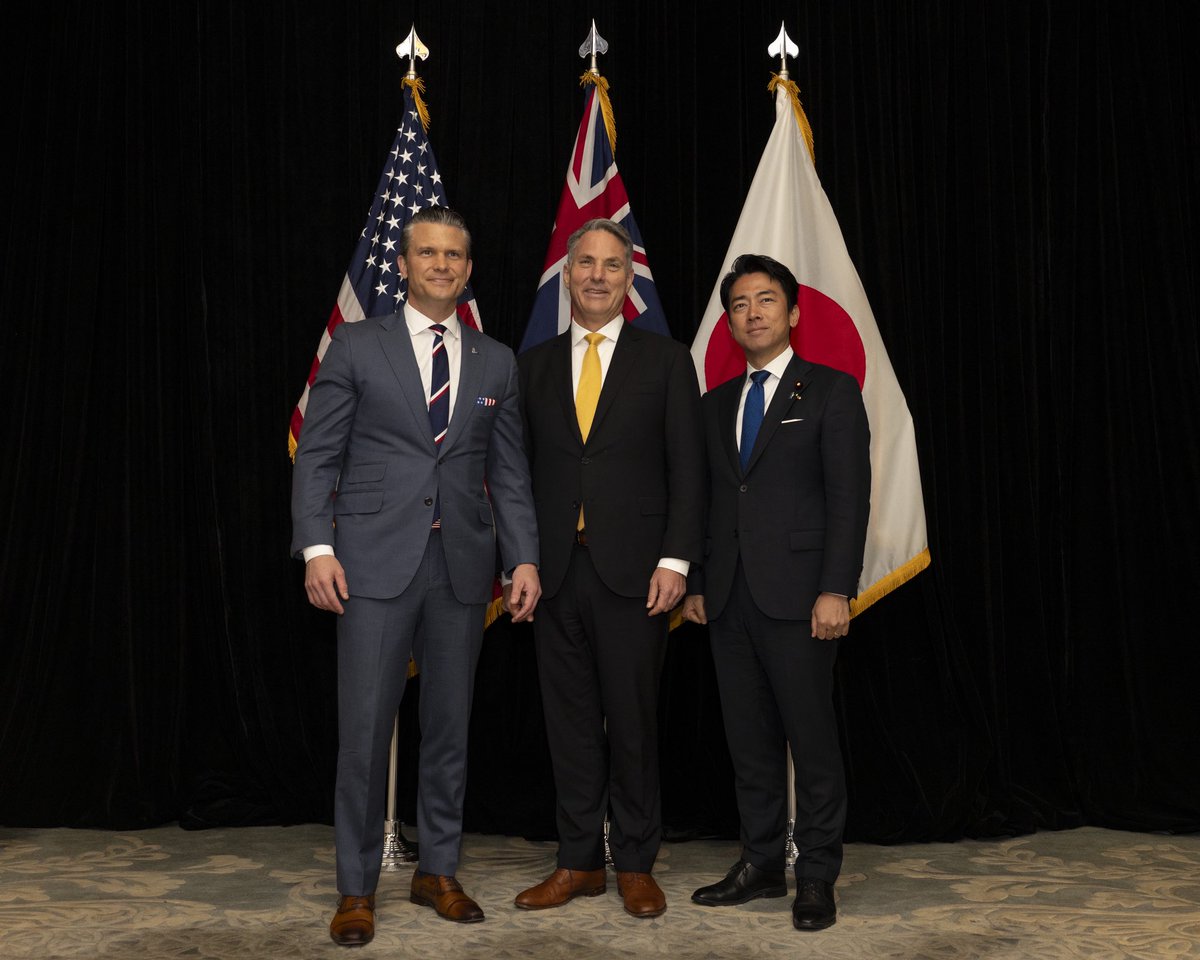
Great to stand with Australian Deputy Prime Minister Marles and Japanese Defense Minister Koizumi.
The United States, Australia, and Japan are united in our commitment to peace through strength.
Following his speech at #IISS_SLD26, United States @SecWar Pete Hegseth fielded a broad range of questions from the audience in an animated question-and-answer session @DeptofWar | Here are a few highlights, you can watch the full session here: https://t.co/LOZqHJacXe
All of us @IISS_org look forward to hearing Koizumi Shinjiro, defence minister of Japan, speak next weekend at the IISS Shangri-La Dialogue. ##IISS_SLD26
Takaichi Sanae recently announced an update to Japan’s Free and Open Indo-Pacific (FOIP) framework.
This focuses on increasing economic security and supply-chain resilience within the Indo-Pacific and on developing cooperation with ASEAN countries.
➡️Read the latest analysis from Takahiro Kamisuna and Jumpei Ishimaru (@IshimaruJu71422): https://t.co/bUw46pNfnK
We’re looking forward to hosting this year’s IISS Shangri-La Dialogue, which kicks off next week in Singapore. To get an idea of what’s in store at Asia’s premier defence summit, here’s a recap of last year’s event | #IISS_SLD26 https://t.co/LOZqHJacXe
Russia’s war in Ukraine faces a growing crisis on the home front. Russia is reaching the limits of its industrial capacity and struggles to replace huge manpower losses.
To sustain its war, Moscow will have to mobilise its economy and society far more deeply and coercively. This will require command-like controls that would be greatly disruptive and unpopular. There are signs the Kremlin has begun to prepare for this. It will be a decisive moment for Russian and European security.
🌐Online
📅Tuesday 19 May 2026
⏰10:00–11:15 BST
🗨️ Nigel Gould-Davies (@Nigelgd1), John Raine (@JohnARaine1)
Register now: https://t.co/0IfWLRXTr2