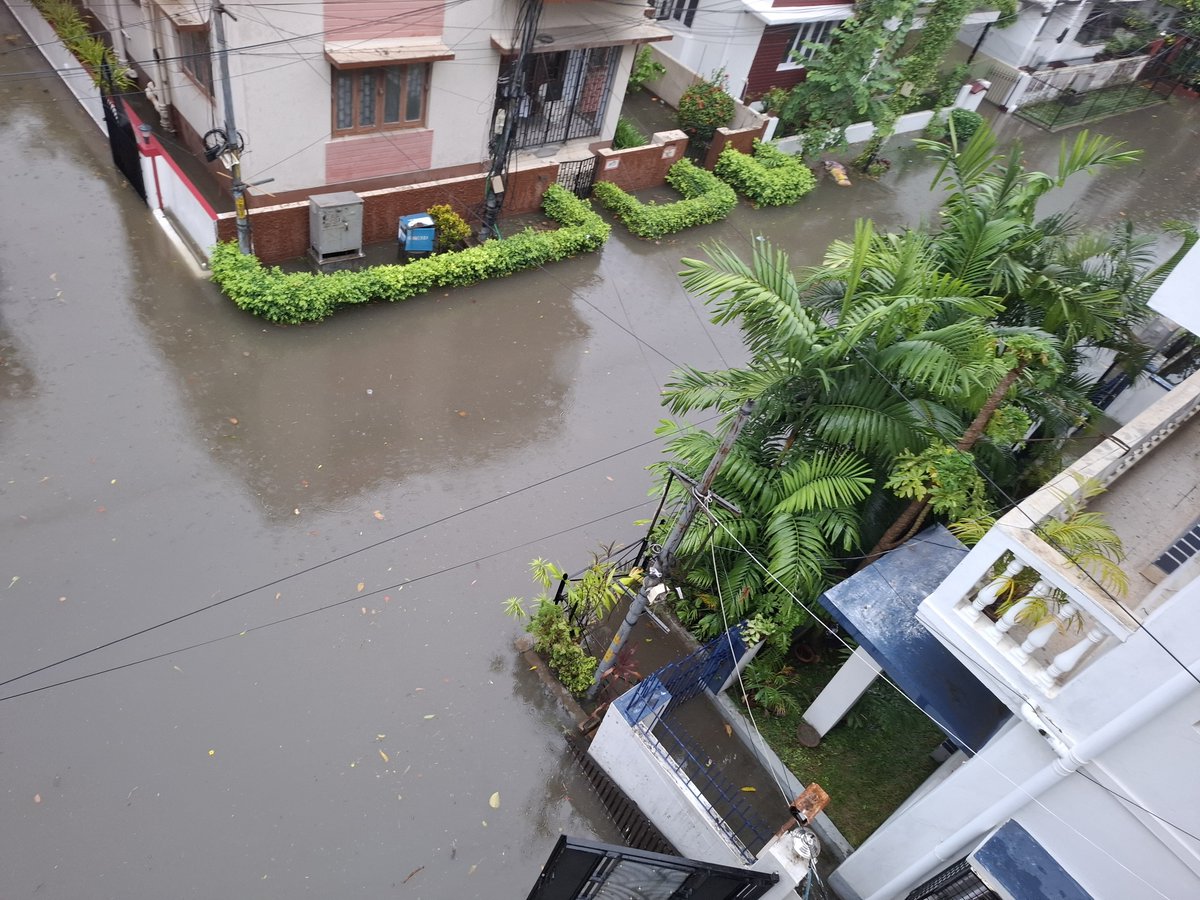
Today after rain… this is regular feature in G.C. Block of Salt lake Kolkata. Requesting concerned department to take immediate action and clear the chocked drains, which have not been serviced for many years now 🙏 @MyBidhannagar@Bidhannagar4BJP@paulagnimitra1@drsharadwat
I am a resident of GC-76 Saltlake Sector-3 .There is a persistent problem of water logging in front of our house even a small rainfall .We had complained several times to the authorities but there is no attempt to resolve the issue.
@MyBidhannagar
Why Not Mass Manufacturing Like China?
•Structural Disadvantage: China has already invested decades in creating vast industrial zones, supply chains, and low-cost logistics that India cannot replicate in the short term.
•Labor Cost Gap: China’s scale keeps per-unit costs lower; India’s rising wages and land costs make bulk manufacturing less competitive.
•Comparative Advantage: India’s strengths lie in human capital, services, knowledge industries, and soft power (culture, tourism, medicine, IT).
•Strategic Choice: By investing where India is naturally ahead, the country avoids the trap of being a late entrant in saturated manufacturing sectors and instead shapes industries of the future.
⸻
Funding the Transformation
•Public–Private Partnerships (PPPs): Mobilize large-scale infrastructure investments in education, tourism, and healthcare.
•CSR Funds: India’s corporate sector contributes ₹25,000–30,000 crore annually under CSR. Redirecting even 20% strategically can seed educational and skill projects.
•Foreign Direct Investment (FDI): Attract global universities, hospital chains, and tech companies to invest in Indian campuses, AI parks, and wellness hubs.
⸻
A Strategic Leap Forward
Tariff barriers abroad are not setbacks—they are signals. Instead of chasing China’s manufacturing model, India should carve its own path by investing in knowledge, services, tourism, skills, and healthcare. These sectors align with India’s inherent strengths and cultural capital, and with the right policies, they can generate foreign exchange, create millions of jobs, and elevate India’s global standing.
This is a call for strategic self-reliance without isolation—building internal strength while deepening global engagement. If acted upon decisively, India will not just withstand tariff shocks but transform them into catalysts for long-term growth and leadership.
Turning Tariff Pressures into Strategic Nation-Building.
The imposition of unreasonable tariffs on Indian goods by developed nations should not be seen merely as an external threat, but as a timely opportunity for India to introspect and strengthen its domestic economic foundations. Instead of pursuing a head-to-head race with China in large-scale manufacturing—a field where China has already built unparalleled dominance—India must focus on areas of comparative advantage. By strategically developing education, tourism, skill training, information technology, and healthcare, India can not only safeguard foreign exchange but also generate sustainable long-term growth, employment, and global influence.
⸻
1. Education: Retain Talent and Currency Within India
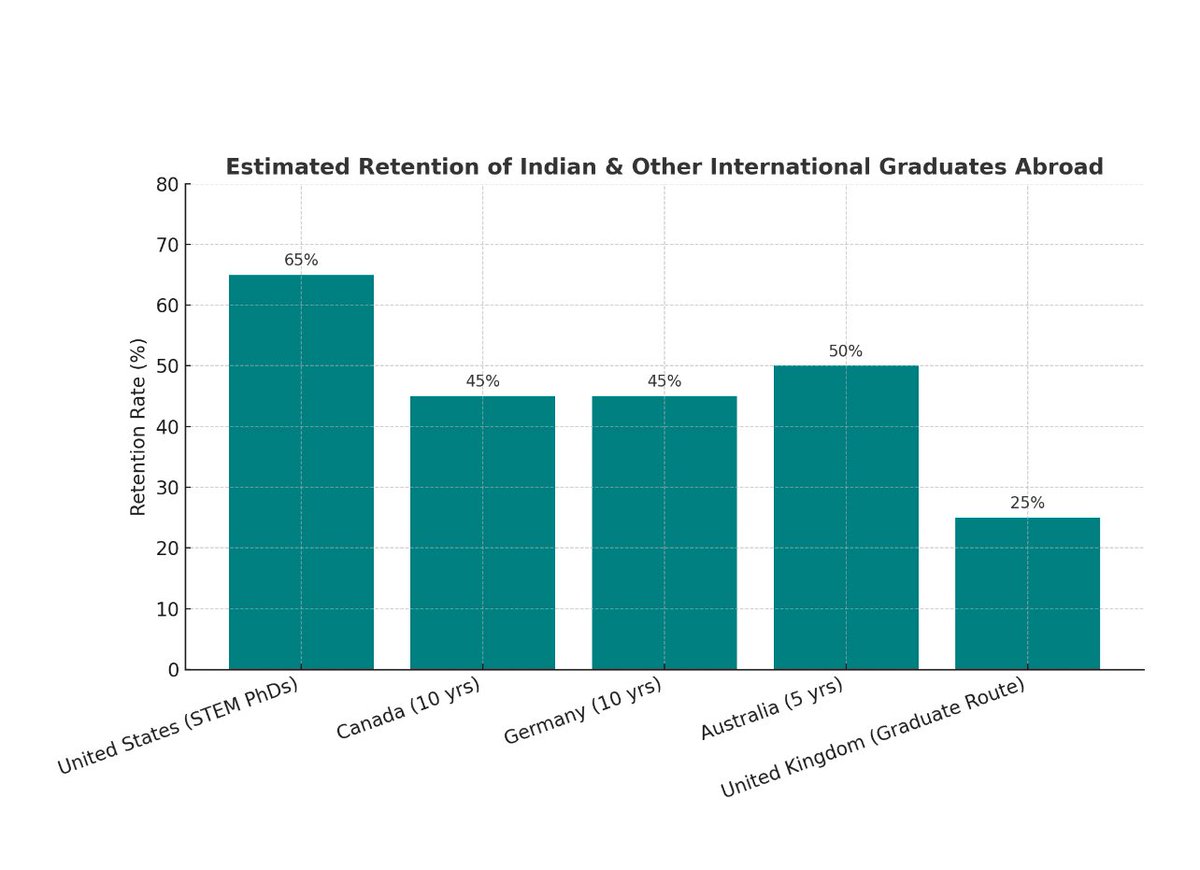
•Current challenge: Indian students spend US$70–85 billion annually on overseas education—nearly equivalent to India’s entire annual FDI inflow.
•Policy action:
•Build world-class universities and research centers in India, modeled on MIT, Stanford, or Oxford.
•Invite international faculty on premium packages and create global curricula.
•Develop specialized centers of excellence in AI, biotechnology, and clean energy.
•Impact: Prevents massive foreign exchange outflow, retains young talent, and positions India as an education hub for Asia and Africa.
⸻
2. Tourism: Transform India into a Top Global Destination
•Current status: India earned US$28.1 billion from foreign tourist arrivals in 2023, but this is far below potential. Thailand and Vietnam, with smaller geographies, attract far higher tourist inflows.
•Policy action:
•Develop heritage circuits, eco-parks, wellness retreats, and art museums with global standards.
•Invest in infrastructure, branding, and safety to make India visitor-friendly.
•Encourage domestic tourism with affordable, well-managed facilities.
•Impact: Could double foreign tourist inflows, generate millions of jobs in hospitality, handicrafts, and transport, while bringing in valuable foreign currency.
⸻
3. Skill Training: Address Global Manpower Shortages
•Global gap: By 2030, the world will face a shortage of 85 million skilled workers (PwC estimate). India, with its youth bulge, is uniquely positioned to fill this vacuum.
•Policy action:
•Establish vocational hubs in semi-urban and rural areas.
•Provide modular training in construction, healthcare support, IT services, and logistics.
•Offer certification aligned with international standards to enable overseas placements.
•Impact: Converts India’s demographic dividend into an economic asset, while increasing remittances (currently US$125 billion annually, the world’s highest).
⸻
4. IT and Artificial Intelligence: India’s Natural Advantage
•Context: Indians already lead global technology corporations—Google, Microsoft, Adobe, IBM.
•Policy action:
•Build AI research parks and incubators in partnership with leading global firms.
•Provide tax incentives for Indian startups in AI, cloud computing, and fintech.
•Create national AI adoption programs in agriculture, healthcare, and governance.
•Impact: Retains India’s brightest talent domestically, positions India as the AI hub of the Global South, and builds intellectual property instead of importing it.
⸻
5. Medical Tourism: Leveraging Global Trust in Indian Doctors
•Current landscape: India is already among the top five global medical tourism destinations, with the sector valued at US$7–9 billion annually.
•Policy action:
•Establish hundreds of world-class hospitals catering to foreign patients.
•Promote integrated healthcare—modern medicine with Ayurveda and yoga.
•Streamline visas and tie up with foreign insurance providers.
•Impact: Potential to generate US$20 billion annually by 2030, while upgrading healthcare for citizens.
Continued….
@hvgoenka@anandmahindra@nsitharaman@nitin_gadkari@narendramodi #IndiaUSTrade