@QANplatform 2/9
The project has been rebuilding its execution layer around Go-Ethereum (Geth), the Ethereum client.
The goal is to retain Ethereum compatibility while integrating its own features, including post-quantum protection & QVM.
That creates some difficult engineering tradeoffs.
1/9
One thing I've learned from following $QANX is that building a quantum-resistant blockchain isn't just about choosing stronger cryptography.
It's also about making that security work within an existing chain architecture.
@QANplatform's latest update is a good example. 🧵
Bitcoin is becoming part of how companies raise and use capital.
Companies issue perpetual preferred shares, offering investors recurring dividends. They use the money raised to buy Bitcoin.
This creates demand for BTC, but preferred shareholders own a corporate security, not the underlying Bitcoin.
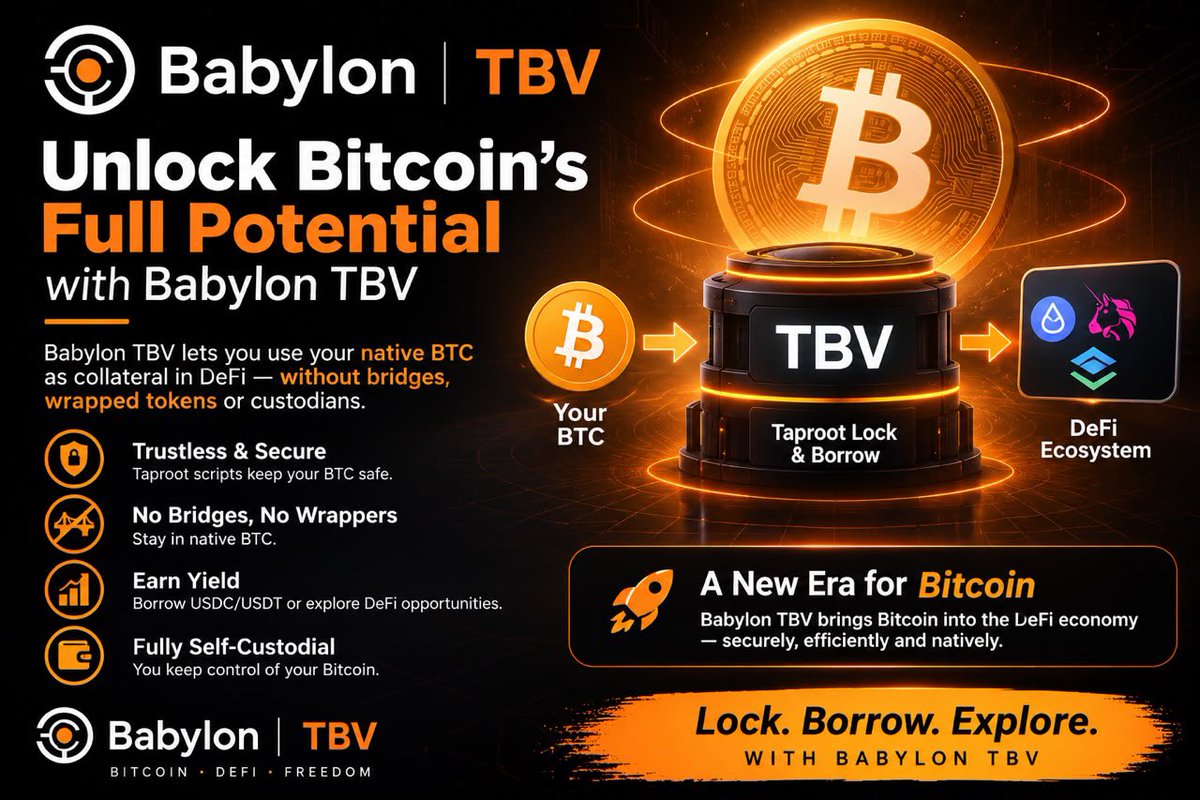
.@Cradle_DEX is building an options DEX powered by Babylon TBV.
This will enable options strategies using native Bitcoin as collateral. Another use case for trustless and native Bitcoin collateral.
Halloween party setting or science dictionary entries?
superposition
Schrödinger's cat, alive and dead
spooky action at a distance
quantum teleportation
Zitterbewegung
quantum hair
magic state
ghost particle
quantum foam
quantum gate
quantum supremacy
Trick: they are all real physics.
Treat: the one that should actually scare you is the quantum gate. Stack enough of them in the right pattern in a quantum computer, and it can break the cryptography most blockchains are currently built on.
[Announcement]
On Friday, we shared the current codebase with the auditor to get a cost and time estimate.
We are eager to elaborate on the features related to the audit submission.
Read the full details on our blog.
Link in the replies. 👇
Last week, Google shortened the timeline for quantum computers.
They demonstrated that magic state cultivation works in practice on their Willow processor.
Magic states are what quantum computers need to perform operations, and they've always been expensive to produce. By some estimates, they potentially consume up to 95% of a machine's capacity.
The method reduced errors by about 40x compared to without cultivation, meaning that higher-quality magic states can be achieved much more efficiently.
More efficient error correction means smaller machines doing bigger jobs.
1/
Ever wondered what borrowing against native BTC would actually look like with @babylonlabs_io TBV and Aave V4?
Here’s the flow, step by step. Still at proposal stage, so this is how it’s designed to work, not something live today 🧵
2/
Step 1: you lock BTC in a Babylon Trustless Bitcoin Vault. It stays on Bitcoin. Taproot script conditions allow only two outcomes: it goes back to you, or to a named liquidator if the loan goes bad. Nothing else is permitted.
3/
Step 2: a non-transferable token called vaultBTC mirrors the vault on Ethereum. It can only interact with approved Aave contracts, so it can’t wander off into random pools the way a typical wrapped token can.
4/
Step 3: you borrow stablecoins from the #Aave V4 Hub. Step 4: you repay, and the vault unlocks your BTC.
You kept your Bitcoin exposure the whole time without handing the coins to a custodian.
5/
The proposal adds two new Spokes: one for borrowing, one for liquidation settlement.
Aave DAO would also receive the first $500K of qualifying annual revenue from the integration.
@Chriss_Landon@babylonlabs_io The two-Spoke design is what stands out to me here. Borrowing and liquidation settlement both need to work properly for native BTC collateral to scale. Good to see Babylon tackling both sides.
1
I've been following the quantum computing race, and it's getting serious attention from big tech, governments and crypto projects.
But building quantum computers is only half the story. The other half is getting existing infrastructure ready for them.
2
I think post-quantum security is often framed too narrowly as a question of new algorithms.
Blockchains, banks & enterprises also have to upgrade identities, signatures and verification systems without disrupting live operations. Migration matters as much as the cryptography.