My last @TimesRadio Monologue of the election of 2024
The result was always a foregone conclusion but it was a night of significant and dramatic developments nonetheless. Three in particular — and Nigel Farage’s Reform party played a role in two of them.
Let’s start with the one that’s had least coverage: the demise of the SNP. The Nationalists have gone from 48 seats in 2019 to 9 or 10 (one Highland seat has still to report) now.
It’s a massive meltdown which heralds the end of Scottish separation for the foreseeable future, perhaps for a generation, perhaps forever. The United Kingdom survives intact and looks like remaining so.
That alone makes the election of 2024 hugely significant.
Labour has returned to dominate Scotland with almost twice as many Scottish seats than all the other parties put together. That’s a problem for any SNP comeback because the Nationalists always do best when there’s a Tory government in Westminster that Scotland did not vote for.
Now it faces a Labour government which Scotland has voted for. The SNP will struggle to hold on to power at Holyrood in two years time.
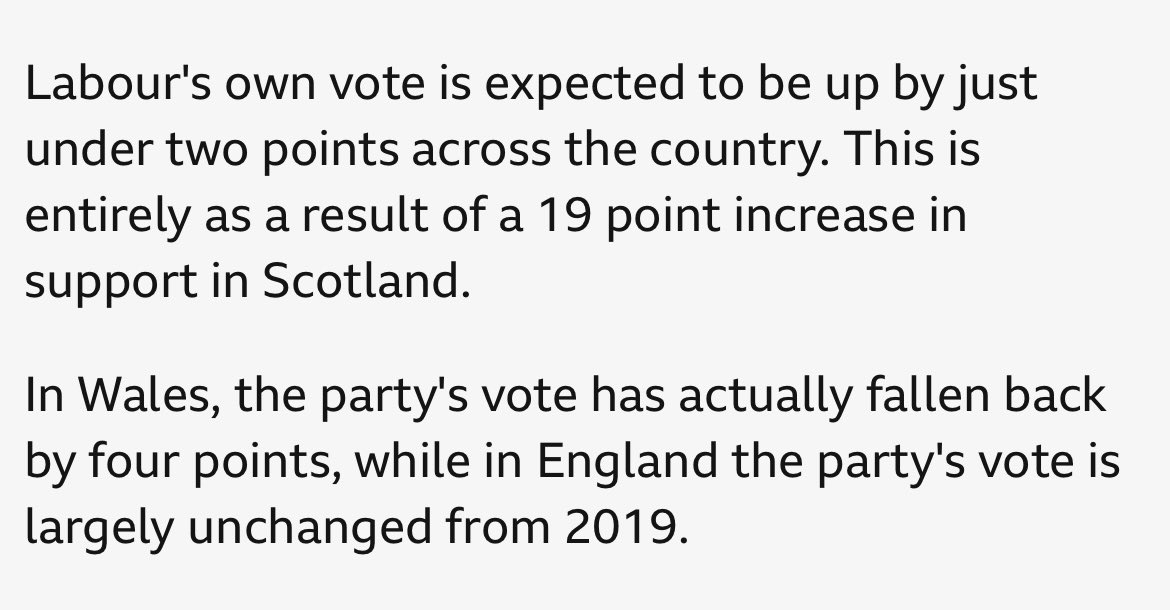
Scotland also played its part in Labour’s landslide, the biggest story of the night. Indeed, with Labour’s share of the vote stagnant in England, it was only because of Scotland that its vote share increased at all.
Labour has won a massive majority. It will be master of all it surveys. But it comes to unassailable power on only about 34% of the vote, which gave it 64% of the seats.
It’s only a percentage point or two more than Jeremy Corbyn won when he was on the wrong end of the Boris Johnson victory five years ago. A much smaller share than when Theresa May lost her overall majority in 2017. No government has come to power in modern times with such a small share of the vote.
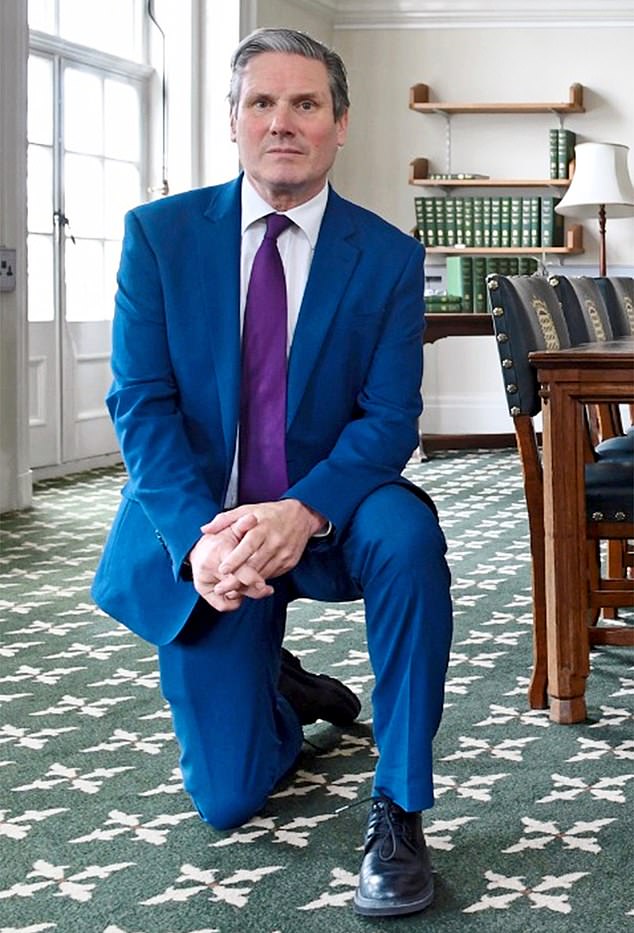
Nor are Keir Starmer’s personal ratings especially stellar. Indeed they’re only a little better than Corbyn’s when he was Labour leader.
It was said that Starmer ran such a cautious and careful campaign that it was as if he was carrying around a Ming vase. His strategy has been vindicated. But it might make sense to carry that Ming vase into government.
No red dawn has risen this morning. No surge for socialism. As I’ve said before, Labour’s support is as wide as the ocean but as shallow as the village pond. It could dissipate quickly with only a couple of wrong or reckless moves. I suspect he realises that.
So why did Labour win so many seats on such a small vote share? Simple: Farage’s Reform party. In 140 seats the Tories failed to hold, Reform had a larger share of the vote than the Tory losing margin.
Labour owes its massive majority at least in part to a politician it despises.
Reform is also the reason for the Tories’ catastrophic defeat. Starmer’s majority is just a little shy of Tony Blair’s historic landslide in 1997, which shredded the Tory party.
They’ve done even worse in 2024. In 1997 they were reduced to 165 seats, which was bad enough. This time they’re down to 122, their worst performance in almost 200 years.
For those of you looking for the night’s Portillo moment it came when Liz Truss had her very own ClusterTruss, managing to lose one of the safest Tory seats in the land.
It was emblematic of the Tory collapse. Perhaps not quite to a rump. But pretty close. Not just a very small base from which to recover. But small enough to be vulnerable to influence or infiltration from the forces of Farage.
This is good news for Starmer. He can set about running the country unimpeded while what’s left of the main opposition party is knocking lumps out of itself.
These sounds you can hear in the distance are the first shots in the upcoming Tory civil war.
Prof Sir John Curtice lays out some brutal facts to put this Labour landslide into perspective:
— Labour’s vote share in England has *stayed the same* since the last election
— Most of the Tory losses are explained by former Tory voters choosing Reform
— Keir Starmer has won fewer votes than Jeremy Corbyn did in 2017
“In many ways, this looks more like an election the Conservatives have lost than one Labour have won.”
https://t.co/Lh7LSYxcnM
Your regular reminder that Gaza is just a normal urban war. That doesn’t make it pleasant, or anything but appalling.
The big difference between Gaza and other recent urban warfare is the unprecedented levels of civilian protection taken by the IDF. Whether you like it or not, shifting millions of people out of harm’s way has saved tens of thousands of lives.
That doesn’t mean that the distribution of aid in a war zone isn’t an eternal problem. It doesn’t mean that innocent Palestinians aren’t homeless and suffering. The difference between this and other recent Middle Eastern urban battles is that in any other conflict, they wouldn’t be hungry and suffering: they’d be dead.
Has the IDF made fuck ups? Of course. Show me an army in any war, ever, that hasn’t. In living memory, god knows the USA, UK and Australia as a minimum have. It’s part and parcel of warfare, as much as armies do and should try to avoid them.
It’s not a genocide. It’s not deliberate starvation. It’s just urban war in cities where Hamas has turned civilian infrastructure into military targets and has a strategy of maximising civilian casualties.
Just for reference, here are Grozny, Homs, Raqqa and Kharkiv. All 21st century urban wars. Ignore the disinformation. This is what urban war looks like.
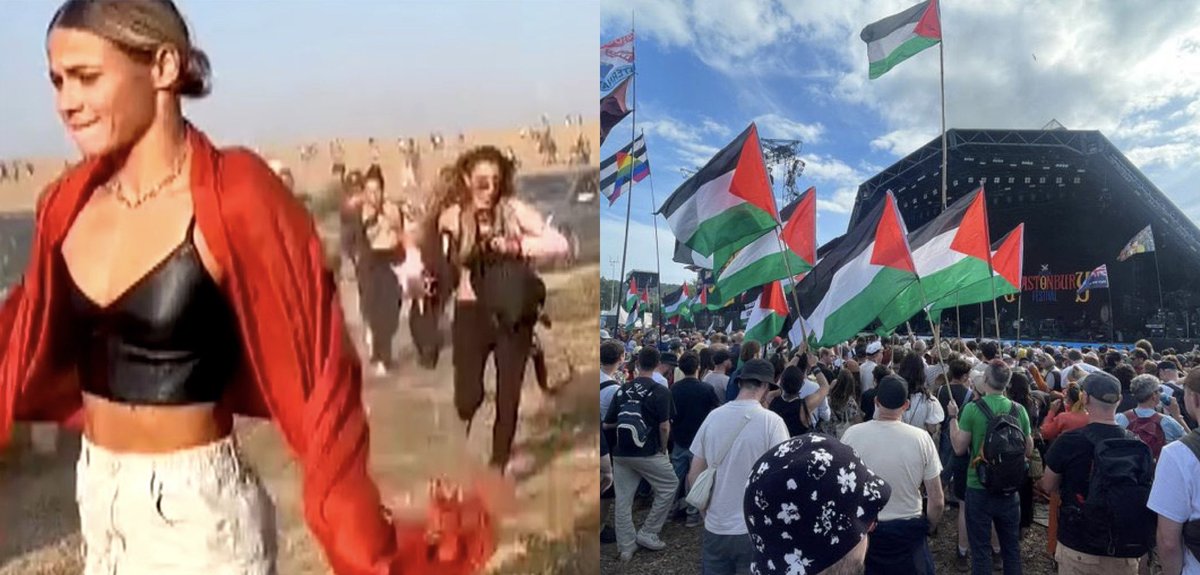
If you’re too thick to understand the hypocrisy of waving flags at a music festival in support of the war aims of a terrorist organisation who carried out a massacre at a music festival, there’s no hope for you.
Sickening how many people are duped by Hamas propaganda.
The ultimate leftist middle class activity is to raise the flag of the people who massacred music festival goers, while attending a music festival.
You can't make this up.
@roadcc Unbelievable. Just a shameful disregard for the impact. There must be odd mitigationing circumstances. What are the sentencing guidelines? @BarristerSecret can you clarify
In two to three years time, when Starmer and his government are no doubt deeply unpopular, I hope we in the media will ask ourselves: "Why were we so supine during the long 2024 election; why didn't we hold Labour properly to account while we could, and ask more probing questions, and explore their records, rather than give them such an easy ride?".
@Mr_Andrew_Fox My thoughts pretty much exactly. We have a new female candidate replacing John Deadwood at long last and she has that rare thing, actual business experience in the real world, rather than being a career politician or lawyer. Slight hold your nose vote, but let’s see.