Pakistan offering to mediate US–Iran talks sounds constructive on the surface. But step back, and the deeper reality is this: Pakistan itself may not be structurally positioned to mediate.
It is already managing instability on its Afghanistan border. It has deep security ties with Saudi Arabia, which could draw it into a direct confrontation with Iran. And critically, one of the central actors in this conflict—Israel—is not even recognized by Pakistan. You cannot host a negotiation where a key participant is diplomatically invisible.
Mediation is not about intent. It is about acceptance by all sides.
Now contrast this with India. India maintains working relationships across Iran, Israel, UAE, Saudi Arabia, and the US. This is not neutrality—it is multi-alignment. And in geopolitics, trust—not declarations—is the real currency.
India may not be trying to broker peace. But it may be one of the few countries that actually can.
@DrSJaishankar@MEAIndia@Reuters@TheEconomist@orfonline
#ChockologyToday #Geopolitics #India #MiddleEast #GlobalStrategy
#ChockologyToday When you fly a lot, you start getting mistaken for airline crew!
A few days ago, on yet another connection, a #pilot struck up a conversation assuming I was one of them.
What he shared was sobering.
Airlines are cutting the number of hours pilots can fly — and fewer hours means smaller paychecks. For many pilots, especially the younger ones still paying off training debt, this is starting to bite hard.
He said something that really hit me:
“You spend so much to get trained as a pilot… and you earn almost as much as an Uber driver. It doesn’t make sense.”
This wasn’t exaggeration — just exhaustion speaking.
At 11:30 pm, when the airport bus finally reached the terminal, he still had hours to go before he’d call it a day. The frustration was genuine.
Then you look at the news: #IndiGo cancelled 550 flights in a single day — the highest in its 20-year history.
👉 https://t.co/lMNuTiqoB5
Operational strain, crew shortages, regulatory fatigue, economic pressure… it’s all converging. The aviation industry is becoming a perfect case study of how complex systems break — not with a loud bang, but with a steady drip of stress that eventually cascades.
We romanticise aviation: the uniforms, the precision, the global reach. But behind the cockpit door is a workforce quietly absorbing the shocks of a changing world — from automation to erratic demand cycles to rising costs.
As someone who builds technology and watches industries transform, this conversation stayed with me. At 35,000 feet, you realise how interconnected our systems — and struggles — really are.
Why are Hindu temples—especially in South India—still under direct government control, while churches, mosques, and other minority institutions enjoy full autonomy?
Temples are run by HR&CE departments that decide:
• trustees and administration
• use of temple funds and assets
• management of festivals and rituals
Meanwhile, churches and mosques manage themselves through independent boards.
Why the asymmetry?
Why should only one faith’s institutions be administered by the state?
This brings up an important dimension: the role of civil society organisations, including the RSS, which has historically advocated for temple autonomy and Hindu cultural preservation.
Whatever one’s personal view of the RSS, the reality is this:
👉 They have the organisational capacity to catalyse dialogue, drive legal reforms, and push for a more balanced model where all religious institutions—across faiths—are treated equally.
If used constructively, this influence could help move India toward a governance framework that is fair, transparent, and uniform across all religions.
As an entrepreneur, I’ve always believed that institutions—whether startups, universities, or temples—thrive when they are accountable and autonomous. Over-centralization rarely produces trust or excellence.
This is not about religion.
This is about policy logic, fairness, and the timeless ideal of Vasudhaiva Kutumbakam — the world is one family. And in a family, the rules must apply equally.
Maybe it’s time we re-examined this outdated governance structure—not to divide, but to create balance.
#TempleAutonomy #GovernanceReform #ReligiousInstitutions #PolicyMatters #CivilSociety #RSS #EqualTreatment #IndiaThinks #SouthIndia #GoodGovernance #VasudhaivaKutumbakam #ChockologyToday
https://t.co/RgiMDATvnV
https://t.co/gDqMjwfkjL
#ChockologyToday
COP30 is underway — and I’m reminded of last COP in Dubai, where I had the chance to sit across the table with partners discussing one very tangible issue: the mountains of steel-slag waste piling up across the world.
I’m glad that conversation didn’t end as another COP corridor chat.
We’ve made real progress at VeeCycle Works — turning steel waste into industrial value. A small step, but a step forward.
Yet this year, there’s a sense of disenchantment.
For a conference built on the ethos of collective action, the absence of the world’s largest historical polluter — the United States — is not a detail, it’s a derailment.
And here’s the inconvenient truth:
An average American emits nearly 7 times more carbon than an average Indian — yet the pressure on India to “do more” under the Paris Accord continues.
It raises a simple question: is it fair to ask a low-emitter nation to tighten further while high-emitters step away from the table?
We’re seeing this drift elsewhere too — whether in GATT or tariff frameworks — where cooperation is increasingly replaced by convenience.
At moments like these, I go back to an idea far older than climate diplomacy:
“Vasudhaiva Kutumbakam” — the world is one family.
Climate action cannot be a choose-when-you-like buffet.
Either the world comes together — or we all fall together
#ClimateAction
#Sustainability
#CircularEconomy
#VeeCycleWorks
#Decarbonization
#NetZero
#GlobalCooperation
#VasudhaivaKutumbakam
#ClimateJustice
#IndiaForTheWorld
#TheSonaGroup
#Chockology Today: Fortressing America and the #TariffTrap
The current U.S. administration has built what I call a fortress around America — erecting tariff barriers that, while politically appealing, are economically enclosing.
So far, nearly $90 billion has been collected in tariffs — money that ultimately comes from the pockets of the average American consumer, who ends up paying about 85% of these duties in the form of higher prices.
In true democracies like Switzerland, such sweeping decisions would go through referendums; elsewhere, courts act as the balancing mechanism. Perhaps it’s time for the U.S. Supreme Court to weigh how these arbitrary tariffs impact the common American — not just the trade ledger.
Economic change must be harmonious, not haphazard. If the goal is to revive domestic production, the path is not by throttling supply through tariffs, but by enabling and empowering local manufacturing first.
Building walls rarely builds wealth.
🔗 CNN Article on Supreme Court and Tariffs
https://t.co/7nDaVsb6im
Want Indian Deep Tech? Match us. Back us.
Mr. Minister @PiyushGoyal, it takes two hands to clap. Admiring China’s deep tech progress is easy—enabling Indian industry to replicate it is hard.
China spends 3.85x more on R&D (% of GDP). To play in the same league, we need bold public-private collaboration.
A simple idea: Matching grants for industry-led research.
At Vee Technologies, we co-fund wearable tech with Canadian universities—and their govt matches us 1:1.
Another path: Tax incentives for Indian firms funding research under 2F/12B.
We’re sitting on 10s of 1000s of idle PhDs—why not use the unspent 7500 Cr+ education cess to unlock them?
Let’s move beyond “dukaandari” and build #DeepTech with both hands.
@SitharamTG@mamidala90 — this one’s worth serious thought.
#NEP 3 language policy #Tamilnadu#Tamil
Was impressed to see @ashwinravi99 speak fluent Hindhi. He had said Hindhi is not a national language but a an official one. It's surely a link language.
https://t.co/YclCxRWrk7
US-India: The $3 Trillion Question 🇺🇸🇮🇳
True trade value deficit is actually 2,953,650,000,000 (2.953T) in America’s favor.
India’s stake in Big Tech? 30% (consumers hence market cap) of $10T (Microsoft, Alphabet, Amazon, Meta) Allowing access to Gmail, Facebook & WhatsApp. GPay & PhonePe (Walmart) control 65% of digital wallets.
CHINA ALLOWS NONE.
Trade isn’t just about goods—India fuels American tech. Who really holds the power?
@nsitharaman@DrSJaishankar #Trade #India #BigTech #BilateralTalks @realDonaldTrump@elonmusk
Why are Indian cricketers called the “Men in Blue” when our flag shines in Orange, White & Green? The Ashoka Chakra is blue, but should we be rocking the #Orange jersey instead? Time for a color switch? #TeamIndia#BleedOrange
Twice-a-year college graduations are a must! 🎓
Globally, students graduate in spring & fall—why should India wait? Industry hires year-round, and students deserve timely job opportunities. #HireMee
CBSE has set the example. @mamidala90, time for @ugc_india to take the leap!
🔗 Read more
Here’s a crisp Twitter/X post with a tag for UGC Chairman Jagadesh Kumar:
---
Twice-a-year college graduations are a must! 🎓
Globally, students graduate in spring & fall—why should India wait? Industry hires year-round, and students deserve timely job opportunities.
CBSE has set the example. @mamidala90, time for UGC to take the leap! #NEP
🔗 Read more
#HigherEducation #SemesterSystem #FutureReady
Connendrume of being #ElonMusk" The businessman vs Politican- Very Unfair": Donald Trump On Elon Musk's Tesla Building Factory In India
https://t.co/qGmpfWeA95
Can someone tell #Trump there r two Indias—Bharat & India? If steel/textile #tarrifs rise, it impacts the Bharat worker Vs if #duties r levied on US cars, d 2% elite in India who don’t feel it. Ps, 200 mill people struggle for food, earning just $1.3/day.” https://t.co/fdAdjFnpnn
Imposing Resiprocal duties is flawed— isn't a simple apples-to-apples comparison. U.S. exports luxury Harley-Davidson, cost 2x d average bike in India. India imposes higher taxes on luxury goods-its affluent citizens can afford them.
India exports Royal Enfield motorcycles, cost less than 1/2 d price of an average motorcycle in the U.S. This impacts d average American consumer, who may not have d budget to buy a premium local bike priced around $13,000 and instead opts for a Royal Enfield at $5,999.
It's an apples-and-oranges comparison!
https://t.co/sTFMh6bLph
🚀 The Sona Group: Pioneering India’s Technology Transformation 🌟
From shaping India’s IT revolution to redefining the future of aviation, we’re proud to drive innovation across industries:
✨ 1980s: Partnered with #TexasInstruments, sparking India’s IT revolution.
✨ 2010: Collaborated with #ISRO for cost-effective satellite launches, powering missions like #Chandrayaan.
✨ Today: At #SonaSPEED, designing #eVTOL air taxis with Sarla Aviation to revolutionize urban and rural connectivity.
Empowering a more connected India, one breakthrough at a time. 🇮🇳
#Innovation #Technology #FutureOfFlight #SonaGroup
Hey @lufthansa, took an overnight flight from Delhi to Frankfurt with no blankets provided. But saw mattresses on the FRA to Houston flight. Why the double standard? #TravelQuery#indiamatters
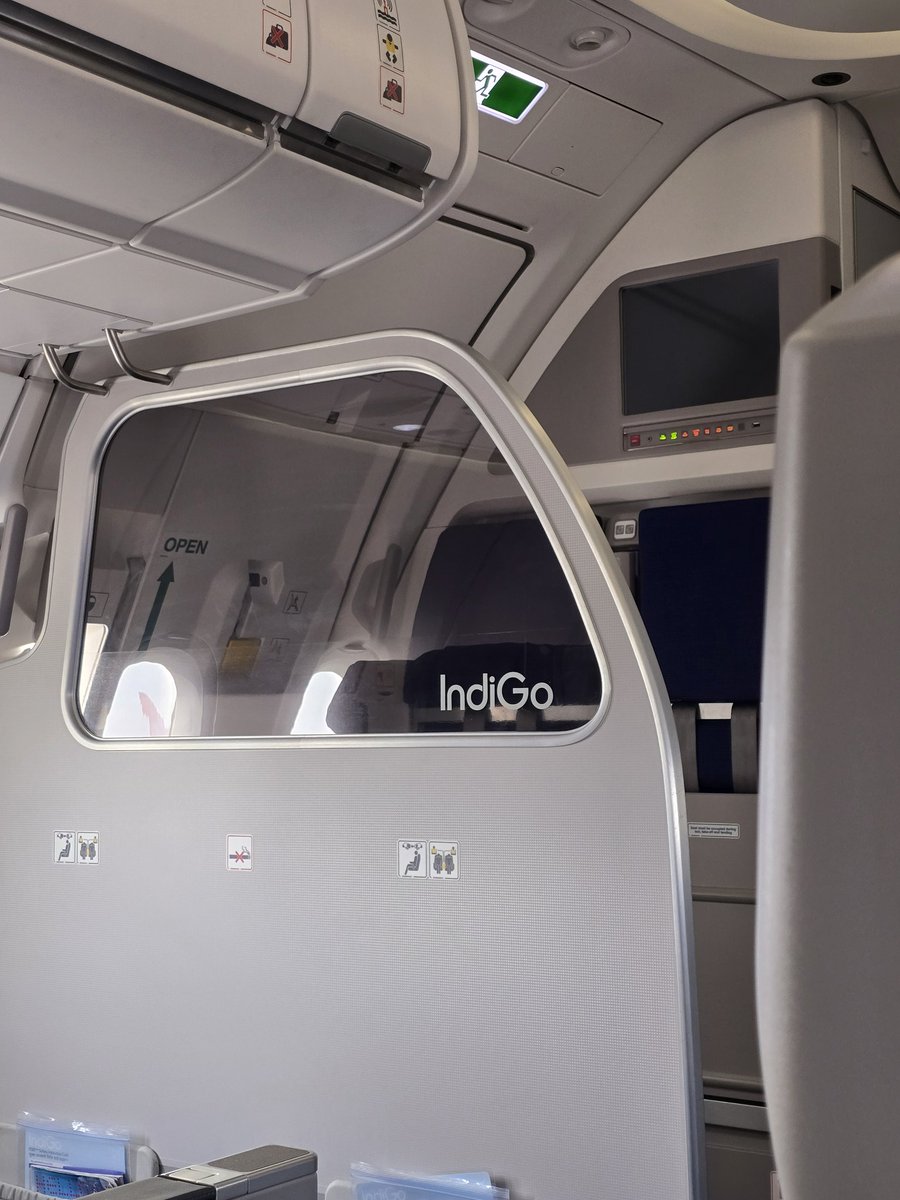
Sitting on an #IndiGo flight for 45 mins. 8 AM flight to Delhi now delayed indefinitely. They shut the doors at 7:55 to claim "on-time departure" but announced a delay moments later.
On-time metrics need a revamp—exclude weather delays or focus on arrival times. #travel